

Matos on tactics, Klopp’s influence, and taking Swans to top of the league
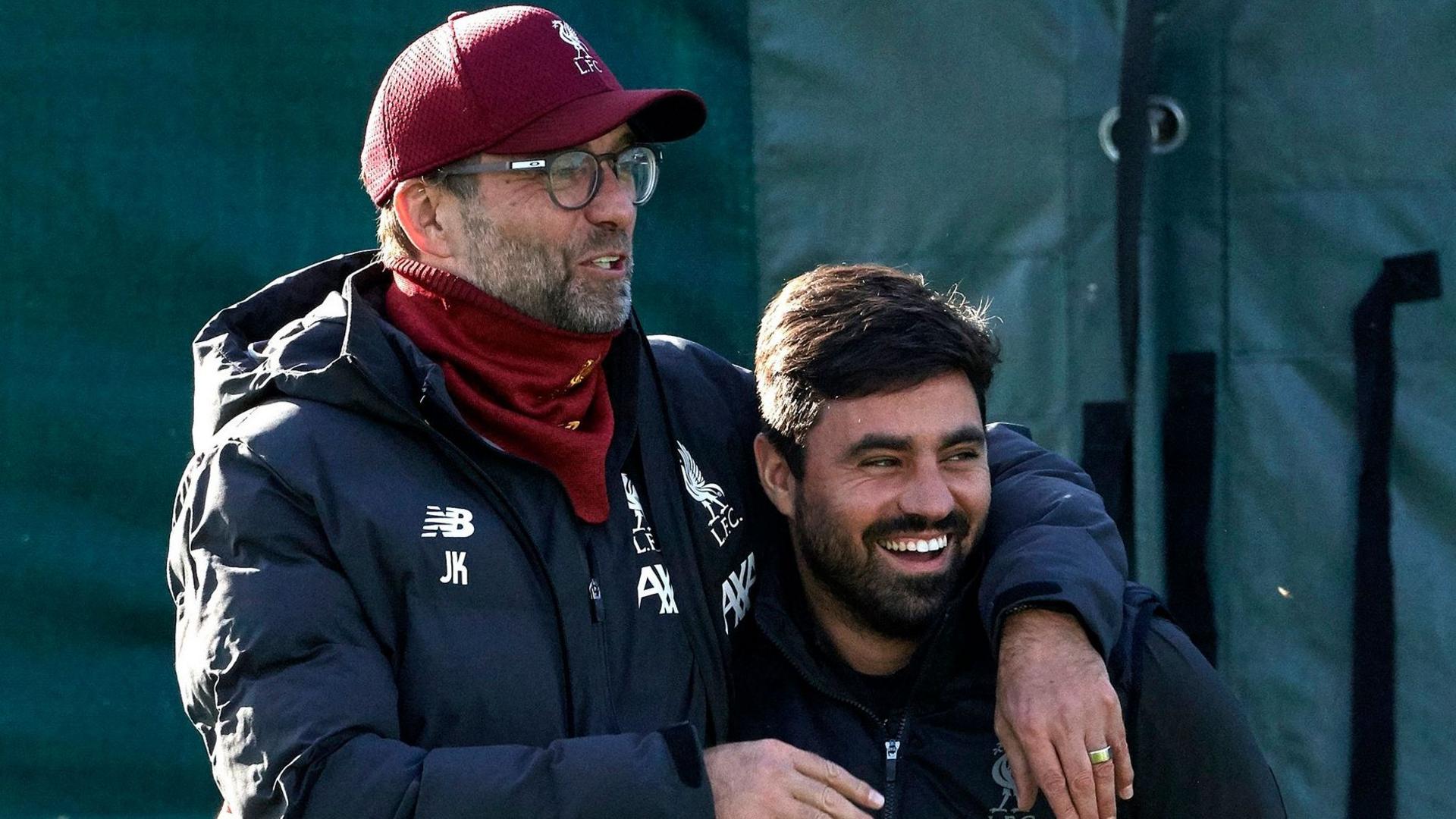 Image source, Getty Images
-
Published
When Vitor Matos took charge of Swansea in November 2025, concerns around a potential relegation were on people’s lips. Yet almost one year on, the Swans sit top of the Championship 10 games into the season.
In retrospect, the hire appears to have been a masterstroke considering the fact that Matos had only managed 12 senior games before moving to Swansea – those coming in the Portuguese second division.
Behind those 12 games, however, lives a coaching journey spanning 23 years across many continents and a variety of roles.
Prior to his spell in charge of Maritimo, the 38-year-old spent five years working under Jurgen Klopp as an elite development coach at Liverpool, before joining Red Bull Salzburg as Pep Lijnders’ number two.
I called the Portuguese manager to explore his influences, principles and the ever-changing tactical landscape.
‘Liverpool influenced me a lot’
Building a squad on a foundation of counter-pressing feels apt for Matos when you consider the time he spent working under Klopp.
“Liverpool influenced me a lot in terms of counter-pressing, pressing, intensity, and what makes you grow as a team,” he said.
“The most important thing is how much you believe in your idea and this style is how I see football. That’s why I wanted this to be the foundation for our team.”
Although the influence is clear, it would be unfair to paint Vitor with a Klopp-shaped brush entirely.
“I started at a really young age wanting to be a coach and was influenced by many different styles,” he added.
Evidence of these many influences are clear to see in Swansea’s game-model this season, with Vitor pulling together ideas from his time at FC Porto, Shandong Taishan and Liverpool.
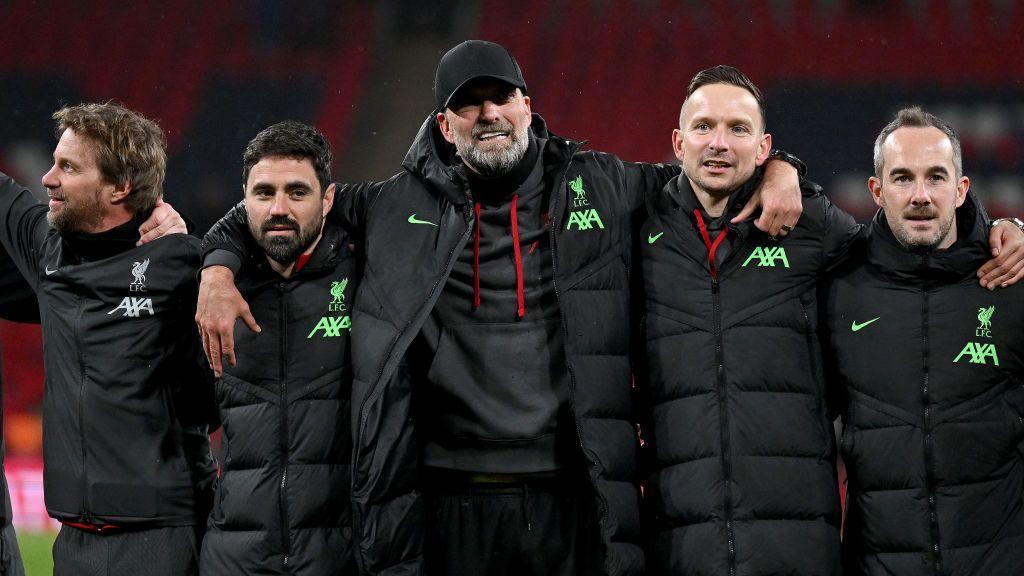 Image source, Getty Images
Matos detailed his list of priorities when he replaced Alan Sheehan at Swansea.
“The most important thing was to make the team feel confident again, to make the players fall in love with playing with each other,” he explained.
“For that, we wanted to take steps first on making the team much more aggressive without the ball.
“Giving them that boost of confidence by demanding a more aggressive game, creating a good feeling after a high regain or a wonderful tackle – it creates a better mood inside the group.”
He also opted to play a back four.
“Before I arrived there was also some change between a back four and a back five. I thought the squad was built for a back four at that time and to give consistency to the players, sticking with that was another priority.
“So, in our 4-3-3, we had a clear idea – to become a pressing and counter-pressing team, brave enough to take that risk.
“But then it’s about, trying to find out the ways to be more aggressive.”
In that sentence, Matos subtly revealed a key thread to his managerial approach and one that came up time and time again throughout our conversation.
He spoke about his many fixed footballing principles but believes the route to accomplishing those ideas must be shaped by the players at his disposal.
As a result, he takes a holistic approach to each player, seeking to understand them deeply, as footballers and human beings. Only then does he know how best they can work within his system.
 Image source, Getty Images
“We want to press but where will we set up in terms of starting positions?” he continued.
“Who should start the press? Which are the triggers? Who are the players who buy in more or are more ready for this type of style in a short period of time?
“When you start from the players you have in front of you, you start from a position of comfort for them. This allows the players to be more confident which helps you to build your idea over time.”
‘When we go, we really go’
“When I spent time with the youth of FC Porto, I developed my understanding of positional play,” Matos explained.
“We used a very positional 4-3-3, understanding the spaces, the timings, waiting for the ball to arrive to you at the right time. Players moved the ball until gaps started opening.”
This season, we have seen those principles, honed at Porto, become the basis of an impressive Swansea side.
“How we solve problems depends on if we play against a man-marking team or a complete zonal team,” said Matos.
“When you play against a complete zonal team, the most important thing is that you understand that you need to move them. By moving the opposition, you create spaces, you create a free player.”
Much of the historic success of positional play has been underpinned by that same idea – finding the free player.
Against zonal defences, an attacker can occupy a gap between opponents and become a free, unmarked player. If a defender comes across to mark him, they risk leaving another attacker unmarked elsewhere.
But the rise in man-to-man pressure in recent years presents a different challenge. With defenders following individual opponents, the free player can cease to exist altogether.
To solve this problem, Matos has drawn on his time in China for answers.
“In China, I understood that to arrive at a more positional game, you could have different steps beforehand,” he said.
“There is a benefit to having more players close to each other, rather than spreading them over space.
“If you spread them over space, you are demanding that, technically, they can solve many situations one-v-one. If they come closer to the ball, you can generate more possibilities. You can create a tempo that allows other players to be better in the big spaces.”
It is unique style of play but these overloads have given Swansea extra solutions around the ball, helping disorganise both zonal and man-marking systems.
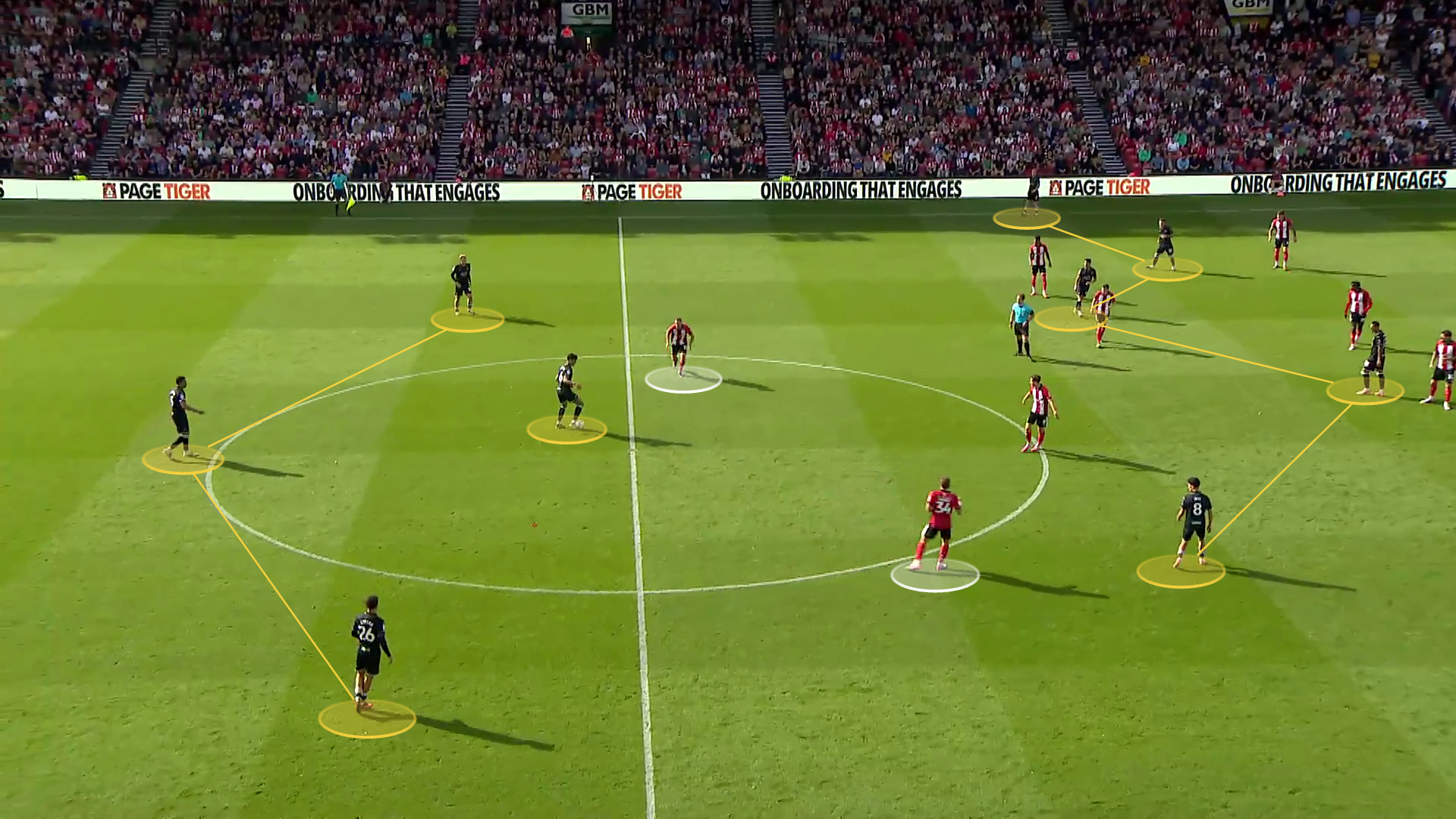
Matos added: “Especially if you play with a midfielder outside, you can overload one side a little bit more. Let’s exchange the ball here five times, eight times and then when we go, we really go.”
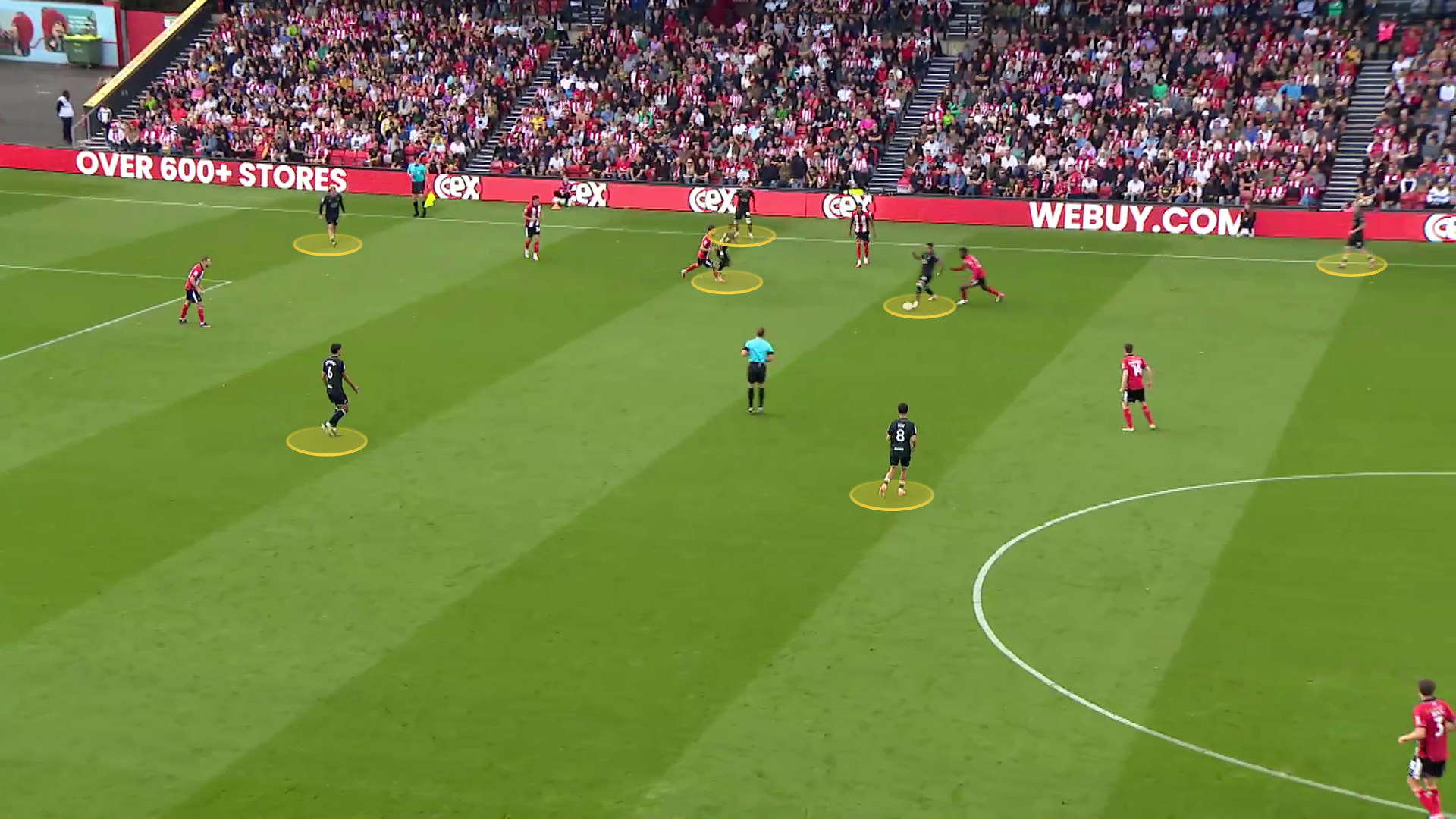
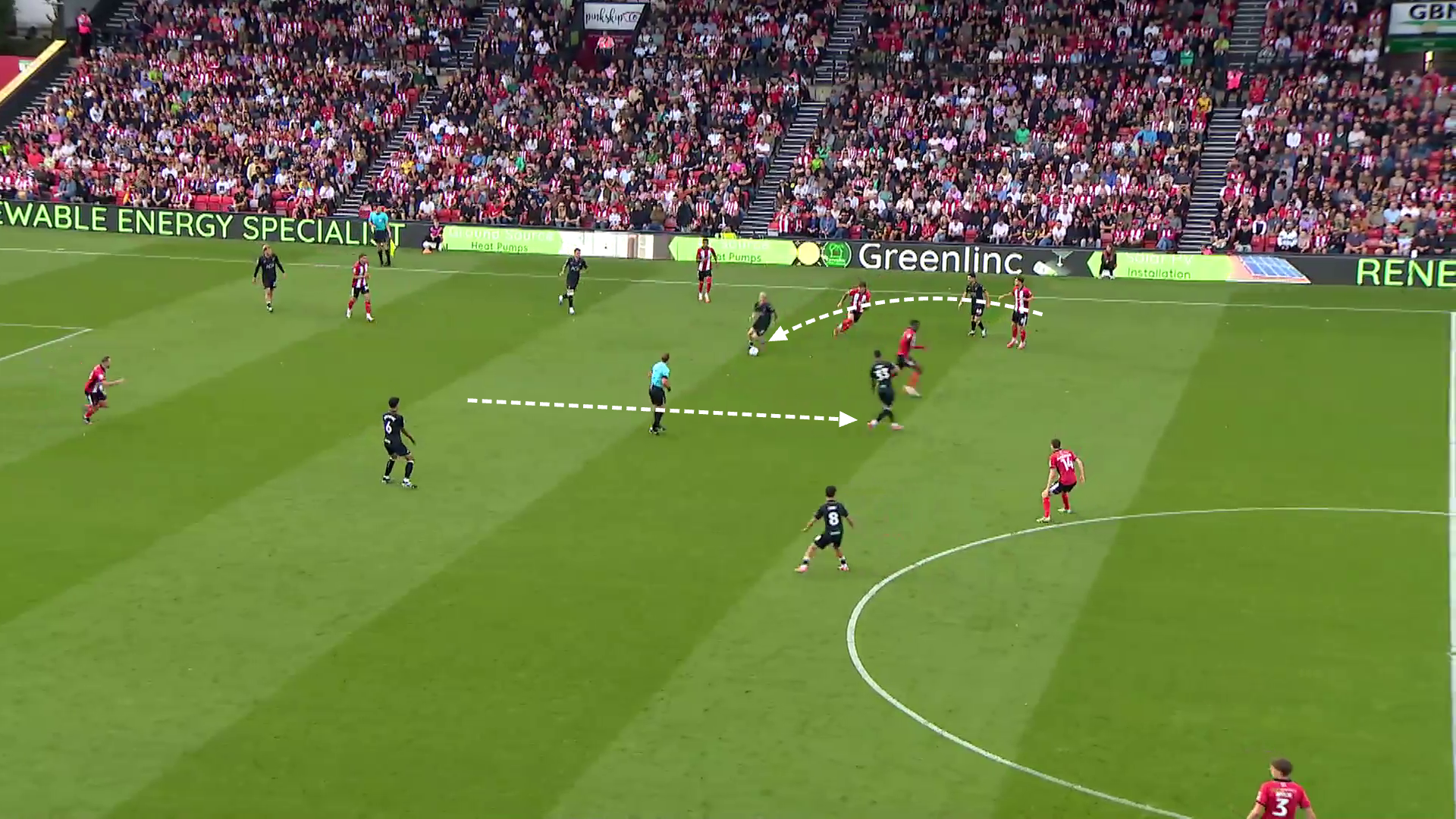
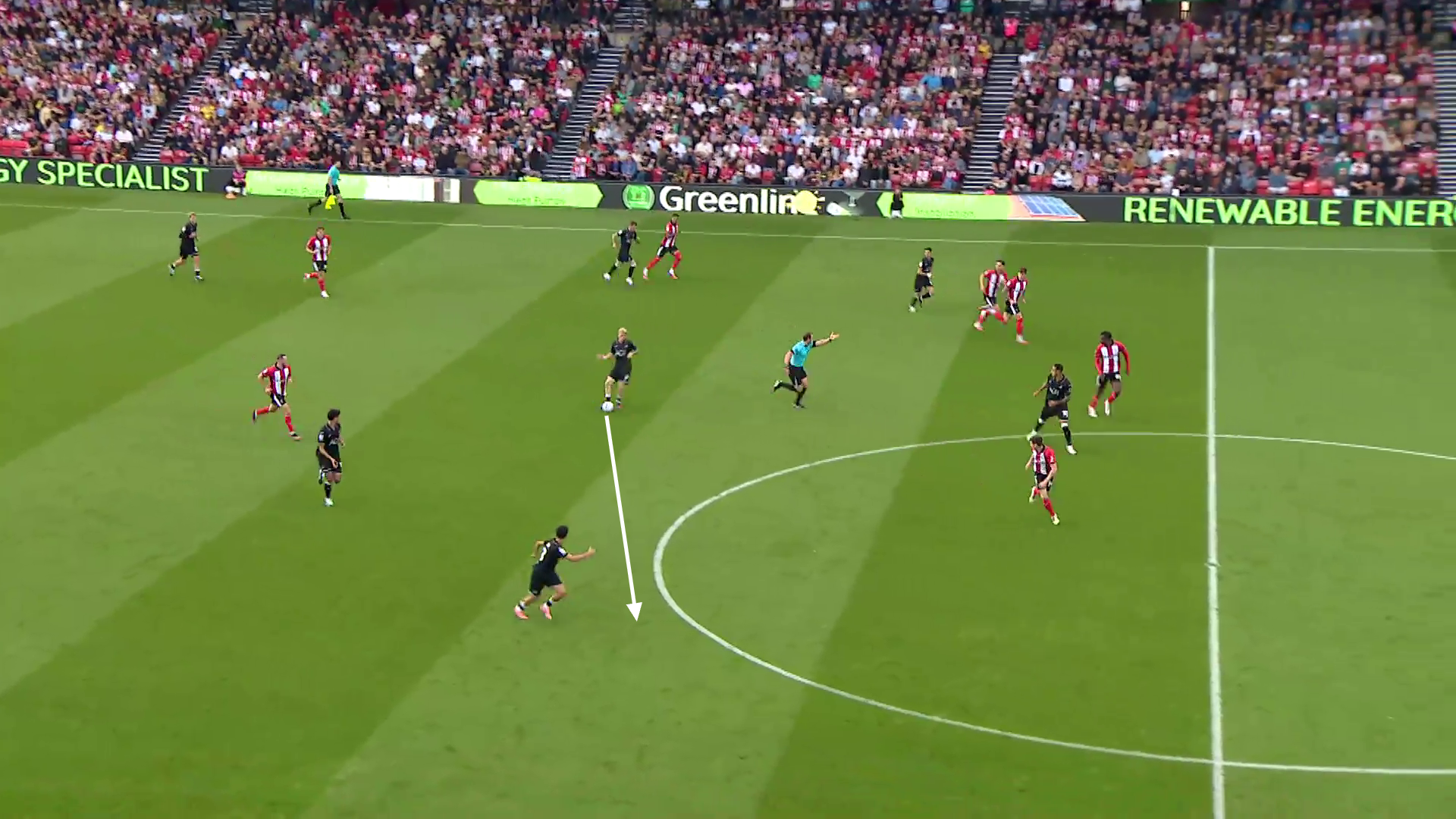
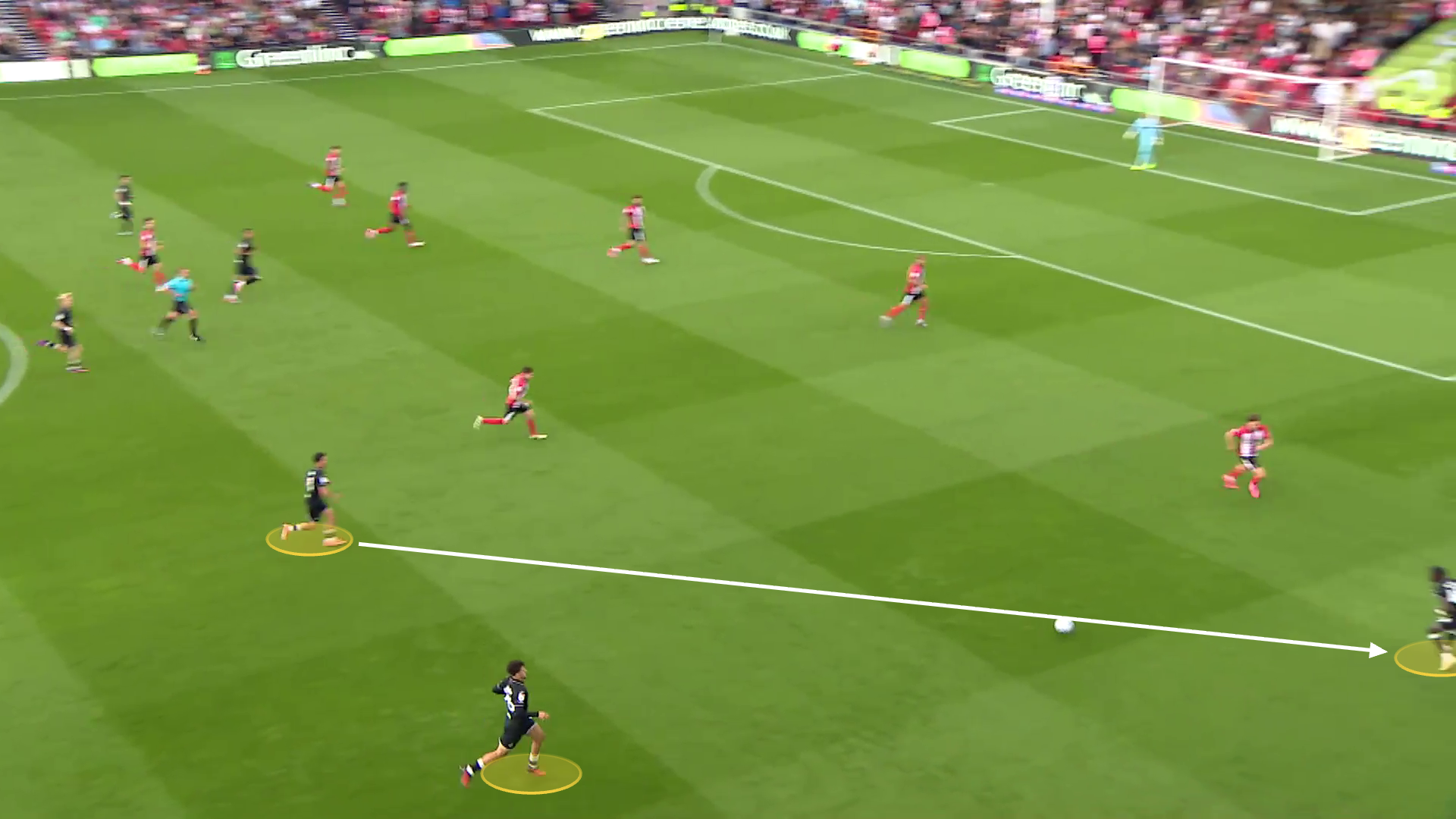
1 of 4
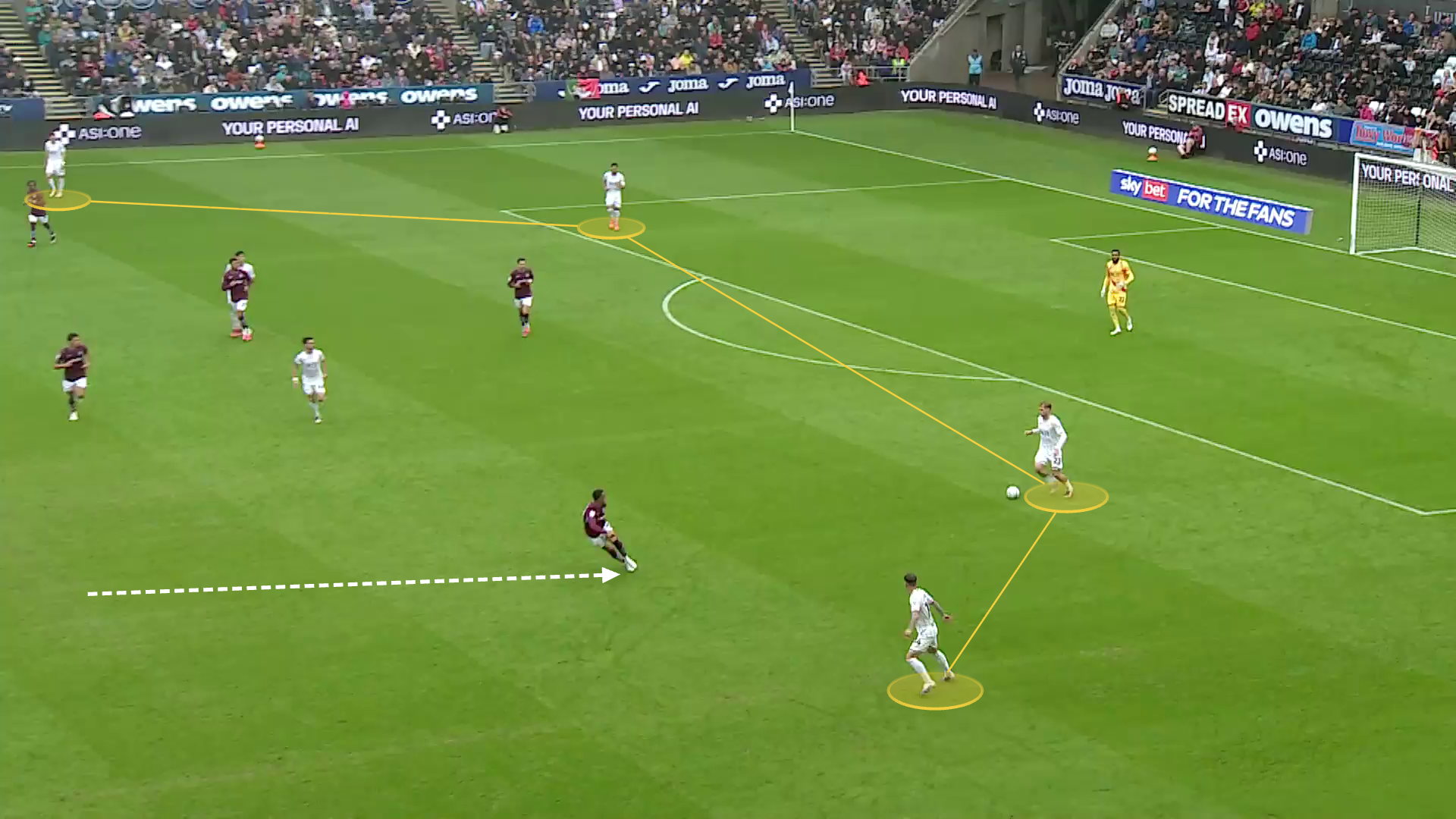
Slide 1 of 4, Screengrab showing Swansea’s build up and their wide overloads, Swansea build out from the back against Lincoln here. Looking to escape Lincoln’s man-to-man high press, Swansea commit seven players (highlighted in yellow) towards the ball
‘With our two full-backs, we can tweak a lot of things’
Knowing that good positioning, overloads around the ball, and relentless off-the-ball running help Swansea disorganise defences, it is likely the dynamic and roaming full-backs that embody these qualities best.
Both full-backs have been used as tactical tools to undo a team’s defensive strategy too:
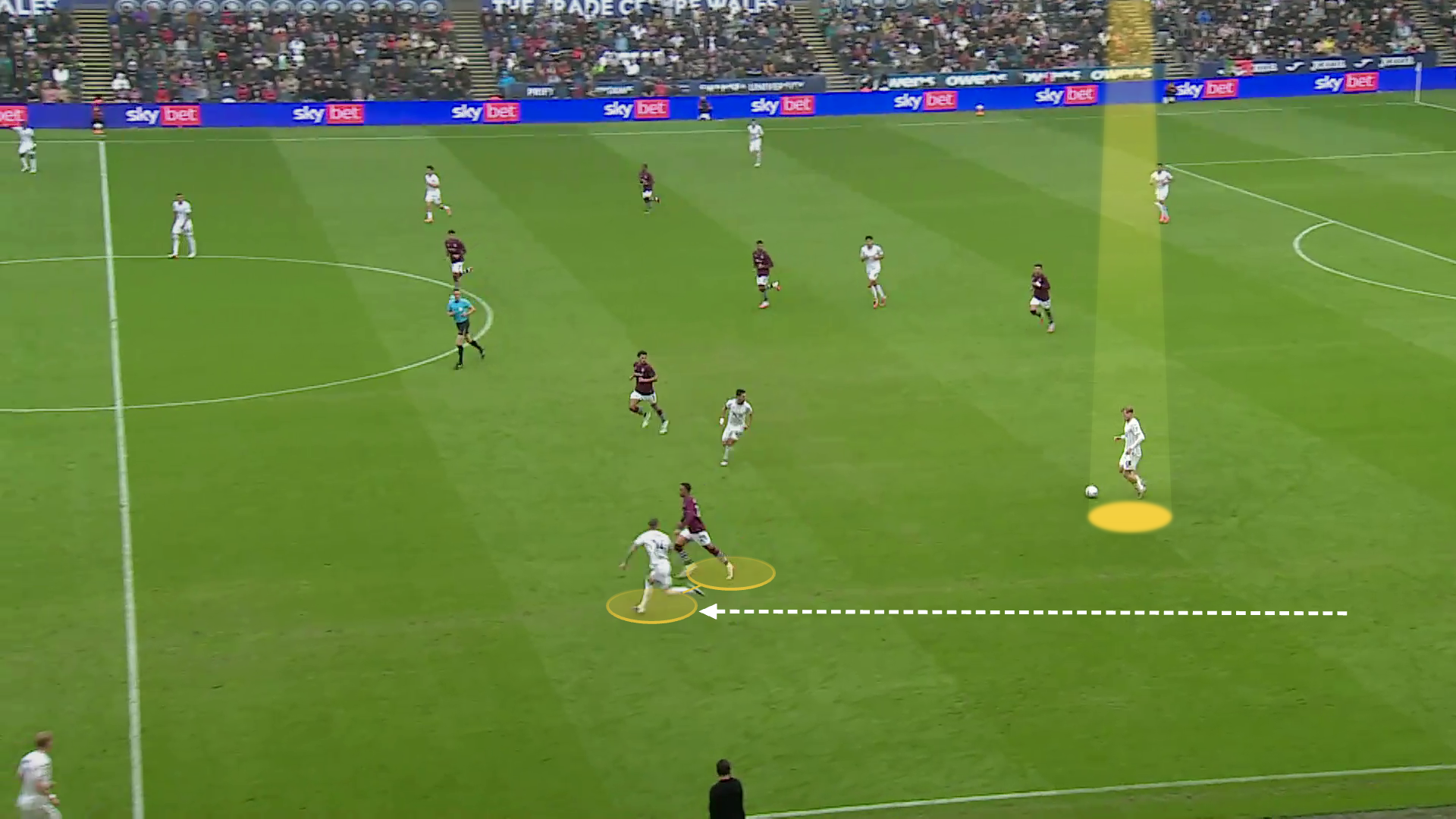
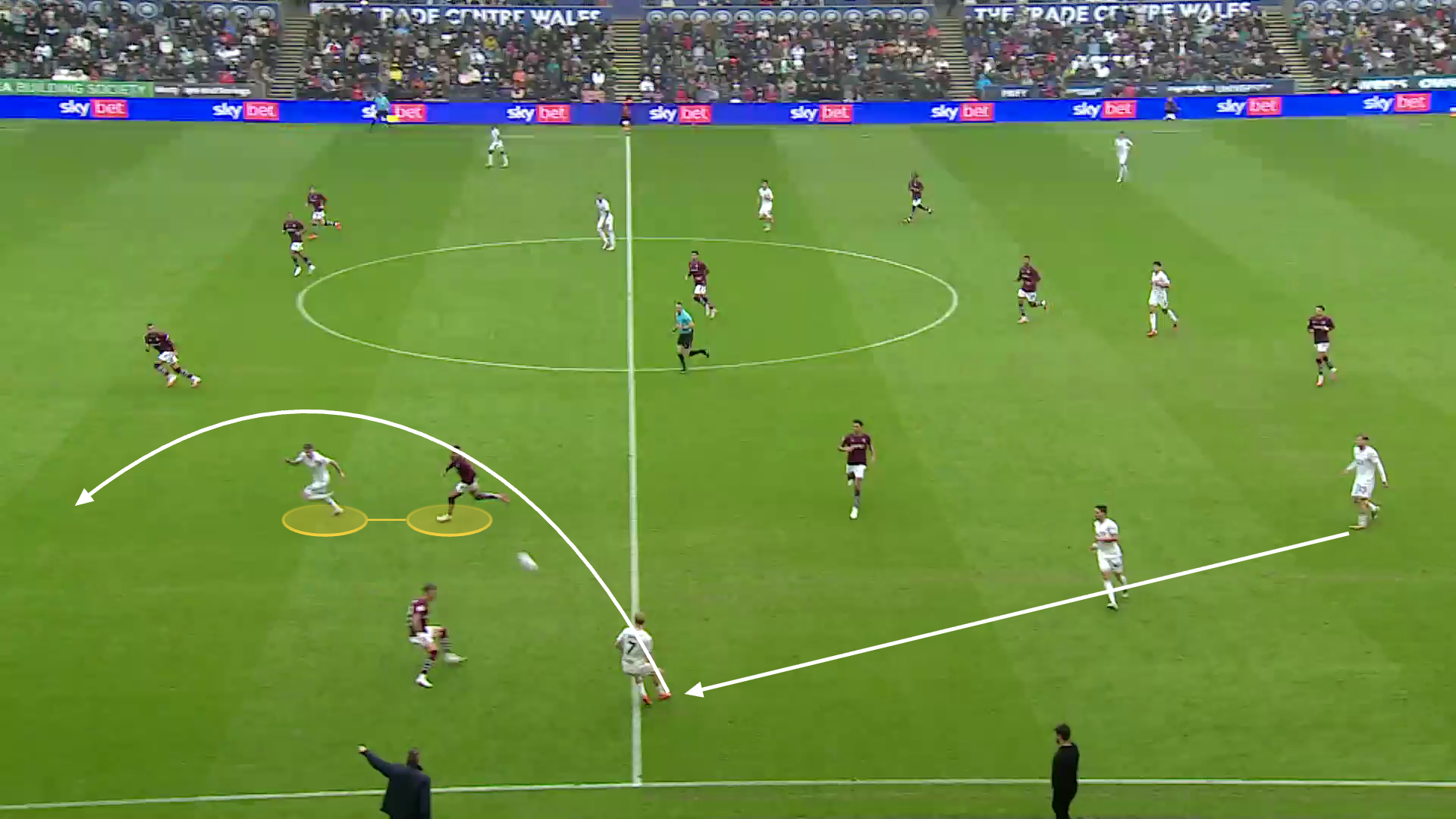
“With our two full-backs, we can tweak a lot of things because these are normally positions where, especially if the opposition defend zonally, it’s harder to press,” Matos said, shedding light on why many top coaches have experimented in this position.
“Opponents need to make a decision on how they’re going to press those spaces. And by pressing those spaces, there is the potential to create a lot of unbalance in the structure.”
1 of 3
Slide 1 of 3, Screengrab showing Swansea’s build-up and the role of the full-backs, Here we see Swansea’s left-back take a lower starting position in build-up. As Burnley begin to press, their wide player is caught between pressing the player with the ball or the opposing full-back
‘Only when you are yourself can you really add value to something’
Successful young coaches are often praised for their tactical acumen, but management is as much about the moments away from the tactics board.
Matos, only 38, feels like a bridge between coaching generations.
“In the end, what I try to do is to value everyone in the right way. I try to make the best of everyone and try to allow everyone to be themselves. Only when you are yourself can you really add value to something,” he said.
“The time with Jurgen was massive regarding that. How he was as a leader, how he took care of the club, how he took care of the players – that moulded a lot of me.”
Now Matos draws on that experience for his own player-focused approach.
“I come from Portugal, but someone will come from Argentina, Brazil, Germany or the UK. And all of us have different ways to arrive at this specific moment,” he said.
“Maybe I had a good house to live in and maybe one of them didn’t, so he might be more emotional than me. Trying to understand them, trying to have sensitivity to that, is important.
“Knowing all of that, in the end we all are here for one thing: to win the next game.”
-
-
Published4 days ago

-
-
-
Published1 day ago
-
-
-
Published1 day ago
-