
Israeli police arrest 10 over settler attacks on journalist and diplomats in West Bank
-
Published
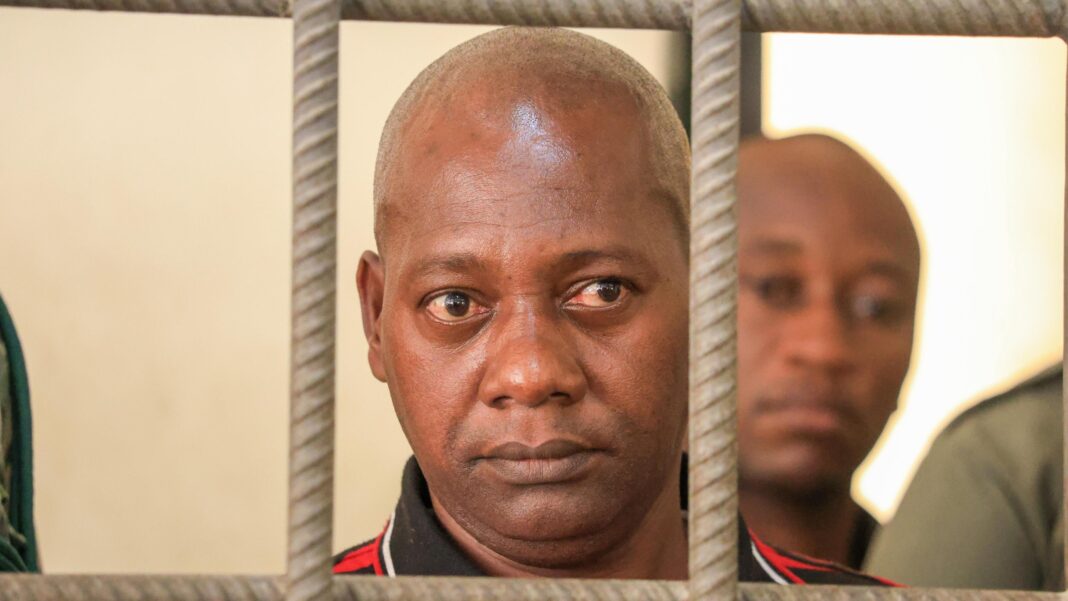
Israeli police say they have arrested 10 suspects in the occupied West Bank after attacks by settlers on an American journalist and European diplomats last week.
The unnamed suspects were detained at several locations on suspicion of acts of violence, violating a closed military zone order and illegal construction, according to a statement. Potential evidence and vehicles were also seized.
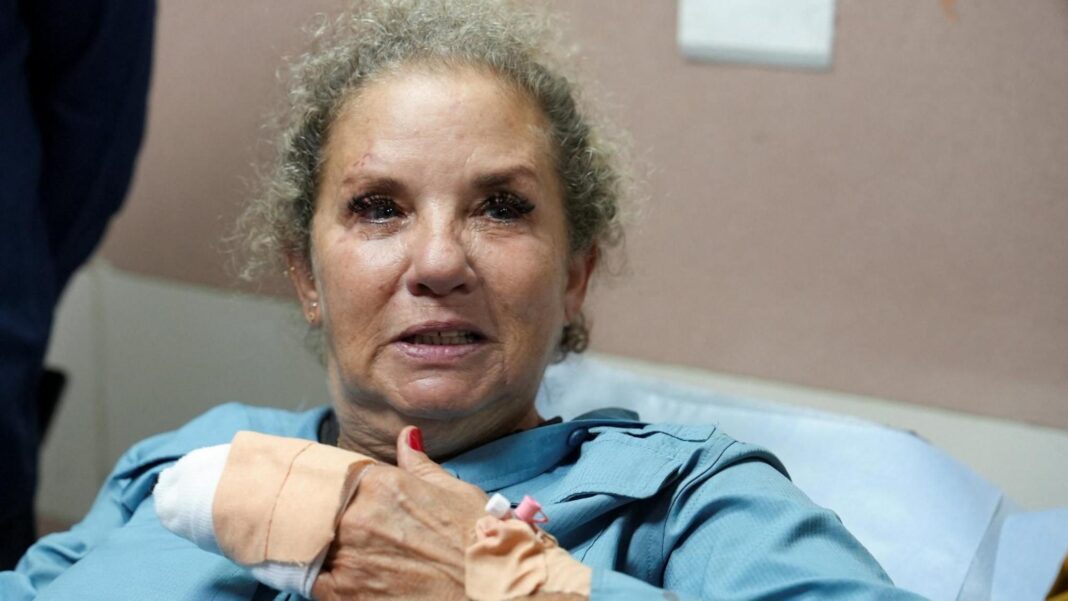
On Friday, masked Israeli settlers beat and severely injured Washington Post photojournalist Heidi Levine as she covered an olive harvest in the Palestinian village of Abu Falah.
A day later, diplomats from Belgium, France, Poland and the Catholic Church were attacked by masked settlers in nearby Taybeh.
The US ambassador to Israel, Mike Huckabee, welcomed the arrests.
“A very positive development in finding & punishing those who severely attacked and beat Heidi Levine,” he wrote on X.
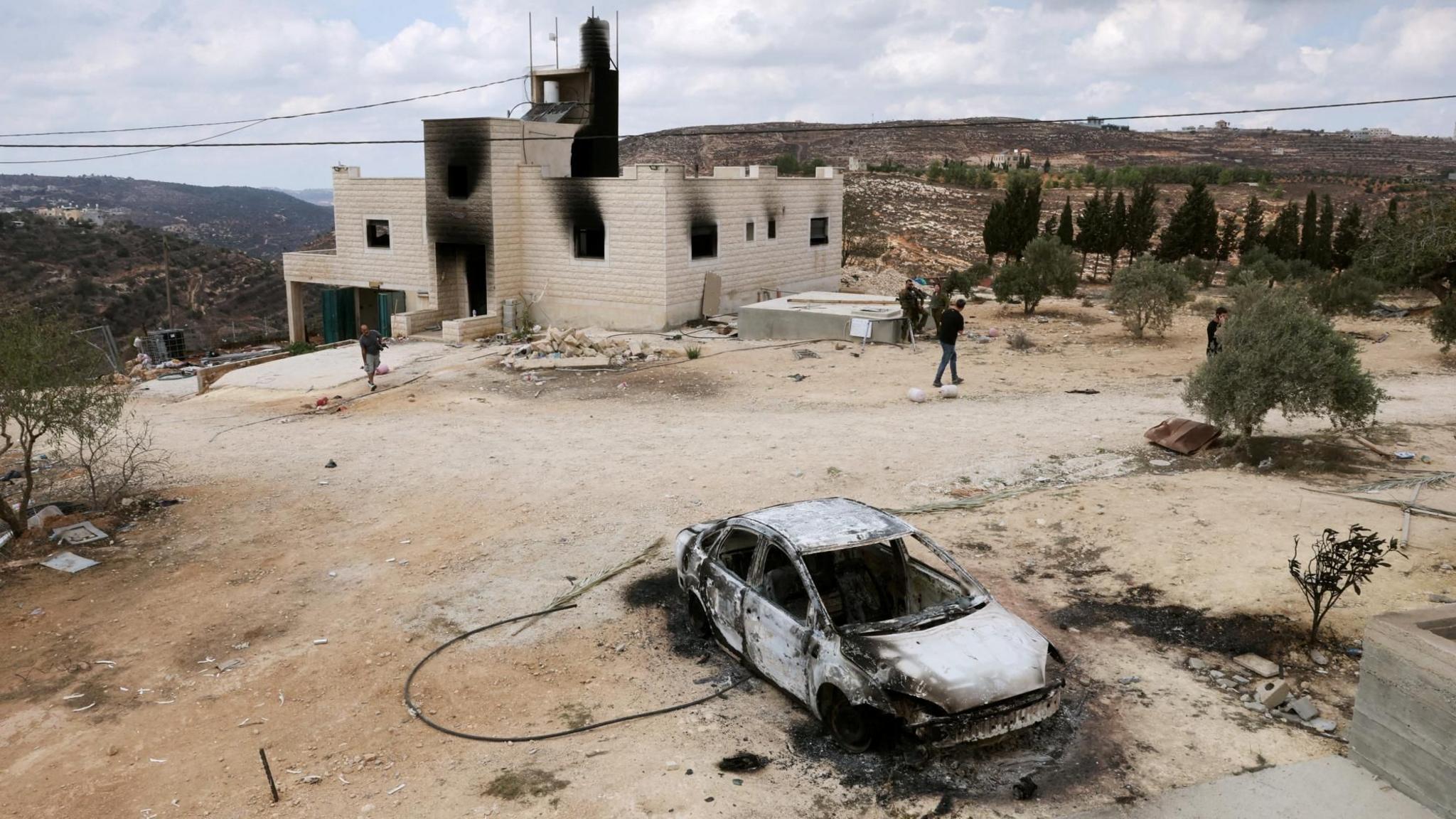
Settler violence in the West Bank is at an all-time high, according to UN records. However, it has escalated dramatically during this year’s olive harvest, which is essential to Palestinian livelihoods.
The Israeli human rights group Yesh Din said on Sunday that it had logged 269 incidents of violence directly related to the olive harvest over the previous 20 days.
They included 98 cases of violence and physical assaults against harvesters, as well as crop thefts, and the damaging and burning of olive trees.
To play this video you need to enable JavaScript in your browser.
This video can not be played
A BBC team witnessed one of several settler attacks during an olive harvest near Khirbet Abu Falah on Friday, which a local official said injured 12 Palestinians, including four dual Palestinian-American citizens, as well as Heidi Levine.
The veteran photojournalist, who was wearing a flak jacket clearly marked “PRESS” on the front and back, said she was knocked to the ground by a group of settlers, kicked repeatedly, and stripped of her cameras and phone.
She suffered four broken vertebrae, a broken rib and lacerations across her body. She required surgery on a finger that was ripped open.
In a telephone interview with the BBC’s Today programme from her hospital bed in central Israel on Monday, Levine said it “could have been a lot worse”.
“We [journalists] don’t always want to wear flak jackets and helmets – it’s heavy, it can be a pain when other people aren’t wearing them, you feel kind of silly – but we all did and I’m grateful for that.”
“I think I would have suffered more serious injuries for sure, especially [to] my head. I tried to keep my face to the ground as much as I possibly could so that protected it… I don’t guess, but I know that I’m actually really, really lucky.”
Huckabee called the attack on Levine a “despicable act of terror carried out by masked cowards” and said they should spend years in prison.
US Secretary of State Marco Rubio said President Donald Trump “does not want to see friction or a crisis in the West Bank”.
Israeli President Isaac Herzog said he had told Levine that the “despicable behaviour of the perpetrators of this attack does not represent the citizens or the values of the State of Israel”.
On Saturday, a delegation of Belgian, French, Polish and Catholic Church envoys visited Taybeh, about 6km (4 miles) to the south of Abu Falah, to watch an olive harvest.
Belgium’s Foreign Minister, Maxime Prevot, said a car from its consulate was damaged and that a French mayor, Bernard Baudoux, was assaulted.
Video from the scene showed masked settlers confronting the convoy and a man wearing a French tricolour sash slumped beside a vehicle. Reports suggested that stones were thrown.
Prevot condemned the attack in the strongest terms and said that Israel, as the occupying power, had to protect Palestinians, ensure the safety of diplomats and journalists, and bring those responsible to justice.
The European Union also demanded “full accountability”.
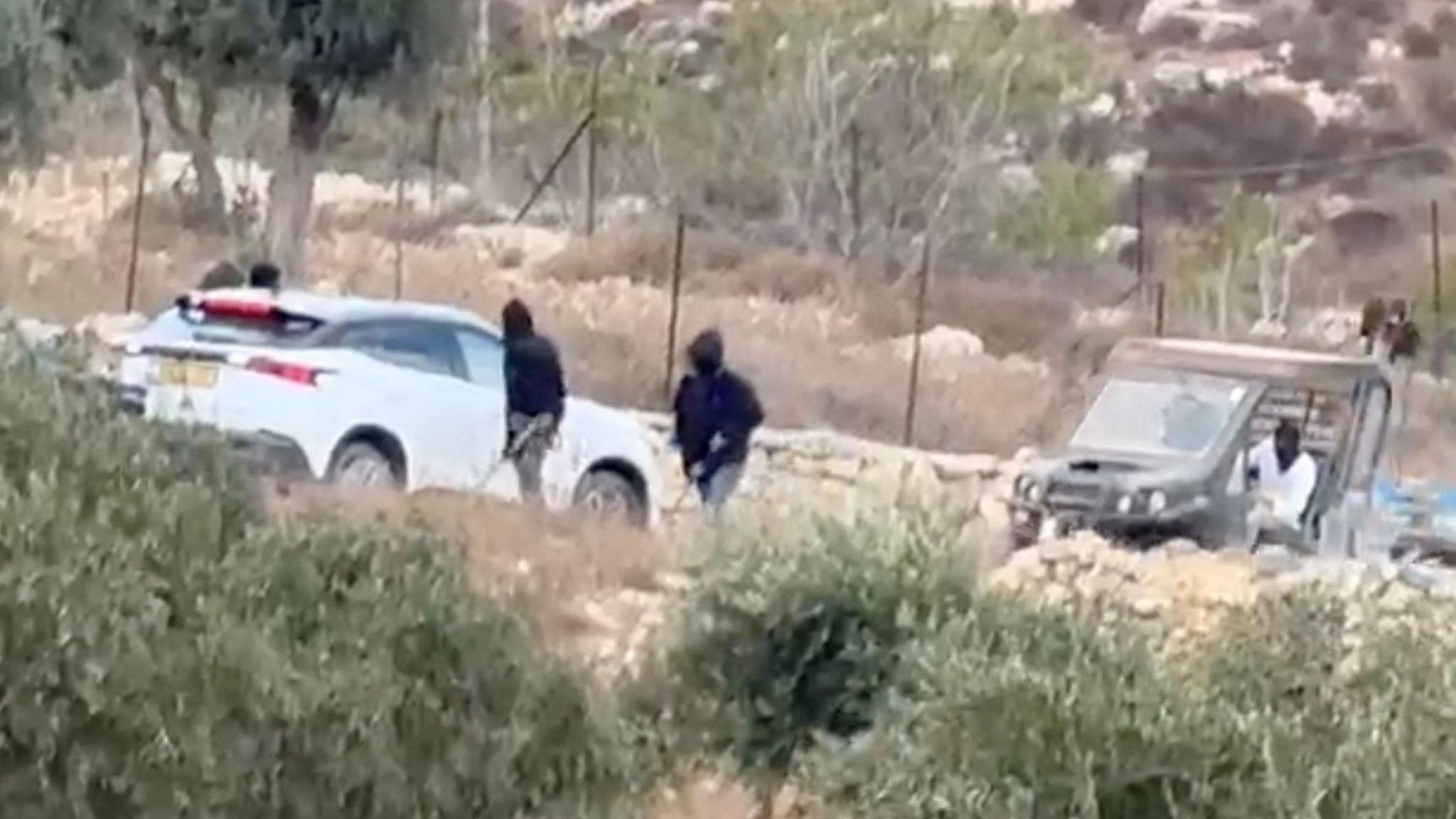 Image source, Reuters
Despite the international condemnation, Israeli Prime Minister Benjamin Netanyahu’s office questioned the video evidence and testimony from the incidents in Abu Falah and Taybeh.
It described them as “alleged” attacks and said they came amid what it called a “co-ordinated campaign to smear Israel” and West Bank settlers.
“I’ve had the president of Israel call me, and he was very, very sweet. He called the attackers thugs, promised to do everything in his power to have them arrested,” Levine told the BBC.
“I was just reading another article regarding the prime minister’s response, and it’s shocking to me. It’s a big slap on my face.”
She said Netanyahu should have sent a “clear message” telling settlers to end their attacks, “instead of the message that I feel was presented, which is… ‘Keep at it.'”
Israel has built about 160 settlements housing 700,000 Jews since it occupied the West Bank and East Jerusalem – land Palestinians want, along with Gaza, for a future state – during the 1967 Middle East war. An estimated 3.3 million Palestinians live alongside them.
The settlements are illegal under international law.
At least 96 Palestinians have been killed by Israeli forces or settlers in the West Bank since the start of the year, according to the UN’s figures. Twenty-five of those deaths have occurred in the context of settler attacks.
Four Israelis, both security forces and civilians, have been killed by Palestinians in the West Bank over the same period, the UN says.
Israel’s police commissioner, Daniel Levy, said the law applied to everyone in the West Bank, “regardless of identity or affiliation”.
However, prosecutions of Israeli settlers accused of attacking Palestinians are rare.
Between 2005 and 2025, more than 93% of Israeli police investigations into ideologically-motivated offences committed by Israelis against Palestinians in the West Bank ended without an indictment, according to Yesh Din.
-
-
Published22 hours ago
-
-
-
Published29 September
-