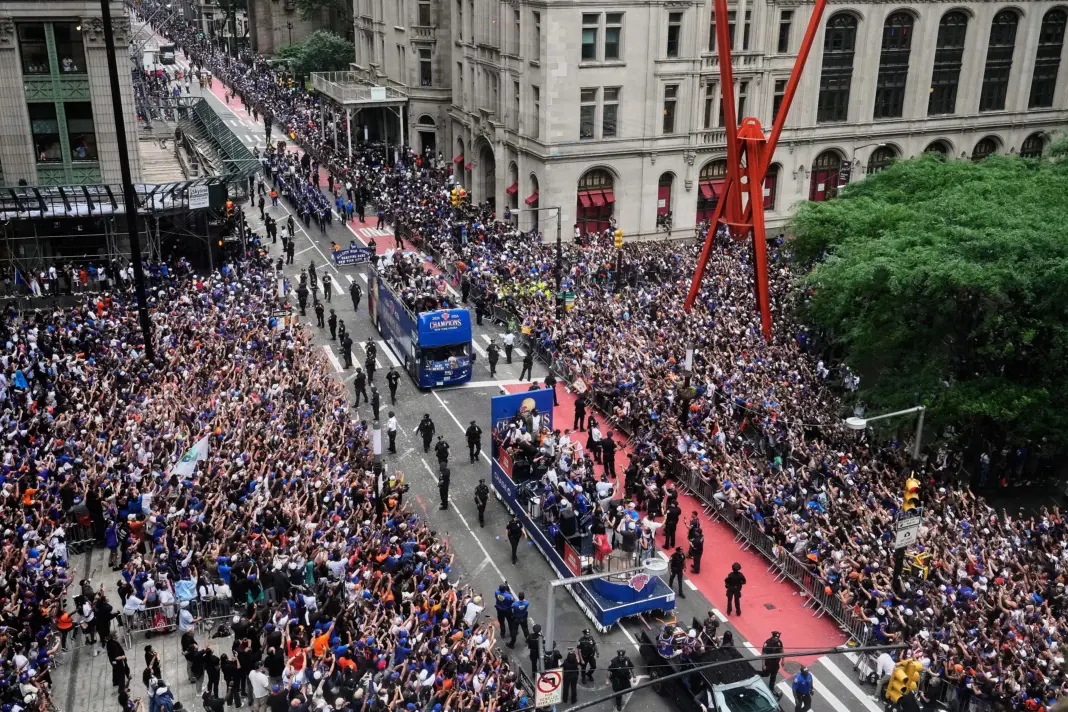

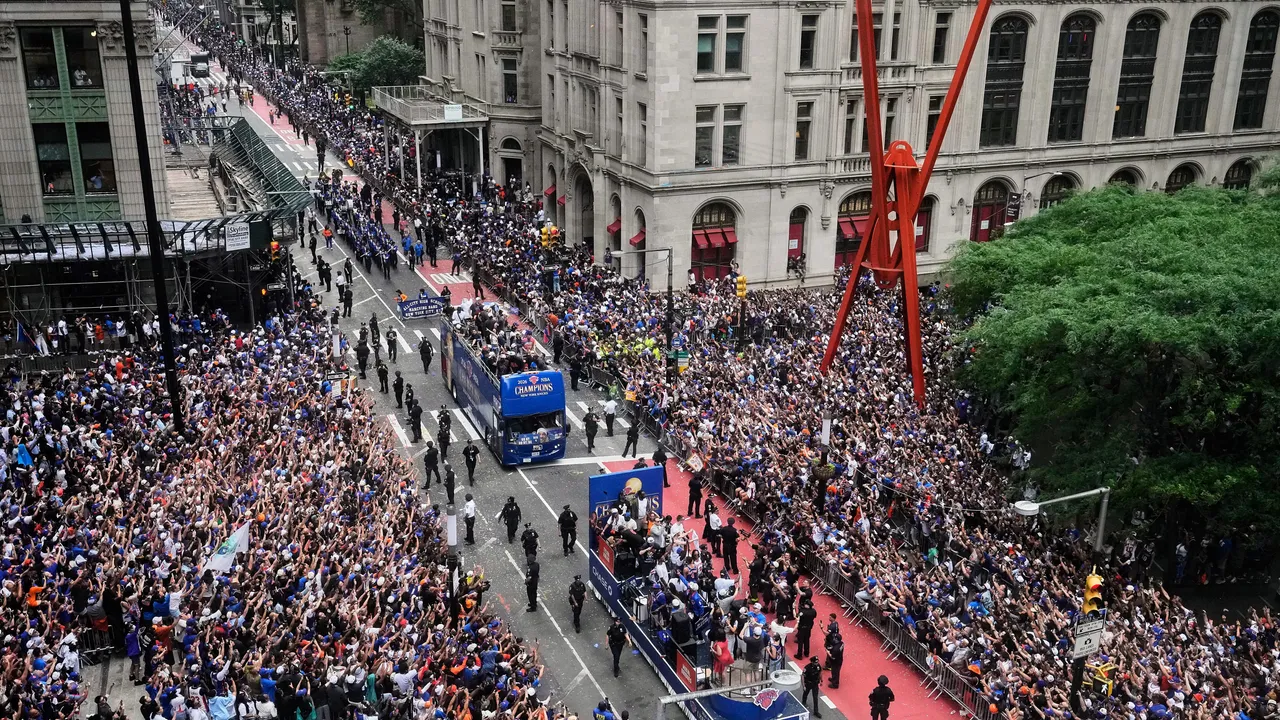
As an almost lifelong citizen of New York City in his mid-50s, I go through the usual phases of “What have they done to my beloved city?” and “Hmm, things aren’t as bad as I thought they were.” Right now I’m definitely in the second stage of my relationship with Gotham. What’s changed? The answer nearly everyone gives is “da Knicks.” I’m not a huge sports fan, but when it felt like the whole city was dancing around me and Spike Lee was throwing block parties in Fort Greene, it was hard not to get caught up in the joy. And then, to up the good-vibes ante, the World Cup came our way, and Norwegian soccer fans were Viking-rowing in Times Square.
The other thing that changed was the answer to the perennial question that haunts this super-expensive city: Who is New York for? The election of Zohran Mamdani as mayor was not welcomed by everyone (though a 58 percent approval rating in a city as contentious as New York is not bad at all), but it seemed to signal that the cost-of-living issue—the main plank on which Mamdani ran—had come to a head. Why does this matter? Because New York is only as great as its citizens, and that means continuing its legendary diversity—not just racial and ethnic but also economic diversity. It is a beacon for immigrants from around the world, but it is also a home for people who aren’t centimillionaires: the teachers, the social workers, and those in the service industry who are essential to every visitor’s impression of the city.
What this means to me on a day-by-day level is that, because of this economic and cultural diversity, New York is still the best walking city in America and perhaps the world. The Italians have their evening passeggiata, and Spaniards practice the splendid art of the tapear, hopping from tapas joint to tapas joint in search of satisfaction and tipsiness. I head out on great all-around-the-world culinary feasts, which can be found in nearly every corner of New York.
I’ll start in Queens, in the Jackson Heights–Elmhurst-Woodside axis. I appreciate Mayor Mamdani’s love of Kebab King, but my favorite Pakistani joint is Dera, whose nehari is the best beef stew in the world (go ahead, Mayor, fight me on this). Then I head over to Michelada House II for that eponymous jet fuel and the spicy hubcap-size crusty bread roll known as the torta de chilaquiles, then saunter down Roosevelt Avenue to the Himalayan Yak for some adorable momos before finishing up at the tiny 969 NYC Coffee, which, in addition to resurrection-level espressos, sells fresh salmon onigiri and other toothsome Japanese snacks (yes, they have matcha—I knew you’d ask). Total cost for three hours of intense pleasure? I don’t know, maybe 40 bucks? Of course, I have a Manhattan version of this trek, starting with the odd dive bar that also happens to serve excellent Malaysian food (it’s called Fish Market and it’s in, of all places, the Seaport) and ending perched on a barstool at the Viet-Franco-who-knows-what masterpiece that is Ha’s Snack Bar on the Lower East Side.
New York will always be up and down and all around. The rich will covet it, the poor will hang on, and, hopefully, the middle class will continue to grow. And in another 50 years, when this waterfront city may very well be laced by canals and have wind turbines lean precariously off its skyscrapers, it will still be my home—and for those who visit, a place of endless welcome.
This article appeared in the November 2026 issue of Condé Nast Traveler. Subscribe to the magazine here.