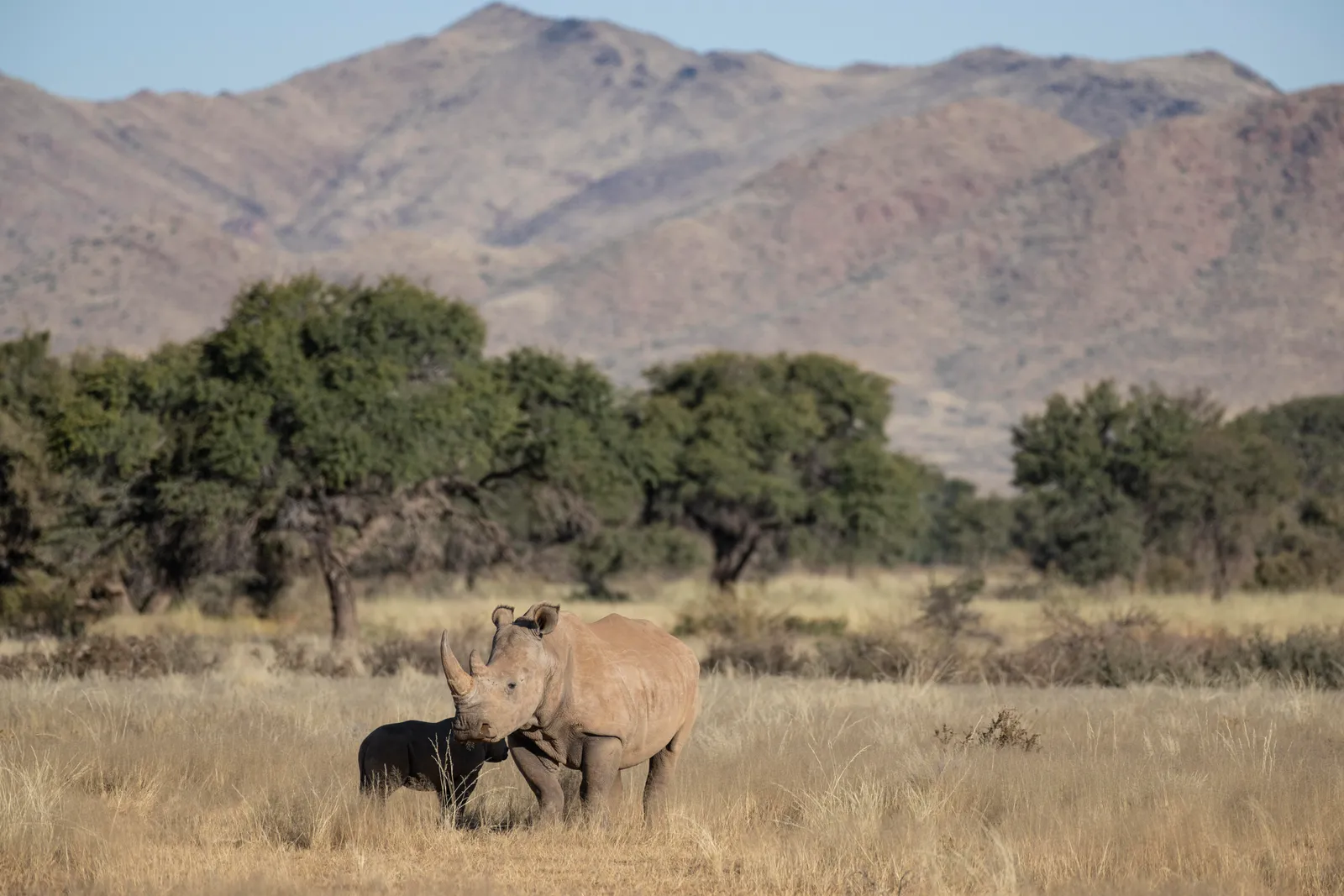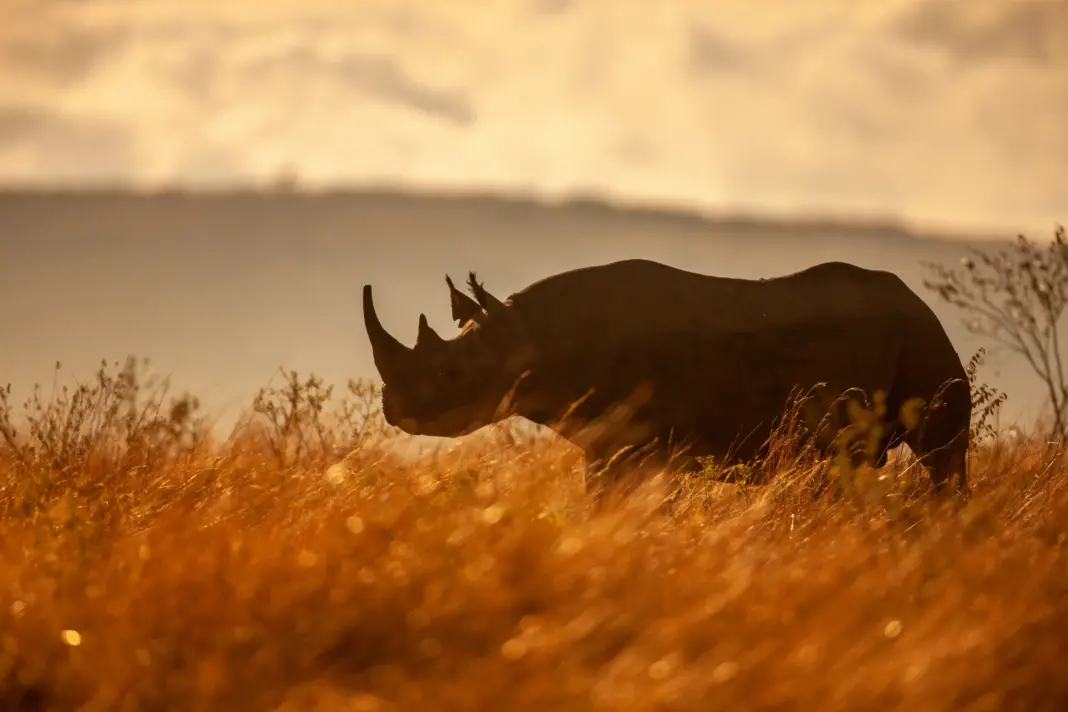

We’d been looking for nearly five hours—scanning the dry grass for upturned pebbles and the horizon for a dark, lumbering shape—when we spotted the rhino bull. Next to me, tracker Mensley Karutjaiva shook his head with a resigned chuckle. We’d been up since daybreak, alongside three other members of the Save the Rhino Trust, looking for critically endangered black rhinos in Damaraland, a land of flat-topped mountains, rocky hills, and stark plains in the Kunene region of northwestern Namibia. While we scrambled about in the heat, the bull had been dozing in the shade of a milk bush. We watched as he stood up, as if posing for us, before lying back down to resume his nap.
I was traveling in a loop around northwest Namibia that took me to three new (or recently renewed) camps. Since photographic safari tourism began here over a century ago, Namibia has largely been known amongst international travelers as a self-drive vacation—a destination with plenty of do-it-yourself road trips through otherworldly desert landscapes. Unknown to many visitors, though, human-wildlife conflict—population activities that negatively affect animals through habitat loss or resource competition— has been an ongoing challenge, and past decades of poaching threw rhinoceros populations into a tailspin. But, in the past few years, Namibia has seen a lot of positive conservation momentum, with these northwest reaches acting as a bellwether. From innovative government measures to an Indigenous-stewarded private reserve, this region is now a story of forward-looking change.
In May 2026, the country’s government launched a new conservation finance deal called Namibia for Life in partnership with the World Wildlife Fund. Worth approximately $63 million, it sets aside funds for Namibia’s 86 community-supported conservancies, which span more than 49 million acres.
Gazing at the black rhino, I felt a thrill as my eyes followed the magnificent swoop of the animal’s two intact horns, the larger of the two over three feet long. In an attempt to deter poachers, wildlife management will often cut down a rhinos’ horns—a humane, if humbling, procedure—so that the sight of a rhino, especially one of this critically endangered sub-species, often entails seeing just nubs.