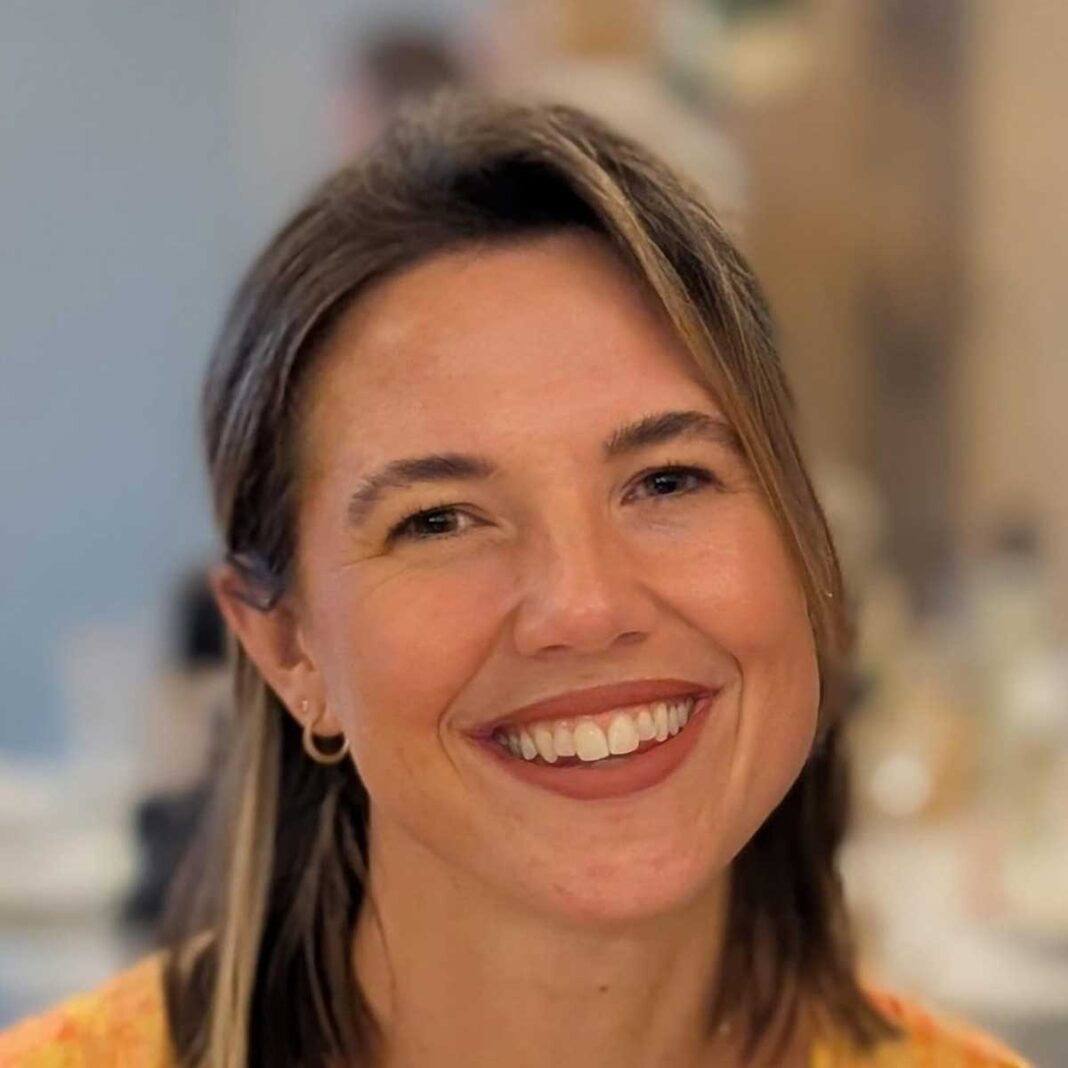

Suzanna Chaplin is the founder of esbconnect, the UK customer acquisition business that lets brands buy opted-in email audiences in the same way they buy paid media.
In July 2026 the company named Go Ape, Simba, Broadband Genie and Costway as new customers for Optivo, the email retargeting platform it launched in August 2025, which draws on a database of 17 million opted-in UK consumers. Chaplin, who led a management buyout of esbconnect in 2023, says the business has now worked with more than 600 brands.
She tells Business Matters why email still earns its place, and why transparency sits at the heart of everything she does.
What do you currently do at esbconnect and Optivo?
We are a small team, so as the founder, I am involved in multiple areas of the business, but my core focus is sales and key account management: bringing in new business and making sure our clients are happy with the service we provide. I also take full responsibility for new product development and innovation, making sure we are tracking trends and meeting consumers where they are.
One example of this is Optivo, our audience retargeting tool. It uses our GDPR-compliant database of 17 million opted-in UK email addresses to enable brands to retarget anonymous website visitors who are not on their CRM system, and do not log in to the site, using email.
Within minutes of a visit, matched users are enrolled into a compliant email journey, offering them a chance to subscribe and ultimately purchase. Those that choose to subscribe are immediately added into the brand’s CRM to be nurtured towards a conversion.
How are brands using Optivo?
Over the last 12 months, Optivo has proven itself as a valuable and effective retargeting tool for brands. In July we announced four new customers: Go Ape, Simba, Broadband Genie and Costway.
We have seen that between three and five per cent of people who enter into this process convert to become subscribers. Go Ape reports a return on ad spend of 4.8 against its primary KPI.
What was the inspiration behind your business?
It was the idea that email is not as glamorous or high-profile as many other marketing channels like social, search, online display or CTV, but it works. It has been around, and used, for over 30 years, and people still rely on it today. According to The Radicati Group’s Email Statistics Report 2024-2028, 392.5 billion emails are being sent and received worldwide each day in 2026, and the figure grows each year.
When we formed esbconnect in 2014, email was not trusted as an acquisition channel in the UK, because it was associated with bad data. People were being spammed with irrelevant, intrusive and annoying messages.
We wanted to create a transparent buying platform for email, allowing brands to use it as a trusted acquisition channel, as you would social, search or display, and that is what we have done.
Who do you admire?
There are a lot of people, but I will call out two. The first is Reid Hoffman, the founder of LinkedIn. Did you know that in 2003, along with Mark Pincus, founder of Zynga, he bought the Six Degrees patent, which covers the basic “friend request” mechanism that every social network still uses today?
As the patent owner, he could have used his position to shut down rival social media startups, but chose not to, fuelling the industry’s rapid expansion and growth.
I also love Emma Grede, CEO and founder of fashion brand Good American. I think she says things that many people are worried about saying, including the hard things that mothers and businesswomen need to hear.
Looking back, is there anything you would have done differently?
Where do I start? Hindsight is a wonderful thing. I guess the better question is probably what would I have done the same? And the answer is, not much. I would literally change most things I did, from how I spent budgets, to who I saw as the key targets and contacts, to how I marketed the business.
There is no blueprint for a successful business beyond the core tenets of creating products people want or need, and making sure they know they exist. How you do that depends on the circumstances you find yourself in: the money you have at your disposal, the people you work with, the prevailing economic conditions, and of course a little bit of luck and good timing.
But I am proud of what we have built here, and there is one thing I would not change, which is at the core of the business and my personal outlook on life: staying transparent.
What defines your way of doing business?
Game-free transparency. You cannot do business with someone unless you trust them. Or you might get away with it once, but if you do not deliver on your promises, people will never come back to you.
We all see it in our everyday lives. The restaurant you go to that you will never visit again because your own experience is unrecognisable from what its website led you to believe. The kitchen appliance that looks amazing in the YouTube videos but is impossible to use when you try to set it up.
Given the level of competition in every walk of life, you have to promise the gold standard to attract new customers. If you want to keep them, you have to deliver it. Time and time again.
What advice would you give to someone starting out?
Get out there and meet people. Human connection is still worth its weight in gold.
And I know it has been said a million times before, but only because it is so true: when you go to an industry event, the most profitable outcomes are often not what you hear on a panel or in a keynote presentation, but the conversations you have with strangers queuing for a coffee or over lunch.
There is an old saying in sales circles: “People buy people first”. In an age when so much business is conducted remotely, over Zoom or Teams, it has never been more apt.