
How could Israel break election deadlock? Here are four scenarios
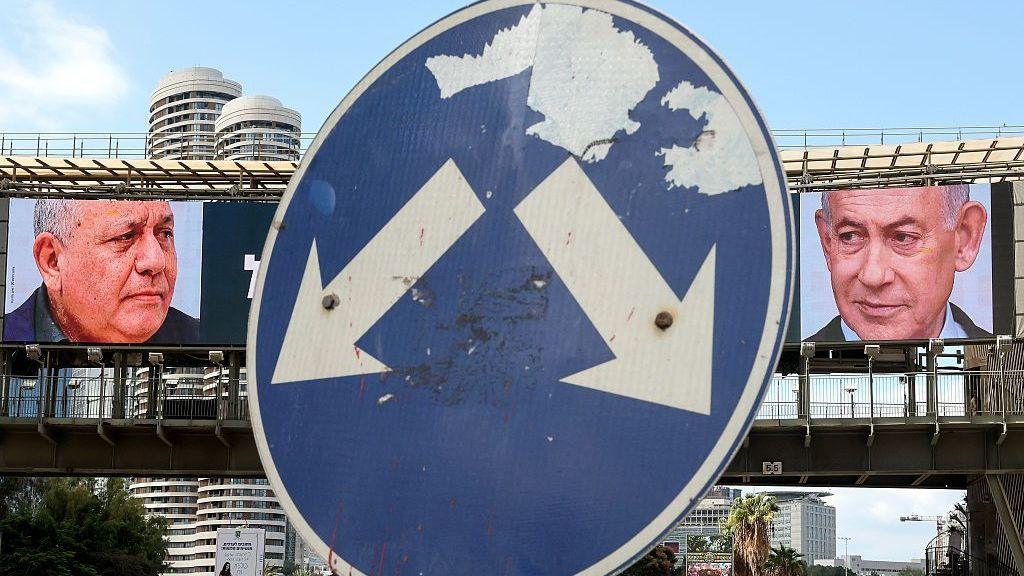 Image source, AFP via Getty Images
-
Published
Israel looks to be in political deadlock.
With 85% of votes counted after Tuesday’s election, neither the incumbent Prime Minister Benjamin Netanyahu’s coalition, nor the bloc of his key challenger Gadi Eisenkot look set to win a majority.
In order to form a government, it looks likely one of the leading parties would have to break their campaign promises – meaning the most probable outcome may well be new elections.
Here are four possible scenarios.
National unity government led by Netanyahu
Could Netanyahu persuade Eisenkot to join him in a national unity government?
Eisenkot would have to abandon his key platform to do so. He’s framed himself as the only alternative to Netanyahu, and built his campaign on ousting him from power.
Just last night, he took to the stage at his campaign HQ and called on Netanyahu to “announce his retirement from political life today,” telling the crowd that Israelis are fed up with Netanyahu’s “culture of lies”, “division and incitement”.
But that was before one of the main exit polls – which had initially projected a lead for Eisenkot’s bloc – was revised, and he was overtaken by Netanyahu.
Netanyahu could try to persuade Eisenkot’s Yashar Party to join his Likud Party in a unity government by ditching the far-right and ultra-Orthodox parties he is currently in coalition with. But last night at Likud HQ he thanked his “loyal partners” and called for a “strong right-wing government” – remarks some have interpreted as meaning he intends to preserve his alliance with them.
One thing that could make a unity government more likely is a renewed conflict with Iran, which could place serious pressure on party leaders to put aside their political differences and work together. In the days prior to the election, Israeli and US media reported that Netanyahu was pushing for fresh strikes on the country, and had pressed Donald Trump to approve US involvement.
This would no-doubt be framed by Netanyahu’s critics as an attempt to save his own political skin by entering another regional conflict.
Eisenkot-led coalition with Arab parties
This would be a seismic shift for Israeli politics. Only one independent Arab party has ever formally been part of a coalition, in 2021, and it didn’t last long.
Eisenkot and every other Jewish party in his bloc bar one have already ruled out entering government with them. But right now, it’s the opposition’s only path to a majority.
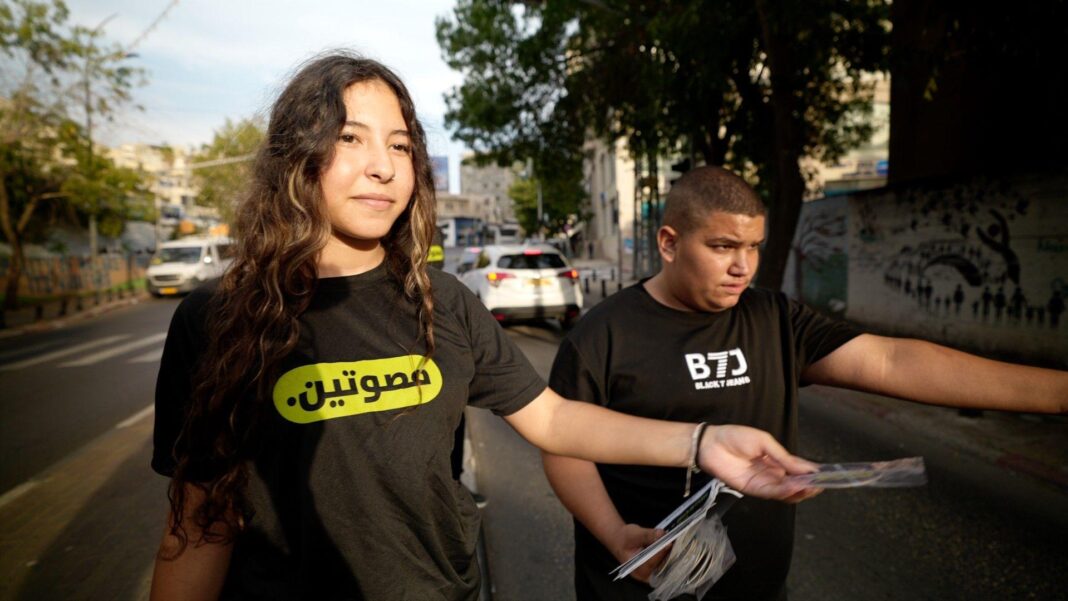
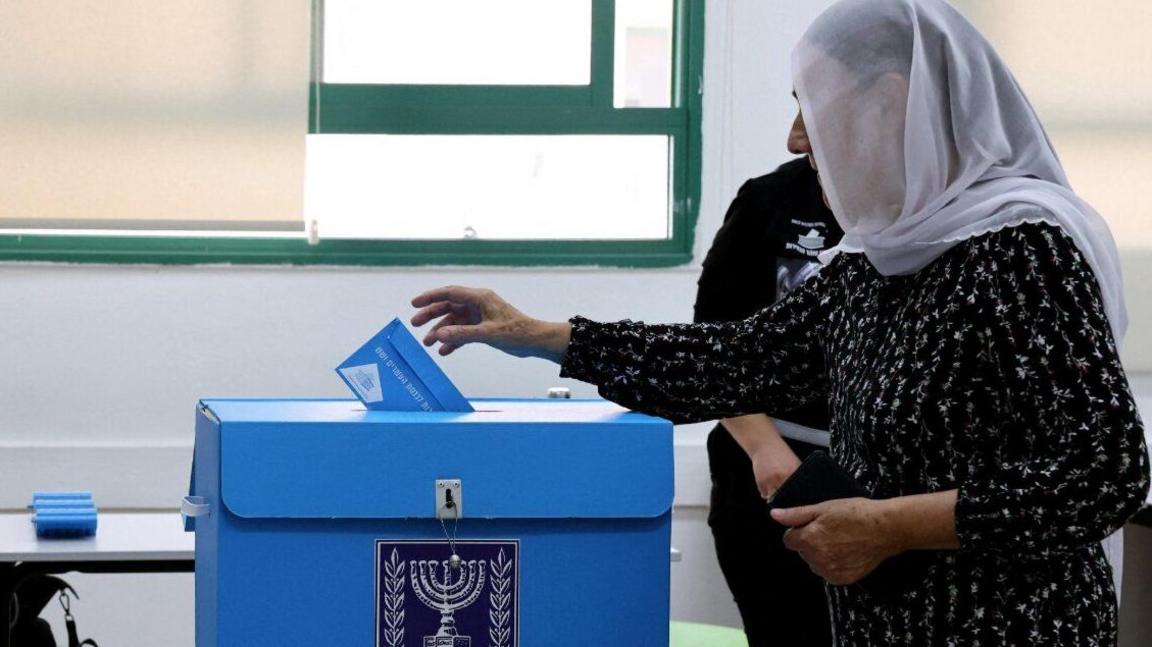
The Arab parties were the story of election night. They look to have defied expectations and could gain a record 19 seats – helped by an unprecedented turnout from Israel’s Arab population, who account for about one-fifth of the country and often describe themselves as Palestinian citizens of Israel.
For years, many boycotted Israeli elections, saying voting would legitimise a system that they say treats them as second-class citizens. But their turnout last night was inspired by a desire to oust the most right-wing governing coalition in Israel’s history.
The United Arab list, who are currently projected to win around 7 seats, have said they’d join an opposition government, while The Joint List, who are projected to win 12 seats, have said they’d support one from outside.
However, the only Jewish leader advocating this scenario right now is The Democrats’ Yair Golan. And a coalition like this would be very fragile, especially on issues like Gaza and the occupied West Bank.
The fact there is such a unified front from the otherwise fragmented Jewish parties against Arab participation points to Israel’s deep divisions.
Netanyahu-led majority, with right-wingers from opposition
Could Netanyahu persuade the right-wing parties in Eisenkot’s bloc to break away and join his coalition?
The two most likely candidates for this are Naftali Bennett – joint-leader of the Beyachad political alliance – and Avigdor Lieberman, leader of the Yisrael Beiteinu party. They are both right-wingers who are hardline on security, and share some political ground with Netanyahu.
But both campaigned explicitly to oust him, and to extend military conscription to the ultra-Orthodox – bringing them into direct conflict with the two ultra-Orthodox parties already part of Netanyahu’s government. So it’s difficult to see them joining forces.
Some have suggested Bennett and Lieberman’s parties could replace the ultra-Orthodox parties, but current electoral math suggests that grouping may not have the seats needed for a majority.
New elections
If none of the above scenarios can be negotiated, the default outcome would be new elections.
Many would see this as a tacit win for Netanyahu, who would remain as caretaker PM until the new elections take place – and he may believe he has a better chance of winning them.
Some analysts think the high Arab turnout would not be repeated – especially if their record representation in parliament led to no change. And it could also mobilise more right-wing voters in a second poll.
Netanyahu may also bet that the estimated 70,000 Israelis who flew home from abroad to vote, and are thought to skew against him, wouldn’t do so again.
Additionally, several right-wing parties who failed to pass the electoral threshold of 3.25% may attract fewer votes or may not even run, thereby bringing more votes to Likud and its allies.
Between 2019 and 2022, Israel held five separate elections as Netanyahu and his rivals struggled time and again to co-operate.
More on Israel’s election
-
-
Published6 days ago
-
-
-
Published17 hours ago
-
-
-
Published3 days ago
-
-
-
Published20 October

-
-
-
Published9 hours ago
-