
Wide Margins: Unhurried conversations with thinkers, writers, and creators about what’s next. A series by WordPress.com.
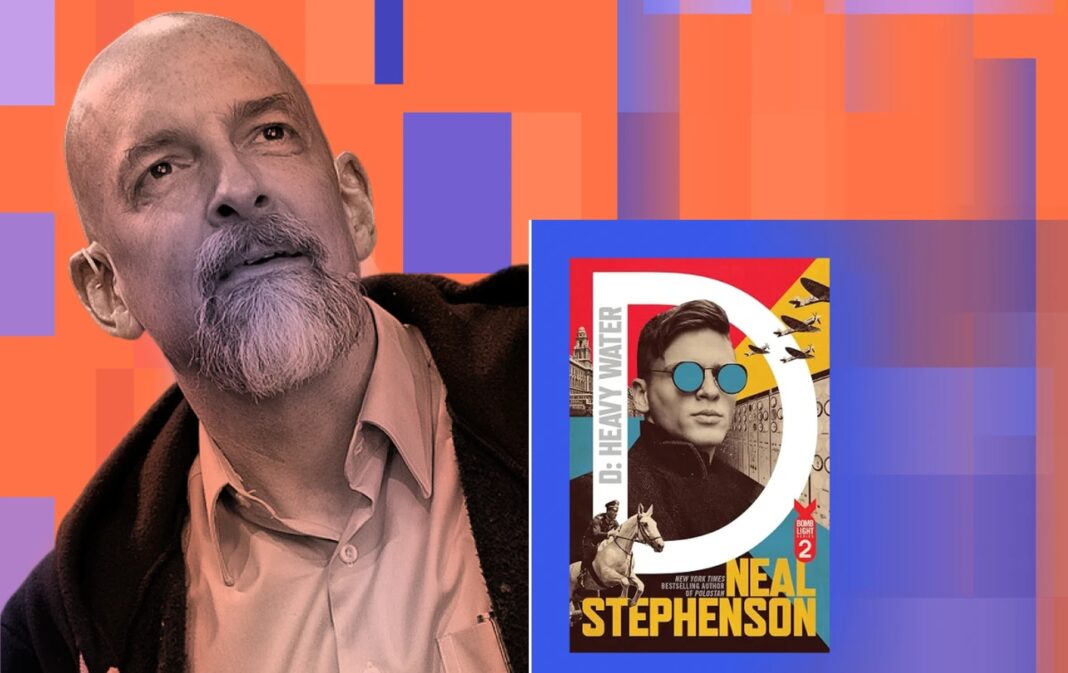
Neal Stephenson has spent decades writing about what happens when engineering outpaces the people and institutions meant to steer it.
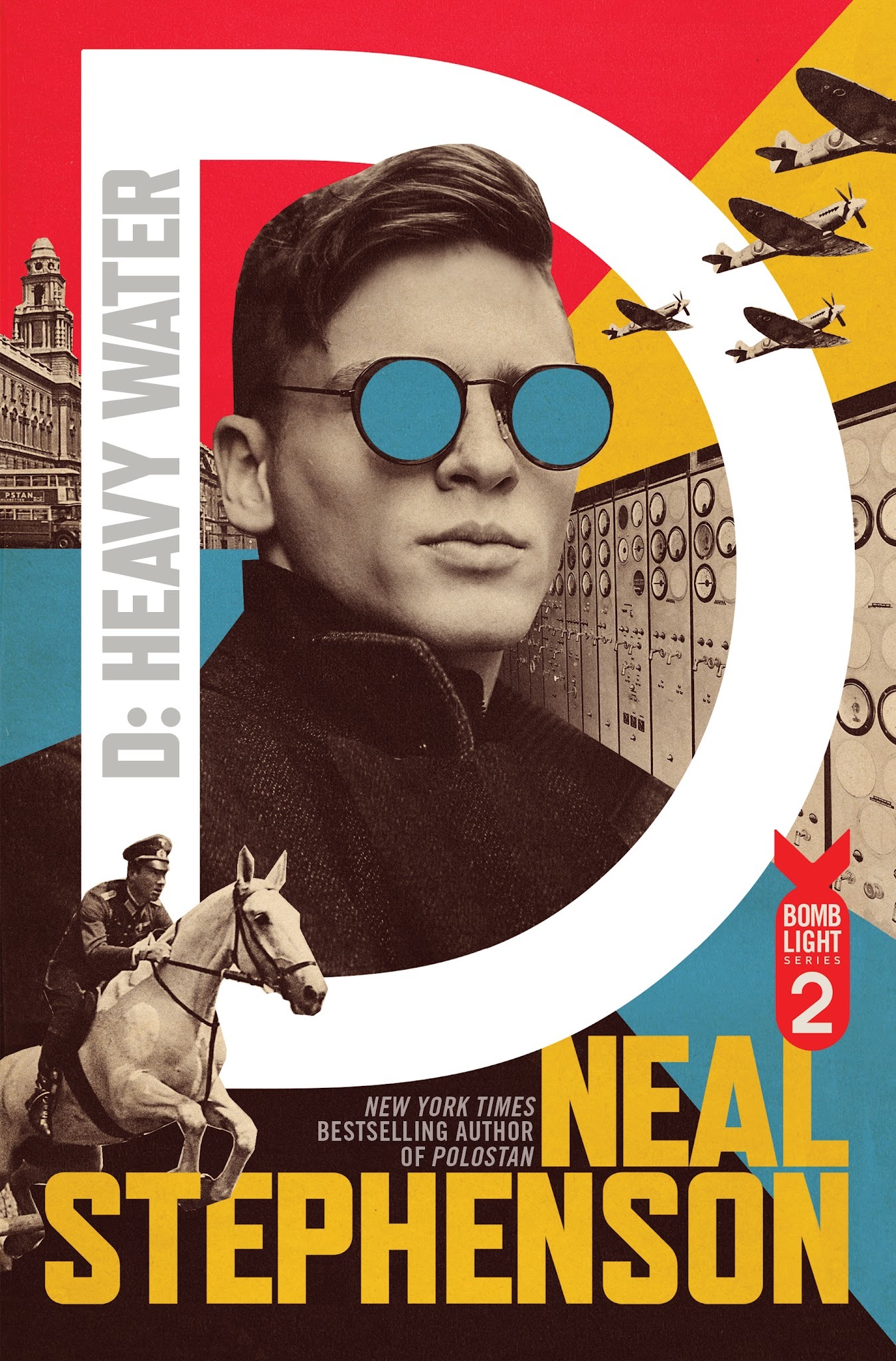
He joined us for the first public Wide Margins conversation on October 13, publication day for D: Heavy Water, the second book in his Bomb Light series.
We discussed the book, but also his fascination with ages of heroic engineering and the parallels between those times and today.
The thread running through the conversation was about how we control technology: who gets to shape it as it moves ahead, and how much understanding and choice do the rest of us retain?
The command line is back — but who’s in control?
We discussed his early essay, In the Beginning Was the Command Line. The command line, he observed, “is back.” It is how you work with tools like Claude Code. The difference is that “we’re spectators to it in a way.”
The essay was partly about open source and how much control we have over our computers. I asked how that idea holds up in a world of increasingly siloed ecosystems. Stephenson’s answer was unexpected: AI tools have brought the command line back, but can assemble commands so quickly that people can scarcely follow them.
It’s an unexpected role reversal: we have gained an extraordinarily capable tool, but the steps it takes can be harder to see.
The same question of control runs through Stephenson’s account of a far earlier technological race.
From tabletop to national secret, then and now
This past begins to rhyme with the present. Stephenson described the neutron experiments of the 1930s as “gentleman science” done on tabletops. In late 1938, Lise Meitner and her nephew Otto Frisch explained how the uranium nucleus had split.
Within months, the physics world understood what that meant. During World War II, nuclear research became a secret national priority.
“Fermi had to hire fast graduate students because some of the isotopes they were creating were so short-lived that they would decay in the time it took to carry them down the hallway to the lab.”
— Neal Stephenson
When Neal started the Bomb Light series in 2012, the AI we have now was barely on the horizon.
He noted that the argument that we have to build it before our adversaries do is “sort of exactly where we are.” He hears the same logic in today’s AI race.
We discussed whether the outbreak of World War II, which turned nuclear physics into a focused, secret national priority, may have made it more containable. But much of today’s AI is already in public hands. As Stephenson put it, “nobody’s going to build a nuclear bomb in their garage.” The models, on the other hand, are already in the garage.
The problem of reality
Stephenson traces his attraction to stories of heroic engineering to growing up in Ames, Iowa, where scientists produced uranium metal for the Manhattan Project.
He also finds near-future science fiction harder to write, because things change too fast to project even a decade or two ahead.
Dystopia, he said, has become the default pose for writers, even though, in his view, life keeps improving generation after generation.
“I think that a great many science fiction writers are closet history geeks and use characters and incidents from history as the kernel of ideas.”
— Neal Stephenson
His two big worries remain carbon emissions, which he believes has technological fixes, and people’s failure to agree on what reality is, which has no obvious answer. He worries that bot farms deliberately drown out truth online to serve other agendas, making it harder to find.
The thinking he chooses not to outsource
He is using AI to write code but not to summarize his research. Reading sources, taking notes, and comparing them with old notes creates connections a summary never would.
Asked about brain-computer interfaces, he said they don’t interest him: translating thoughts into words is the point.
“Speech and storytelling are intrinsic parts of what makes us human.”
— Neal Stephenson
Stephenson is hardly rejecting new technology. He is making a choice about where it helps, and where he wants to do the thinking himself.
My full conversation with Neal Stephenson includes a reading from D: Heavy Water and more on science fiction, engineering, and the stories we tell about our future.
He’s now working on the third and likely final Bomb Light book. Expect it in two to three years.
Next on Wide Margins
Wide Margins is a WordPress.com series of live, unhurried conversations hosted by Alexander Rose, featuring writers, thinkers, and creators exploring what’s next.
Each conversation streams on YouTube, with recordings available afterward.
November 17, 2026: Worldbuilding in fiction
Hugh Howey, author of the Silo series, on experimenting with worlds in the alternate present and possible futures.
January 12, 2027
Eric Ries, author of The Lean Startup and Incorruptible.