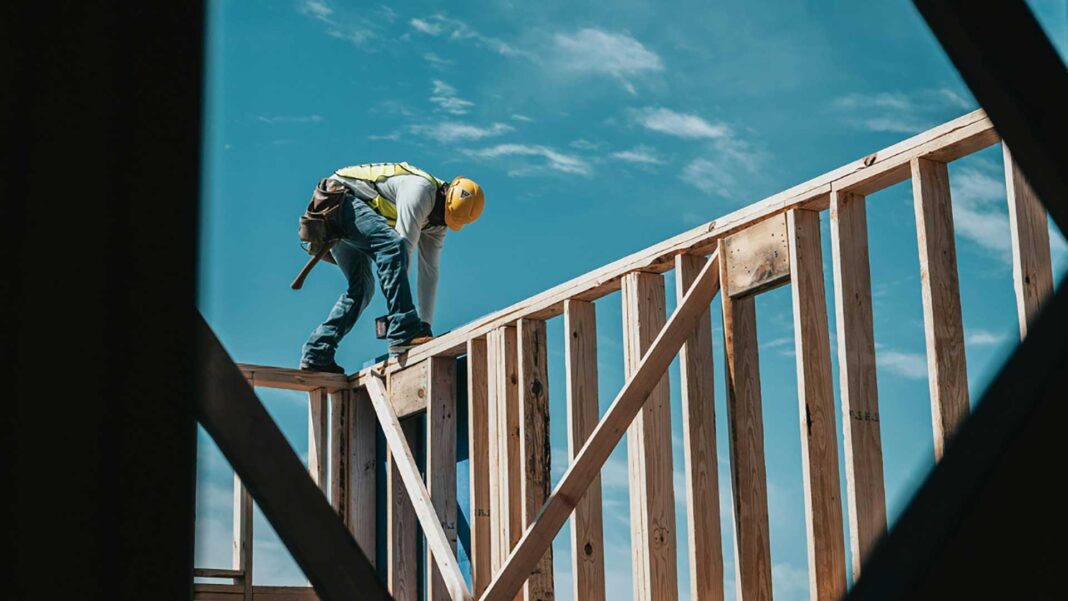

Bright grew up in Greenville and developed an interest in hands-on work from an early age. After high school, he attended North Carolina State University and East Carolina University, studying construction management.
His education gave him a strong foundation in project planning, trade coordination, scheduling, and the practical decisions required to move a residential build from concept to completion.
He later expanded his technical knowledge by studying heating and air at Pitt Community College, where he graduated ahead of his class. That experience gave him a closer understanding of the systems that sit behind finished walls and how decisions made during construction can affect a home for years.
Bright’s career has also included work with Pair Electronics and experience involving indoor and outdoor wiring, security systems, electronics, and single-family residential construction. Rather than viewing these areas as separate trades, he has developed an approach based on understanding how they overlap.
That perspective has become increasingly useful as homes rely on more connected technology. Travis Bright believes builders benefit from considering HVAC, networking, security, wiring, and future upgrades earlier in the construction process.
Outside work, he remains active through golf, pickleball, rock climbing, off-road biking, skiing, fishing, and fitness. He has also volunteered with Habitat for Humanity, applying his practical experience in a community setting.
Travis Bright on Construction Management, Technical Knowledge and Planning Ahead
You grew up in Greenville, North Carolina. What first drew you towards construction?
I have always liked understanding how things work and how separate parts fit together. Growing up, I was active and enjoyed doing things rather than just watching from the side. I played golf in high school, and I think even that taught me to think ahead and pay attention to small decisions.
Construction appealed to me because you can see the result of the decisions you make. There is a clear process from an idea or set of plans to a finished home, but there are hundreds of smaller decisions in between, and I liked the challenge of understanding how those pieces came together.
How did studying construction management shape the way you looked at the industry?
Construction management taught me to stop looking at one task in isolation because schedules, materials, subcontractors, inspections, and homeowners all affect the same project.
What interested me most was coordination. A decision made early in a build can make another trade’s job much easier or much harder several weeks later, and that made me interested in understanding more than the management side alone.
Why did you decide to study heating and air as well?
I wanted a better understanding of what was happening behind the finished work because HVAC is a major part of a home, and it interacts with framing, electrical work, insulation, controls, and other systems.
I studied heating and air at Pitt Community College and graduated ahead of my class. The technical training was valuable because it gave me a different perspective from what I had learned in construction management and helped connect the planning side of the job with what actually has to happen in the field.
Your background also includes electronics, wiring, and security. How did those areas become part of your career?
I worked with Pair Electronics and became familiar with indoor and outdoor wiring, electronics, and security systems. Those areas made me think even more about planning because modern homes need far more infrastructure than people sometimes realise.
You may have cameras, internet equipment, smart thermostats, audio, security devices, and other technology all needing power, wiring, or a good location. If those conversations happen after the walls are finished, the job becomes much harder than it needs to be.
What do you think construction managers sometimes overlook during residential projects?
Future use of the home is one thing that can get overlooked because people naturally focus on what the homeowner needs today, even though the property may be used very differently five or ten years from now.
One simple example is conduit. I think there are situations where installing empty conduit during construction makes sense even when there is no immediate use for it because technology changes quickly while walls do not. Giving someone an easier way to run future wiring can be more useful than trying to predict exactly which technology they will eventually install.
How has technical knowledge changed the way you manage projects?
Technical knowledge helps me ask better questions because a construction manager does not need to personally perform every trade, but understanding what each trade needs makes coordination easier.
If you understand the basics of HVAC, wiring, security, and electronics, you are more likely to notice when two systems are competing for the same space or when a decision could create a problem later. That knowledge can also improve communication because you can have a more useful conversation with the people actually performing the work.
What has been one important lesson from mistakes earlier in your career?
One important lesson has been not to assume that something will work in the field simply because it works on paper. Earlier in my career, there were times when something looked straightforward from the plans, but the actual conditions created complications because another system was already occupying the space or access was more difficult than expected.
That taught me to walk projects, look at the physical conditions, and ask questions before making assumptions. An extra ten minutes of checking can prevent a much larger correction later.
How do you see residential construction changing as homes become more connected?
I think the line between traditional construction and technology will continue to become less obvious because HVAC systems now involve connected controls, security systems rely on networking, and homeowners expect reliable internet throughout the property.
Cameras, lighting, and other systems may all be connected, which means builders have to think about technology much earlier. It cannot always be treated as something that gets added near the end of the project.
What has helped you most in developing your career?
Learning outside one narrow area has helped me the most. Construction management gave me a broad foundation, while HVAC and electronics gave me more technical understanding.
I have found that the more you understand about the people and systems around your own work, the easier it becomes to solve problems. You do not have to know everything, but you do need enough knowledge to recognise when something deserves a closer look.
Does staying active outside work influence the way you approach business?
I think it does because I enjoy golf, pickleball, skiing, fishing, rock climbing, off-road biking, and working out, and those activities give me a way to reset and think differently.
Golf probably has the clearest connection to how I think about construction because you cannot only think about the shot directly in front of you. You have to think about where that shot leaves you next, and construction is similar because a decision might solve today’s problem but create a bigger one later.
What do you think will remain important in construction even as technology changes?
Planning, communication, and practical experience will remain important because technology will continue changing, but people still have to understand how a project comes together.
Someone has to think about sequencing, space, access, and how one trade affects another. The tools may improve, but I do not think the value of asking good questions early will disappear.