

US strikes Iranian island ahead of midterm elections
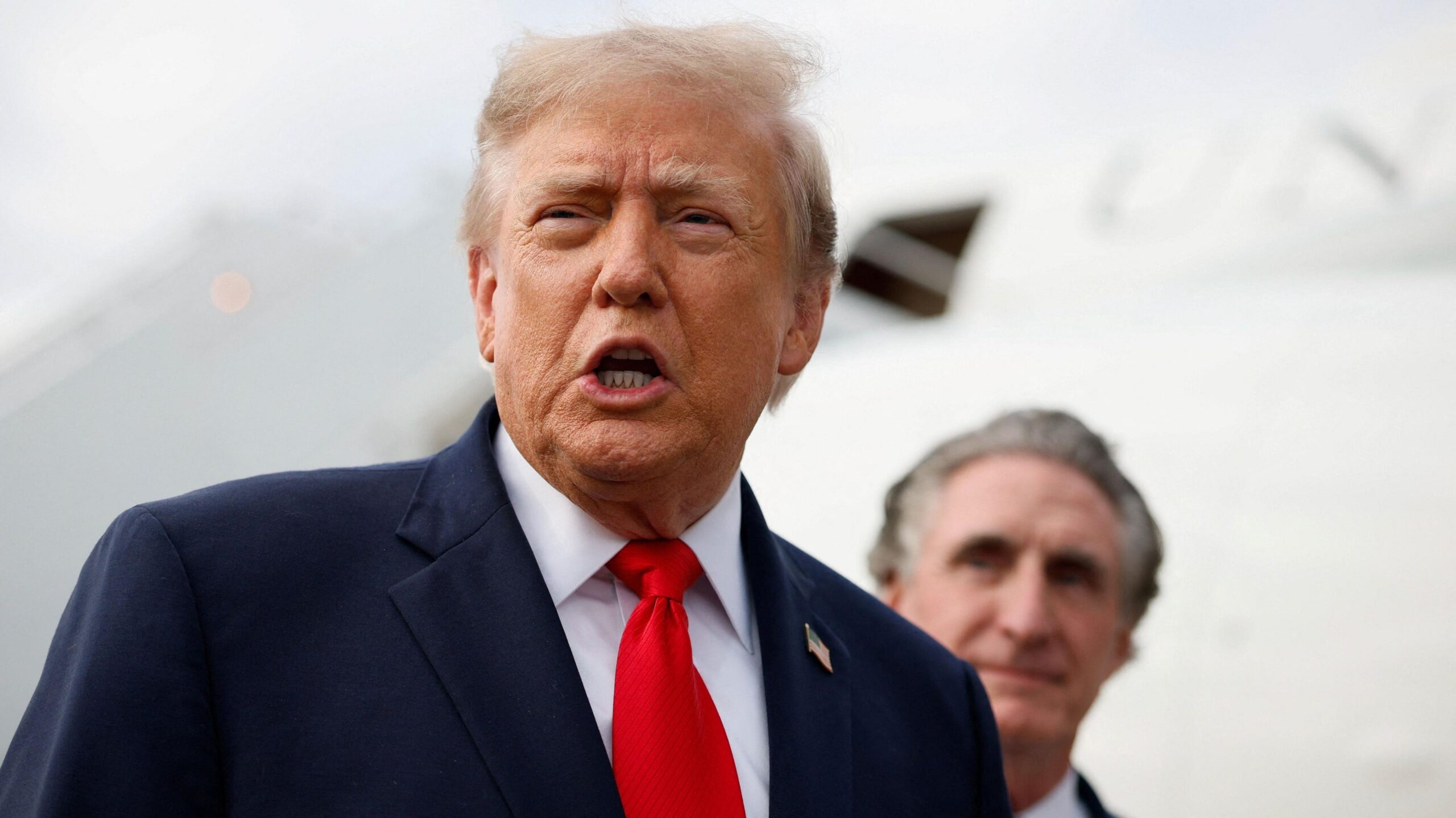 Image source, Reuters
-
Published
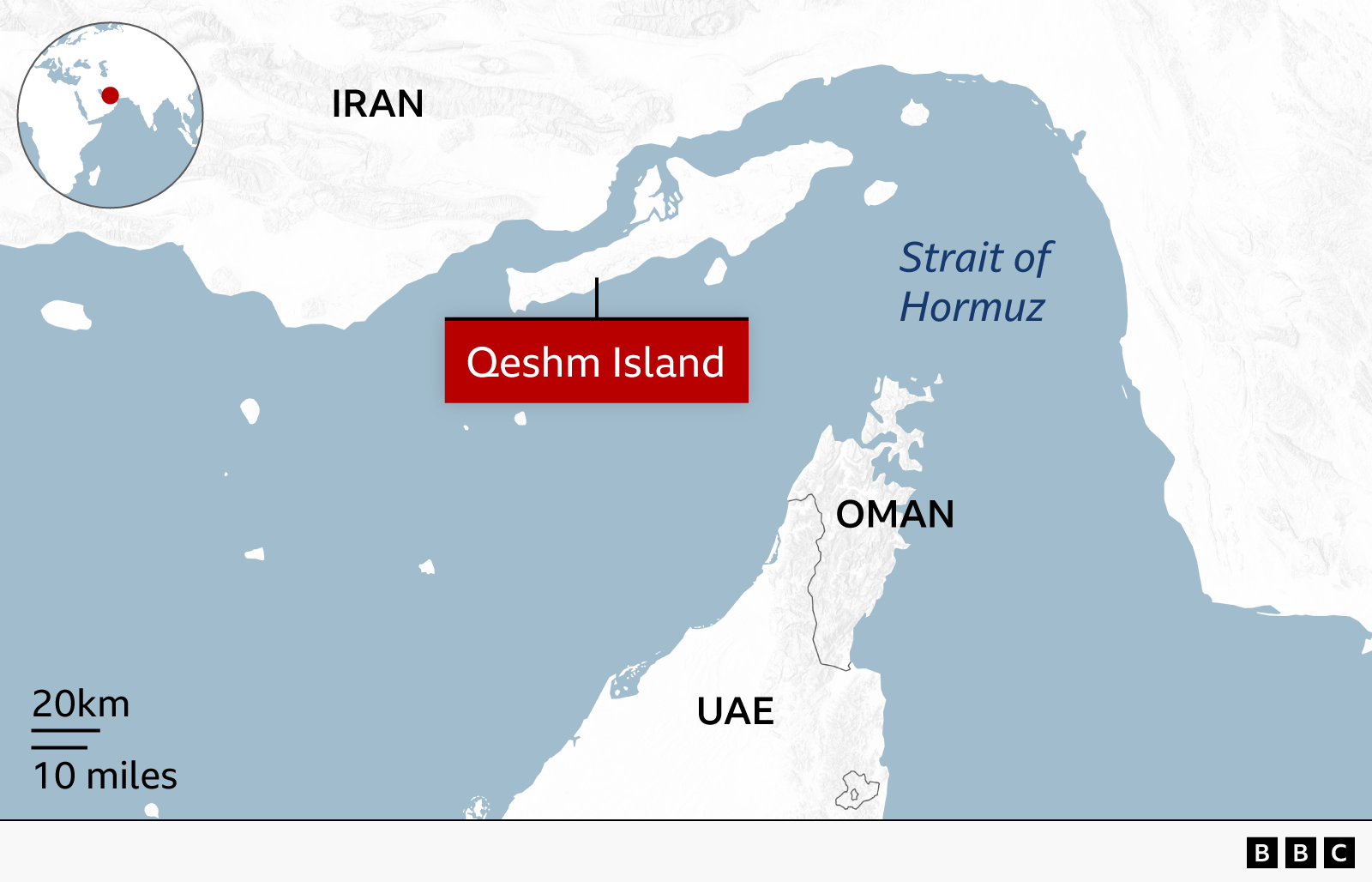
The US has carried out strikes on Iran’s Qeshm Island in the Strait of Hormuz, US officials have told CBS, the BBC’s US partner.
The officials described the strikes as limited and defensive, and said they were in response to Iran’s Islamic Revolutionary Guard Corps (IRGC) firing on a US aircraft.
Iranian state news agency Irna reported explosions on Qeshm on Monday. The IRGC did not comment but said its forces had shot down two US MQM-170 drones south of the island and a US MQ-9 drone east of the Strait of Hormuz.
The US military has not commented on the strikes, which came as mediators stepped up their efforts to prevent a return to all-out war after the US midterm elections on Tuesday.
Trump has been facing falling polling numbers and pressure from within his Republican Party to end the war, which began when the US and Israel attacked Iran in February.
Earlier on Monday, the president told reporters that he was in “no rush” to ramp up strikes on Iran.
“One way or the other, we will do something, but there is no rush. We crippled them financially,” he told news outlet Axios. “They have no money, no gasoline and their people are getting very tired of it.”
He also said the US “might need to go after Pickaxe [Mountain]”, an underground site linked to Iran’s nuclear programme, in an interview with Fox News on the eve of the midterms.
This was “not a big deal” and could be done in “one hour”, Trump added.
There has been mounting speculation in the last few days that the US may resume significant strikes in Iran again after the midterms. But asked by a reporter on Monday if that was the case, Trump said “no”.
Meanwhile, the Associated Press cited two regional officials as saying that, during a weekend phone call, Israeli Prime Minister Benjamin Netanyahu had pushed Trump for another wave of strikes on Iran following the midterms.
On Tuesday, Iran’s chief negotiator with the US, parliament speaker Mohammad Bagher Ghalibaf, stated: “The ball is now in America’s court to prevent war.”
“Just as the Islamic Republic of Iran stands ready for battle with its finger on the trigger, it has also given the American side a powerful and rational response,” he said in a televised speech.
It was not immediately clear what Ghalibaf was referring to, but Iranian Foreign Minister Abbas Araghchi told Irna on Monday that “very intensive” talks to try to end the war were under way with the US via Qatari and Pakistani mediators.
Qatar’s foreign ministry spokesman said on Tuesday that both sides were “reviewing the ideas and proposals we have presented” and that it remained hopeful of a deal being agreed.
“Both parties remain committed to the negotiation process… We are facilitating the real-time exchange of proposals between them,” Majed al-Ansari told reporters in Doha.
Last week, Iranian negotiators discussed with mediators a proposal to reopen the Strait of Hormuz within two days once the US met its seven conditions. They reportedly include lifting a naval blockade of Iranian ports and releasing frozen Iranian assets.
The Strait of Hormuz, through which a fifth of global oil and gas shipments usually pass, was effectively closed after the start of the Iran war due to Iranian missile and drone attacks on commercial vessels and the US naval blockade.
The US and Iran reached a preliminary agreement to end the war and reopen the strait in June, but it collapsed within weeks after Iranian attacks on shipping resumed and the US reinstated its blockade.
Iran insisted it would not give up some measure of control over the waterway and began targeting vessels using a southern route through Omani waters that avoids its preferred route through Iranian waters.
To keep exports flowing from Gulf Arab states, the US military has been providing protection for tankers shuttling oil through the Strait of Hormuz.
-
-
Published24 October
-
-
-
Published1 October
-