
What failure of COP31 reveals about a divided world
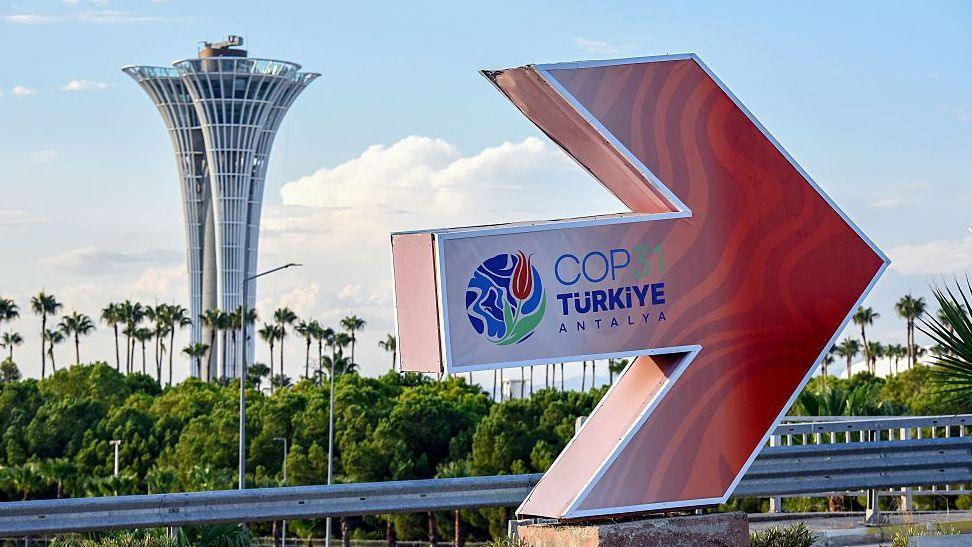 Image source, Getty Images
-
Published
Some may have found it ironic that the world’s biggest conference on climate change should collapse over the very mention of fossil fuels – the main cause of global warming.
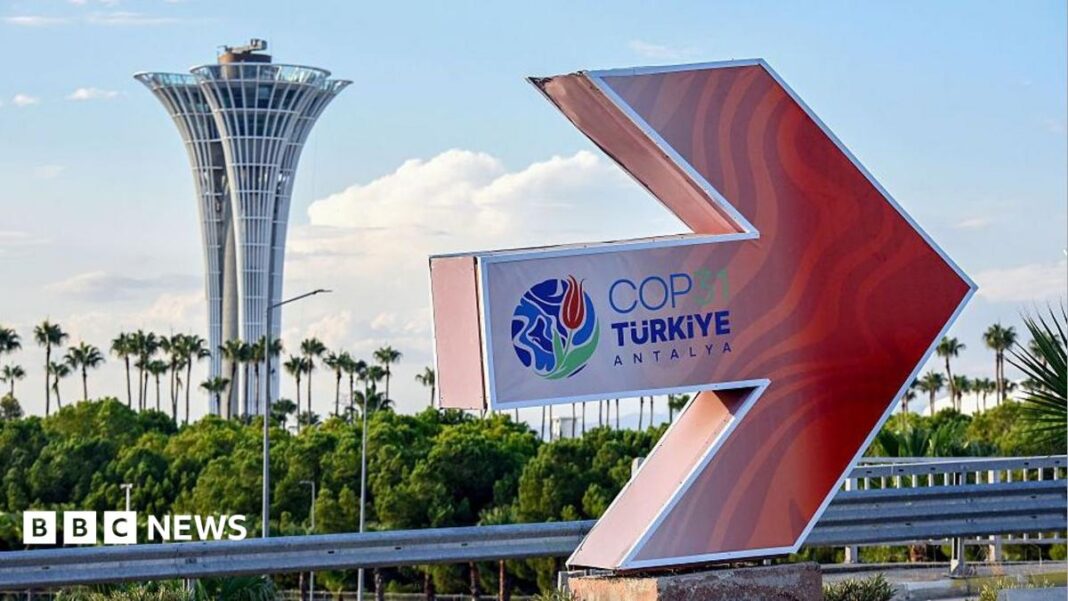
Yet that is what happened in Antalya, Turkey, on Sunday.
The failure tells us something about the state of climate diplomacy. But it may tell us even more about the increasingly divided world in which the negotiations take place.
Chris Bowen, the Australian minister who led the negotiations, spoke of a backdrop constituting “the most complicated and fraught geopolitical environment in living memory”. The competing demands, he said, had become “unbridgeable red lines”.
Murat Kurum, Turkey’s environment minister and the summit’s president, was blunter. Governments should not disappoint people desperate for climate action, he suggested, by getting “hung up on one word or phrase”.
And Kurum had a point. Three years ago, at COP28 in Dubai, there was agreement to transition away from fossil fuels. The proposed Antalya Pact failed to mention them at all.
Was it really worth sacrificing the agreement over two words, then?
The countries that rejected it said the distinction was fundamental. They argued that there was a world of difference between promising to reduce greenhouse gas emissions and committing to move away from the fuels responsible for most of them. Without that explicit commitment, they feared the new agreement would weaken the one made in Dubai.
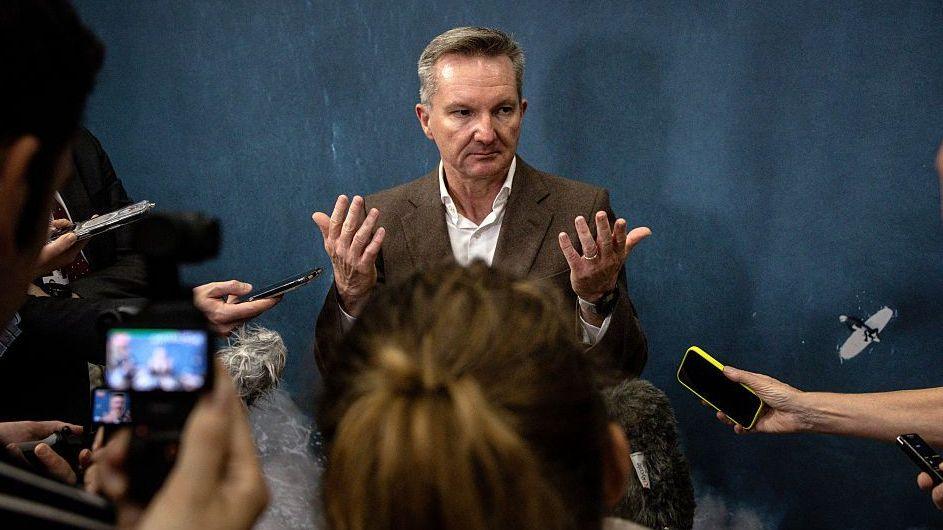 Image source, Getty Images
Normally, it is difficult to establish exactly who has said what at these conferences. Much of the bargaining takes place behind closed doors, and governments are often reluctant to admit which proposals they have opposed.
This time, some of the opposition was public – mostly from oil-producing nations.
Mohammad Ayoub, a Saudi negotiator speaking on behalf of the 22 Arab League countries, argued that Arab nations had contributed less than 2% of historical greenhouse gas emissions. It was wealthy industrialised nations, he said, that bore the overwhelming responsibility for the problem.
He defended the Arab countries’ right to choose how to tackle climate change according to their national circumstances.
Russia’s delegate Sergei Kononuchenko went further. Cutting oil and gas supplies before demand fell, he warned, would cause shortages, higher prices and energy poverty.
“For that reason, we cannot agree to any formulation on fossil fuel,” he said.
The wider political backdrop was still more revealing.
The US, which in previous rounds of talks had helped broker compromises – sometimes working alongside China – had no official delegation in Antalya. President Donald Trump has rejected the entire international climate process.
And while delegates argued over fossil fuels in Turkey, Trump, China’s President Xi Jinping and Russia’s Vladimir Putin issued a joint declaration in Shenzhen that included a pledge to increase production and supply of refined petroleum products.
The priorities of some of the world’s most powerful governments appeared very different from those being discussed in the negotiating rooms.
A majority that may yet offer hope
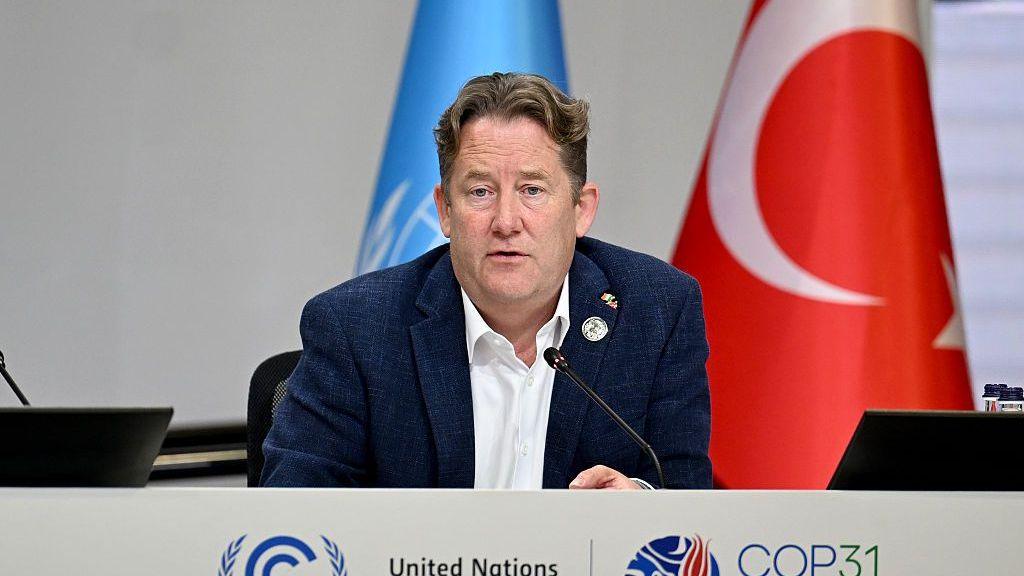 Image source, Getty Images
Yet, perhaps, the picture is more optimistic than it first appears. About 130 governments backed a demand for explicit language on moving away from fossil fuels – roughly two-thirds of the countries represented in Antalya.
Christiana Figueres, who led the UN negotiations that delivered the Paris Agreement, argued that countries were right to walk away rather than endorse a weaker political commitment that might undermine the progress already made.
Looked at this way, the collapse is not evidence that the world has lost its appetite for climate action. Quite the opposite – a substantial majority of governments were demanding more ambitious action.
So why not simply find a way for them to move ahead without waiting for the countries determined to block them?
The difficulty becomes clearer when you look beyond the dispute over fossil fuels.
Kononuchenko had another target in his sights: climate finance. Much of the money wealthy countries provide to poorer nations, he complained, comes as loans rather than grants. He said that developing countries ended up repaying more than they received.
“This is an old colonial distribution of labour under a new banner,” he declared.
Then, in a striking moment, he leaned towards the microphone and switched from Russian into English to address his criticism directly to the Europeans: “First of all distinguished representatives of the EU.”
Russia has its own reasons for attacking Europe, but the complaint about finance is one that many developing countries share. They argue that they are being asked to pay for damage they did little to cause while receiving too little help to adapt to climate change or build cleaner economies.
The EU had ruled out significant new funding before the negotiations began. Mohamed Adow, the Kenyan campaigner who heads Power Shift Africa, accused Europe of rejecting a flawed deal while refusing to acknowledge its own responsibility for the failure on finance.
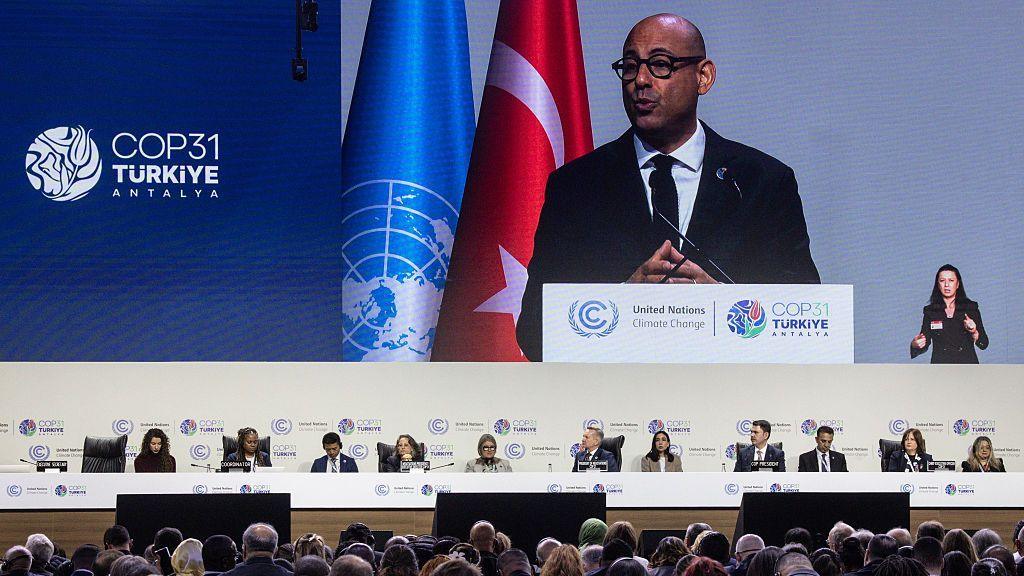 Image source, Getty Images
So is it possible for a majority of countries to outvote those blocking progress?
The UN climate chief, Simon Stiell, has acknowledged the need to “improve, modernise and reform” the process. Some governments have proposed introducing voting when consensus proves impossible. Others want countries prepared to move faster to make their own agreements outside the formal talks.
But there is a reason the UN climate process depends on consensus. International climate co-operation is largely voluntary.
Voting might produce more ambitious agreements on paper, but would it persuade the governments that had been outvoted to act? Consensus also offers some protection to smaller and poorer nations that might otherwise find themselves overruled by the most powerful countries.
Meanwhile, the failure to agree a summit declaration does not mean climate action stops. Solar panels, batteries and electric vehicles are becoming increasingly competitive, while the upheaval in global oil and gas supplies is giving countries another reason to generate their own electricity rather than depend on imported fossil fuels.
The energy transition is moving forward, whatever happens in the UN negotiating rooms. The problem is that it is not moving nearly fast enough for the climate.
To play this video you need to enable JavaScript in your browser.
This video can not be played
-
Longest-ever UN climate talks end with no deal as deep divisions exposed
-
Published12 hours ago
-
-
Five takeaways from the failed climate talks COP31
-
Published10 hours ago
-
A rare moment of agreement
Perhaps the most poignant aspect of the failed Antalya Pact is what the countries had apparently been prepared to accept.
The final draft expressed “deep concern” that global warming was expected to exceed 1.5°C in the next few years. It warned that further warming would cause increasingly serious damage, some of it irreversible, and called for urgent action to limit how far temperatures rose above that threshold.
This remarkably strong language had survived into the final version, apparently without provoking the opposition that sank the agreement. Even countries bitterly divided over fossil fuels and finance seemed prepared to acknowledge the scale of the danger.
Yet they couldn’t agree on how to respond.
And that, perhaps, is what Antalya tells us about the state of international climate co-operation. The problem isn’t simply finding the right words or changing the voting rules. It is persuading countries with very different interests to take action that no international authority can compel them to take.
That was always going to be difficult. In today’s divided world, it looks harder than ever.

Sign up for our Future Earth newsletter to keep up with the latest climate and environment stories with the BBC’s Justin Rowlatt. Outside the UK? Sign up to our international newsletter here.