

This post was originally published on this site.
Vaccines prevent the spread of disease and protect people from serious illnesses. The World Health Organisation (WHO) has designated the last week of April as “world immunisation week”, during which it promotes the power of vaccines. Since 1974, vaccines have saved 154 million lives worldwide and reduced infant deaths by 40%. The value of the vaccine market has increased by an annual 15% over the last five years. Vaccines work by stimulating the body’s immune system to produce antibodies that fight off viruses and bacteria. Since vaccines were introduced, diseases such as smallpox, polio and tetanus, which used to kill or maim millions of people, have become rare or extinct.
Edward Jenner, an English doctor, created the first successful vaccine. He discovered that milkmaids infected with cowpox were immune to smallpox. He then inoculated an eight-year-old boy, James Phipps, with matter from the cowpox sore on a milkmaid’s hand. James felt unwell for a few days, but quickly recovered. Then, two months later, Jenner inoculated James with matter from a human smallpox sore, but James remained in perfect health and thus became the first person ever to be vaccinated against smallpox.
Sign up to Money Morning
Don’t miss the latest investment and personal finances news, market analysis, plus money-saving tips with our free twice-daily newsletter
Don’t miss the latest investment and personal finances news, market analysis, plus money-saving tips with our free twice-daily newsletter
The rise of cancer vaccines
(Image credit: SEBASTIEN BOZON/AFP via Getty Images)
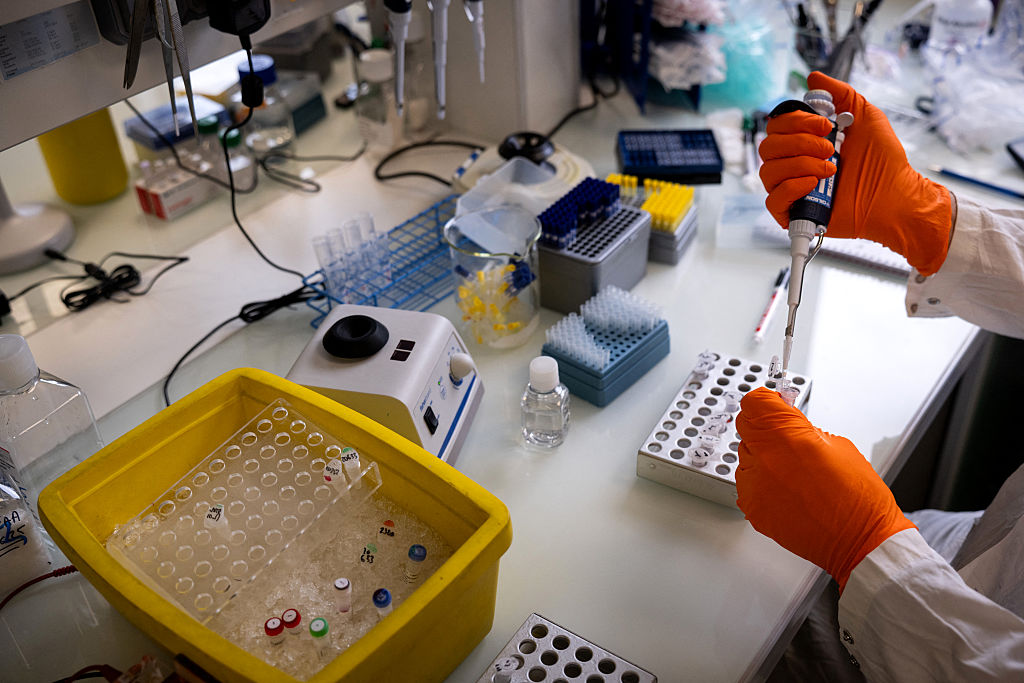
In addition to the traditional vaccines mentioned above, there is a promising new class of therapeutic vaccines that can treat diseases such as cancer. Cancer vaccines are different from the usual vaccines that teach the immune system to recognise a pathogen ahead of an infection. Instead, a cancer vaccine uses proteins produced by cancer cells – antigens – to provoke a strong response to existing tumours. In other words, they work by stimulating the body’s immune system to recognise and attack cancer cells.
There are three key mechanisms for doing this. The first is to deliver tumour antigens to dendritic immune-system cells (specialised cells with a tree-like shape). These present them to other cells in the immune system, which respond to the cancer. The second is to activate a particular type of immune-system T-cell (white blood cells crucial to fending off disease), which can attack tumour cells directly. The third is to target specific proteins absent in normal cells, but present in cancer cells. Many approaches are highly personalised and these include making use of mRNA technology, which primes the immune system to fight cancer cells. For some types of cancer, a less personalised approach is possible using antigens shared by many people.
Several clinical trials are in progress using cancer vaccines. For example, a phase-I trial (the first of three phases of clinical trials) of an mRNA vaccine produced by BioNTech started last year at University College Hospital in London for non-small-cell lung cancer. And a phase-II trial at Memorial Sloan Kettering Cancer Centre is in progress using a personalised mRNA cancer vaccine from BioNTech and Roche for pancreatic cancer, one of the most deadly of all cancers.
Research is also underway to identify new cancer vaccines with GSK, for example, which is investing £50 million into a three-year partnership with Oxford University to develop new approaches to cancer vaccines by delving into the pre-cancer biology. Several biotech and pharmaceutical companies now have cancer vaccines in their pipelines.
A few early cancer vaccines are already on the market. An example is BCG, made by Merck and used to treat early stage bladder cancer. And Adstiladrin gene therapy from Ferring Pharmaceuticals is used to treat bladder cancers that have progressed despite treatment with BCG. Provenge from Dendreon Pharmaceuticals, a vaccine made from a patient’s own dendritic cells, treats metastatic prostate cancer.
A burgeoning vaccine subsector
Fortune Business Insights predicts that global vaccine sales will rise from $85 billion in 2024 to $179 billion in 2032. The main drivers of growth are the increasing incidence of infectious diseases, higher funding for research and development (R&D) in the vaccine subsector and the emergence of next-generation vaccine technologies, such as the mRNA approach used for Covid vaccines. For example, the US Department of Health aims to accelerate the development of next-generation vaccines through public-private partnerships with an initial investment of $5 billion.
The global vaccine market was dominated by Covid vaccines in 2021, when they comprised 70% of the market by value, but this figure dropped to 28% by 2023 and 15% in 2024. Aside from Covid vaccines, the three largest ones by value in 2023 were those for seasonal flu, PCV (against pneumonia, meningitis and ear infections) and HPV (which tackles sexually transmitted HPV infection, genital warts and certain cancers such as cervical cancer).
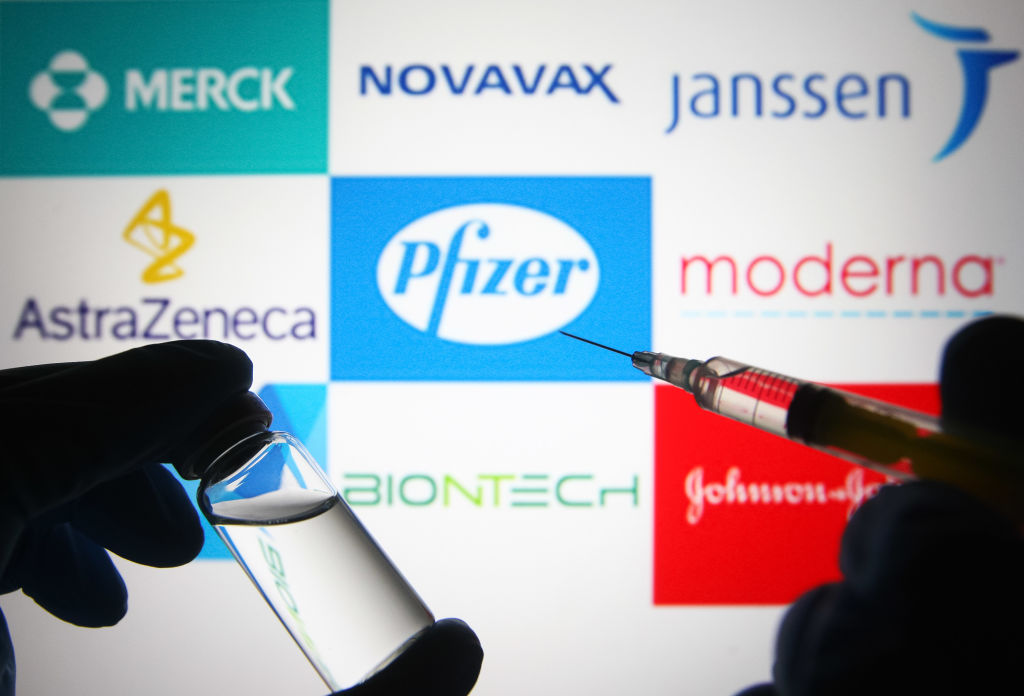
A WHO report highlights global patented vaccine-market shares by company for 2022, excluding Covid vaccine sales. The market shares of the top six vaccine companies are Merck (with 24%), GSK (21%), Pfizer and Sanofi both (15%), CSL of Australia (3%) and SII, the Serum Institute of India (2%). There are 45 other companies, most with market shares well below 1%. The subsector is very concentrated: in 2023 (and including Covid), just five companies accounted for 79% of the global market by value, with seven firms (the six above, plus Moderna) making up 84%. The US is by far the largest market for vaccines by value.
In addition to the large pharmaceutical companies mentioned above there are others with smaller vaccine interests as a percentage of total sales, such as Novartis and AstraZeneca. Then there are several much smaller vaccine companies. These include Novavax, Sanaria, Inovio Pharmaceuticals and Bavarian Nordic, together with Moderna and BioNTech, which pioneered mRNA Covid vaccines, but are now using mRNA technology to develop cancer vaccines and treatments.
The top five vaccine companies
(Image credit: Pavlo Gonchar/SOPA Images/LightRocket via Getty Images)
Merck, GSK, Pfizer and Sanofi have the largest vaccine sales, while CSL’s are much smaller. Last year’s sales provide the best guide to companies’ relative standing in the vaccine market and to their vaccine sales as a percentage of total sales. Merck had 2024 vaccine sales of $13.5 billion, 21% of total sales. Pfizer produced vaccine sales of $13.2bn (excluding Covid ones), or 20.7% of total sales (29.1% if Covid vaccines are included).
GSK’s vaccine sales were $10.3 billion, or 25.9% of its total, and Sanofi’s vaccine sales reached $8.3 billion or 20.2% of its total. CSL has vaccine sales of only $1.4 billion (20% of total sales). In 2023, the four vaccines with the largest global sales by value excluding Covid were HPV, PCV, seasonal flu and shingles, in that order. GSK makes all four types, as does Merck, although its shingles vaccine (a joint development with Sanofi) has been superseded by GSK’s Shingrix. Pfizer makes PCV and Sanofi just makes the flu treatment.
Promising pipelines of pharmaceutical companies
The number and quality of vaccines under development in pharmaceutical companies’ pipelines helps us understand which players are likely to gain market share in future years. We start with the four largest vaccine companies. GSK was first to market with a RSV vaccine in 2023. It has just presented a new one to regulators, while it also has two others in phase III (meningitis and varicella) and ten in phase II. Merck has HPV and pneumococcal vaccines under review for approval, a cancer vaccine in phase III and two in phase II (dengue fever and cancer). Pfizer has three vaccines in phase III (Covid, Streptococcus, Lyme disease) and four in phase II. Sanofi has four vaccines in phase III (yellow fever, pneumococcal, rabies and flu for over-50s) and five in phase II.
Moving on to some of the smaller companies mentioned earlier, some of them have surprisingly strong pipelines. Clinical trials have established that Sanaria (a non-profit group) is developing a gene-edited malaria vaccine giving 90% protection. Moderna and BioNtech are using their mRNA platforms to develop new vaccines. Moderna has its own Covid and RSV vaccines on the market, but it has pruned its pipeline, with two projects terminated in November 2025.
BioNtech’s successful Covid vaccine was marketed by Pfizer and BioNtech is now using its mRNA technology to develop cancer immunotherapies as well as vaccines for infectious diseases. BioNtech is primarily focused on cancer, with eight cancer vaccines in over 20 phase-II and phase-III trials. BNT113, in phase-III trials for head and neck cancer, is the most advanced of the group. For infectious diseases it has four early phase trials (Mpox, TB, shingles and malaria).
The other smaller companies have modest pipelines. Novavax has a Covid vaccine on the market with Sanofi, a malaria with SII and four phase-II or -III trials (all Covid and flu). Inovio has Covid and HPV treatments in phase-III trials. Bavarian Nordic has six products on the market, but only one phase-II trial (equine encephalitis).
Where to look now in the vaccines market

(Image credit: Michael Nagle/Bloomberg via Getty Images)
Since vaccines only account for 20%-26% of the sales of the four largest companies, it is important for investors carefully to assess companies’ other products and the pipelines backing them up. The riskiest company is Merck, since its successful cancer drug Keytruda accounted for 46% of 2024 sales, but its primary patent expires in 2028. Furthermore, while Keytruda’s sales were up 18% over 2023, total sales excluding Keytruda were down 1% from 2023-2024.
Merck’s future will therefore depend on two potential growth drivers: acquisitions and the success of its 20 oncology drugs and vaccines in phase-III trials. These could yield several blockbuster products (products with annual sales over $1billion) over the next few years. The risk for investors lies in the possibility that these two routes may not prove to be as successful at driving growth as Merck hopes.
GSK’s productivity with respect to R&D has improved greatly over the last several years and it now benefits from a diverse pipeline covering four areas: oncology, HIV, infectious diseases and respiratory, immunology or inflammation problems. There are five drugs and two vaccines in registration with 15 drugs and seven vaccines in phase III. Bepirovirsen, a potential cure for hepatitis B, is completing phase III. GSK now projects that its revenue in 2031 will be £40billion, up from £31.4billion in 2024.
Pfizer’s large size (2024 revenue reached $63.6billion) gives it economies of scale and a powerful distribution network, which together constitute an enduring competitive advantage. The firm now focuses on four areas: oncology, inflammation or immunology, vaccines and internal medicine. However, it invests just 17% of revenue in R&D compared with Merck’s 27.9%. Eli Lilly has much smaller revenues of $45billion, but nevertheless invested more than Pfizer in R&D: 24.4% of revenue. Pfizer’s low R&D investment could account for the large number of product enhancements in its new drug pipeline – for example, two-thirds of its phase-III trials in oncology are product enhancements.
Sanofi’s 2024 revenue was €41.1billion ($48.1billion), up 6.5% from 2023, with R&D of 18% of sales. Sanofi focuses on immunology, rare diseases, oncology, neurology and vaccines with almost half the phase II and regulatory submissions highlights in immunology. Several programmes are carried out in collaboration with Regeneron Pharmaceuticals, which boasts Dupixent, an immunology drug with sales of €13.1billion in 2024, up 13.3% over 2023. Sanofi’s guidance for 2025 is for a mid-to-high single-digit sales increase.
Other large pharma firms with vaccine interests include AstraZeneca and Novartis. AstraZeneca’s 2024 revenue was $54.1billion, up 21% from 2023. It aims to deliver revenue of $80billion by 2030. It delivered the first Covid vaccine, has seasonal flu vaccines and vaccine manufacturing in Liverpool, the Netherlands, Belgium and Philadelphia. It also outsources manufacturing to firms in India (SII) and Germany. The company has scrapped its planned £450million expansion of its Liverpool vaccine-manufacturing plant because the Labour government reduced the investment incentive agreed with the previous government.
Novartis no longer focuses on developing vaccines itself, but instead supports production partnerships and manufacturing agreements with other companies. For example, it manufactured the mRNA Covid vaccine. SII, a private company, says it is the world’s largest vaccine manufacturer by number of doses. It primarily operates through partnerships with other pharma companies, such as with AstraZeneca over the latter’s Covid vaccine, and as a generic vaccine manufacturer. However, it has developed a small number of improved vaccines.
What to buy
Of the companies mentioned in the previous sections, seven in particular are worth examining as potential investments. These seven fall into two groups. The first – four lower-risk companies – consists of AstraZeneca (LSE: AZN), GSK (LSE: GSK), Pfizer (NYSE: PFE) and Sanofi (Paris: SAN). The second, a riskier collection, consists of Merck (NYSE: MRK), BioNtech (Nasdaq: BNTX) and Moderna (Nasdaq: MRNA). The latter two are loss-making.
AstraZeneca has a forward price/earnings (p/e) ratio of 18 and a forward dividend yield of 1.8%. The shares are up 88% in five years and the company intends to raise revenue by 48% between 2024 and 2030. GSK is on a forward p/e of 9.5 and a dividend yield of 3.5% and the share price has gained 35% over the last five years. It has a target of raising revenue 27% by 2030. Pfizer has a forward p/e of 8.4, a dividend yield of 6.9%, and the share price has dropped by 32% over the last five years (mainly because of falling profits from the Covid vaccine). Pfizer’s guidance for 2025 is for revenue in the range $61billion-$64billion – hardly impressive given that 2024 revenue was $63.6 billion. Sanofi has a forward p/e of 9.8, a dividend yield of 4.7% and the stock has gained only 6% over the last five years.
We have explained that the risk with Merck is of new oncology drugs failing to replace the massive revenues from its successful Keytruda cancer drug, whose patent expires in 2028. Merck’s forward p/e is 11.2 and the dividend yield 3.2%. The stock has gained 35% in five years. BioNTech has an interesting pipeline of potential cancer vaccines and continues to develop its Covid vaccine. It has a forward p/e of seven, no dividend and the share price increased by 16.8% over the last five years.
Investors looking for high-yielding dividend stocks may be tempted by Pfizer’s 6.9% forward yield at its recent price of $24.9, but those seeking growth with a reasonable dividend are more likely to go for AstraZeneca, with a yield of 1.8%. Astra is targeting a 48% revenue increase to 2030. Then there is GSK, with a yield of 3.5% and a cancer-vaccine partnership with Oxford University. Sanofi yields 4.7%.
BioNTech has a better pipeline than Moderna, with several conventional vaccines in development, together with its cancer vaccines and drugs that could become blockbusters. The firm could market them in partnership with selected big pharma companies with extensive distribution networks.
Merck, yielding 3.2%, has a large and interesting oncology pipeline and is less risky than BioNtech as it has a diversified set of products in vaccines (where it leads the field by revenue), animal health and drugs for diseases other than cancer. But the patent for its blockbuster cancer drug Keytruda expires in 2028. Your selection of investments from these six companies will depend on your appetite for risk, but could reasonably include two or three lower-risk companies and one of the two riskier ones.
This article was first published in MoneyWeek’s magazine. Enjoy exclusive early access to news, opinion and analysis from our team of financial experts with a MoneyWeek subscription.