

Picking the right fjord
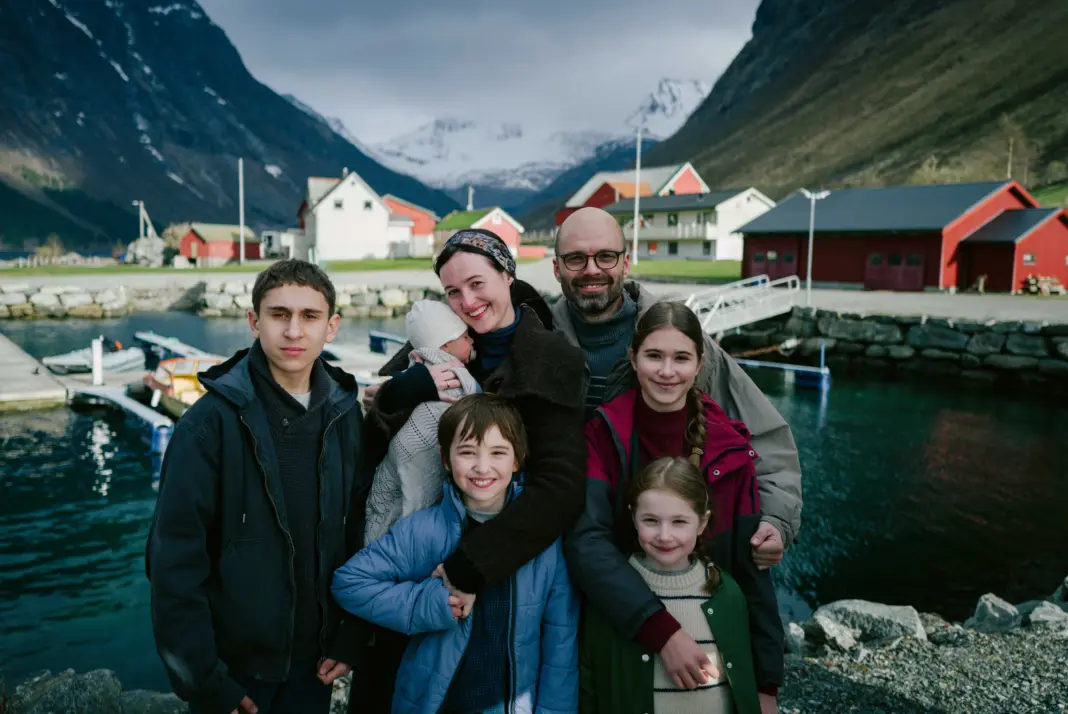
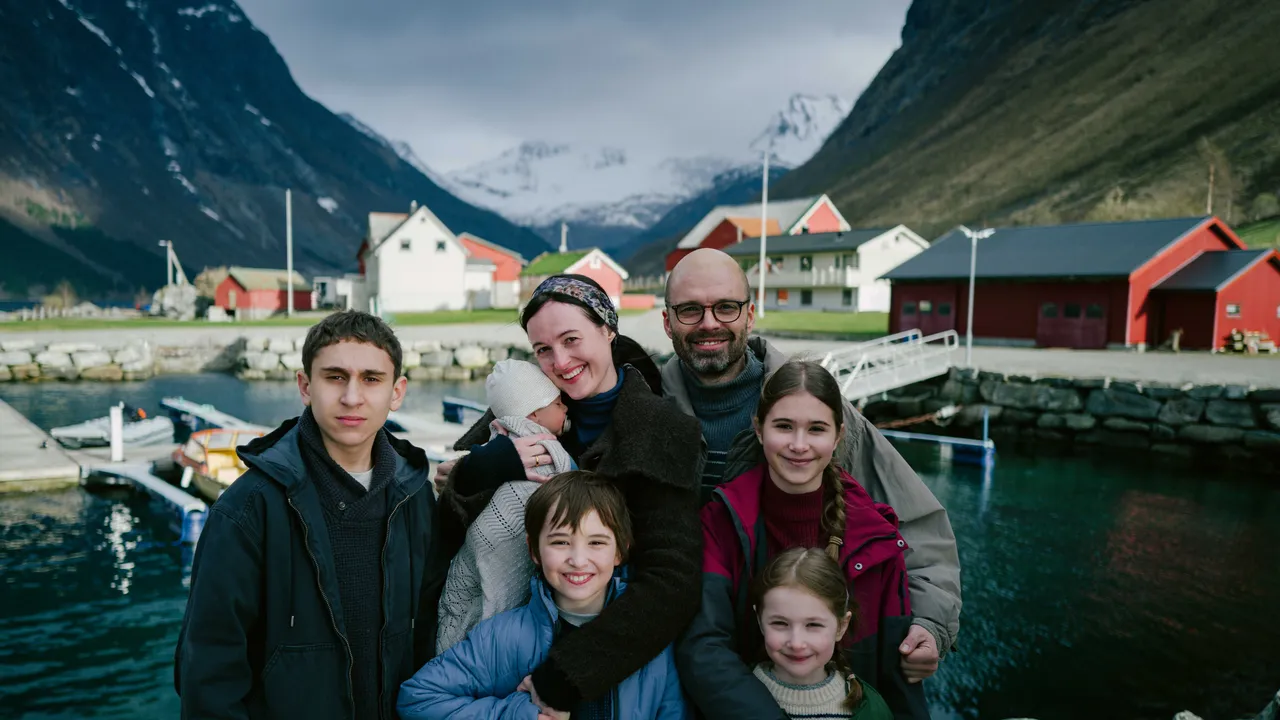
When it came time to select the perfect fjord, Mungiu was purely pragmatic. “I imagine scenes quite in detail when I write the screenplay and while scouting,” he explains. “I try to find locations as close as possible to what I’ve imagined.” He drew a “very precise sketch” for his location scout of what he was looking for: two neighboring houses at the end of a fjord, “with mountains and forests behind, quiet deep water in front, and a narrow road connecting them to the rest of the world—all this ideally covered in snow during wintertime.”
His production team found a spot that looked just as he envisioned in Stenes, deep down the fjord and away from the coast, to maximize the potential for more snow. Then the hardest part started: convincing the homeowners to rent their properties out for the shoot.
“Once we started our scouting, we felt that we were visiting a form of paradise,” he says. “The light always comes from an angle, the air is pure, the colors are strong, the calm of the ocean is threatening, the snow on the peaks looks menacing.” Everything in the area, he continues, “is clean, organized, precise, logical, and functional.” Mungiu jokes, “For an OCD person like me, it was the perfect place.”
Of course, the wildness of the fjord came with its own set of challenges, from avalanche warnings to a lack of consistent snow cover (they trucked in powder from the mountains). But Mungiu and his team tried to use these issues to their artistic advantage. On the first day of shooting, for instance, a major storm forced them to move production inside and shoot an emotionally complex scene. Inspired by the dramatic gusts, they hung an enormous Norwegian flag just outside the window to thrash and snap in the gale, “adding a visual element to the inner feelings of Lisbet in a very delicate moment for her as a character.”