

This post was originally published on this site.
Engaging team-building activities are essential for enhancing collaboration within small work groups. These activities not only dismantle barriers but furthermore encourage trust among team members. From casual Virtual Coffee Chats to structured problem-solving exercises like the Marshmallow Challenge, there’s a variety of options to choose from. Each activity serves a specific purpose, helping to strengthen relationships and improve communication. Comprehending these activities can transform your team’s dynamics, so let’s explore the best options available.
Key Takeaways
- Virtual Coffee Chats foster open communication and build personal connections in remote settings, enhancing team dynamics and collaboration.
- Two Truths and a Lie promotes interaction and active listening, revealing surprising facts about team members in both virtual and in-person settings.
- Escape Room Challenges encourage problem-solving and critical thinking under pressure, making them engaging and fun for small groups to strengthen collaboration.
- Build a Tower activity enhances teamwork and creativity through strategic planning, using simple materials to construct a structure within a time limit.
- Memory Wall Activity creates a visual collection of favorite work memories, strengthening team spirit and fostering a sense of community among members.
Virtual Coffee Chats

Virtual coffee chats offer a simple yet effective way for team members to connect in a relaxed setting, especially in remote or hybrid work environments.
These informal gatherings provide a platform for genuine conversations without a formal agenda, mimicking the spontaneous interactions often missed in a traditional office. You can discuss personal stories, mutual interests, or even share ideas, enhancing team dynamics and collaboration.
Regularly implementing virtual coffee chats can break down barriers and encourage open communication, which is crucial for effective teamwork in remote settings.
For small groups, these chats serve as trust team building activities, reinforcing relationships among team members. Tools like CoffeePals automate pairings, ensuring everyone stays engaged and connected.
Two Truths and a Lie

Team members can engage in “Two Truths and a Lie,” a popular icebreaker game that encourages interaction and connection. In this activity, each participant shares three statements: two truths and one lie. Others must then identify which statement is false, promoting discussion and engagement among the team. This game nurtures personal connections by allowing team members to reveal surprising facts about themselves.
It works best in small groups, facilitating deeper conversations and more intimate interactions. Furthermore, “Two Truths and a Lie” is versatile; it can be easily adapted for both in-person and virtual settings. The activity likewise promotes active listening and critical thinking, as participants must evaluate each statement carefully.
| Statement Type | Example |
|---|---|
| Truth | I’ve traveled to Japan. |
| Truth | I play the guitar. |
| Lie | I’ve never had pizza. |
Escape Room Challenges

Escape Room Challenges offer a unique opportunity for small work groups to develop collaboration and problem-solving skills in a fun, engaging environment.
These activities require teams to solve a series of puzzles and riddles within a set time limit, usually around 60 minutes. This structure encourages critical thinking and promotes effective communication among participants.
Whether conducted in-person or virtually, escape rooms are adaptable for various work environments, including remote and hybrid setups. Team members must delegate tasks and collaborate under pressure, which improves their teamwork abilities.
The immersive experience of escape rooms promotes deeper connections as participants share both the excitement and stress of working toward a common goal.
Research indicates that engaging in escape room activities can boost team morale and improve overall workplace dynamics. As a result, they’ve become a popular choice for team-building exercises, providing lasting benefits for small work groups.
Build a Tower

In the “Build a Tower” activity, you’ll need basic materials like newspapers, tape, and scissors to create the tallest freestanding structure possible.
This challenge not just promotes teamwork but additionally encourages creativity as your group strategizes and navigates design constraints.
Working under time pressure adds an extra layer of excitement, pushing you to collaborate effectively as you enhance problem-solving skills.
Materials Needed Overview
Engaging in the “Build a Tower” activity requires only a few simple materials, making it accessible for any small work group looking to improve teamwork skills.
To participate, you’ll need uncooked spaghetti, tape, and a marshmallow. These items allow teams to creatively construct the tallest freestanding tower possible.
Typically, your team should consist of 3-8 participants, enabling effective collaboration in a small group setting. The activity is designed to last around 20-30 minutes, giving you enough time for brainstorming and building.
As you work together, you’ll need to strategize and communicate effectively, emphasizing problem-solving and resource management.
In the end, during the tower’s height is a goal, the insights gained from teamwork dynamics are equally valuable.
[embedded content]
Teamwork and Creativity Benefits
Although the “Build a Tower” activity may seem simple, it offers significant benefits regarding teamwork and creativity for participants. Engaging in this challenge encourages collaboration, as everyone must brainstorm and contribute ideas to create the tallest freestanding tower.
[embedded content]
Here are three key benefits:
- Joint Ownership: Participants feel a sense of shared responsibility, enhancing commitment to the team’s success.
- Enhanced Creativity: Team members utilize their problem-solving skills, thinking outside the box to design unique structures that meet the challenge.
- Improved Communication: The necessity to articulate ideas and listen to others nurtures stronger communication skills, essential for effective teamwork.
Ultimately, the “Build a Tower” activity not only promotes creativity but likewise strengthens team dynamics through engagement and friendly competition.
Human Knot
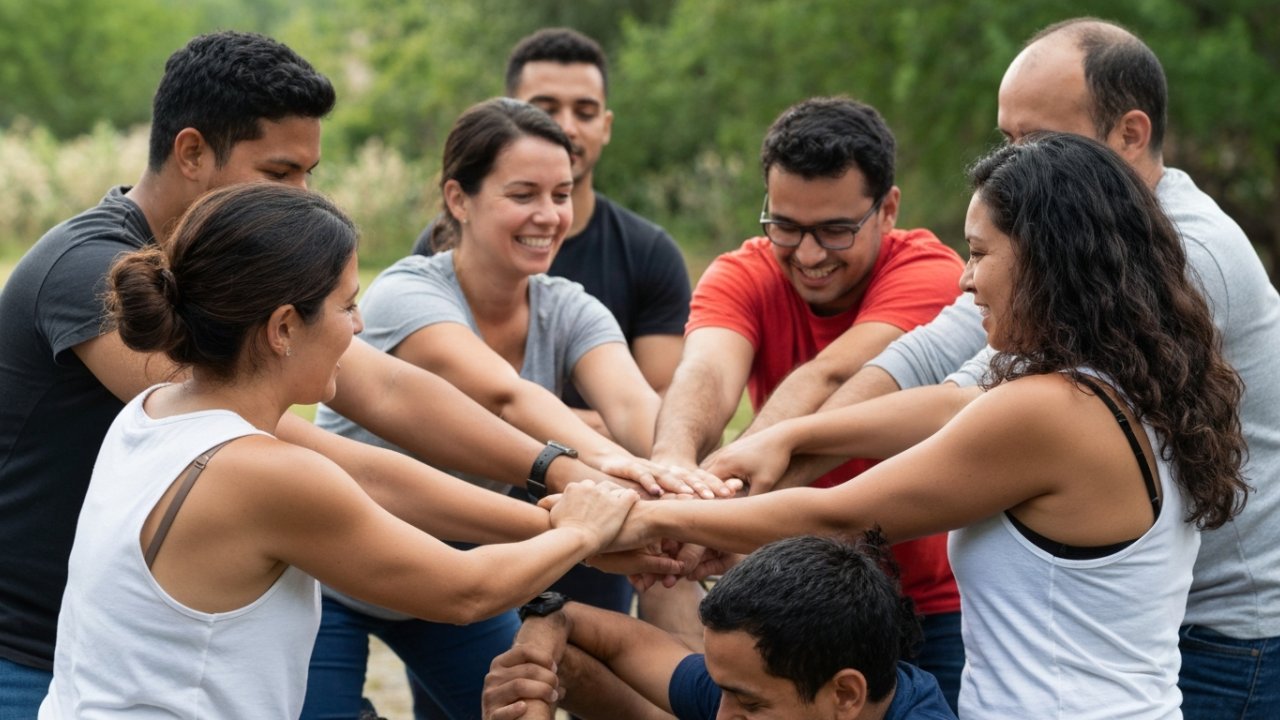
The Human Knot is a popular team-building activity designed for small work groups, typically accommodating 8 to 12 participants. In this activity, everyone stands in a circle and grabs hands with two different people across from them, creating a tangled “knot.”
The challenge is to untangle this knot without letting go of each other’s hands. This exercise improves communication and collaboration, as team members must strategize together to find a solution within a limited time frame, usually around 10 to 15 minutes.
Successful completion of the Human Knot requires patience, effective problem-solving skills, and attentive listening, reinforcing critical team dynamics. By engaging in this activity, participants can cultivate stronger relationships and build trust, making it an ideal choice for small work groups aiming to improve teamwork.
Office Trivia

Following the engaging dynamics of the Human Knot, Office Trivia serves as another effective team-building activity that promotes interaction among colleagues. This quiz-based format encourages team members to answer questions related to workplace knowledge, company history, and fun facts, nurturing engagement and friendly competition.
Here are three key aspects of Office Trivia:
- Group Size: It accommodates 8-20 participants, making it ideal for small work groups aiming to build camaraderie and team spirit.
- Duration: Sessions typically last between 30 to 45 minutes, providing a fun and interactive break during the workday.
- Customization: You can tailor the questions to include specifics about your colleagues, projects, or company milestones, enhancing relevance and enjoyment.
Incorporating Office Trivia into team-building efforts can greatly improve communication, boost morale, and create a positive work environment through shared experiences and laughter.
Memory Wall

Creating a Memory Wall allows you and your colleagues to share favorite work memories or achievements, which can greatly boost team morale.
As you write these experiences down and display them, you’ll cultivate a positive atmosphere that encourages reflection on shared moments.
This simple activity promotes engagement by inviting team members to read memories aloud and guess their authors, ultimately reinforcing relationships within the group.
Sharing Favorite Memories
How can sharing favorite memories improve team dynamics? The Memory Wall activity encourages team members to reflect on positive experiences, nurturing deeper connections and enhancing collaboration.
By sharing achievements, you create a supportive atmosphere that strengthens team spirit. Here’s how it works:
- Write Memories: Each participant notes their favorite work memories on paper, which can include personal milestones or team successes.
- Display Memories: These notes are then pinned on a designated wall or whiteboard, creating a visual collection of shared experiences.
- Engage in Storytelling: As members read and discuss these memories, they engage in storytelling, promoting insight and camaraderie among the team.
Incorporating this activity into meetings requires minimal preparation but maximizes engagement and connection.
[embedded content]
Boosting Team Morale
Boosting team morale is an important aspect of maintaining a productive and harmonious work environment. One effective activity for this purpose is the Memory Wall. This exercise encourages team members to share positive and memorable experiences from work, nurturing a sense of community and belonging.
By writing and reading aloud these memories, you improve team spirit and create a positive atmosphere. The Memory Wall promotes open communication, allowing you to connect with colleagues through shared experiences and laughter.
Furthermore, it celebrates individual contributions and achievements, reinforcing a culture of appreciation. This simple yet impactful activity can easily be integrated into team meetings or gatherings, requiring minimal preparation as it delivers significant emotional benefits to the group.
Scavenger Hunt

A scavenger hunt is an engaging team-building activity that effectively encourages collaboration and problem-solving among small work groups.
This versatile activity can be organized indoors or outdoors, adapting to various environments and team goals. Participants work in teams to solve riddles and find hidden items, promoting strategic thinking and teamwork.
Here are three key benefits of a scavenger hunt:
- Customizability: You can tailor the hunt to include company-related items or themes, making it relevant to your team’s objectives.
- Time-efficient: Typically lasting between 30 to 60 minutes, it fits various schedules without overwhelming participants.
- Interactive Atmosphere: The activity encourages movement and exploration, cultivating a fun environment that strengthens team bonds through shared experiences.
Incorporating a scavenger hunt into your team-building efforts can improve engagement as well as achieving specific goals efficiently.
Marshmallow Challenge

The Marshmallow Challenge is a hands-on team-building activity where groups compete to construct the tallest freestanding structure using limited materials: spaghetti, tape, string, and a single marshmallow placed on top.
Typically lasting around 18 minutes, this challenge encourages you to brainstorm, prototype, and iterate your designs quickly. As you work under tight time constraints, it becomes crucial to communicate and collaborate effectively with your teammates.
Research shows that teams that prototype early and often tend to perform better than those who spend too much time planning without testing their ideas. This activity is suitable for small groups of 3-10 participants, making it ideal for encouraging teamwork and creativity.
Blind Drawing

Blind Drawing is a unique exercise that pairs team members back-to-back, where one describes an image as the other attempts to draw it based solely on those instructions.
This activity not only improves communication skills but additionally encourages creative collaboration, as participants must interpret and convey ideas clearly.
Communication Skills Enhancement
Engaging in an activity like Blind Drawing can greatly improve communication skills within small work groups. This exercise focuses on verbal clarity and active listening, which are crucial for effective teamwork.
By participating, you’ll amplify your ability to convey instructions accurately and interpret them correctly. Here are three key benefits of Blind Drawing:
- Clarity of Expression: You’ll learn to describe complex images simply, ensuring your partner understands your intent.
- Active Listening: As the listener, you’ll practice focusing on verbal cues, which strengthens your comprehension skills.
- Trust Building: The results often highlight misinterpretations, promoting discussions that build trust and teamwork.
Creative Collaboration Exercise
When team members participate in a creative collaboration exercise like Blind Drawing, they not only enhance their communication skills but also nurture a sense of teamwork.
In this activity, pairs sit back-to-back, where one person describes a picture while the other attempts to draw it based solely on that description. This setup emphasizes clarity and comprehension, as the success of the drawing hinges on the describer’s ability to convey details accurately.
Typically lasting 15 to 30 minutes, Blind Drawing suits pairs or small groups, making it ideal for team-building sessions. Engaging in this exercise helps develop leadership qualities, as participants practice giving and receiving constructive feedback, building trust and camaraderie as they promote a collaborative and enjoyable atmosphere.
Frequently Asked Questions

How Can Team Building Activities Improve Workplace Communication?
Team building activities improve workplace communication by promoting collaboration, trust, and comprehension among team members.
When you participate in these activities, you practice active listening and learn to express ideas clearly. This shared experience can break down barriers, encouraging open dialogue and reducing misunderstandings.
Furthermore, as you engage in problem-solving together, you develop a better appreciation for each other’s strengths and weaknesses, ultimately leading to more effective communication in the workplace.
What Are the Benefits of Virtual Team Building Activities?
Virtual team building activities offer several benefits. They improve communication by breaking down geographical barriers, allowing team members to connect regardless of location.
These activities can further enhance collaboration, as participants engage in problem-solving and decision-making together. In addition, they promote a sense of belonging, which is vital for team cohesion.
Furthermore, virtual activities are often more flexible and can be customized to fit diverse schedules, making them accessible for all team members.
How Often Should We Organize Team Building Events?
You should organize team building events at least once a quarter to maintain a strong team dynamic.
Regular events help reinforce relationships, improve communication, and boost morale.
Nevertheless, if your team is facing challenges, consider increasing the frequency to monthly sessions, which can address issues more swiftly.
Balance is key; too many events may lead to disengagement, whereas too few can hinder team cohesion.
Adjust the schedule based on your team’s specific needs and feedback.
Are These Activities Suitable for Remote Teams?
Yes, team-building activities can be suitable for remote teams.
Virtual platforms allow you to conduct various activities, such as online quizzes, collaborative projects, or virtual escape rooms. These activities promote communication and collaboration among team members, even from a distance.
It’s important to choose options that accommodate different time zones and guarantee all participants can engage fully.
What Is the Ideal Group Size for Team Building Activities?
The ideal group size for team building activities typically ranges from 5 to 15 participants. This size promotes effective communication, encourages participation, and allows for diverse input.
Smaller groups, under five, may lack varied perspectives, whereas larger groups can lead to disengagement. In this range, members can actively engage with one another, enhancing collaboration and relationship-building.
In the end, choosing the right size depends on the specific activity and the goals you wish to achieve.
Conclusion

Incorporating engaging team-building activities can considerably improve collaboration and trust within small work groups. By participating in diverse exercises such as Virtual Coffee Chats, Escape Room Challenges, and the Marshmallow Challenge, team members can enhance communication, problem-solving skills, and creativity. These activities not merely cultivate personal connections but additionally create a cohesive work environment. By regularly integrating these exercises into your team’s routine, you can build stronger relationships and boost overall team performance, leading to greater success.
Image via Google Gemini