
This post was originally published on this site.
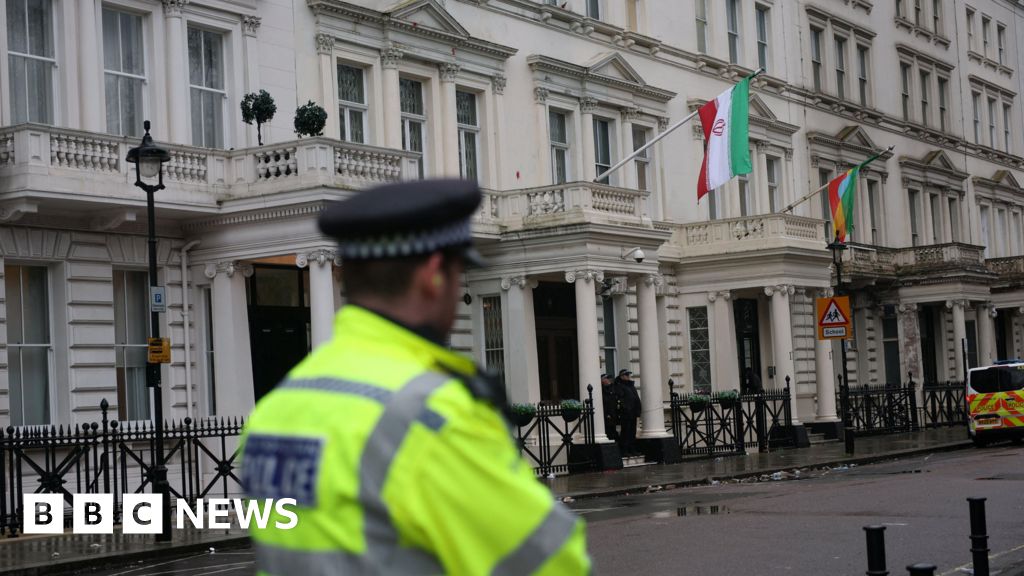
The UK government has summoned the Iranian ambassador in response to the ongoing “brutal” killings of protesters in the country, the foreign secretary has said.
Thousands of people are feared dead or have been detained after a crackdown on anti-government protesters across Iran in recent days.
Foreign Secretary Yvette Cooper outlined “the UK’s total abhorrence of the killings, the violence, and the repression that we are seeing” in a Commons statement, and said she feared the death toll may be significantly higher than reported so far.
She also said the government would implement “full and further sanctions” against Iran targeting finance, energy, transport, software and other industries.
The Foreign Office has not specifically set out what form the new sanctions will take or when they will be put in place.
It is understood the meeting between Cooper and Iran’s ambassador Seyed Ali Mousavi at the Foreign Office lasted just nine minutes.
Speaking in the Commons earlier on Tuesday, Cooper said the government “will work further with the EU and other partners to explore what additional measures might now be needed in response to developments”.
Cooper, who spoke directly to the Iranian foreign minister on Monday to convey the UK’s objections to the crackdown, said the decision to summon the ambassador on Tuesday came following “horrific reports” of violence overnight and to “underline the gravity of the moment”.
In a diplomatic offensive, several European countries – including France, Spain, Finland, Belgium and Germany – have also summoned Iranian ambassadors.
Meanwhile, the US President Donald Trump is continuing to weigh up military intervention in the region after he introduced a 25% import tariff on countries doing business with Iran.
The protests, which began in December, were initially driven by economic hardship and rising inflation, but have since broadened into more widespread anti-regime rallies.
In response, Tehran’s security forces have hit back with heavy force, with live ammunition being used against crowds and a wave of arrests being made.
Last Thursday, Iranian authorities also imposed a near total internet blackout in an effort to suppress the unrest. As a result, Iranians have been almost completely cut off from the outside world.
The country restricts international news organisations from operating there, hampering efforts to independently verify the number of people who have died during the protests.
Iranian authorities have accused foreign government of fomenting the unrest and have condemned “terrorist actions”, state media reported.
But Cooper said Iran’s leaders were “peddling its manufactured narrative of foreign manipulation”.
She added: “The United Kingdom condemns in the strongest of terms the horrendous and brutal killing of Iranian protesters, and we demand that the Iranian authorities respect the fundamental rights and freedoms of their citizens.”
Cooper also said British officials were in contact with Iranian counterparts about UK nationals detained there.
She confirmed a Foreign Office minister had met the family of Craig and Lindsay Foreman on Monday, a couple who were arrested and accused of espionage in Iran last January while on a motorcycle trip around the world.
Last year, a major report by Parliament’s intelligence and security committee found the UK faces a “rising” and unpredictable threat from Iran, and raised particular concern over “sharp increase” in physical threats against opponents of Iran’s regime in the UK.
At the time, the Iranian embassy in London “wholly rejected” the report’s findings.
In October, the UK, France and Germany activated a so-called “snapback” mechanism to reintroduce sweeping UN economic and military sanctions on Iran for failing to comply with restrictions on its nuclear industry.
Cooper said the government had imposed over 220 sanctions on Iran since Labour came to power.
But shadow foreign secretary Dame Priti Patel called for more information about what new sanctions would be put in place, and asked why the Iranian ambassador was not summoned sooner.