
This post was originally published on this site.
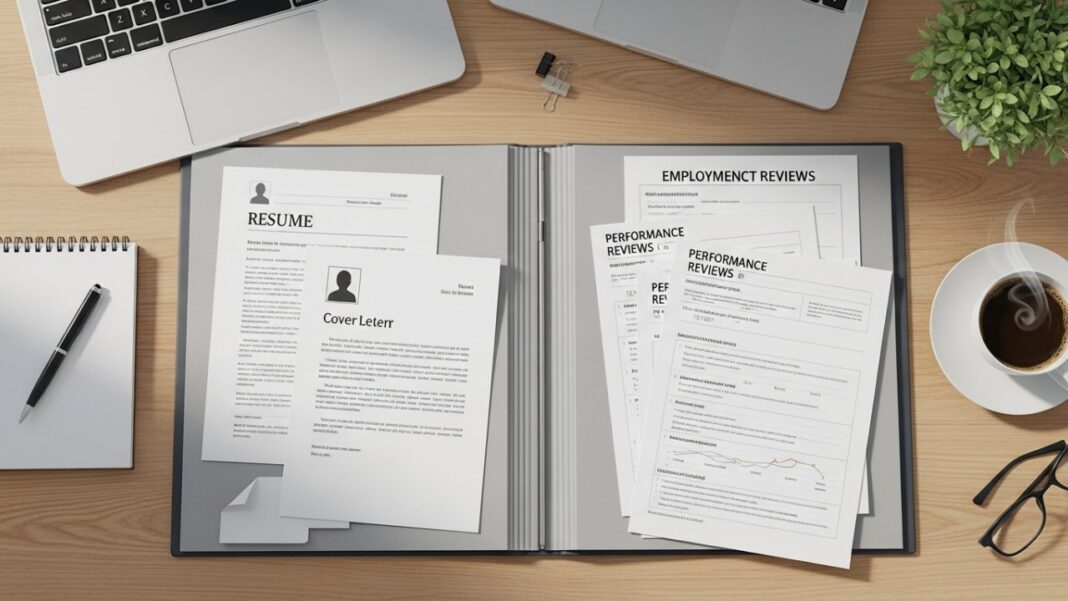
An employment file is a critical collection of documents that provides detailed information about an employee’s work history, performance, and compliance with legal requirements. Maintaining these files is vital for effective human resource management, as they support decisions related to promotions, terminations, and legal matters. Comprehending the key components and best practices for managing these files can greatly impact organizational efficiency. So, what exactly should you include in these files, and how can they influence your HR strategies?
Key Takeaways
- An employment file is a comprehensive record of employee information, including personal and job-related details.
- It is crucial for legal compliance and serves as documentation for work history and evaluations.
- Employment files help organizations manage human resources effectively and mitigate litigation risks.
- Legal requirements dictate retention periods for employment records, ensuring compliance with federal and state laws.
- Proper management of employment files supports HR decisions and promotes organizational efficiency through secure and accessible documentation.
Definition of an Employment File
An employment file, often referred to as a personnel file, is an important repository of information regarding an employee’s professional path within an organization. This file contains a collection of documents that detail personal and employment-related information about you, including your name, Social Security number, date of birth, and address.
It additionally includes job-related details such as your job title, salary, and performance history. Employment files are essential for ensuring compliance with legal and regulatory requirements, as they serve as a thorough record of your work history and evaluations.
Access to these employment files is typically restricted to authorized personnel, safeguarding sensitive information from unauthorized access. Proper management of your personnel file aids in making informed decisions about promotions, raises, and employee development, as well as protecting the organization from potential legal challenges.
Grasping the definition of an employment file is fundamental for both employees and employers in today’s workplace.
Importance of Maintaining Employment Files
Maintaining employment files is vital for organizations endeavoring to uphold regulatory compliance and manage human resources effectively. These files guarantee that you meet legal requirements, such as the Fair Labor Standards Act (FLSA), which mandates retaining specific employee information for at least three years after employment.
A centralized location for tracking employee performance and conduct allows you to make informed decisions about promotions, raises, and professional development opportunities.
[embedded content]
Additionally, accurate employment files help mitigate litigation risks by providing a documented history of evaluations and disciplinary actions. They’re significant for compliance during regulatory audits from agencies like the Equal Employment Opportunity Commission (EEOC) and the Department of Labor (DOL), which may request access to these documents.
Finally, maintaining secure and organized employment files protects sensitive employee information from unauthorized access, safeguarding against data breaches and privacy violations.
Key Components of an Employment File
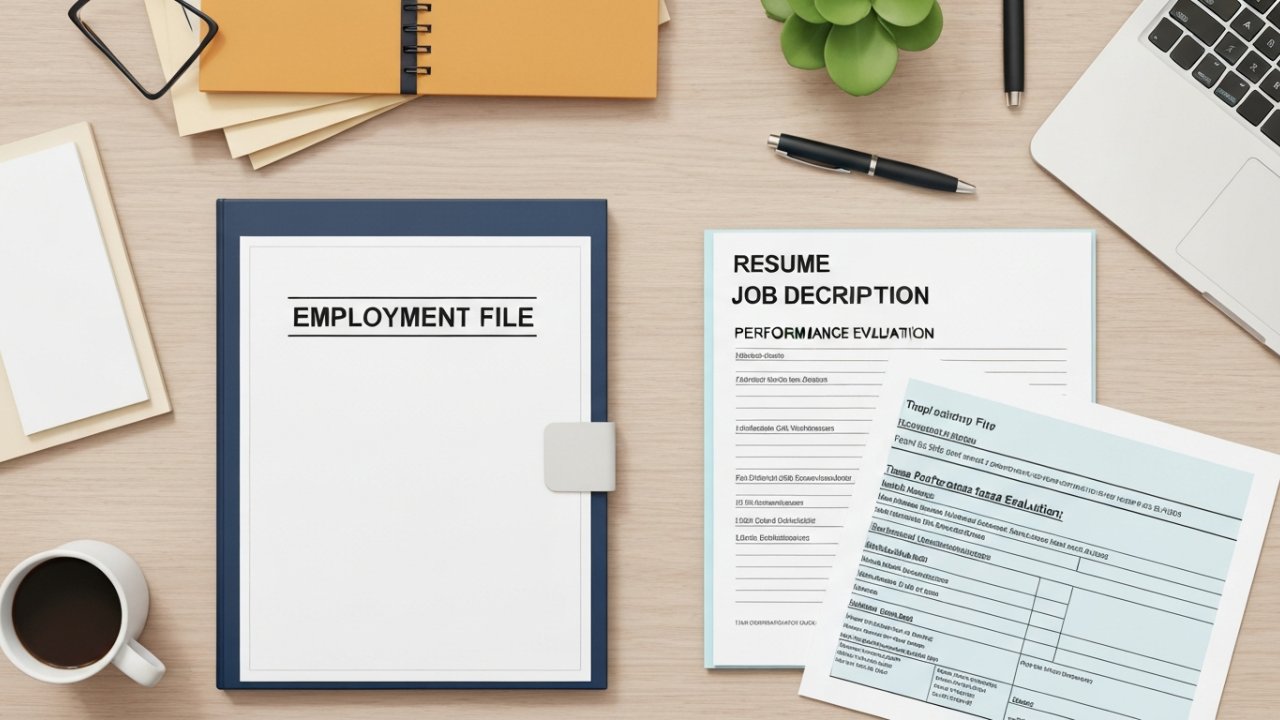
Employment files consist of several key components that play a significant role in effective human resource management.
First, personal information is fundamental; it includes the employee’s name, address, Social Security number, and date of birth for identification purposes.
Next, job-related details such as the employee’s job title, salary, benefits, and employment history help with payroll and HR management.
Performance evaluations and reviews are also important, as they track employee progress and inform promotion decisions or disciplinary actions.
Furthermore, attendance records document employee presence and absences, ensuring compliance with company policies and labor laws.
Finally, supplementary documentation, including onboarding materials and post-employment records, provides a thorough view of the employee’s history.
These components together form a complete employment file that supports both effective management and legal compliance within the organization.
Legal Requirements for Employment Documentation
In relation to employment documentation, comprehending legal requirements is vital for compliance.
You need to be aware that various federal and state laws dictate how long to keep records, such as payroll and employee benefits forms, to avoid penalties.
Adhering to these guidelines not just protects your organization but additionally guarantees transparency and accountability in employment practices.
Record Retention Guidelines
Grasping record retention guidelines is crucial for compliance with various legal requirements surrounding employment documentation.
The Equal Employment Opportunity Commission (EEOC) requires you to maintain employment records for at least one year after an employee’s termination or decision.
Furthermore, the Age Discrimination in Employment Act (ADEA) mandates payroll records must be kept for a minimum of three years.
Under the Fair Labor Standards Act (FLSA), records explaining wage differences need to be preserved for at least two years.
Medical records, governed by HIPAA, should be stored securely and separated from general personnel files.
Finally, be aware that state laws may impose different retention periods for employment documents, which could vary greatly from federal requirements, so always check local regulations.
[embedded content]
Compliance With Employment Laws
Compliance with employment laws is a fundamental aspect of managing an organization’s human resources effectively.
To avoid legal penalties and guarantee a strong defense against potential litigation, you must maintain accurate employment documentation. Here are key requirements to keep in mind:
- Keep employment records for at least one year post-termination, as per EEOC regulations.
- Retain payroll records, including pay rates and hours worked, for a minimum of three years under the ADEA.
- Document wage differences for at least two years, as required by the FLSA.
- Secure sensitive employee information, such as Social Security numbers and medical records, to comply with HIPAA privacy laws.
Who Has Access to Employment Files?
In terms of employment files, access is typically restricted to specific authorized personnel, including you, your direct supervisor, and certain HR staff.
You have the right to review your file, ensuring the information is accurate and reflects your employment history.
Nonetheless, sensitive records, like medical information or background checks, remain limited to HR and legal teams to protect your privacy.
Authorized Personnel Access
Access to employment files is typically restricted to a select group of individuals, guaranteeing that sensitive information remains protected. This controlled access helps maintain confidentiality and promotes trust within the workplace.
Here’s who usually has access:
- The employee: You have the right to view your own file.
- Direct supervisors: They may need access to manage your performance effectively.
- Authorized HR personnel: These individuals handle employment records and guarantee compliance with regulations.
- Legal teams: Access is granted for matters requiring legal oversight, such as disputes or compliance issues.
Access is granted on a need-to-know basis, safeguarding personal information as relevant parties perform their roles effectively.
This balance is vital for maintaining privacy and accuracy in employment records.
[embedded content]
Employee Review Rights
Grasping your rights regarding employment files is crucial, as you have the ability to review the information contained within them. Typically, you can access your own employment file to guarantee accuracy and transparency.
Access is usually restricted to you, authorized HR representatives, and direct supervisors to safeguard confidentiality. Depending on state laws, you might’ve the right to request your personnel file, with some jurisdictions requiring timely responses from employers.
Nonetheless, some sensitive records, like background checks, are only viewable by HR or legal teams. If you find inaccuracies in your file, you can request amendments to maintain correct records.
Comprehending these rights empowers you to manage your employment information effectively.
Roles Involved in Managing Employment Files
Managing employment files involves a collaborative effort among various roles within an organization, each contributing unique expertise to guarantee the integrity and accessibility of employee records.
Key players include:
- Human Resources Managers: They maintain employee files, making certain all documentation is accurate and up-to-date.
- Payroll Managers: They track employee pay and benefits information, organizing payroll-related documents effectively.
- Benefits Managers: They manage records related to employee health and life insurance, assuring compliance with documentation requirements.
- IT Departments: They oversee access to employee files, focusing on the security of digital records and employee login information.
In smaller organizations, specific employees might handle certain records, whereas larger companies often have dedicated teams for various aspects of employee file management.
Each role is crucial to guarantee that employment files aren’t just complete but also secure and readily accessible when needed.
Best Practices for Storing and Securing Employment Files
To guarantee the protection of sensitive employee information, organizations must adopt best practices for storing and securing employment files.
Implement secure storage solutions, like locked cabinets for physical files and encrypted digital systems for electronic records, to safeguard against unauthorized access. Limit access to these files to authorized personnel only, such as HR staff and direct supervisors, ensuring confidentiality and privacy.
Regularly conduct audits of employee files to confirm compliance with legal retention requirements and verify that sensitive information is stored appropriately. Establish a well-defined document retention policy that outlines how long different types of records should be kept, aiding in compliance with EEOC, ADEA, and FLSA mandates.
Furthermore, provide training for HR personnel on best practices for handling sensitive information, emphasizing the importance of redacting personally identifiable information (PII) when disclosing files to external entities.
This structured approach will help maintain the integrity of your employment files.
How Long to Retain Employment Records
In terms of retaining employment records, you need to be aware of various legal requirements that dictate how long you should keep them.
For instance, the EEOC mandates that records be maintained for at least one year after termination, whereas other laws, like the ADEA and FMLA, have their specific retention periods.
Moreover, it’s wise to establish best practices for retention that may extend beyond these minimums to safeguard against potential litigation and comply with state regulations.
Legal Retention Requirements
Comprehension of legal retention requirements for employment records is crucial for compliance and effective human resource management.
Different laws dictate how long you should keep various records, ensuring you meet federal regulations. Here are key retention timelines to remember:
- EEOC: Maintain employment records for at least one year post-termination.
- ADEA: Keep payroll records for a minimum of three years to comply with age discrimination laws.
- FLSA: Retain wage difference records for at least two years to support fair labor practices.
- FMLA: Hold onto FMLA leave records for three years to demonstrate compliance.
Additionally, sensitive employee data must be stored separately and retained according to relevant laws, ensuring confidentiality and adherence to regulations.
Best Practices for Retention
Maintaining employment records isn’t just a legal obligation; it’s a best practice that can greatly benefit your organization.
The Equal Employment Opportunity Commission (EEOC) requires you to keep employment records for at least one year from termination or creation. For payroll records, the Age Discrimination in Employment Act (ADEA) mandates a minimum retention of three years.
Furthermore, the Fair Labor Standards Act (FLSA) states that wage difference documentation must be held for at least two years. If you handle medical information, follow HIPAA guidelines for secure storage, often spanning many years.
To safeguard against potential litigation, consider retaining records for six years or longer, ensuring you have an all-encompassing history available when needed.
Electronic Document Management Systems for Employment Files
In today’s fast-paced business environment, utilizing an Electronic Document Management System (EDMS) for employment files is vital for many organizations. EDMS centralizes employee files digitally, making them more accessible and secure than traditional paper systems.
Here are some key benefits:
- Enhanced Security: EDMS often includes encryption features to safeguard sensitive employee information, ensuring compliance with regulations like HIPAA and FLSA.
- Streamlined Onboarding: These systems simplify the storage and retrieval of important documents, such as applications, contracts, and performance evaluations.
- Improved Reporting: EDMS provides analytics on employee data, assisting HR departments in making informed decisions regarding workforce management and compliance.
- Reduced Physical Storage Needs: Shifting to EDMS minimizes risks of document loss or damage, boosting organizational efficiency and productivity.
The Impact of Proper Employment File Management on HR Decisions

Effective management of employment files plays a crucial role in shaping HR decisions, particularly regarding evaluating employee performance and facilitating career development. When HR has easy access to a thorough history of employee performance, it can make informed decisions about promotions, raises, and professional development opportunities. Organized files likewise help maintain compliance with labor laws, reducing legal risks.
Here’s a brief overview of the impact of proper employment file management:
| Benefit | Description |
|---|---|
| Informed Decision-Making | Provides documented facts for performance evaluations. |
| Compliance Assurance | Reduces risks of legal penalties because of proper documentation. |
| Efficient Dispute Resolution | Facilitates timely responses to employee grievances. |
| Proactive Accountability | Identifies gaps in documentation through regular audits. |
Frequently Asked Questions

What Is the Purpose of an Employee File?
The purpose of an employee file is to organize crucial information about you, including demographics, job title, salary, and performance history.
This centralized repository supports compliance with labor laws and aids in efficient HR processes like onboarding and payroll. It likewise documents evaluations and attendance, providing valuable insights for management decisions.
In addition, your file can serve as evidence during legal disputes, ensuring that your employment records are accurate and accessible when needed.
What Should Not Go in an Employee File?
You shouldn’t include sensitive information in an employee file. This means avoiding investigation files, medical records, and benefits records, as they contain private details.
I-9 documents must be stored separately to comply with federal laws, whereas any information protected by attorney-client privilege should likewise be excluded.
Keeping these records separate helps guarantee confidentiality, adheres to legal standards, and protects both the employee’s privacy and the organization from potential legal issues.
What Is the Purpose of an Employment Certificate?
An employment certificate serves as official proof of your employment status, confirming your job title and duration with a company.
You might need this document for various reasons, like applying for a loan or renting an apartment. It can likewise include details about your salary, performance, and responsibilities, depending on company policy.
Accurate and confidential information is essential for compliance with employment laws, so follow your organization’s protocols when requesting one.
Who Should Have Access to Employee Files?
You should know that access to employee files is usually restricted.
Usually, employees can view their own files, whereas direct supervisors and authorized HR personnel likewise have access.
State laws often allow current or former employees to request their personnel records for transparency.
Confidential information, such as medical records and background checks, is limited to HR staff.
Any access requests from others in the organization need justification and approval to comply with privacy regulations.
Conclusion
In conclusion, maintaining an employment file is vital for effective human resource management. These files not merely store critical employee information, but they additionally guarantee compliance with legal requirements. By comprehending the components and best practices for managing these documents, you can protect your organization from potential litigation and support informed decision-making. Proper management of employment files finally contributes to a more organized and efficient workplace, nurturing a culture of accountability and transparency.
Image via Google Gemini