
This post was originally published on this site.
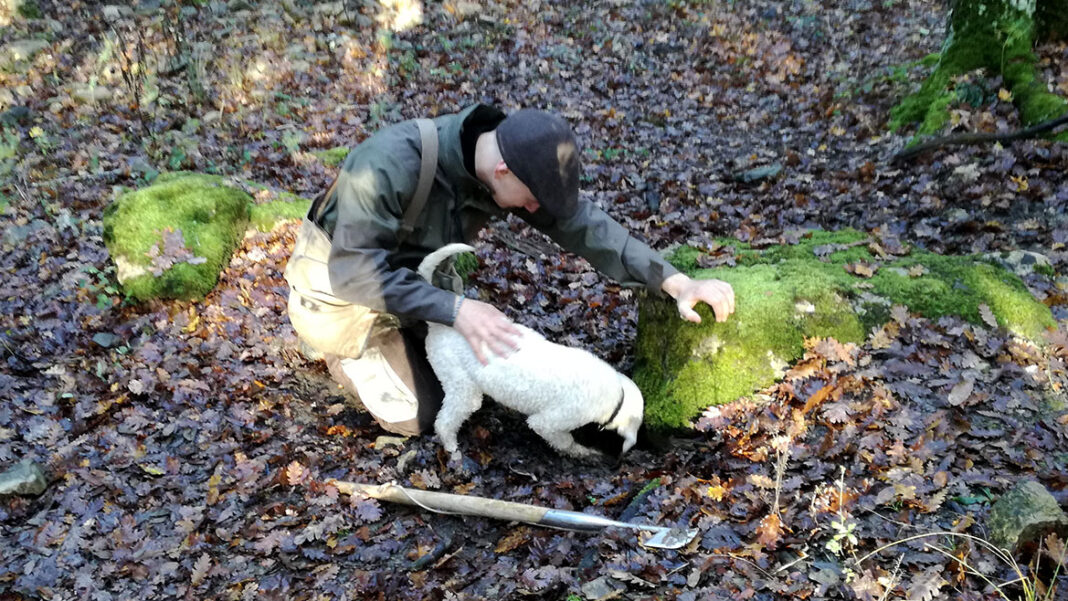
Spina, a ten-month-old lagotto romagnolo, sniffs the autumn air. She has been brought to these woods on the Castiglion del Bosco, A Rosewood Hotel estate in Tuscany to do one thing – find truffles. Let off the leash, she in fact proceeds to do many things.
She darts from person to person in our truffle-hunting pack, she hurdles a tree root almost as big as herself and then runs back to her handler for a treat. Too soon, Spina. You must first find the truffle. “No, Spina, vai, vai!”
Sign up to Money Morning
Don’t miss the latest investment and personal finances news, market analysis, plus money-saving tips with our free twice-daily newsletter
Don’t miss the latest investment and personal finances news, market analysis, plus money-saving tips with our free twice-daily newsletter
Spina zeros in on a tall oak tree. It is a fine specimen, but nothing sets it apart from the others. Spina knows better and her fluffy white paws set to work, scraping away the soil from the base of the tree. “Bravissima! Super dog!” It is a truffle and a large one, worth maybe €40 on the market. Spina surrenders our treasure for one of hers and she swallows the treat in a single snap. Now, she has her tail up.
The hunt continues and Spina brings us to a large rock with nothing about it to suggest another truffle lies beneath. But again, the paws set to work, digging deeper this time. Our guide probes at the crevice Spina has made with his vanghetto – a small trowel on the end of a long wooden shaft. “Dove?” Where is it, he asks. Spina produces the black treasure with a flourish of her paws. “Bravissma!”
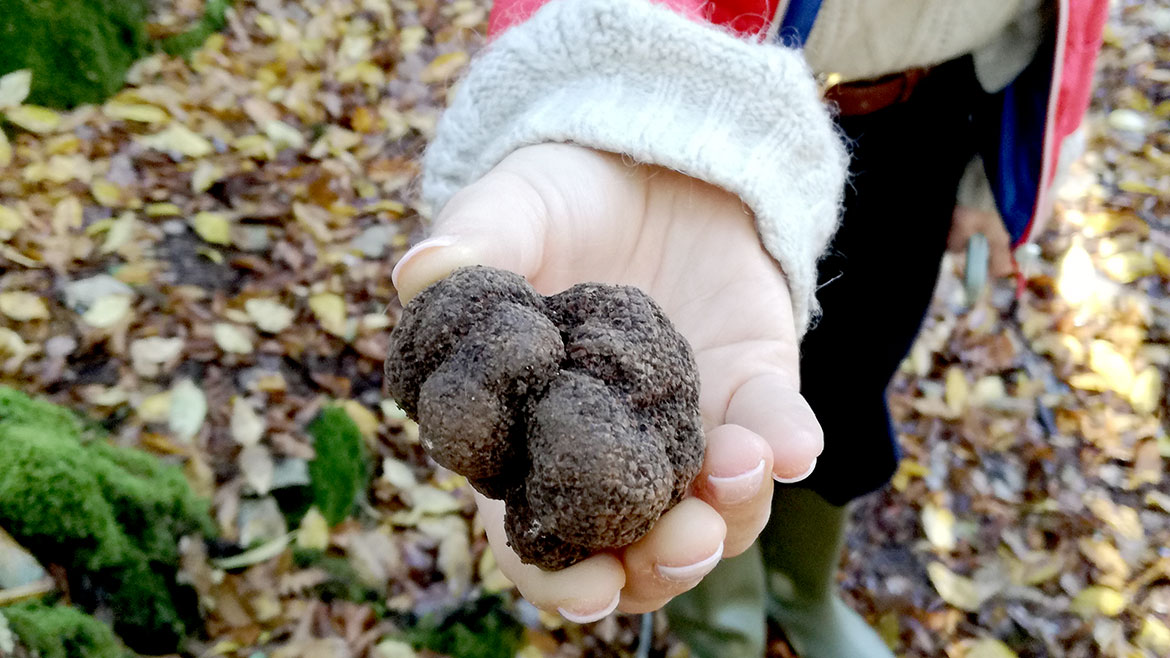
A truffle worth maybe €40 on the market
(Image credit: Future/Chris Carter)
A short while later, I’m in a rustic Tuscan kitchen, making the pasta to go with the truffles. But I’m making a poor fist of it. “Are you feeling stressed in your life?” our chef-teacher asks. I’ve certainly been busy and my efforts, crumbling before my eyes, aren’t helping.
The egg yolks are supposed to be massaged into the flour to form a smooth, silky dough. “If you are stressed, you shouldn’t make pasta.” Any nonna in Italy will tell you that. But, like this would-be pasta maker, if you let the dough rest, it will recover, our chef assures me. Except, it doesn’t. I have squeezed the life out of it.
Fortunately, the work of my comrades is more fruitful and after a few turns through the pasta-rolling machine, we are eating fresh tagliolini in a creamy sauce, with generous shavings of Spina’s truffles. As for the wine, it is excellent.
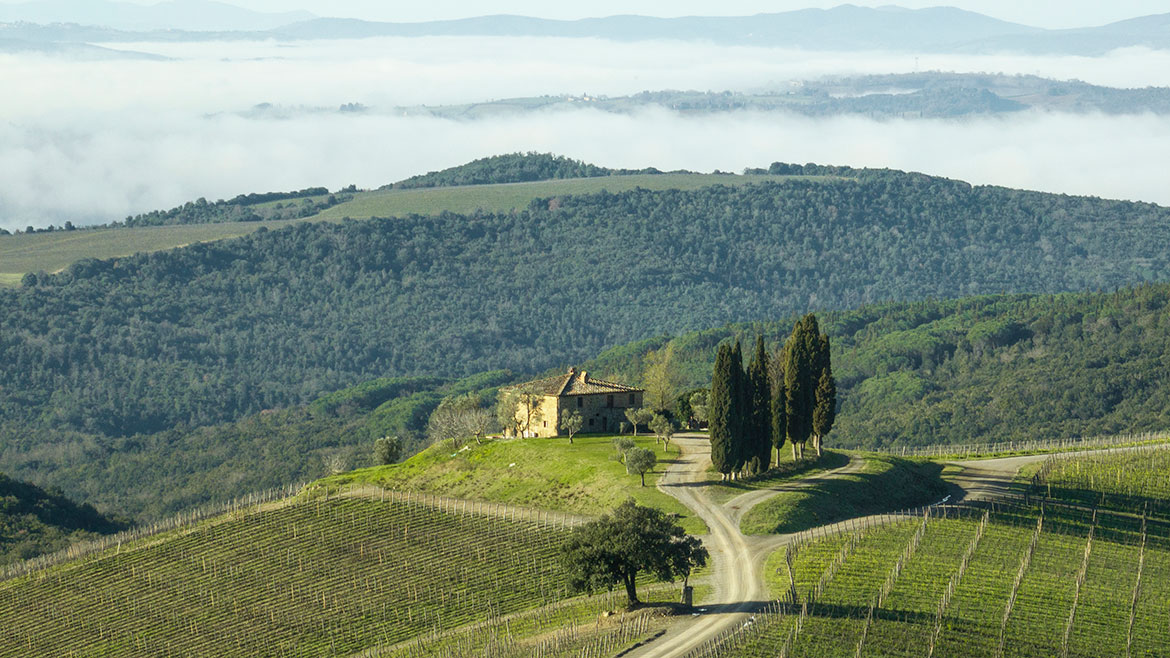
Villa Capanna is surrounded by vines
(Image credit: Castiglion del Bosco, A Rosewood Hotel)
Outsanding wines from the estate
The Castiglion del Bosco estate produces a number of high-end Brunello di Montalcino wines, made from the sangiovese grapes grown just beyond the walls of Villa Capanna, in which we are now sitting, having lunch. The pick of the bunch goes into making Zodiac, a true collectors’ wine – but good luck finding a bottle.
The relatively few magnums that are made get snapped up, notwithstanding the minimum €1,500 price tag. Each bottle sports a label depicting the animal in the Chinese zodiac corresponding to its vintage, beautifully designed by British artist Melanie Miller. We were able to admire the bottles, if not taste the contents, on a tour of Castiglion del Bosco’s winery.
At the heart of this modern facility sits the Members’ Cellar – an elegant round room of polished woods and copper, where the members’ collections are carefully stored behind lock and key. Admission to Millecento Wine Club is by invitation.
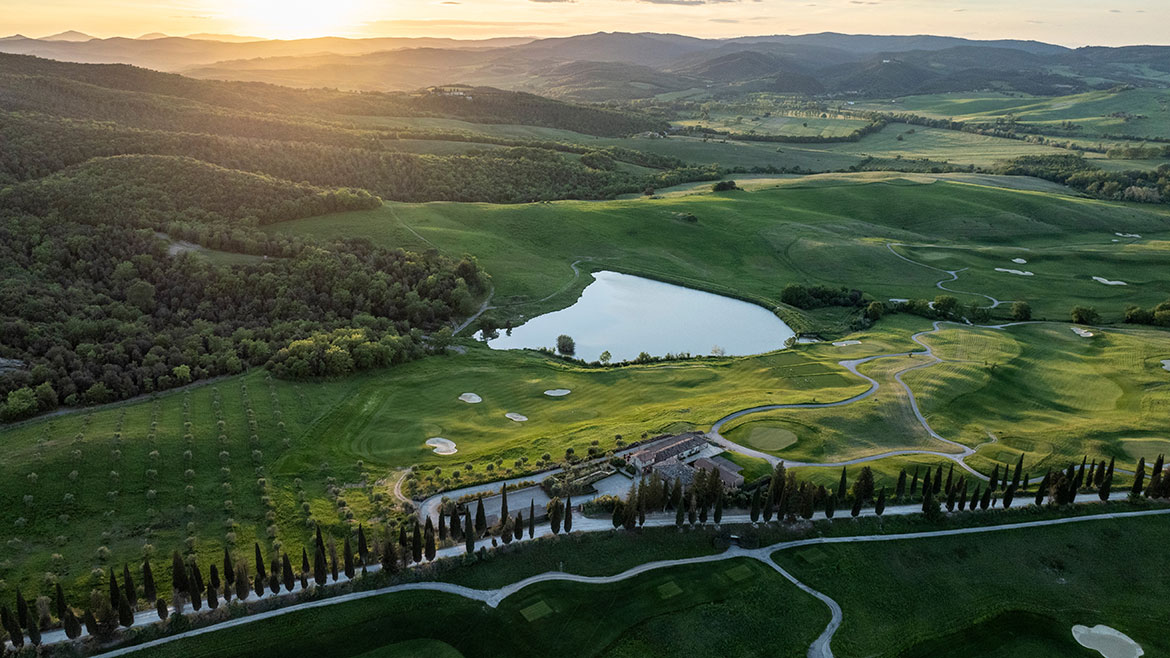
The golf course laid out by Tom Weiskopf
(Image credit: Castiglion del Bosco, A Rosewood Hotel)
Our conversation over lunch at Villa Capanna turns to Castiglion del Bosco’s equally exclusive golf club, simply called The Club. Its 18 holes (in fact, there is a 19th “Brunello Hole” for settling scores) were laid out by the late British Open champion Tom Weiskopf and they, like the rest of the 5,000-acre estate, are moulded to the gently undulating contours of the beautiful Unesco-listed Val d’Orcia National Park.
The Clubhouse occupies a former farmhouse that has been refurbished to include modern changing facilities, a cigar room and The Club Restaurant, which has panoramic views over the course. Again, membership to Italy’s only private golf course is by invitation, but guests of the Rosewood hotel at Castiglion del Bosco are invited to use the fairways.
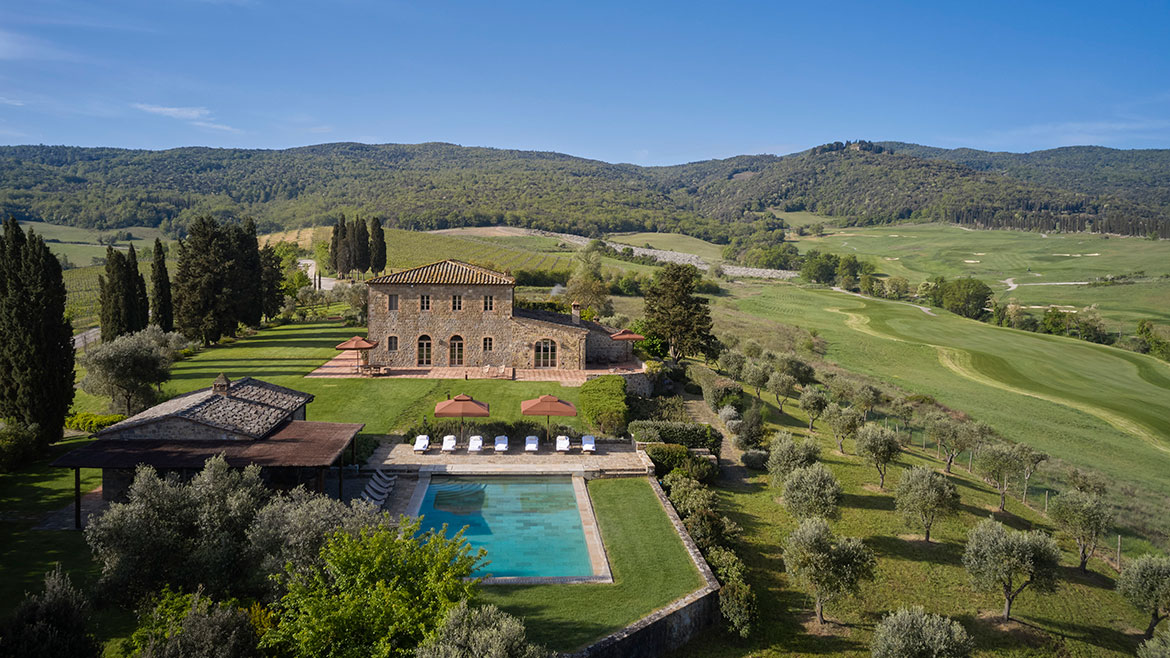
Villa Sant’Anna has lovely views of the valley
(Image credit: Castiglion del Bosco, A Rosewood Hotel)
The guest villa in which I am staying, Villa Sant’Anna, also has views over the green from the outdoor terrace that runs down its side. It is one of 11 villas that were built as farmhouses in the 17th and 18th centuries and that have since been sympathetically renovated to become guest villas, while retaining original features, such as exposed wooden beams.
One evening, we met with Signora Loriana, who grew up in the house and still lives nearby. Over pizzas baked in the outdoor wood-fired oven – another original feature of the villa – she showed us old photos of the property and explained how the farmhouse has been transformed into the refined, yet cosy Villa Sant’Anna.
Each of the guest villas comes with a “mamma in villa”, who is there in the day to rustle up breakfast and keep the log fire burning in the elegant living room. In the garden, there is a large outdoor, heated swimming pool with lovely views of the valley.
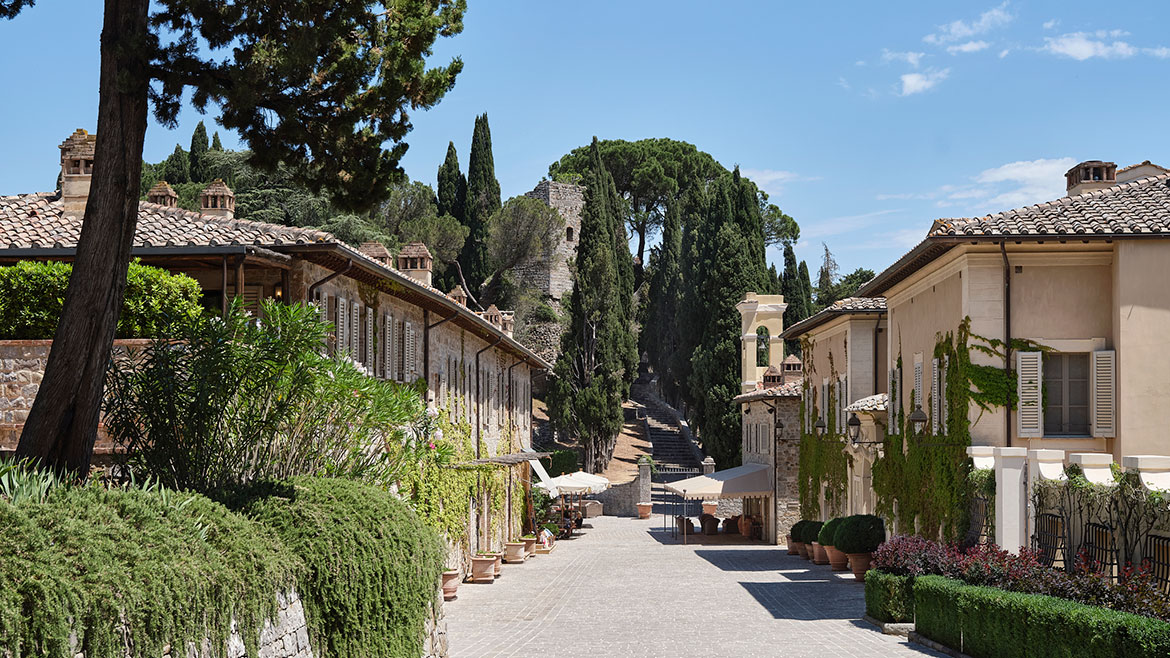
The borgo straddles the old Via Francigena
(Image credit: Castiglion del Bosco, A Rosewood Hotel)
A luxury hotel centred on village life
Village life is at the heart of the Italian rural idyll, so you won’t be surprised to find a village, the borgo, at the heart of Castiglion del Bosco. Here, a cobbled street runs up towards the ruined 12th-century castle, perched on a hill at the far end.
On the left, the street is flanked by converted stables and on the right, Rosewood’s Ristorante Campo del Drago, with its two Michelin stars, as well as Osteria La Canonica, with its menu of hearty Tuscan fare. Both look out over the valley. Just as the body needs feeding, so does the soul and it is fitting that La Canonica was, indeed, once the home of the priest.
Next door, you will find the diminutive Pieve San Michele church, which sheltered pilgrims passing along the Via Francigena, connecting Canterbury to Rome. Many will have admired the 14th-century fresco by Pietro Lorenzetti, rediscovered under plaster in 1876.
The whole of the Castiglion del Bosco estate is immaculate. This is rustic Tuscany without the rough edges – authentic, bucolic and charming. That is, in large part, down to the intervention of Italy’s Ferragamo fashion dynasty, which bought the estate in 2003 and restored it so lovingly. It is also in the way the estate is still very much part of the local community.
The villas at Castiglion del Bosco, A Rosewood Hotel, are available year-round and there is never a bad time to stay. Each season presents the estate in a slightly different, but no less beautiful, light. But I am glad to be sitting here in the late autumn, at Villa Capanna, enjoying a lunch of fresh pasta with truffles, wonderful wine and good company. What could be more Tuscan than that?
Chris was a guest of Castiglion del Bosco, A Rosewood Hotel. From €1,450 in low season and €2,050 in high season in a junior suite (available from 21 March 2026, when the borgo, facilities and restaurants reopen. The villas can be booked year-round).
This article was first published in MoneyWeek’s magazine. Enjoy exclusive early access to news, opinion and analysis from our team of financial experts with a MoneyWeek subscription.