
This post was originally published on this site.
 Getty Images
It is the biggest annual sporting event in the world and its impact on Wales is tipped to be “transformational”.
Tour de France organisers have confirmed Wales will host the third stage of the iconic race in 2027.
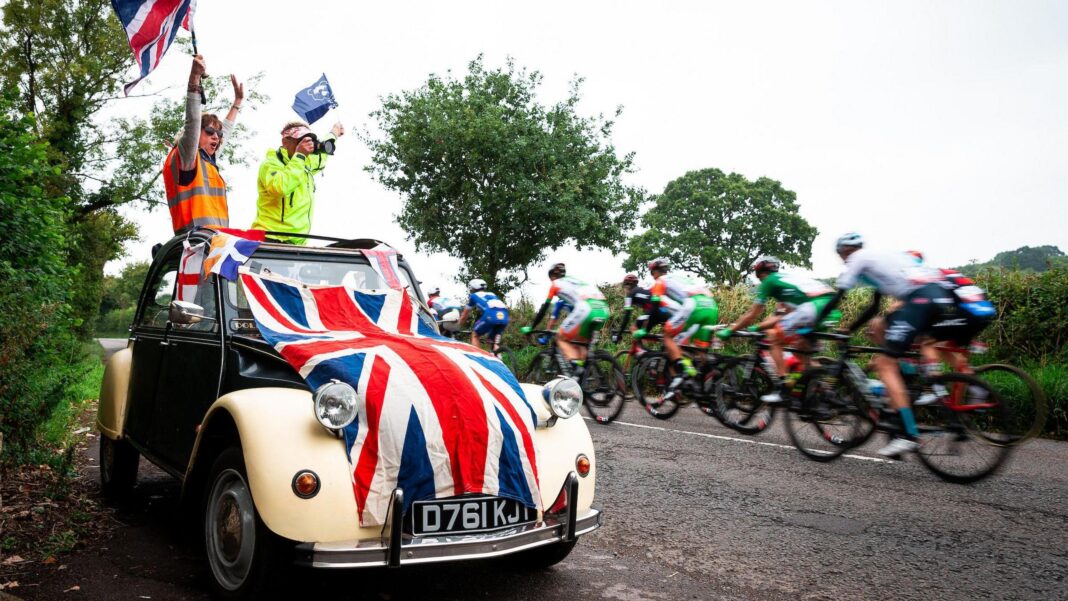
For the first time, the world’s most famous cycle race will be held in Wales in front of thousands of fans expected to line the streets from Welshpool, Powys, to Cardiff as well as a television audience in the billions, across more than 100 countries.
The event is seen as a huge opportunity to boost sport, business and health in the country.
“The Tour is the reason I got into cycling so it will be a very special day – but it’s the legacy that will be key,” said Thomas.
‘Once in a lifetime opportunity’
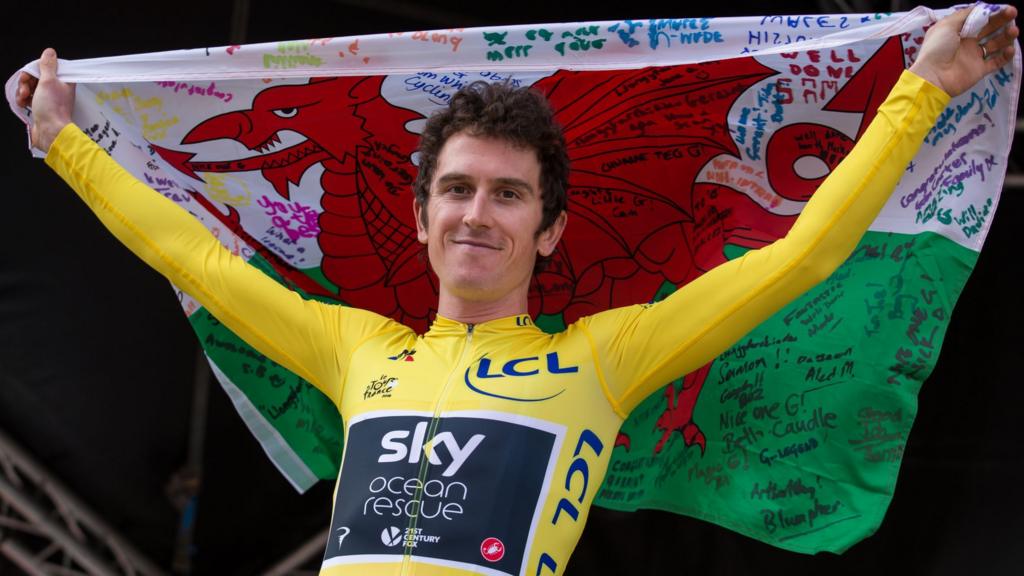
For Thomas, who has stood on all three steps of the podium on the Champs Elysees including top spot in 2018, it is a realisation of a dream.
The Tour that inspired him to start cycling as a child will pass through the streets were he grew up, beside the cycling track where his potential was first spotted and even past is local pub.
But as well as the sporting and personal significance, the former Olympic champion is all too aware of the huge opportunities that await.
The 39-year-old spoke of showcasing Wales and the “once in a lifetime” chance to both inspire future stars and inject impetus into the tourism sector.
First minister Morgan added: “It’s a real opportunity. The eyes of the world will be on our country for one of the biggest sporting audiences on the planet.
“Millions upon millions of people around the world will never have seen parts of Wales that we’ll be showing them.
“This isn’t just a milestone for cycling in Wales, but it’s a celebration and an opportunity for us to show off our nation.”
The Tour’s general director, Christian Prudhomme, said his first taste of Wales came with rugby before Thomas rivalled the red shirt with a yellow jersey.
“The Grand Depart is always massive and we have to often explain to the French people why we go outside of France,” said Prudhomme.
“But it is because we find passion and we know it will be a resounding success in Great Britain. Wales is made for bikes.”
When is the Tour coming to Wales?
After the opening stage from Edinburgh to Carlisle on Friday 2 July, the tour heads from Keswick to Liverpool before arriving in Wales on Sunday 4 July.
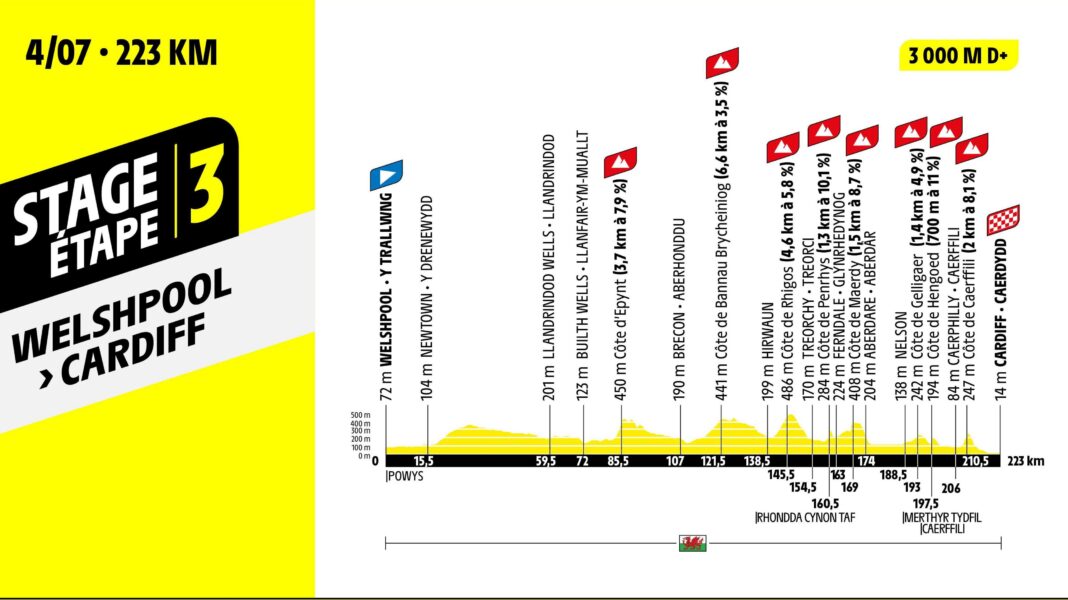
The stage begins at Powys Castle in Welshpool, before heading 223km (139 miles) to Cardiff via Builth Wells, Brecon, Treorchy and Nelson.
Riders will also take on seven categorised climbs, including Bannau Brycheiniog (Brecon Beacons) as well as the Rhigos (Cote de Rhigos) and Caerphilly (Cote de Caerphilly) mountains.
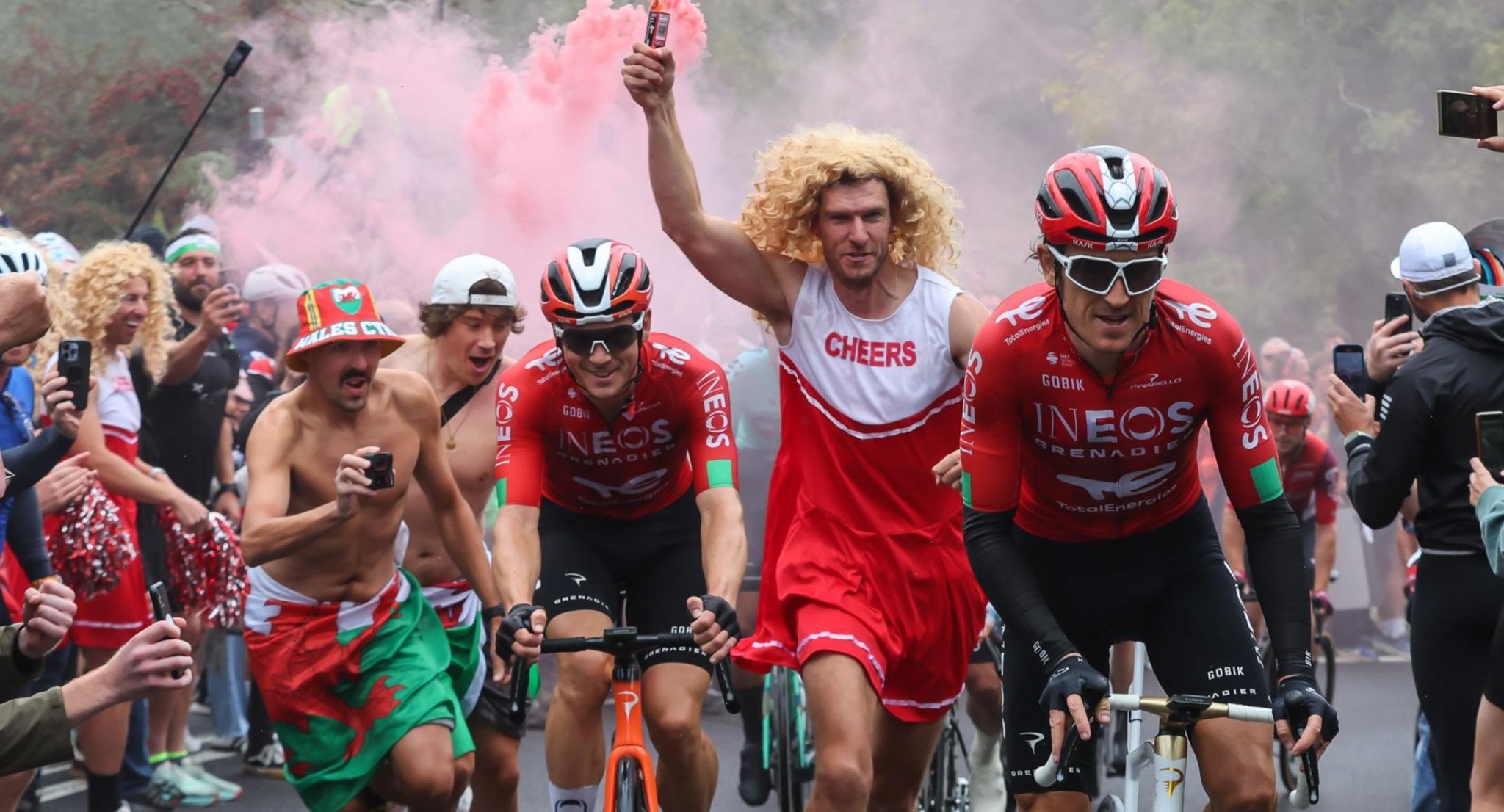
The final flourish into the capital echoes the finish of the recent Tour of Britain where Thomas bid an emotional farewell to his career and expects the atmosphere on Caerphilly mountain to “rival Alpe d’Huez”.
Prudhomme, meanwhile, tipped the stage to see an early battle between the favourites for cycling’s ultimate prize with the likes of Tadej Pogacar, Jonas Vingegaard and Remco Evenepoel set to battle on Welsh roads.
“It’s very important for us to have the GC (general classification) contenders shoulder against shoulder during the Grand Departs – and it will be the case,” he said.
“This stage will be very challenging, it is a 100% Welsh stage. There will be punchy performers but the leaders of each team and the riders who want to win the tour – we will see them on stage three for sure. I think there will be a new yellow jersey after stage three.”
Geraint Thomas’ verdict
Thomas expects the Welsh route to present a new challenge for the peleton.
“Riders will know they’re not in France. The roads and the landscape are completely different to what you get in France and that makes the race more unpredictable,” he said.
“In Wales it’s heavy roads, small lanes and the climbs are just different. It doesn’t come easy, you’re always working hard – and that’s not just me after doing nothing for the past four months.
“Hopefully the weather will be nice, but that brings another dynamic.
“The route itself has a San Remo feel because it starts flat but then it’s a long stage with the climbs coming towards the end with the Rhigos and Caerphilly.
“We’ve seen in the Tour of Britain it can be tough for some but there’s enough time to come back.
“So will the sprinters come back in time? Will it be a bunch finish? Will it be a breakaway? There are a lot of scenarios so it’s going to be super exciting to watch.”
What plans are in place?
 Getty Images
Thomas – named director of racing at Ineos following his retirement – has been appointed as a cycling ambassador for Wales as part of the build-up to the historic event, an obvious choice for the first minister.
“He is one of our most successful athletes, a global figure in the sport and embodies that spirit and determination that makes Wales a unique place,” said Morgan.
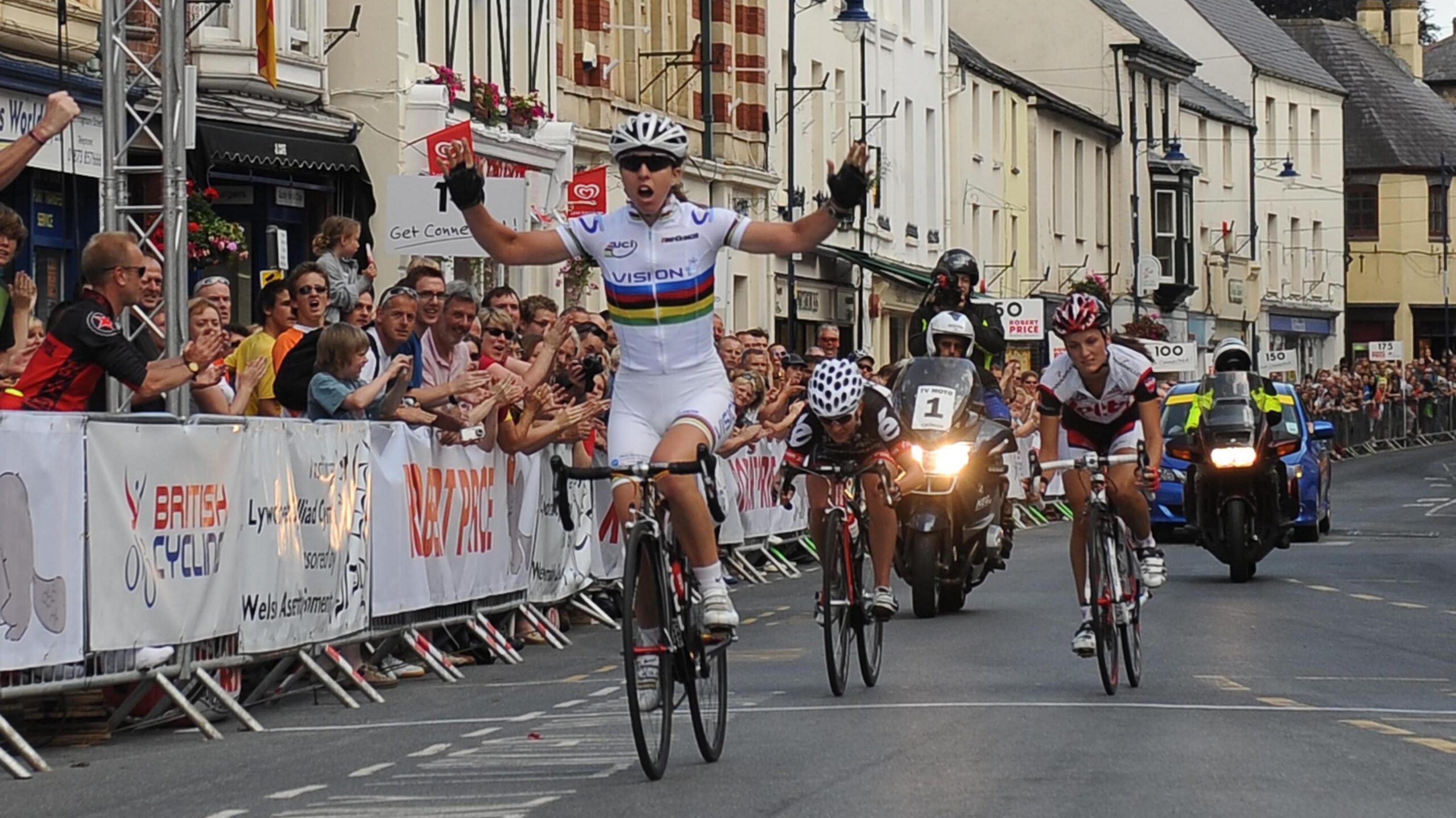
A role for former world and Olympic road race champion Nicole Cooke was also hinted at. Although Wales is not included in the three Tour de Feminin stages to be held in the UK later in July 2027, Morgan appeared keen to involve a rider who Thomas cited as his ‘visible’ Welsh cycling inspiration.
“It is important that we get young girls in particular into sport,” she said. “There is a gap and there’s a particular age where they stop being active so having someone like Nicole would also clearly inspire a different part of the community. We’d love Nicole to be involved so we’ll certainly approach her.”
The Welsh government has committed £1.7m of resource funding and £500k in capital funding for major sporting events, including hosting the Tour de France.
In the draft budget, the government said it would “explore targeted support for private tourism businesses and develop a new cycling infrastructure scheme to capitalise on the Year of Cycling and the arrival of the Tour de France, unlocking new market opportunities and enhancing Wales’ active tourism offer.”
Analysis – ‘Welsh landscape to become global scenery’
The Tour de France coming to Wales in 2027 is about far more than sport. It is a strategic opportunity to build on Geraint Thomas’ legacy, grow cycling participation, and unlock serious tourism value.
For Beicio Cymru and the Welsh government, the stage from mid-Wales to Cardiff provides a ready-made platform to push active travel, improve infrastructure and position cycling as something for everyone, not just elite athletes.
But the most powerful impact is visibility. No sporting event sells a country like the Tour. Five hours of live coverage, much of it helicopter beauty shots, turns landscapes into marketing assets. The mountains, the coastline, the Valleys and the capital become global scenery.
Wales is already visually compelling — the Tour simply broadcasts that to millions in Europe, Asia and the US. The job now is maximising this exposure: aligning campaigns, converting viewers into visitors, and ensuring Wales doesn’t just host the race, but capitalises on it.