This post was originally published on this site.
Despite Crystal Palace‘s FA Cup exit to non-league Macclesfield last weekend, there is no doubt Oliver Glasner has made a big impact in his two years as manager.
Glasner, 51, led Palace to their first major trophy – and into Europe – when they won the FA Cup last season.
On Friday, he announced he would leave the club at the end of the season.
Earlier this month, Glasner sat down with Kelly Somers to talk about where he grew up, the life-threatening injury that led to him retiring from playing, and partying as a teenager.
The interview is available now on BBC iPlayer and will be shown on BBC One on Saturday, 17 January from 23:55 GMT (01:10 on Sunday in Scotland).
Kelly Somers: Oliver, as always, lovely to see you in the players’ lounge here at Crystal Palace. But let’s talk about yourself and football. Where did your love affair with football begin and why did you end up coming into the sport?
Oliver Glasner: I can’t remember so long ago, but this was just what my mum told me – whenever a ball was laying, I was just kicking it, and I think the love started there. I just played football in my home village, a very small village in Austria, and with my friends.
Kelly: What was the name of your first team?
Oliver: My first team was SV Riedau. So Riedau is the… I can’t say city… it’s a village with 2,000 residents. I’m still living there. We built our house there 25 years ago and my best friends are still living there, so my best friends are my childhood friends. Whenever I come home, it’s not so often, but when I come home we go for a dinner or play tennis together or play golf together. This will always stay as my home base. Of course, now I’m traveling around the world, but the home base will always stay -Riedau.
Kelly: In terms of the team when you joined it, can you remember the people that you played with? Are they still your best friends?
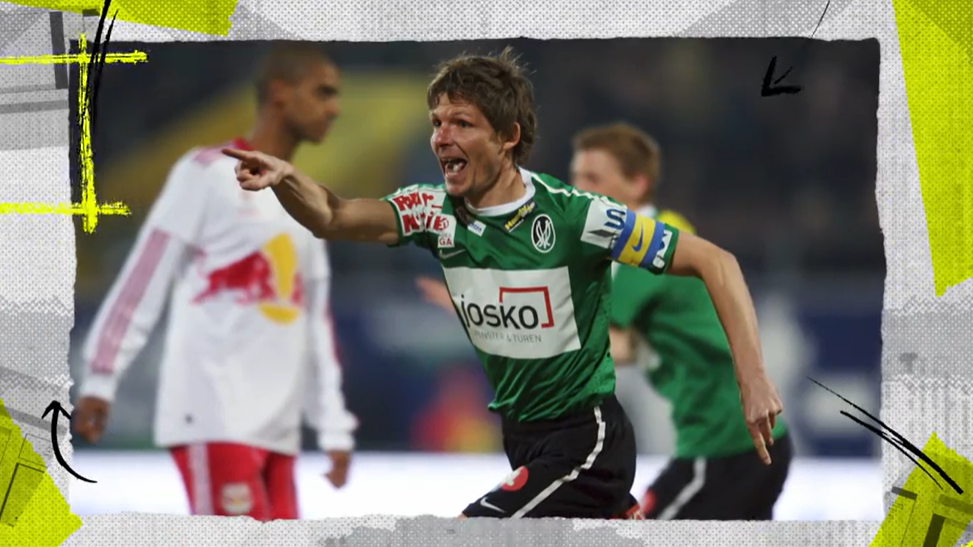
Oliver: Yes, it started with six there but then for 15 years I played first-team football, also non-league football – the sixth league in Austria. I stayed there and then at 18, after graduating, I got an offer from SV Ried – the club I played 19 years for. They were in the second league at that time in Austria and I said: ‘OK, let’s try.’ It was semi-professional and I studied close by Salzburg. Then in 1995 we got promoted and then I said: ‘OK, now I’ll try starting a football career.’ I stopped studying and really said, ‘OK, now I’m 100% focused on playing football’ and it worked quite well.
 AFP via Getty Images
Kelly: You had a really successful playing career as a defender but then, of course, it was cut short. It wasn’t your choice to retire. Talk us through what happened that caused you to end your playing career.
Oliver: Yes, I played many years. I was not a freshman at that time when I had to retire. I was almost 37. I had a very long career and I enjoyed playing football. I enjoyed being in a team, even then, when I was 37. Then I had my crash head-to-head – an aneurysm, and I had surgery. Everything went well at the end but then I had to retire. But I think it was time. My wife always said, ‘Oh, you would have never retired’ because I love playing football. I love to be in a team and maybe that’s why I became a manager later, because I love to be in a team. I love to support players, I love players, human beings, people.
Kelly: For those that don’t know, it was a head injury that you had. You had a brain haemorrhage and then you had an operation? Didn’t you? But it’s clearly changed your whole perspective. Would you say it’s shaped how you think? Has it changed your attitude?
Oliver: No, I don’t think so.
Kelly: Were you like this before? You were able to use these negatives in such a positive way?
Oliver: Yes, I think so. It was more a confirmation what I was thinking before. We had never taken anything for granted. It was 50-50 to survive, that is what I was told afterwards – but in the moment you don’t know.
It was much, much tougher for my wife and for my children at that time because they need to do an emergency surgery and she had to give her OK. You’re at home on the phone in Austria expecting your husband to play football and then you have to say: ‘OK’ [to surgery]. This is tough. I can’t remember, so for me it was not tough – it was just… I woke up the next morning, I didn’t know where, I couldn’t remember. I didn’t know that this happened. I pressed the button when you’re in the hospital and the nurse came in and I asked, ‘what’s going on?’ so it was tougher for my family.
Also. at that moment I took the phone and turned it back to a selfie because I didn’t know what [I looked like], then I could see that my whole head was cut.
This is then the perspective where I think sometimes – we all know complaining about little things – really little things – it’s not really important. This maybe helped me to create the mindset to really get back into a good mood and enjoying things quickly.
Kelly: Has there been a turning point at all in your career? Is that it?
Oliver: I think who we are starts with how we grow up. My mum was a single mum – she had to work as we needed money and we didn’t have a lot of money, but I still feel I had everything I needed to have a great childhood, even without being rich. Boots I always got from the Easter Bunny and I loved it – we couldn’t buy three pairs of boots a year. I think that keeps me grounded, that keeps me humble. I know where I’m coming from. I will never forget it. I’m always telling my players we should never forget that we’re all living our childhood dream.
I grew up with five TV channels – there was no internet at that time – and I was allowed to watch football when it was at 8pm in the evening. I usually had to go to bed because I had school but when there was a football game on, I was allowed to watch it. sitting there as a small boy there and I could see a few times what is now the Champions League, then it was a European game and I remember Liverpool in the ’80s. I remember it like it was yesterday – sitting there thinking that I would love to be involved in this. Now I am.
With all the challenges we have in our job this is when I sit back and have a coffee and think, ‘Oliver, with all this stuff, come on, don’t complain, you are living a childhood dream. When you were a boy, you wanted to be here. And now you are, so come on, be positive and enjoy what you’re doing.’ It takes me usually maximum one hour and then I’m back on track.
Kelly: You’ve obviously gone on to have an incredibly successful managerial career. We don’t have time to talk about all of it because you’ve achieved so much – be it at Frankfurt or be it here at Crystal Palace now. But when you look back so far, what’s the highlight… the standout of your managerial career?
Oliver: Honestly, for me, the highlight is the whole journey. For me, the highlight is getting to know so many great people and sharing great moments with them, and also sharing great moments with my family. Yes, the finals and winning the Europa League and winning the FA Cup, my whole family was there for that. I am always telling the players these kinds of emotions you can’t buy, you have to deserve it and that makes it so special for me.
It is something different if you get a gift – it’s nice and you’re enjoying it, but if you had to work for achieving something and then you achieve your goal with all the effort, it feels better. No Oliver Glasner, no player, no chairman, no owner, no fan could achieve it [alone] but all together we could.
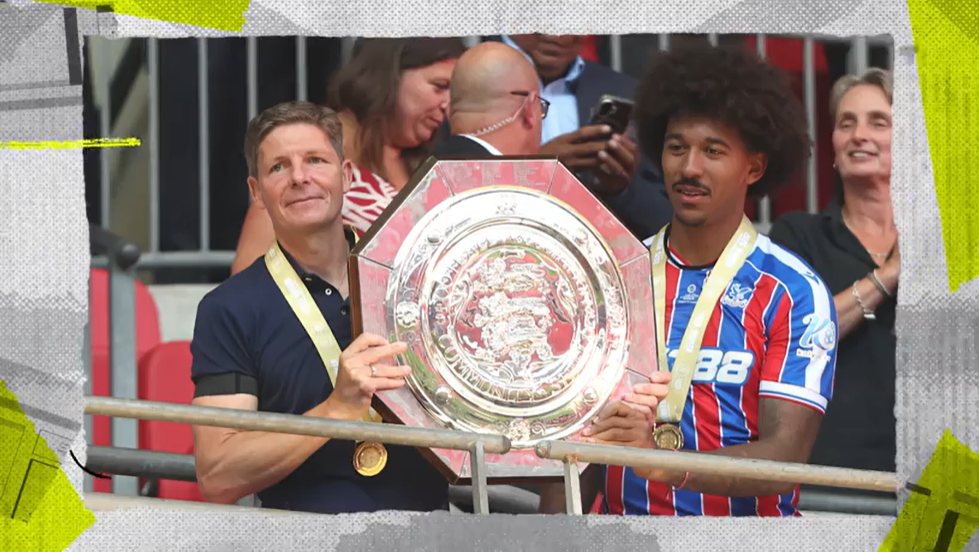
With this spirit – with this working together and supporting each other – we could achieve winning the FA Cup, we could achieve winning the Europa League, we could win against Liverpool in the Community Shield. I like all these moments sharing with people – people who I had a great time with. I think this is something special and this is what I’m really enjoying and the result is the trophy.
To play this video you need to enable JavaScript in your browser.
This video can not be played
Kelly: Tell me one thing about yourself that might surprise me.
Oliver: I think you would be surprised when you have seen the 18 or 19-year-old Oliver Glasner. He was much wilder than he is now.
Kelly: Wild in what way?
Oliver: I don’t know how you say it but when you graduate at school, you go on a holiday with your schoolfriends and we went for a Greek island. It’s a huge party island. At the time we went there for two weeks and it was two weeks just partying from sunrise until sunrise.
Kelly: You’re telling me you don’t do that now…
Oliver: No, I don’t do it any more! It was a lot of fun and I enjoyed it. In life, it is good to have these wild times – you need to develop. That’s why I’m also a little bit more patient with our young players. I’m just thinking they should party a little bit more than they are doing because now with all the phones, with all the videos, they’re always worried that something gets published. It’s good that you haven’t been there and have seen me, and nobody has seen me – and especially my parents haven’t seen it.
Kelly: You have just said it on television. You just told us…
Oliver: I think it is part of life. You need many experiences in your life to grow. Yes, a few of them I maybe think it would have been better if I haven’t done it but it’s part of it. I am always telling my players that making mistakes helps you to grow. I made some mistakes in my life, of course. My children are between 15 and 24. You want them to avoid the mistakes you made at that age but you can’t.
Kelly: So you’re telling them to go partying when they finish university?
Oliver: Of course, of course they do it. They don’t ask, so they do it. And it’s good. It’s the same with young players. I want to help and support them but on the other side, I know they have to make their own experiences and then there will be a few mistakes they make. Maybe we’ll lose a game but if players learn from it and grow and develop, then they enter the next level. This is just how life works.
 AFP via Getty Images
Kelly: What do you still want to achieve? What does the rest of your career want to look like?
Oliver: I want to enjoy what I’m doing – that’s my biggest goal. Because I know then, as long as I’m enjoying what I’m doing… if I’m enjoying being a manager, then I can affect the group I’m working with, I can affect the environment I’m working in and then we will be successful.
I think I’m always surrounded with great stuff and again, it’s not just Oliver Glasner, we need everyone here and a great group of players. Then if we enjoy the time together, we will be successful. This is what I want because for me, it’s not saying, ‘OK, I want to win the Champions League’ but if this year and after I say, it was wasted time, I think it’s not worth it. As long as I’m enjoying the journey then I’m really pleased with my life.
Kelly: What do you need to enjoy it, just progress?
Oliver: For me, it’s working hard together to improve because this is what drives me. It is not being satisfied. I said once to my players if they want to stay in their comfort zone, they should let me know because then I go into my comfort zone, and that’s with my family in Austria, playing golf and tennis. It’s relaxing.
I’m here to be successful and to achieve something together, but if I’m the only one who wants this, I am in the wrong place. But if we all want this, we can do it. This was what I told the players at the beginning of last year. And the players said: ‘OK, we want to achieve and we are willing.’ Then it’s not to tell, it’s to show and to do – and then the players showed and the players did and I think that’s why at the end we could lift the trophy.
Related topics
-
-
16 August 2025

-