
This post was originally published on this site.
Leigh Davies was a hugely gifted Wales rugby international who found himself struggling after retiring. He would soon discover what was wrong
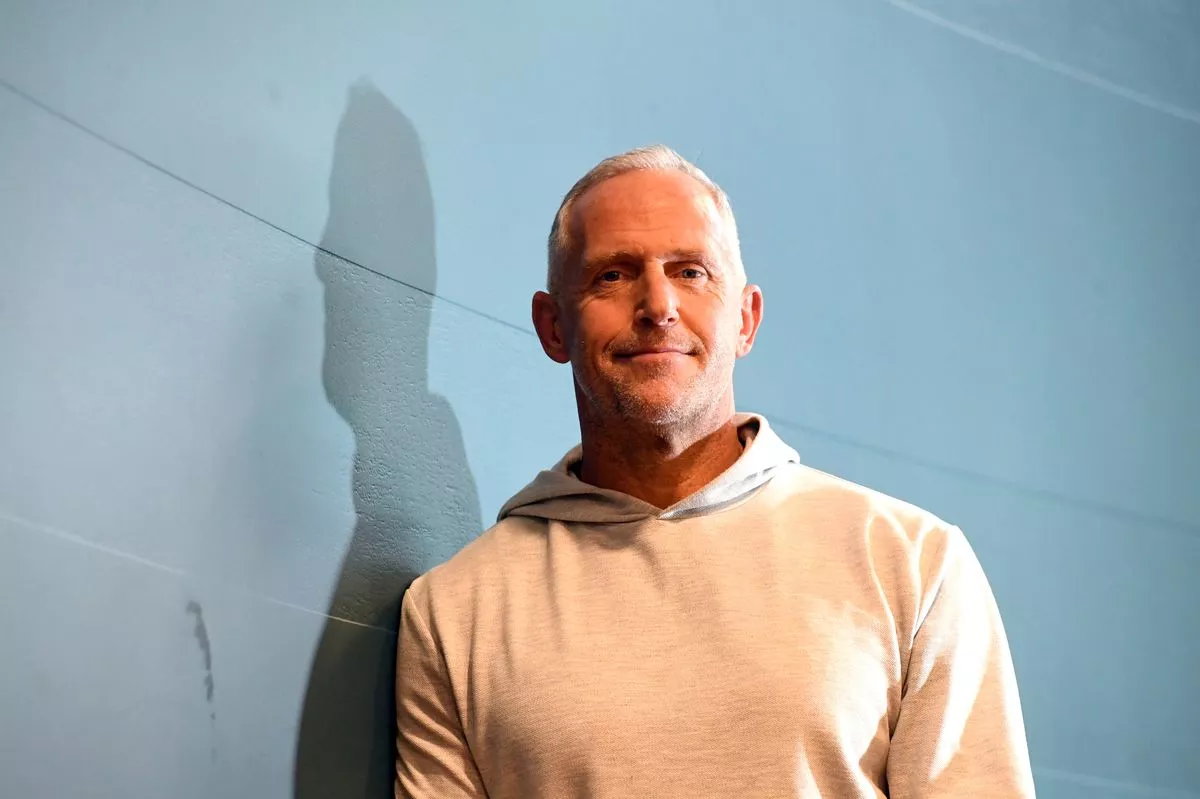
Leigh Davies has been diagnosed with dementia(Image: Rob Browne)
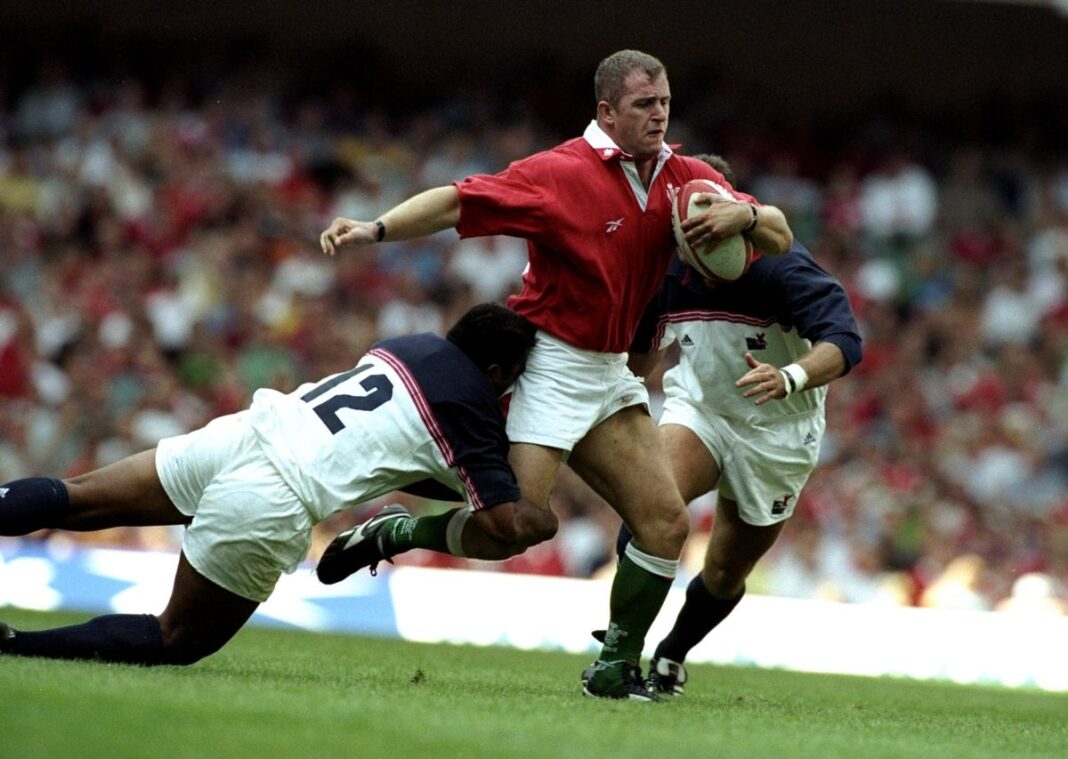
Leigh Davies moves across the cafe area at David Lloyd Swansea, changing gear effortlessly to go beyond a man who has strayed into his path. For a micro-second, the mind flicks back 30 years to a 19-year-old in the black of Neath surging past opponents with a compelling blend of power and pace.
A coffee drinker looks up on clocking the former Wales international and so does a laptop user. Maybe they have both recognised Davies, maybe not. He looks well. Probably, they don’t know the full story.
For Davies has a serious brain injury, early onset dementia and probable chronic traumatic encephalopathy (CTE). He is on a list of former players engaged in a lawsuit against rugby’s governing bodies, claiming those same authorities failed to take reasonable action to protect them from brain injuries.
Davies had been experiencing problems over a long period prior to receiving his diagnosis. “I went up to London for a scan and they tested my neurons and pathways,” he says. “They told me that of the group they were looking at, I had one of the highest rates of neuron damage. Half of what they were testing was in a state.
“I’d been having problems for a long time – memory loss and a sort of vertigo feeling in my brain. Then I started having blackouts.
“I might run through my working week, arrange to meet someone at the weekend but just crash for up to 18 to 20 hours, missing all my meetings or appointments or anything else I’d planned. If someone asked where I’d been I’d say: ‘Sleeping.’ It wasn’t normal behaviour, but it’s how it was. I’d wake up having missed whole days or whole nights. It went on for a number of years.”
Davies won 21 Wales caps between 1996 and 2003. When he burst on the scene, playing for Neath against South Africa as a powerfully built 18-year-old, he was viewed as one of Welsh rugby’s finest prospects, an X-factor centre with fast hands, watertight defence and the ability to beat opponents.
But the game was turning professional, with players starting to train full-time and bulk up. Amateur-era stickmen were beginning to dwindle in number and a contact sport was becoming collision-based. Players became larger, fitter and stronger and the hits became more substantial. It wasn’t altogether certain that everyone appreciated how things were changing.
“I didn’t even know a concussion was brain damage,” laughs Davies.
“I was a young boy who just wanted to play rugby and like most other kids my age I thought it would be OK.
“You just got on with it in those days.
“I can remember my first game playing for Neath, against Treorchy, and one of their players clothes-lined me. That would be a concussion.
“Playing against England when I was 19, I had my broken nose in the first 10 to 15 minutes. In the last minute of the game, I was ripped down by the neck by Phil de Glanville.
“And there were violent blows to my head in a game against Perpignan later in my career.
“Then there were all the other bumps. I didn’t have a clue whether any of them might cause lasting damage. I can’t remember once putting my hand up to say I wanted to come off. I didn’t know any different. The culture was to stay on the pitch, so I did stay on. It was a man thing.”
Davies has been through the most testing times and continues to be on that road, but his attitude to life is something to behold. This writer has known him since those early days with Neath. Positivity was at the heart of his personality then and it continues to be today, helping him deal with this most daunting of challenges.
“I have always been the type of person whose first thought whenever I fell ill or got injured was ‘what can I do to rehabilitate myself?’” he says.
“I know a brain problem is completely different and I know it’s something that might not be able to be fixed totally, but my mentality was to do what I could while working with the doctors.
“They have been really good.
“When this started I’d have ringing in my ears and my sleep patterns were all over the place. If I walked in the day, the light and the cars really affected me. I couldn’t jog, nor could I catch a ball. I was going up the field with my boy, trying to kick the ball, but my coordination was shot.
‘’Everyone has superpowers and mine were physical, but they were leaving me and it was hard to take. I was probably at my lowest around that time.
“You just want to do anything that might help you. I tried walking in the night, for hours at a time. I could manage that better than in the day. I also went swimming and I had regular saunas.
“I am doing everything the doctors tell me I should be doing.
“I am carrying on with the walking, the breathing exercises, the hydrotherapy and stuff, and I have noticed tiny steps forward.
“I won the odd game of table tennis against my son, for starters. He was 15 or 16 and there was a time when I could beat him at most sports, but all of a sudden he was hammering me. But I have stuck at it and the other day I won a game or two again. Once I saw that bit of progress, I thought: ‘Let’s move on to the next step.’
“I’d also lost the ability to juggle, so I thought I’d try to teach myself how to do that again. I was dropping balls everywhere at first. But I challenged myself to do it properly and after a year I could do it again. I’ve had to work at it and it’s not easy, but doing stuff like that, and playing reaction games like pickleball, is supposed to help.
“My coordination has come back a bit.”
Making new memories is the big issue. “If you gave me 10 things to do now, by the time I got out of the door, I wouldn’t be remembering any of them,” he says. “But there’s not a massive decline at this point, which is something to hold onto.”
Davies continues: “I try to be positive. I’ve had a scan and it’s identified what is wrong with me. No money or compensation can go beyond that, because I’ve been able to change my life and prioritise my health.
“I’ve stepped back from everything.
“I was coaching but my stress levels were too high. Rather than be able to switch off as I could back in the day, everything stayed with me – the noise in my head; adrenalin just washing around. My boy Joseph, my mother and my stepdad – we all sat down and they said: ‘We think it’s best if you don’t do that, just concentrate on you and your health.’ I can’t stress how brilliant they’ve been. All my family got behind me, giving me the support I needed. It was like everyone’s in it together.”
Complaining is not Davies’s style but his world has been impacted hugely by his condition and what brought it about. I ask him how he feels about rugby and whether enough was done to keep players like him safe in those uncharted early years of professionalism. “I’m no doctor but a lot of players from that era have developed problems since finishing,” he says. “The courts will decide if enough was done to protect people.
“But I’m not thinking about that at this point. I just want to do what I can to look after myself, and I do think there’s hope. It’s about looking after yourself and hoping there will be medical advancements.
“I was thinking about Lewis Moody the other day and his motor neurone disease diagnosis. I don’t know what brings that condition on, but it’s hard to imagine what he and his family are going through. It kind of puts my problems in perspective. If I can support him in any way, I will.”
Despite the ongoing challenges, Davies still has recall of certain events in his career. The first big one was the infamous Neath v South Africa game in 1994, a match so violent it possibly should have come with an 18 rating. “Wild,” he sums up, “but when you’re an 18-year-old coming through, you just think that’s how the game is at the top level. I’d gone from youth rugby, where there were always fights, to playing for Neath, where there were always fights, so you kind of thought to yourself: ‘This is how it is.’
“I watched the highlights of the South Africa game on YouTube the other day and it was a hell of a match.
“There were some very good players in that Neath side, among them forwards like Brian Williams – an unbelievable player – Andrew Kembery, Gareth Llewellyn, Steve Williams, John Davies, Chris Wyatt and Chris Scott.
“I wanted to play for the club ever since I was a schoolboy. I used to live in Fairyland and all of their team would run through the Gnoll estate and up towards the waterfalls. You’d watch them go past – we’d try to chase them. They always had that super-fit mentality.
“Then when I was playing I’d sometimes go down for breakfast in the town with the rugby manager Brian Thomas on match days and everyone would be there with their black jerseys on – pretty much all of Neath, really, at 12 o’clock ready for the game, the place packed with people just waiting for the match. What an atmosphere. Think of that, with everyone behind it for a routine club game, to where rugby is now.”
Davies played at a time when Scott Gibbs, Mark Taylor and Allan Bateman were all looking to figure in the Wales midfield, but which player of those he faced made the biggest impression on him? For his answer he goes beyond the significant talents of those listed above and instead homes in on a player he came across early in his career.
“When you play against a similar style of player to yourself, in my case perhaps a Taylor or a Gibbs, you know what’s happening there,” he says. “Both of those were great players, but the player who gave me a lesson was Mark Ring.
“I played against him for Neath against Cardiff at the Arms Park and every time he had the ball he seemed to have three or four options – inside, outside: you didn’t know what he was going to do. He was playing 12 and if I came in to mark one of their players, perhaps the full-back, he’d send the ball out to someone else.
“For him, it was about skill and deception. The way he organised to have those options was something that stuck with me. That day, he was brilliant.”
Davies’s Wales days petered out under Graham Henry, with the ex-Neath man winning just three of his caps after Kevin Bowring left the national scene. “Henry didn’t fancy me as a player,” he says. “I think he’d heard I had a reputation for liking the social side, but I worked really hard after he took over, training flat out, going on tours and barely having a drink and it still wasn’t enough. They brought in players from overseas who won caps ahead of homegrown people. Perhaps it’s not always about ability. Sometimes if a coach doesn’t like you, then you’ve no chance.”
Maybe understandably, Davies hasn’t pointed his son in the direction of rugby: “He’s 18 now, a really talented sportsman – an all-rounder. I suppose I could have influenced him. I could have said: ‘Go and play rugby. You could be an awesome player.’ He was a back-three player in school but he stayed more in football. It was up to him, but given everything that’s happened to myself, I just let him find his own path.
“But I don’t want to come across as someone who’s complaining, because I’m not. I’m grateful for my career. I played for great clubs in Neath, Cardiff and Llanelli and for the Scarlets and the Ospreys. I also played for my country and visited different places around the world and had different experiences.
“Above all, I’m grateful for the scans and the expert help I’m receiving and the support my family have given me. None of us – you, me or anyone else – knows what’s ahead in our lives. You just have to try to be positive.”
Rugby players with the natural talent of Leigh Davies don’t come along often.
Men with his outlook are even rarer still.