
This post was originally published on this site.
The former Wales coach sits down with WalesOnline to explain what his remit is with Scarlets and what he’s been doing over the last few years
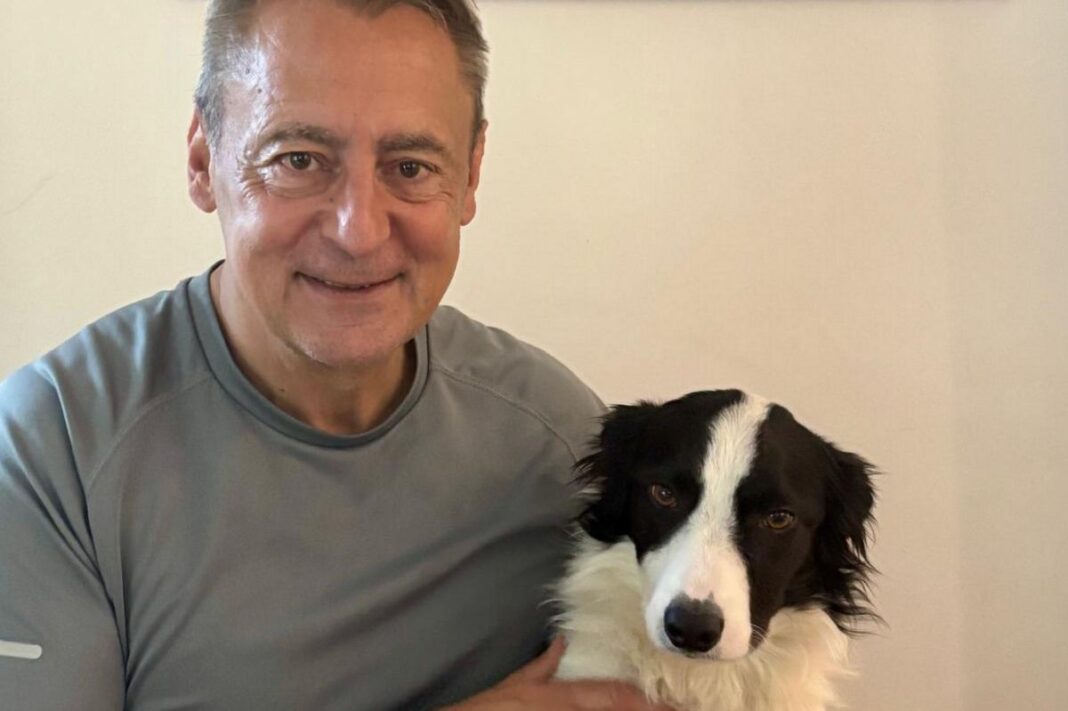
When Nigel Davies was walking his dogs in the Usk countryside, enjoying the quiet rhythms of rural life, the last thing he expected was a phone call asking whether he would consider returning to the Scarlets as interim director of rugby.
It was a call that carried weight. The club was struggling, the wider game was in turmoil and Davies himself had been away from the professional coalface for more than a decade. This was not a decision to be rushed.
“Absolutely,” Davies tells WalesOnline when asked whether he had any reservations about returning.
JOIN OUR WALES RUGBY FACEBOOK PAGE! Latest news, analysis and much more
“I thought long and hard about it. I spoke to a lot of people including Dwayne (Peel) because I felt that was important.
“This was as a result of a review by the board of the Scarlets.
“The first question I had to ask myself is do I think I can make a difference? After some consideration I thought I could.
“At the end of the day this is a club I have a long affiliation with, has been a big part of my life and rugby has been a huge part of my life as well.”
That affiliation stretches back more than 50 years. Davies was a schoolboy supporter when Llanelli famously defeated the All Blacks at Stradey Park in 1972, an occasion that helped define the club’s identity and ambition.
He would go on to make 498 appearances in a Scarlets shirt, scoring more than 100 tries along the way. His first centre partner was Ray Gravell, his last Gavin Henson, a span that neatly captures both the heritage and evolution of the club.
Yet for all that history, this return comes after a long absence from professional rugby. Davies’ last full-time role ended 12 years ago following a two-year stint as director of rugby at Gloucester.
But his love of and connection to the game in Wales continued as it took him to coach Ebbw Vale RFC to their first-ever Premiership title in 2016. A Cup and Premiership title double for Merthyr RFC in 2018 was also on Davies’ watch while CEO at the club.
However, he knew his Scarlets return may prompt the inevitable questions about whether the game had passed him by.
“It has been a few years,” he tells WalesOnline.
“But what I have been doing since then is running my own consultancy. I work with large multinational firms predominantly in the aerospace sector.
“The majority of the work I do is about performance management of organisations which is the alignment, making sure there is a clear DNA within businesses, where processes are mapped out properly, that accountability is clear and culturally they are in the right place to move forward.
“I’ve come in here and I firmly believe I’m better prepared to do this now than I ever have been.
“I’ve got a history in the game and I’ve been in the game a long time. I understand the game.
“It’s the same shaped ball with 15 people on both sides.
“The same things matter in terms of what you do on the field.
“How you do it has changed a little bit and I’m mindful of the law changes.
“If that is being a man of the past is that such a bad thing?
“I think we’ve got a few people in the game now who don’t understand Welsh rugby and I don’t know if that’s been hugely beneficial to our game moving forward.
“I haven’t stood still and over the last eight years I’ve been developing myself and working in high-pressurised environments where performance is everything.
“You get something wrong in an aerospace environment and people die – so performance management is very important and that alignment is vital.
“It’s no different in managing a group of people to deliver that to delivering performance within the rugby environment.”
Davies’ role places him above head coach Peel, with responsibility for the entire rugby department. It is a structure designed to allow Peel to focus on coaching while Davies shapes the wider operation, from culture and accountability to strategy and selection.
“From a performance point of view our aim is to win rugby games,” Davies says.
“From an organisational perspective once those players take the field there’s nothing the coaches can do.
“The outcome is not decided by the coaches, it is decided by the players.
“In this pyramid what we as coaches and an organisation can do is make sure we are the very best in everything that supports that performance.
“This is only the end of my second day but getting back to a DNA that we understand – the Scarlets DNA – is fundamental to that.
“Establishing that is first and foremost in what we have to do. We’ve made little tweaks already.
“We’ve simplified things and we’ve got some clear messages in there but there’s a lot more work to do in that.”
He speaks at length about breaking performance down into manageable elements, about clarity, accountability and culture, concepts that underpin everything he hopes to implement.
“When you start to look at what goes into performance there’s a huge amount that needs to be dealt with, aligned and accountability made clear with performance measures because we can’t control as coaches the on field performance when the players get on there,” he says.
“But everything that goes towards that we can but it’s so complex that unless we break it down into manageable chunks where we identify accountability and what those measures are then getting those little chunks right will give us every opportunity to get it right on the field.
“My driver is based around this. What underpins it all is culture and that’s often overlooked.
“A big part of what I need to do is to support the culture, make sure the culture is right, make sure that everybody understands what being a Scarlet is and how that translates to performance whether that’s people who are off the field or on the field.
“Part of my remit is also to produce a report which will be based on the findings in terms of where we go next and what my recommendations are for that.”
The relationship with Peel, forged over many years, is central to that process.
“We go back a long time so there is a level of trust there from a player and coach perspective,” says Davies.
“We worked well because we trusted each other to do things. That doesn’t mean it has been easy.
“In high-performance environments there has to be friction and we’ve had that friction as a player and coach previously.
“It was fine because it was open and it was honest. I’m sure Peely would say himself he’d rather me not come in at that point but I’d like to think even in the short period I’ve been in here it’s allowed him to do what he wants and needs to do and what his team needs him to do.”
Davies’ previous coaching stint at the Scarlets was defined by an attacking philosophy that encouraged freedom and expression, helping nurture players such as Rhys Priestland, Jonathan Davies, Liam Williams and George North. Reconnecting with that identity is a central part of his return.
“Good teams can look at any successful team in the world and they will know the game they are going to play,” he says.
“We are going to play one on Sunday and we know exactly what is coming but they do it so well they make it difficult for teams.
“We are probably not there yet and when we talk about DNA that’s what we are talking about.
“So, anyone can come into that team and understand clearly what is at stake, what they are playing for and how they are going to play.”
He references the All Blacks tradition as an example of clarity and expectation, while stressing the need for evolution rather than wholesale change.
“We aren’t a million miles away so we have to be careful we aren’t changing everything,” he added.
“But we need to fine tune what is here, refocus on what is really important, getting rid of all the noise which isn’t important, realising what our DNA is and making sure that message is getting across to the players so that when the players go and play they completely understand what they are trying to do.
“I’ve looked at the squad and I’m even more encouraged having been in here. I think the players are here.
“We have a responsibility to make these players as good as they can be.
“There is a far higher ceiling in this group than we are seeing at the moment.”
All of this is unfolding against a backdrop of deep uncertainty in Welsh rugby, with the WRU planning to reduce the number of professional regions. Davies believes that lack of clarity is having a damaging effect across the game.
“I’ve got strong views on this but it is probably not appropriate to talk about it now,” he says.
“What I will say, having been here a couple of days, is the lack of clarity is hurting all the regions. It is very difficult to sign anyone.
“Nobody would realistically sign for a region at this moment in time which is a difficult one when you are looking to strengthen. Staff are looking to move on.
“I think the whole situation is just unacceptable. The governing body is supposed to be looking after the game.”
While Davies is adamant the Scarlets must survive, his message to players has been about focusing on what they can control.
“By losing entities we lose gravity to pull people into the game,” says Davies.
“We’ve got to be really mindful we aren’t looking at the short term here.
“There are challenges to get people into the game but are we running away from it rather than running into it and dealing with the root causes.
“I told the players, look, we can’t control that. In fact it doesn’t really matter if there were 10 professional teams in Wales.
“Unless you perform as professionals to a high level you aren’t going to be rugby players.
“It is a fact of life for professional rugby players.”
For now, Davies insists his focus is firmly on the short term, on stabilising a club he knows better than most and laying foundations for the future.