
This post was originally published on this site.
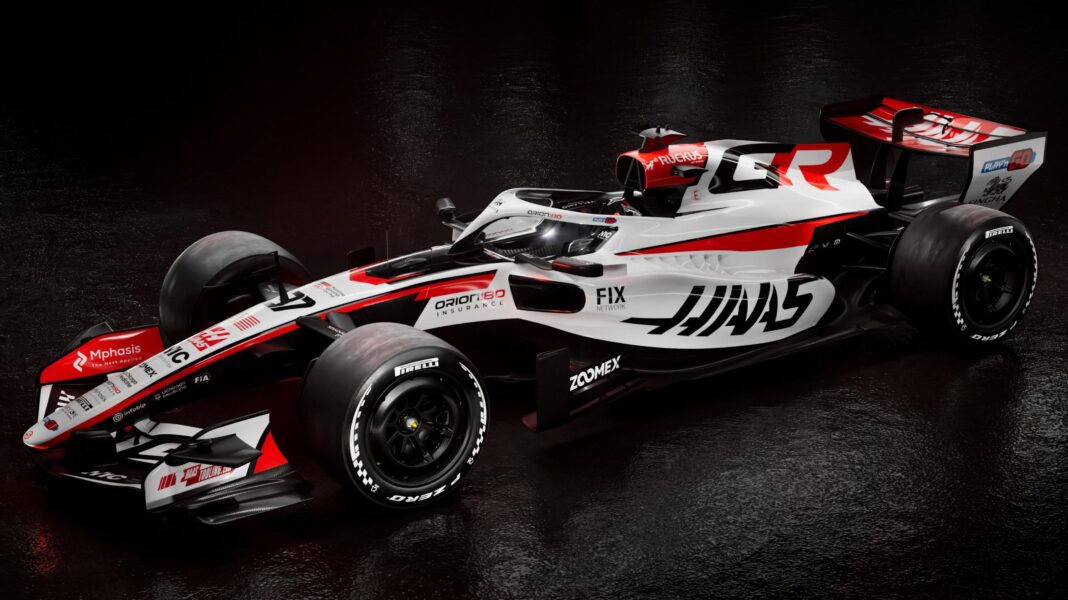
Haas have become the first team to reveal the look of their new Formula 1 car for a season in which the sport is introducing its biggest rule change for decades.
Digital renders of the new Haas VF26 were released on Monday, showing a number of features of the new 2026 cars.
These are smaller and narrower than the previous designs and are constructed to rules with a different aerodynamic philosophy.
The most obvious changes on the Haas are the narrower front wing and fin on the engine cover.
The car produced by the new Cadillac team which ran for the first time at Silverstone on Friday in a private test also featured an engine-cover fin.
Cadillac released photographs of their car running on track, but these were deliberately framed so as not to reveal too much about the car, either shot from a distance or in a blurred panning shot.
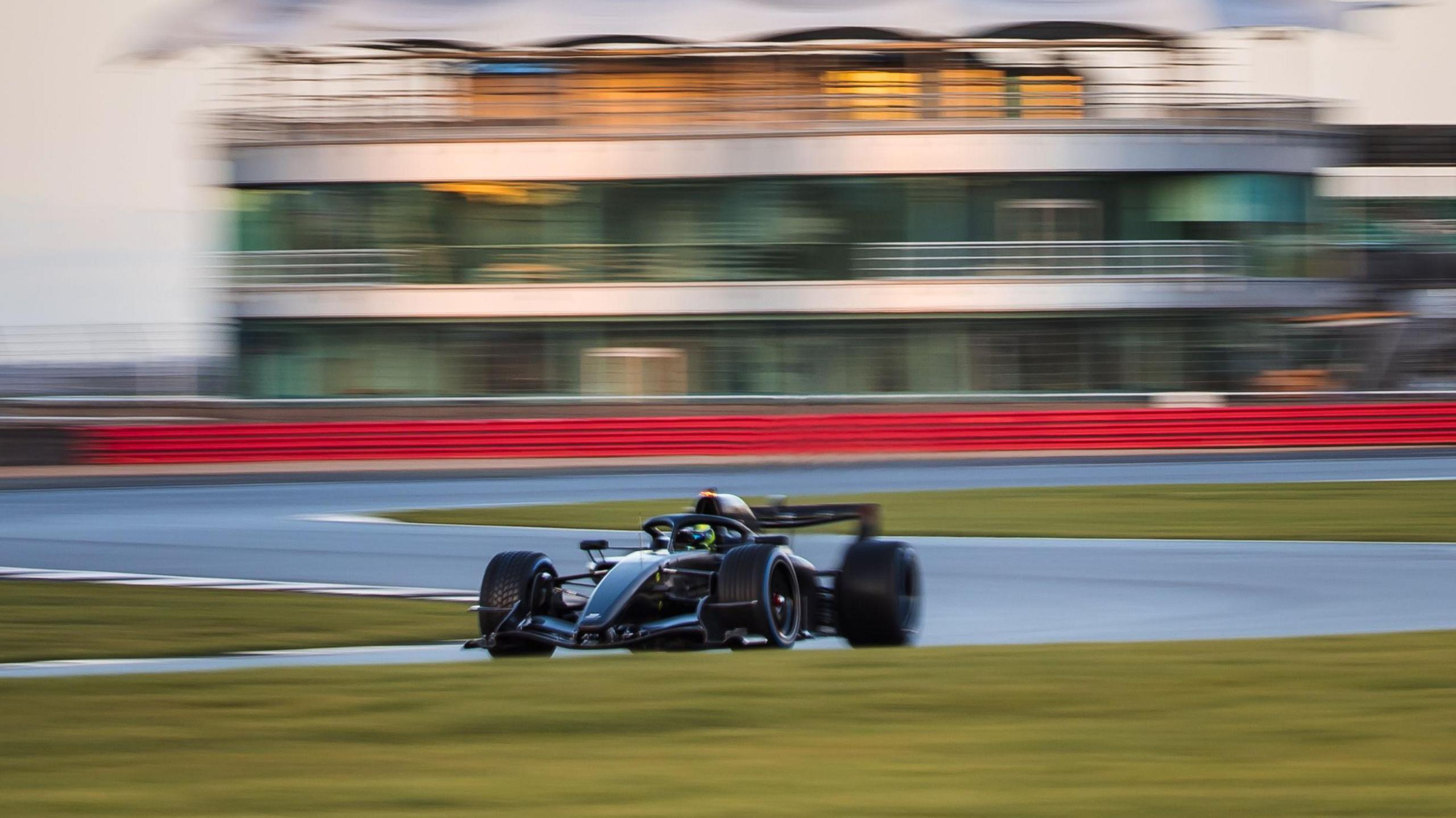 Cadillac F1 Team
‘It’s going to be a very dynamic season’
Red Bull launched their new engine partnership with Ford in Detroit on Thursday but the car on display there in the team’s new livery was a show car that bore almost no resemblance to their 2026 car.
The new rules for 2026 change both the cars and power-units (PU). The engines remain 1.6-litre V6 turbo hybrids, but the electrical components of the engine now have a much greater importance in overall performance, with significantly increased energy management around a lap and over a race, and the engines must run on fully sustainable fuel produced from either waste biomass or industrial synthetic processes.
The teams will reveal their cars individually in a series of online launches over the next three weeks, before the first public pre-season test in Bahrain from 11-13 February, which is followed by a second on 18-20 February.
There is a first test in Barcelona in the last week of January but this is private, with no independent media allowed.
The first race of the season is the Australian Grand Prix in Melbourne on 6-8 March.
Team principal Ayao Komatsu said the extent of the regulation changes was a major challenge for Haas as F1’s smallest team.
“I don’t think any team, even the biggest, is going to say they’re fully equipped to tackle this. However, for us, the challenge is bigger,” he said.
“There’s going to be huge variation between teams because of two elements.
“First is the PU, with the teams using the same provider presumably bunched up, so Mercedes providing four teams, Ferrari providing three, Red Bull two, Audi and Honda providing one.
“Then on the aerodynamic side, it’s completely open, and development will happen fast.
“A pecking order may get established in the first four races pretty quickly, but I think it’s going to be a very dynamic season. What you see in race one and race two, I expect will be totally different when we come to the final races of the year.”
Komatsu said working out the complexities of energy management would be a large focus of the first weeks of work.
-
Biggest rule change ever and Brit teen – what’s new in F1 in 2026?
-
10 December 2025
-
-
Active aero and overtake mode – F1’s new terminology
-
17 December 2025
-
The electrical components are three times more powerful than last year and provide up to 50% of the engine’s total power. But the rules mean the teams will struggle to recover sufficient energy for the battery, which will deplete and recharge several times a lap.
Komatsu said: “What the question will be for everyone is what’s possible for drivers to manage around a single lap and for a racing scenario over multiple laps, how precisely can you control various things – so that’s going to be a lot of what we’re doing in Barcelona.
“We’re in the homework phase of prepping all those different scenarios before we go racing, and even testing, we need to get on top of energy management, that’s the huge one.
“I don’t know if we all understand the full extent of the challenge because we don’t know what we don’t know.
“Then with aero development, we’re reasonably happy with what we’ve done so far, but as with all new regulations, the question will be, is the target we’ve set good enough? When we get testing, I’m sure we’re going to see different concepts, and if we’ve missed something, we need to get on it very quickly.”
The car’s revised livery is a refection of Haas’ enhanced relationship with Japanese car giant Toyota, whose corporate colours of white and red predominate in the design.
British driver Oliver Bearman, who partners Frenchman Esteban Ocon again for his second season in F1, said: “I feel these changes are the biggest in the history of Formula 1, so with that is a huge deal of excitement for me.
“It’s impossible to gauge where we’re going to be right now. Everything I’m seeing from the team is positive, but we don’t know how we stack up, and we won’t know until qualifying in Australia.
“Even then, I feel like in the first few races reliability is going to be playing a big factor. There are going to be teams and people making mistakes with these new regulations. It’s going to be tough to establish a true pecking order.”