
This post was originally published on this site.
 Getty Images
With two 0-0 draws at the weekend, this season’s Premier League has now featured more goalless games than the whole of last term – with 16 rounds of fixtures still to go.
Already, 17 games have ended without either side breaking the deadlock.
Two-time title-winner Joe Hart told BBC Radio 5 Live’s Monday Night Club “the pragmatic approach is a lot more favourable now” and said the financial implications of relegation made it “too dangerous” for many clubs to risk defeat.
Yet despite claims from some quarters that the league is getting boring, the average number of goals per game still stands at a healthy 2.74 – above average in the context of all seasons since 1992-93 – so what has prompted the criticism?
BBC Sport looks at the data.
Back to the drawing board
While the number of 0-0s currently is up on the previous two seasons, there have been more (18) at this stage as recently as 2022-23.
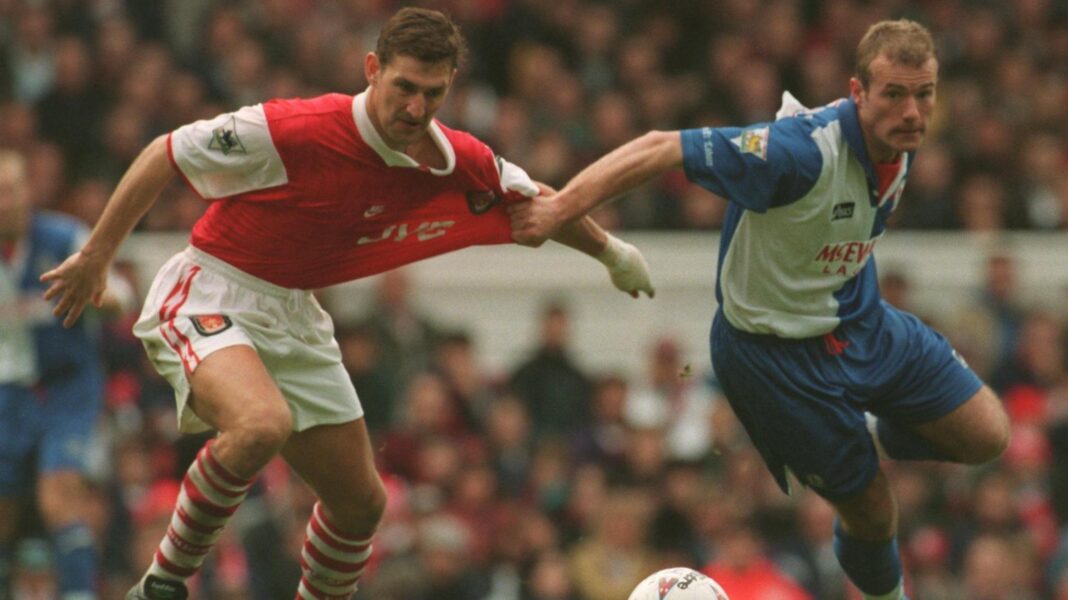
And even if the pattern continues in the next four months, it seems unlikely the final number will come close to the peak of 51 goalless draws in 1994-95, when Blackburn Rovers won the league.
In fact, of the six seasons in which more than 40 games finished 0-0, four were in the 1990s – although two of those campaigns (1993-94 and 1994-95) featured a 22-team Premier League, meaning there were 462 games in a season as opposed to the current 380.
The highest percentage of 0-0 draws in a season is also from that decade – 1998-99 featured 49 goalless games, or just under 13%.
The general trend since 2018 has been towards a drop in goalless draws. But after hitting a Premier League low of 11 two seasons ago, they are on the up again.
Former England number one Hart, who kept 127 clean sheets in 340 top-flight games, has noticed a tactical shift that may explain that.
Hart said: “I think the pragmatic approach is a lot more favourable now, no getting away from it.
“It’s the cycles that you talk about, and for years – I think set by the teams coming into the Premier League – teams were willing to go toe-to-toe and slug it out, and if they lost, so be it.
“But financially, it’s too dangerous to do that. The people in charge are saying: ‘We can’t really afford for you to go out there and have a right good go – it doesn’t work like that anymore. We need you to be a lot more safe and build foundations.’
“It’s gone right the way up the league. Before, you’d be seen as a dinosaur if you were willing to play like that. But you’ve seen the bigger and the more dominant teams adopt it.
“The physicality and the way you can make the changes in the game… there are far fewer mistakes and people coming out of their lines. They also back themselves to play for the 95 minutes rather than get the game done.”
Marginal gains
While Sir Dave Brailsford’s involvement at Manchester United was scaled back last summer, his philosophy of ‘marginal gains’, which brought success to British cycling, has perhaps manifested itself in the Premier League through an increased focus on set-pieces.
Fewer than two-thirds (64.5%) of Premier League goals this season have come from open play; only one season in the history of the competition, 2009-10, has finished with a lower percentage.
Rory Smith, the Observer’s football correspondent, noted: “Now you’ve got teams cancelling each other out, so they’re moving to small margin stuff like set-pieces to say: ‘Look, basically we’re all as good as each other so it comes down to who takes the better corners.’
“And I think there’s something in that. I think it’s maybe not to do with tactics so much as it’s to do with conditioning, recruitment and resources.
“Now Premier League teams have 25 players, all of whom are internationals, all of whom are incredibly fit, so that they can get through 90 minutes without really making mistakes.”
Gunners lead the way on set-pieces
Arsenal, seven points clear at the top of the table, have scored more goals from set-pieces this season than any other side, notching 14 (excluding penalties).
Specialist coaches – the Gunners recently recruited former Liverpool throw-in expert Thomas Gronnemark – are increasingly common as the top clubs seek to unlock well-drilled defences.
Newcastle United have also been prolific from dead balls, but Sunday’s drab draw with bottom side Wolverhampton Wanderers was their fourth 0-0 of the campaign.
The Magpies’ pass completion rate in the first half (94%) was the highest by any team in a half of Premier League football without recording a shot on target since such records began in 2003-04, prompting head coach Eddie Howe to bemoan their lack of cutting edge.
And after a loss at Brentford in October marked four defeats on the bounce for title-holders Liverpool, Arne Slot conceded that his side were struggling to break teams down. “It is definitely that teams have a certain playing style against us,” said the Dutchman. “It is a very good strategy to play. We have not found an answer yet.”