
This post was originally published on this site.
Mark PoyntingClimate researcher

 Reuters
The decline in the health of nature around the world poses a threat to the UK’s security and prosperity, an intelligence committee has concluded in a long-awaited report.
The document warns of “cascading risks” from the degradation of some of the planet’s most important ecosystems, including conflict, migration and increased competition for resources.
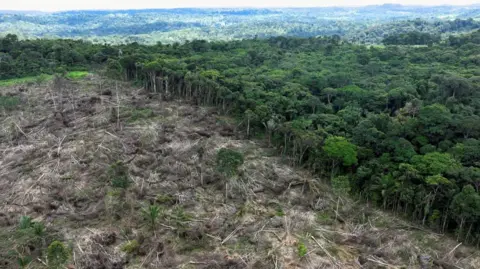
Pointing to the UK’s reliance on ecosystems that are “on a pathway to collapse” – such as the Amazon rainforest – the report warns of rising food prices and says that UK food security could be at risk.
In response, the government said that nature underpinned the UK’s security and prosperity and that the report would help it prepare for the future.
The 14-page report was officially published by the Department for Environment, Food and Rural Affairs (Defra). But the BBC understands it was put together by the Joint Intelligence Committee, which oversees the security services, in addition to input across government.
The report draws on scientific research and expert judgement to assess a “reasonable worst case scenario” for the impacts of nature loss on the UK’s security.
It highlights six ecosystem regions which it calls “critical for UK national security”, based on the likelihood of these ecosystems collapsing and the impacts were they to do so.
They include the rainforests of the Amazon and the Congo basin, the boreal forests of Russia and Canada, the coral reefs and mangroves of South East Asia, and the Himalayas.
These ecosystems are on the “pathway to collapse”, the report says, if current rates of nature loss continue. But exactly when this would happen – and how long it would take – is uncertain.
The report draws attention to several possible impacts on the UK’s security from ecosystem degradation and collapse, from rising migration and geopolitical competition to a higher risk of pandemics and economic insecurity.
But perhaps the strongest words are reserved for the potential consequences for UK food supplies.
The report says that ecosystem degradation or collapse “will challenge the UK’s food security”, pointing to its reliance on global markets for food and fertiliser.
If major food-producing regions were hit, some foods would become scarcer, driving up prices globally and potentially restricting choice, the report says.
But the report warns that the UK is “unable” to be food self-sufficient at present based on current diets and prices – and full self-sufficiency would also require “very substantial price increases” for consumers.
However, some technologies, like regenerative agriculture or lab-grown protein, could help with further research and investment, the report adds.
Gareth Redmond-King, head of international programme at the Energy and Climate Intelligence Unit, said that weather extremes fuelled by climate change were already hitting food production in some parts of the world.
“This is a cost-of-living crisis, driving up food prices on supermarket shelves for UK households,” he said.
In response to the new report, a Defra spokesperson said: “The UK has a resilient food system and remains one of the most food-secure nations in the world.
“We have access through international trade to food products that cannot be produced here, which supplements domestic production and ensures that any disruption from risks such as adverse weather or disease do not affect the UK’s overall security of supply.”
The document should have been published in October but was delayed. The Times reported that No 10 had blocked the report’s release owing to fears it could be considered too negative. A government source did not dispute this interpretation when asked by BBC News.
The government has faced accusations from some green groups that it is retreating from its promises to protect nature.
At November’s COP30 climate summit in Brazil, the UK failed to commit public funds to Brazil’s “Tropical Forests Forever Facility”, its flagship fund to try to protect these ecosystems.
The government cited pressures on the economy and has repeatedly said that it hopes to contribute to the fund in the future, and that it will encourage private sector investment.
And in December, the government was accused of loosening protections for nature to try to boost house building.
However, the government points to its investments in flood defences and funds to support sustainable food production as evidence of its efforts to protect the UK from climate change and nature loss.
Despite conservation efforts, global biodiversity is deteriorating quickly, driven by habitat loss, climate change, invasive species and other factors.
A landmark UN report in 2019 warned that the rate of change in nature worldwide since 1970 “is unprecedented in human history” – and estimated that one million animal and plant species were threatened with extinction.