
This post was originally published on this site.
Three activists who organised annual vigils to commemorate the 1989 Tiananmen Square crackdown have gone on trial in Hong Kong, facing charges under the city’s controversial national security law.
Chow Hang-tung, 40, Lee Cheuk-yan, 68, and Albert Ho, 74, are accused of inciting others to subvert state power under the China-introduced law. Ho has made a guilty plea while the other two pleaded not guilty.
The trio – part of the now-disbanded Hong Kong Alliance – face up to 10 years in jail if convicted. They have been in custody since 2021.
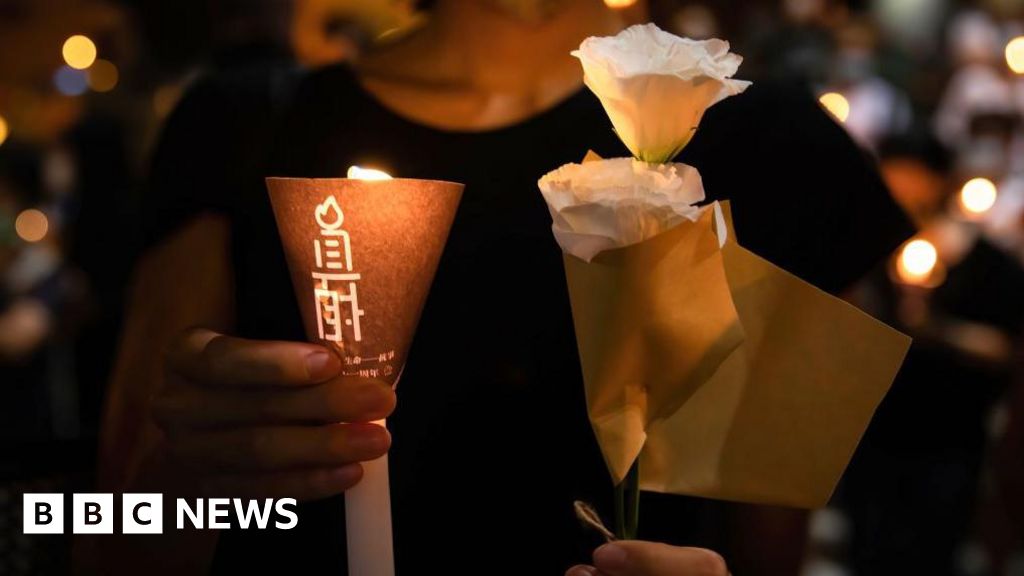
Hong Kong used to be one of the only places in Chinese territory where people could gather to mark the deadly 1989 crackdown against pro-democracy protesters.
Authorities banned these gatherings in 2020, citing Covid-19 policies, but they have never resumed. This was also the year the national security law, which makes illegal a wider range of dissenting acts, officially came into force.
Hong Kong Alliance (HKA) was founded in May 1989 to support students holding pro-democracy rallies.
Weeks later, the Communist Party sent troops and tanks to crush pro-democracy protests in Beijing’s Tiananmen Square. Tens of thousands of protesters had gathered by then, and estimates of the death toll range from a few hundred to many thousands.
Over the next three decades, HKA called on authorities to accept responsibility for the crackdown, free dissidents and introduce democratic reform.
On the mainland however, public discussions and remembrance of the crackdown are not allowed.
In their opening statement to Thursday’s trial, prosecutors argue that one of HKA’s slogans – “bring the one-party rule to an end” – is subversive to the Chinese constitution.
The trial is expected to last 75 days.
It opens a day after judges rejected Chow’s bid to quash her charge, in which she argued that the prosecution did not specify what was unlawful about her actions.
“This case is not about national security. It is about rewriting history and punishing those who refuse to forget the victims of the Tiananmen crackdown,” Sarah Brooks, Amnesty International’s deputy regional director for Asia, told Reuters news agency.
Critics say the national security law – introduced and drafted in Beijing – has created a climate of fear in Hong Kong and weakened the city’s autonomy, but authorities argue it is necessary to maintain stability.
Among other things, the law criminalises anything considered as secession, or breaking away from China; subversion; terrorism; and collusion with foreign or external forces.