
This post was originally published on this site.
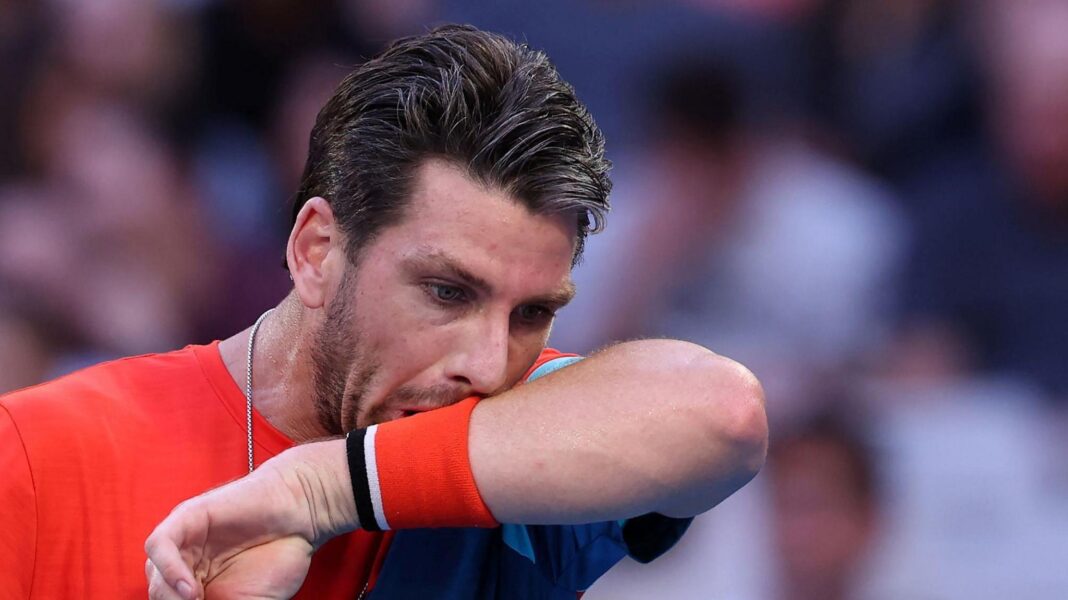
Cameron Norrie has become the Mr Dependable of British tennis.
If you’re backing a Briton to reach the third round of a Grand Slam then he’s your man.
Norrie, 30, has reached that stage in 15 of his past 20 majors, but moving beyond the last 32 is what has been consistently difficult.
The same goes for his compatriots.
On Friday, 26th seed Norrie became the final British singles player to fall at the Australian Open when he lost to German third seed Alexander Zverev.
It was the second successive major where Britain – one of the richest tennis nations in the world because of the cash generated by Wimbledon – failed to reach the second week.
Even withstanding the obvious deficit in population and participation figures to its Grand Slam cousins, it is hard to dispute the notion Britain is punching well below its weight.
With Jack Draper injured, there were only seven British players in the men’s and women’s main singles draws in Melbourne. Other than Norrie, only Emma Raducanu and Arthur Fery won a match.
The United States had 38 players in the draws, France had 17, while Australia’s figure of 21 was bloated by the wildcards given to home players.
British governing body, the LTA, points to the further 20 players ranked between 101 and 300 as a sign of its depth.
British coach Dan Kiernan agrees, telling BBC Radio 5 Sports Extra that while “the numbers don’t lie”, it is “not all doom and gloom, I think we just need to look a little bit lower down the food chain”.
There is an irony that Norrie has been the man left carrying the flag in 14 Grand Slams over the past five years.
He was born in South Africa, grew up in New Zealand, switched allegiance when he was 16 and then went into the American college system.
There is no doubt Norrie, a grinder with limited weapons, has maximised his talents superbly.
Few would have predicted him to become a Wimbledon semi-finalist in 2022 and reach the world’s top 10 as a result.
That leads to an argument that Norrie possesses a mentality which some of his British colleagues have been accused of lacking.
There is one obvious name who did not lack the minerals. For so long, Andy Murray was the epicentre of British tennis.
In the aftermath of the three-time major champion’s retirement almost 18 months ago, there was cause for optimism.
Strong showings by Britain’s next generation at the 2024 US Open provided a feelgood factor for those worrying how the void might be filled.
Then, Draper had just reached the Flushing Meadows semi-finals. Raducanu was making sound progress in her first season back from wrist operations.
Now, Draper has missed the Australian Open having played one match in six months as questions about his physical durability linger.
Raducanu has just suffered one of the most demoralising Grand Slam defeats of her career, mitigated by an off-season beset by a foot injury, with seemingly more introspection about where she is heading.
On Britain’s lack of main-draw wins in Melbourne, Norrie told BBC Sport: “It has been a bit unfortunate but I think we all need to stay patient – there are some good players coming through.
“There are so many great coaches and there is no reason why there won’t be more [players] inside the top 100. I think there will be one moment where it all clicks.”
Britain had a record nine men and two women in the Australian Open qualifying draw this year.
Coming through, there remains excitement in British tennis circles about the potential of teenagers Mika Stojsavljevic, Hannah Klugman and Mimi Xu.
“I like to look at the top 200 number,” Kiernan said. “That’s where the real judgement should be – how many players in the nation are we getting into Grand Slam qualifying, or main draws?
“If you’re consistently getting nine to 13 players in those positions then the conveyor belt is there.”
One area where Britain has plenty of strength is the men’s doubles.
Going into the Australian Open, there were five British players ranked inside the world’s top 10 – although Joe Salisbury, taking a career break to protect his mental health, will soon slip out.
All-British pairing Lloyd Glasspool and Julian Cash were the top seeds in Melbourne, but suffered a shock defeat in the second round.
Henry Patten and Neal Skupski – who play with non-British partners – remain in the draw.
All five have Grand Slam titles to their names and at least one of them has won a major in each of the past six seasons.
So, what constitutes success for British tennis – now and in future years? It is a point which has been debated for most of the past two decades.
Is it more Grand Slam singles champions like Murray and Raducanu?
Is it more players ranked inside the world’s top 100?
Or is it attaining larger participation figures across the nation?
“Of course, the answer is we strive towards all of these,” LTA chief executive Scott Lloyd told BBC Sport in 2024.
“Having Grand Slam champions is no mean feat but of course having players go deep in the biggest events brings visibility and inspiration for all our tennis fans and player base, and helps to encourage youngsters to pick up a racquet.
“The more players we have competing in the top 200 in the world helps push and pull all our players to the best they can be.”
Related topics
-
-
16 August 2025

-