

This post was originally published on this site.
Let’s face it, you need a heap of cash to make it as a professional tennis player.
The cost of equipment, coaching and travel is astronomical and it can be difficult to fulfill potential depending on your circumstances.
Growing up in a country ravaged by war only further stacks the odds against you.
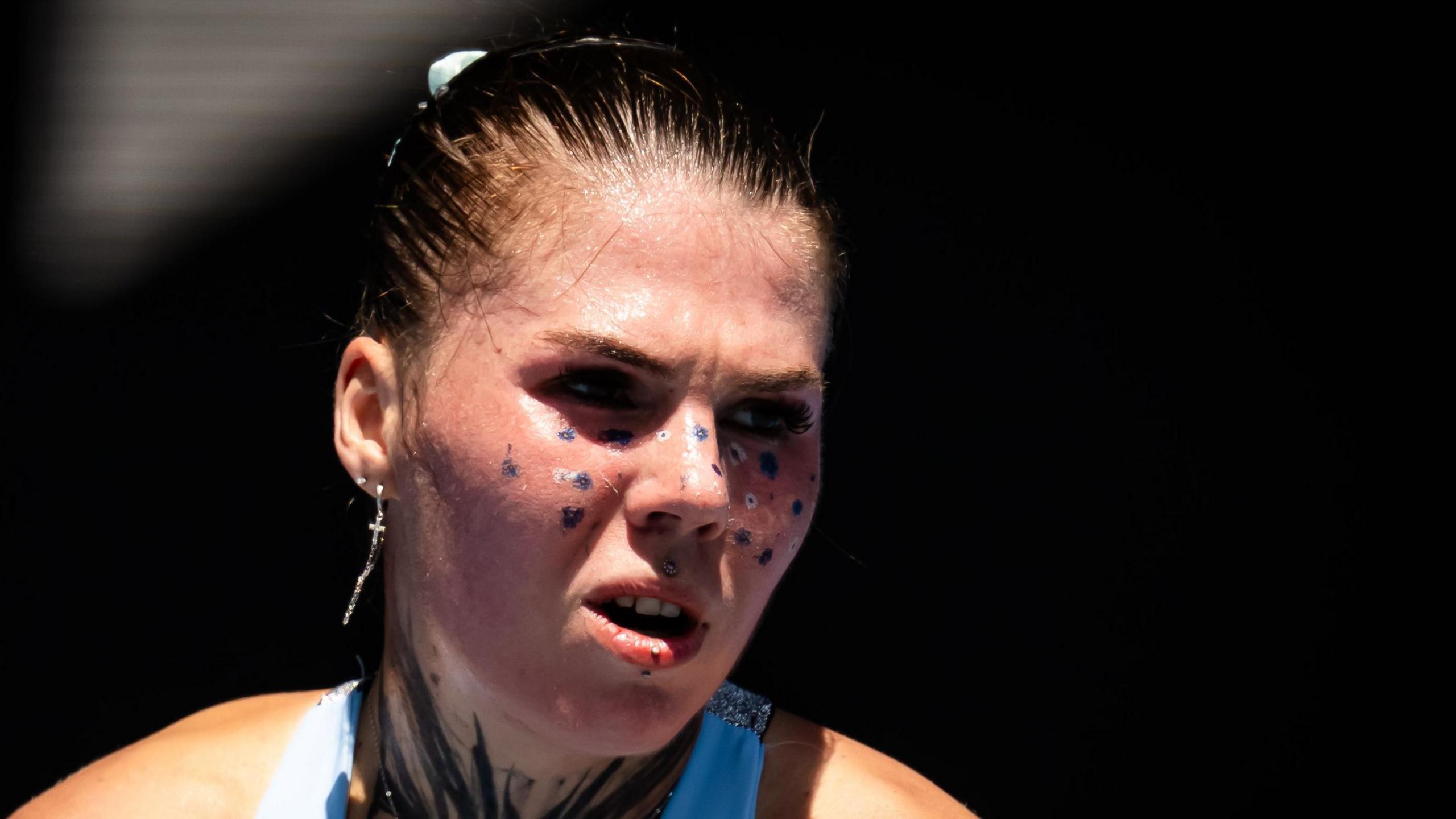
After playing in her first Grand Slam main draw at the Australian Open, Ukraine’s Oleksandra Oliynykova laid bare the obstacles she has faced on the way to the top.
The 25-year-old left Ukraine as a child because of her father’s opposition to the country’s pro-Russian president Viktor Yanukovych, but is back living there in spite of the ongoing full-scale invasion by Russia.
Now a top-100 player, it is not so long ago that Oliynykova was eating only sandwiches at tournaments to save money.
Under the omnipresent threat of missiles, Oliynykova had no electricity or water in her Kyiv apartment as she trained for the season-opening major.
“A drone hit the home across the road. My apartment was literally shaking because of the explosion,” she said.
The A$150,000 (£75,757) she earned for her first-round appearance at the Australian Open will help Oliynykova both on and off the court. Helping cash trickle further down the ladder is one of the reasons leading players are campaigning for the Grand Slams to offer more prize money.
“Oliynykova’s story is on another level. It is so inspiring and sad, but I hope every single player listens to it,” Slovakian former world number five Daniela Hantuchova told BBC Sport.
“Players are talking about prize money – when I won my first 25k tournament it was the first time we, as a family, could afford to have pizza with seafood on.
“I felt like I was eating caviar.”
 Getty Images
Damir Dzumhur, a fixture in the men’s top 100 over the past decade, was born in Sarajevo while missiles rained down on the Bosnia-Herzegovina capital in 1992 as the former Yugoslavia dissolved.
Two days after Dzumhur and his mother were collected from the maternity ward, the hospital was bombed.
When Dzumhur was old enough to pick up a racquet, there were very few courts available. Most had been bombed.
“My first steps on the court were in a small school gym, which was used for football and basketball, not tennis,” the world number 66 told BBC Sport.
“They just put the net in the middle and that’s where I started playing.
“I didn’t play on a proper hard court until I was 12 at a junior tournament in France.”
Being born in a country without tennis pedigree means there is usually a lack of financial support from their federation and fewer role models to follow into the game.
Hantuchova believes players who have come from humble beginnings develop a resilience, discipline and mentality that is “not seen that often these days”.
“When I decided I wanted to play tennis, I asked my parents if – one day – I could have a chance of getting a racquet,” said Hantuchova, who describes her Bratislava upbringing as “simple”.
“I knew I had to wait until their monthly salary allowed them to do so.”
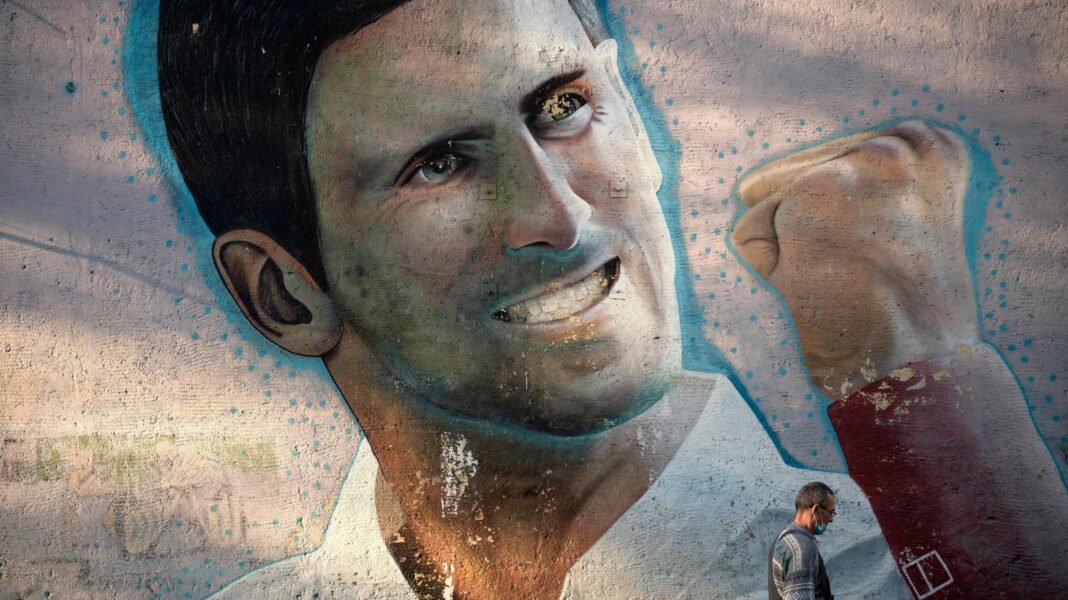
Novak Djokovic, considered by many as the greatest player of all time after winning 24 major titles, has blazed a trail for Serbia.
As a child, Djokovic was forced to take shelter in Belgrade as Nato bombed the Serbian capital between March and June 1999.
“My upbringing during several wars in the 90s was a difficult time,” the 38-year-old said in 2020.
“We had to wait in line for bread, milk, water, some basic things in life. That probably has been my foundation, the fact I came from literally nothing.”
-
The janitor’s son who became an Australian Open hope
-
20 January 2019
-
American Frances Tiafoe is another player who built his career from scratch.
The son of parents who fled Sierra Leone’s civil war in the 1990s, Tiafoe used to sleep on the floor at a plush Maryland tennis centre where his father was a janitor.
The two-time US Open semi-finalist stayed there while his mother Alphina worked night shifts as a nurse.
The benefit of Tiafoe’s situation was access to top-quality tuition, while Djokovic is eternally grateful for being nurtured by Jelena Gencic, who ran a tennis camp and developed his talent.
Ukraine’s Elina Svitolina had her potential recognised by businessman Yuriy Sapronov. He sponsored her move to Kharkiv – 420 miles from her home – so she could receive professional coaching as a 12-year-old.
Initially, Sapronov struck a deal to receive a cut of her future earnings, but waived his percentage in exchange for Svitolina becoming an ambassador for his companies.
“I don’t know how my career would have developed without his support, but I’m very thankful to him,” Svitolina added.
“It’s part of tennis life that you need a lot of investment to get results.”
Djokovic and Svitolina have become symbols of their nations, seen by many compatriots as providing a voice for them on the international stage.
They and other players have set up charitable foundations to give something back to the countries and people that shaped them – something particularly welcomed in times of hardship.
“When the war in Ukraine started, setting up a foundation was a natural instinct to help people who are in need,” world number 20 Marta Kostyuk told BBC Sport.
“The focus was kids affected by war, but I realised I can have more impact and make more difference by popularising tennis as a sport and physical activity in Ukraine.
“I believe sport can bring hope and change lives.”
Related topics
-
-
16 August 2025

-



