
This post was originally published on this site.
We first wrote about semantic search back in 2020, when it was just starting to gain attention. A lot has happened since then. ChatGPT was launched, AI Overviews showed up in search results, and understanding meaning—not just keywords—became central to how search engines work. Because of all this, it was time to update this article.
Search engines “think” in topics, not keywords. They understand entities—people, places, products, ideas—and how they relate. They focus on meaning, not word matching.
If you want to do SEO today, or show up in AI recommendations, you need to understand this shift. It’s not optional. It’s how search works now.
Search for “how tall is the guy who played Wolverine.” Google knows you’re asking about Hugh Jackman’s height—even though you never typed his name. It understands “guy who played Wolverine” refers to a specific person and gives you the answer: 6′2″.
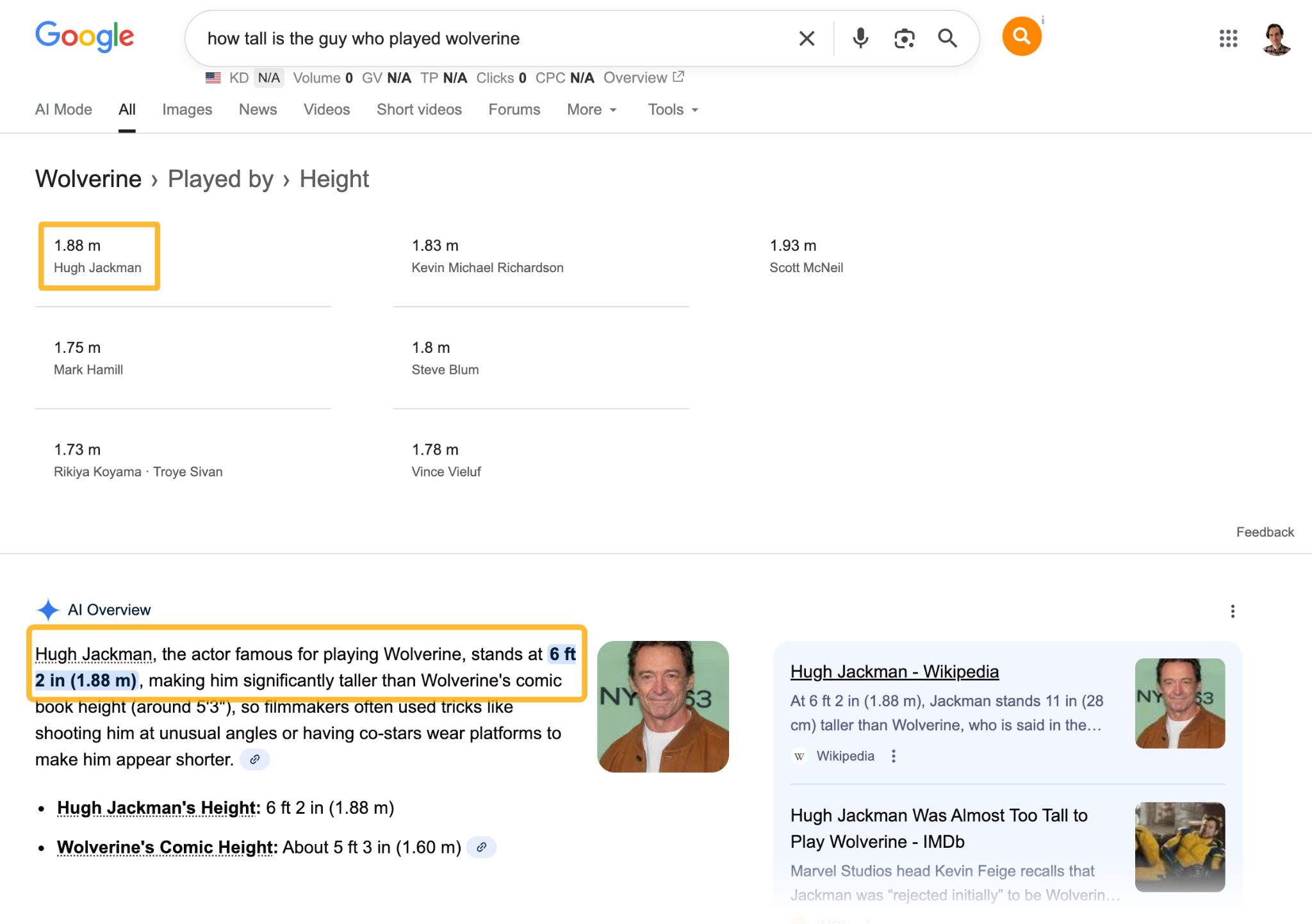
That’s semantic search in action.
Instead of matching the exact words in your query to words on a webpage, semantic search interprets what you’re actually trying to find—considering relationships between words, user intent, and context. It’s an application of natural language processing (NLP), the field of AI that teaches machines to understand human language the way we actually use it.
For years, Google talked about semantic search, but it felt like background infrastructure—something powering results behind the scenes while marketers kept stuffing keywords anyway.
Then ChatGPT launched in late 2022.
Within two months, over 100 million people were using it. Instead of typing “python error fix” into Google, they were asking full questions: “I’m getting a TypeError when trying to concatenate a string and integer in Python. Here’s my code—what am I doing wrong?”
Natural language. Context. Conversation. Not keywords.
Google had been building toward this for years, but ChatGPT made it the expectation. Suddenly, users wanted answers, not links. Google responded by pushing AI Overviews into search results. Bing partnered with OpenAI. Searches—including voice searches—got longer and more conversational.
Semantic search works in four ways that make it feel like a huge step forward from old-school search.
Semantic search connects related words
Semantic search knows that “cheap,” “affordable,” and “budget-friendly” all mean similar things. It understands “spouse” includes “wife,” “husband,” and “partner.”
This is called query expansion—the system automatically broadens your search to include synonyms and related terms. When you search for “cheap flights,” it also looks for content about “affordable flights,” “budget flights,” and “low-cost airfare” without you asking.
So, you don’t need to write separate content for each variation. One good article covers them all.
Semantic search recognizes things (entities) and how they relate
Search engines now access databases of entities—people, places, products, companies—and understand how they connect. This is stored in knowledge graphs—massive databases that map relationships between millions of real-world things.
To populate these graphs, search engines use entity extraction—algorithms that scan content and identify references to specific people, places, organizations, and concepts. When your page mentions “Tim Cook,” entity extraction recognizes this as Apple’s CEO, not a random person named Tim who cooks.
Here’s another example: Search for “who’s the partner of the actor who played Obi-Wan.”
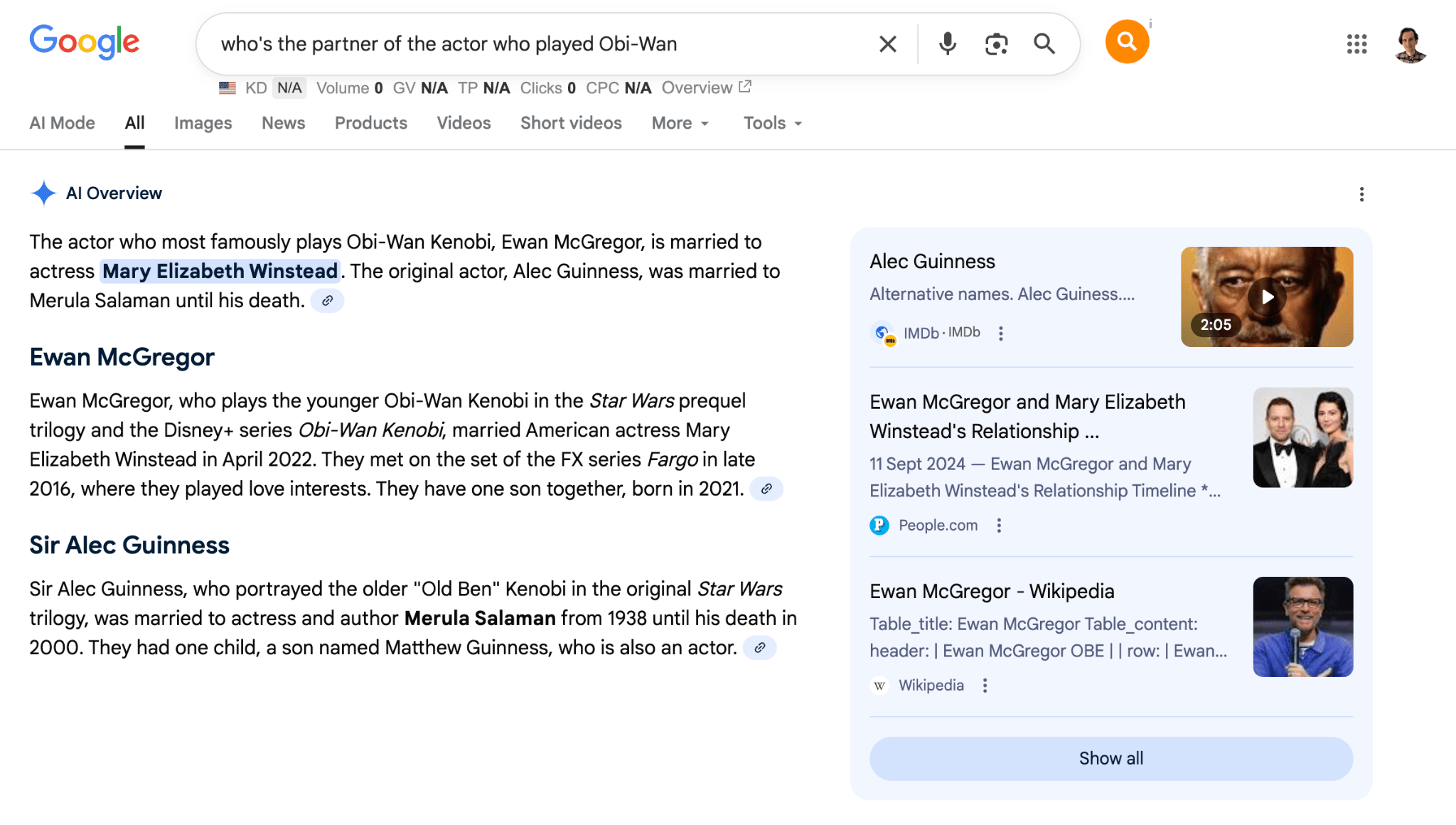
To give you this kind of result, Google needs to:
- Know Obi-Wan is a character.
- Know multiple actors played him and have some conception of who the most popular one was.
- Understand “partner” means romantic partner.
- Find the right person.
That’s entity recognition working across multiple relationships.
Semantic search figures out what words mean in context
About 40% of English words have multiple meanings. “Apple” could mean the fruit or the tech company. “Jaguar” could be an animal or a car brand.
Semantic search uses context—your location, search history, the other words in your query—to figure out which meaning you want.
Semantic search understands what you’re really looking for based on the outside context
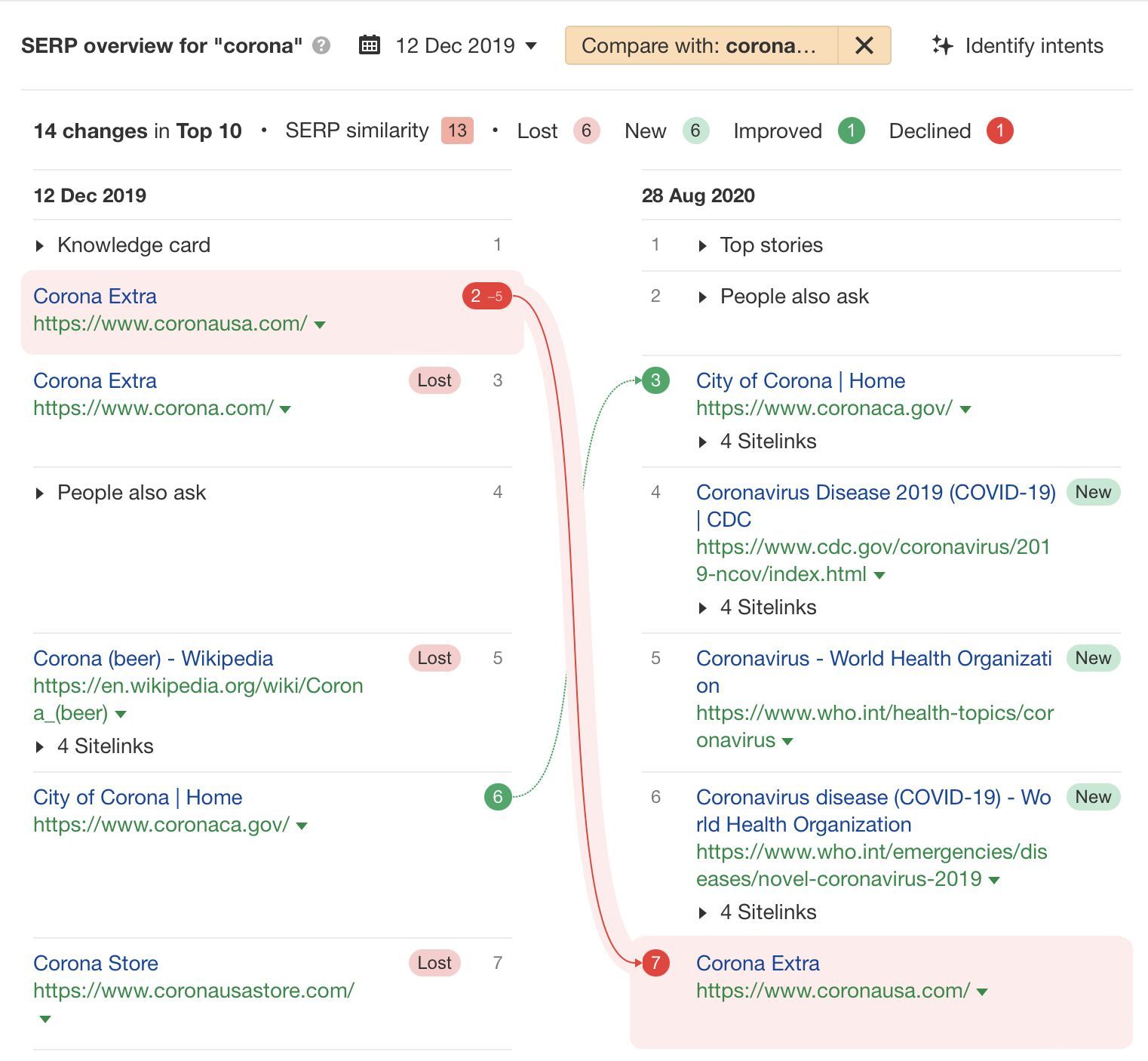
When the coronavirus became a pandemic in early 2020, Google recognized that people were mainly looking for information about COVID-19. As a result, for searches like “corona,” which can have multiple meanings, Google reordered the results to show information about the virus first, while pushing results about Corona beer and other meanings further down.
This change is easy to see when looking at historical data in Ahrefs’ Keywords Explorer.
You don’t need to understand all of the technical details, but knowing these exist helps explain why everything changed.
How search engines organize information
Before understanding meaning, systems break text into pieces through tokenization — splitting sentences into words or subwords that models can process.
But that’s just step one. To understand what content is about, search engines need to recognize real-world things and how they relate. This is where knowledge graphs come in—structured databases that store facts about entities (people, places, products, companies) as simple relationships:
Entity → Attribute → Value
For example, Google’s Knowledge Graph might store:
- iPhone 17 Pro → price → $1099
- iPhone 17 Pro → release date → September 2025
- iPhone 17 Pro → camera resolution → 48MP
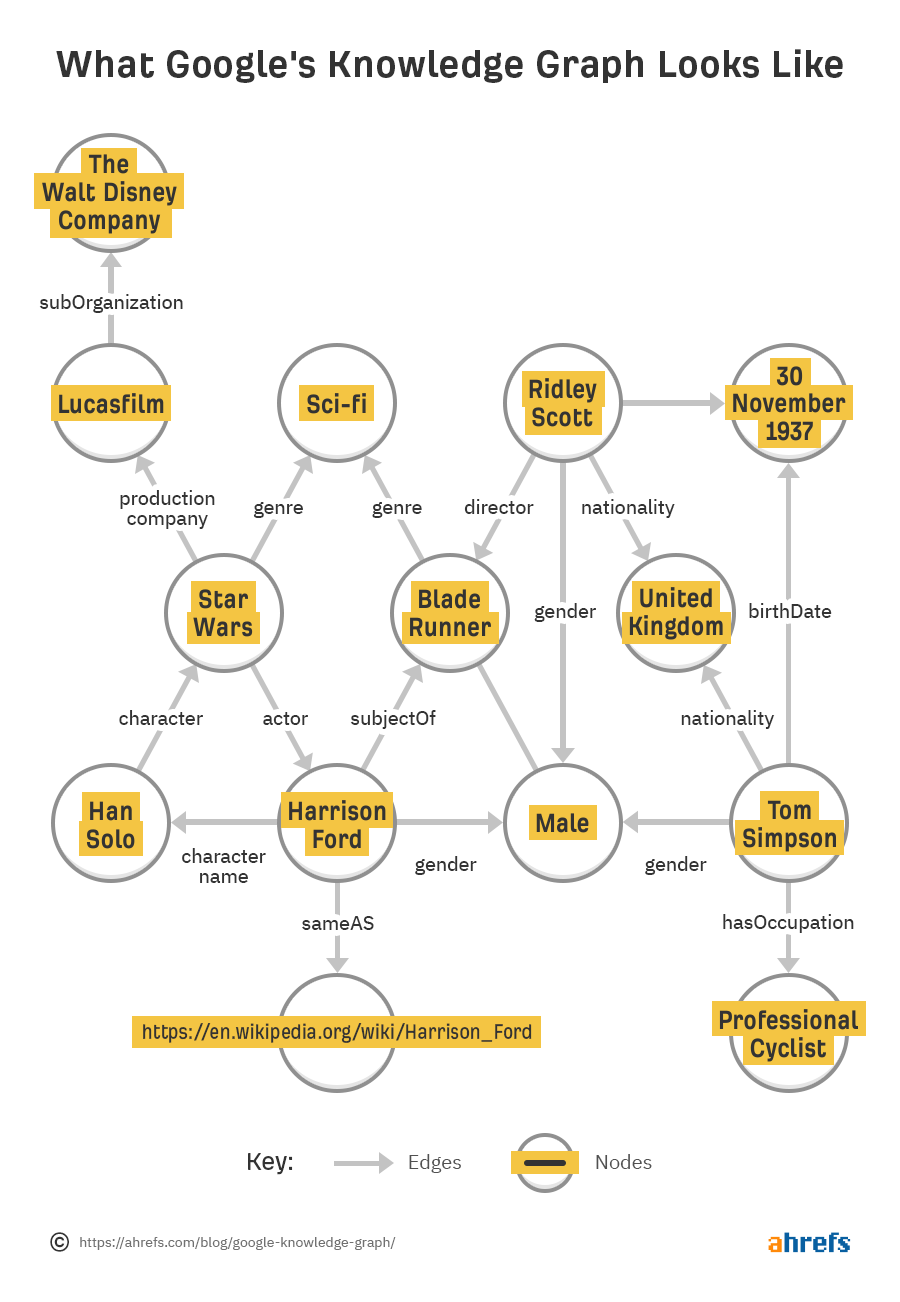
How does Google build this? The full process isn’t public, but it draws from structured sources like Wikipedia and authoritative websites. Patterns matter too: when millions of pages mention “iPhone” alongside “Apple,” “smartphone,” and “iOS,” those associations get reinforced. The graph is shaped by consensus across the web over time.
For your content, this means search engines check whether your page contains meaningful information about recognizable entities, not how often you mention keywords.
Vector embeddings
Search engines also convert content into mathematical representations called vector embeddings — coordinates that capture meaning. This lets them find conceptually similar content even when the wording differs completely.
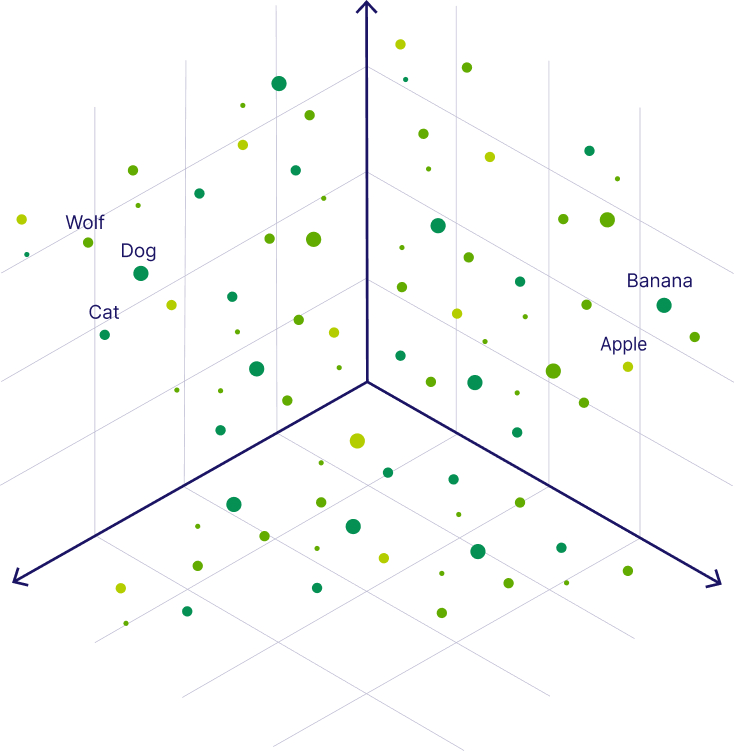
“How to fix a leaky faucet” and “repairing dripping tap” might score 0.89 similarity despite sharing almost no words. That’s why Google shows you “cheap smartphones” results when you search “budget phones.”
Comparing vectors is fast—milliseconds across billions of pages.
The major technological milestones
Beyond the Knowledge Graph, Google has introduced several advances that deepened semantic understanding:
- RankBrain (2015). If you’ve ever heard of “LSI keywords,” forget them. RankBrain, an upgrade to Hummingbird, solves the same problem LSI tried to solve, but better. It understands the meaning of unfamiliar words and phrases using machine learning—crucial since 15% of all search queries are new every day.
- BERT (2019). Improved understanding of how words relate in sentences, especially for complex queries where word order matters.
- MUM (2021). Handles complex, multi-step questions across 75 languages.
- Gemini (2024). Google’s latest AI model that understands text, images, video, and audio together. Powers AI Overviews and AI Mode.
How it all fits together
Modern search works in stages. First, a fast retrieval layer pulls a large pool of potentially relevant pages based on keyword matches and semantic similarity. Then a more sophisticated model re-ranks that shortlist: Does this page answer the query? Does it match the intent? Is the source trustworthy?
This is why keyword stuffing fails. Even if your page makes the initial pool, the re-ranking stage evaluates quality in ways that gaming can’t fake.
Further reading
That’s how it works. Here’s what it means for your content strategy.
Topic coverage beats keyword targeting
Because semantic search understands that “python tutorial,” “python guide,” and “learn python” mean the same thing, you can’t rank separate pages for each variation anymore. Google will pick one page to rank for all of them.
Our article on SEO forecasting ranks in the top 10 for dozens of keyword variations—not because we optimized for each one, but because we covered the topic thoroughly. That’s the shift: comprehensive content on a topic beats a portfolio of thin pages targeting keyword permutations.
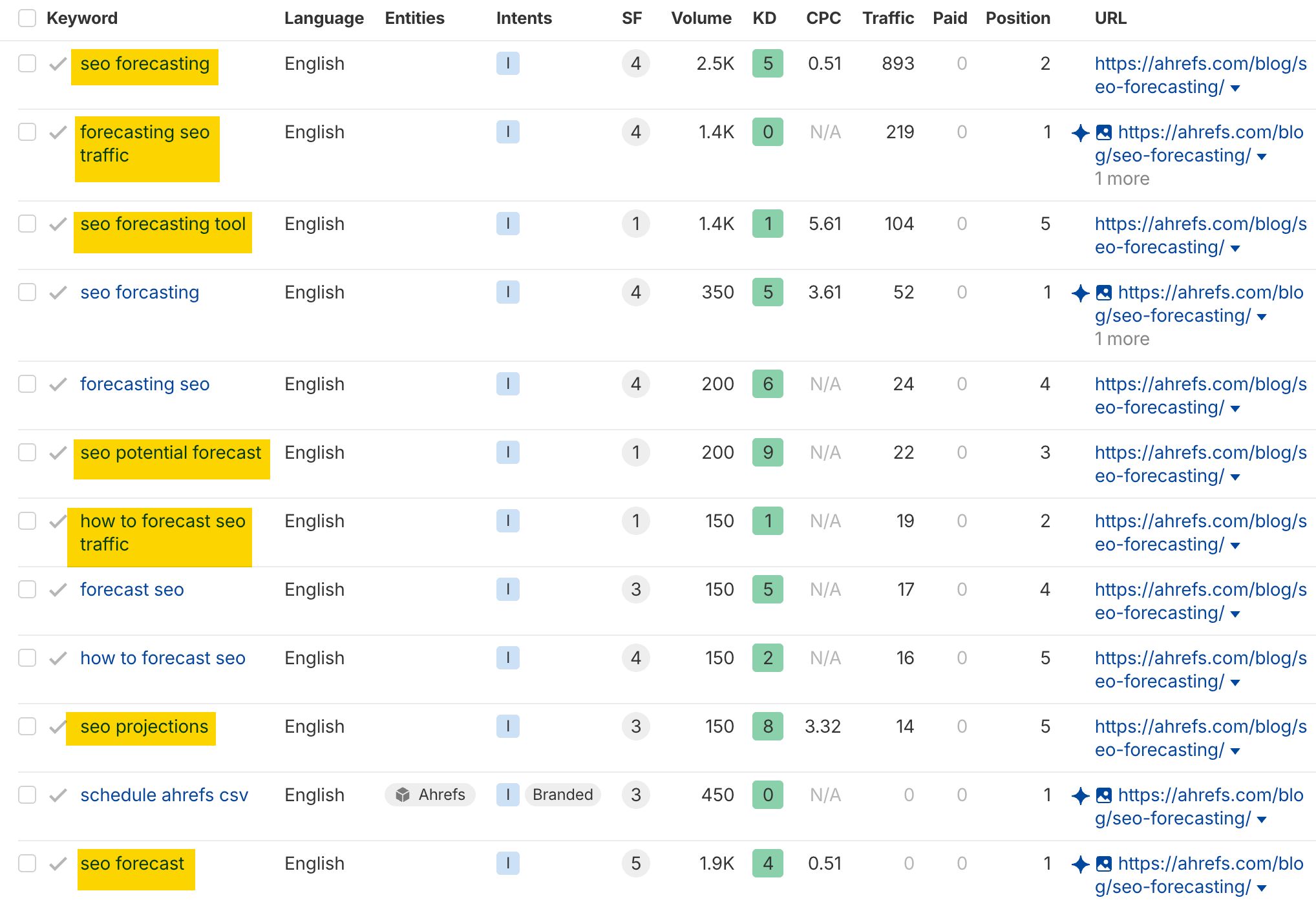
What you need is comprehensive content that covers entire topics, not separate pages targeting individual keyword variations. We’ll get to that part in a bit.
Also, this opens up the long tail. In keyword-based search, your content only ranked if users typed the exact words you targeted. Now, semantic search can match your page to queries phrased completely differently, as long as the meaning aligns. A guide titled “How small law firms can automate client onboarding” might surface for “legal intake automation” or “streamlining new client setup for attorneys.
Further reading
Search intent is everything
You can write the most technically perfect article about “SEO report,” but if people searching that term want a template, not an advanced tutorial, you’ll struggle to rank.
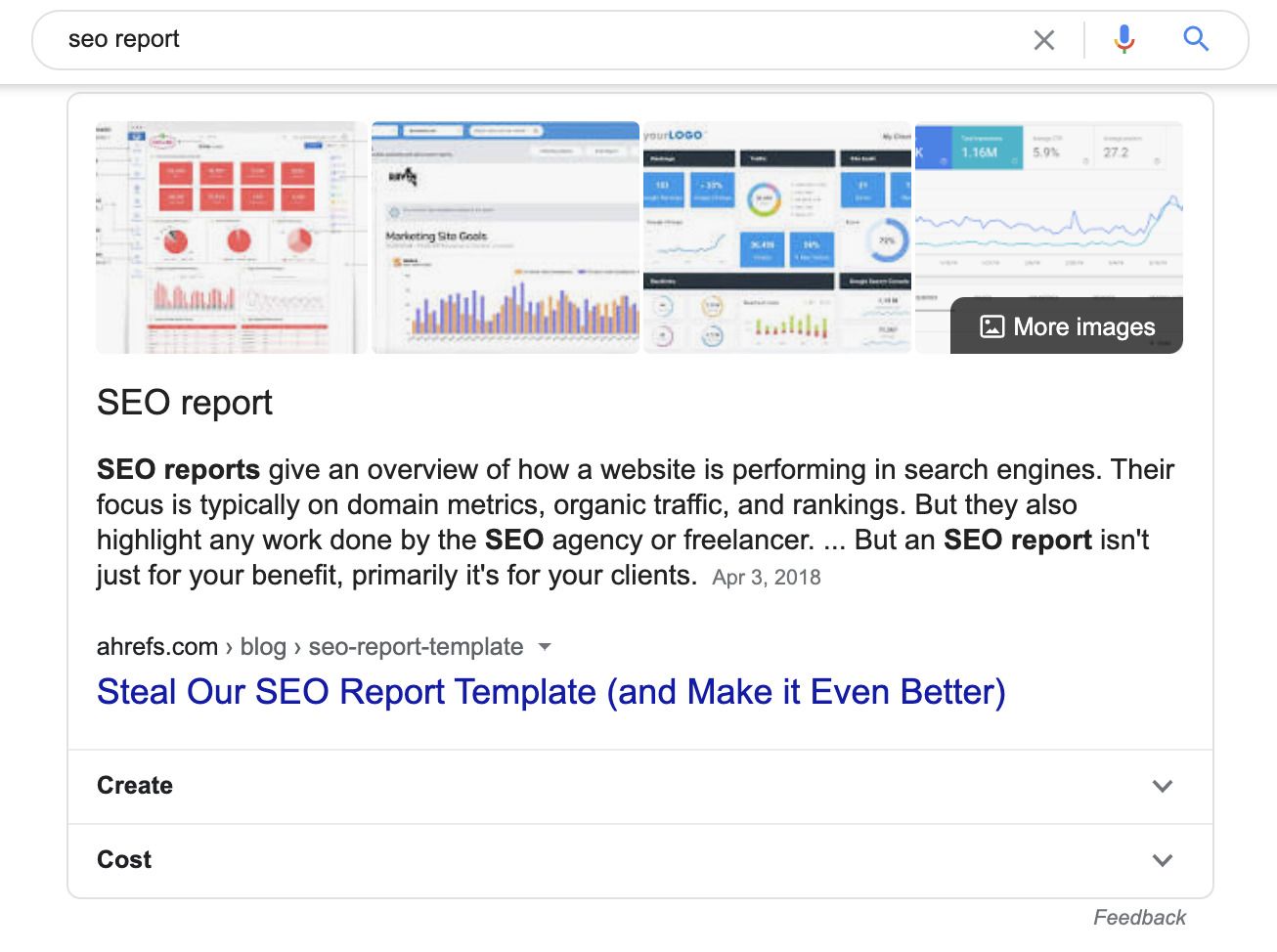
This is where semantic search changes the game. Google doesn’t just know what words someone typed—it knows what people searching those words typically want. It learns this from behavior: which results get clicked, how long people stay, whether they return to try a different link.
So when thousands of users searching “SEO report” click on templates and ignore in-depth guides, Google learns that “SEO report” means “give me something I can use,” not “teach me the theory.” Your page might be perfectly optimized for the keyword, but if it doesn’t match what searchers actually want, semantic search works against you.
The takeaway: understanding intent is now more important than targeting keywords. You need to infer what people want from a search—and the easiest way to do that is to look at what’s already ranking.
Further reading
Brand and authority become ranking factors
Semantic search systems understand who’s talking. When your brand becomes a recognized entity in the Knowledge Graph, your content gets more trust.
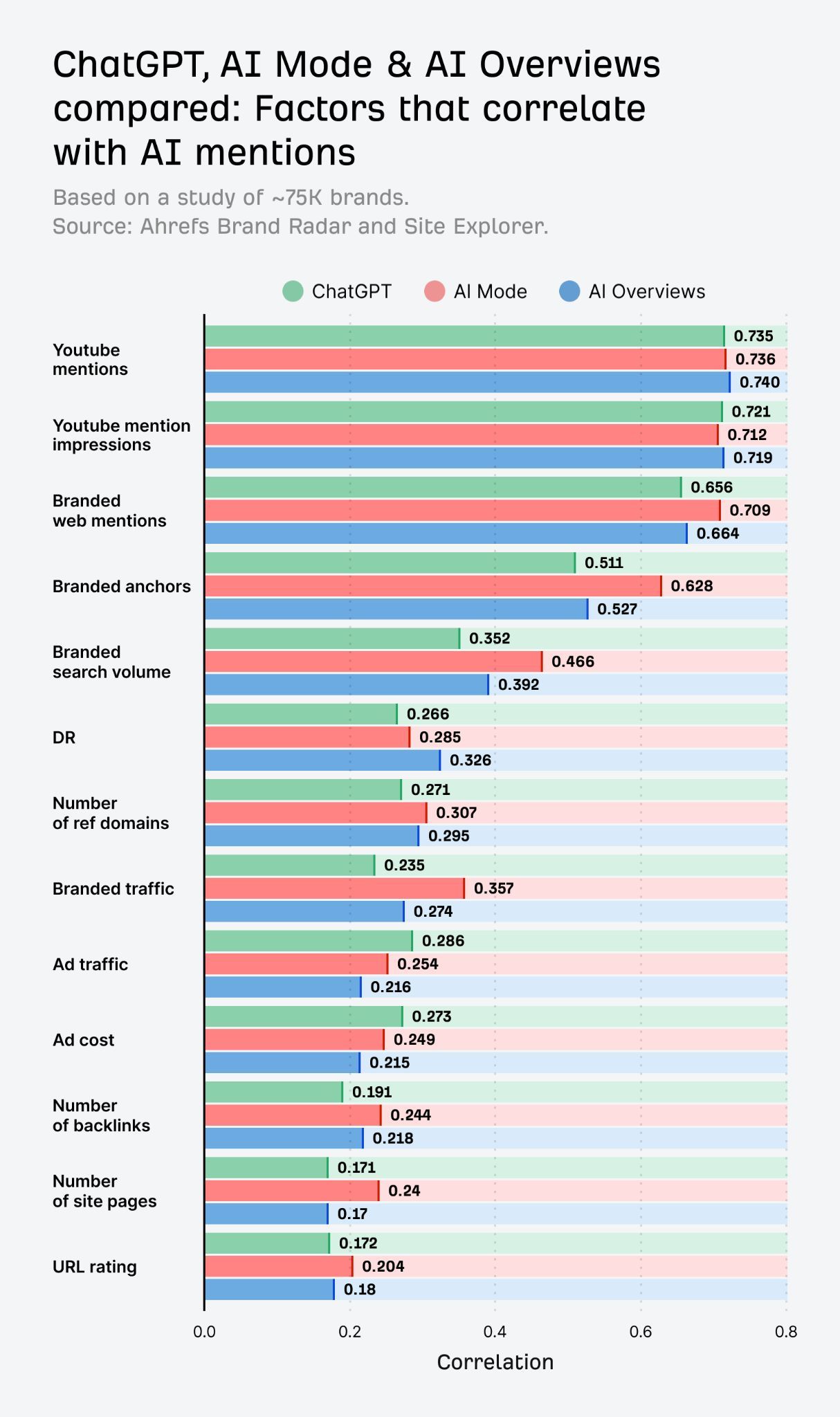
This effect extends to AI-powered search, which is built on the same semantic foundations. A study of 75,000 brands found that branded web mentions correlated strongly (0.66–0.71) with visibility in ChatGPT, AI Mode, and AI Overviews. Traditional SEO metrics like backlinks and page count showed much weaker correlation.
Now that you know what matters, here’s how to actually do it.
1. Match search intent and cover the topic comprehensively
Before you write a single word, you need to understand two things: what format searchers want and what information they expect.
First, check the search intent. The easiest way to understand what searchers want is to analyze the current top-ranking results using the three Cs of search intent:
- Content type. Are the top results blog posts, product pages, landing pages, or category pages? If the top 10 positions show blog posts, don’t try to rank a product page.
- Content format. What format dominates the results? How-to guides, step-by-step tutorials, listicles, reviews, or comparisons?
- Content angle. What’s the unique selling point of the competing content? Look for patterns like “free,” “for beginners,” “2025,” “fast,” or “cheap.” These angles tell you what matters most to searchers.
For example, if you search “SEO statistics,” you’ll see the content type is blog posts, the format is listicles, and the dominant angle is freshness (most titles include the current year).
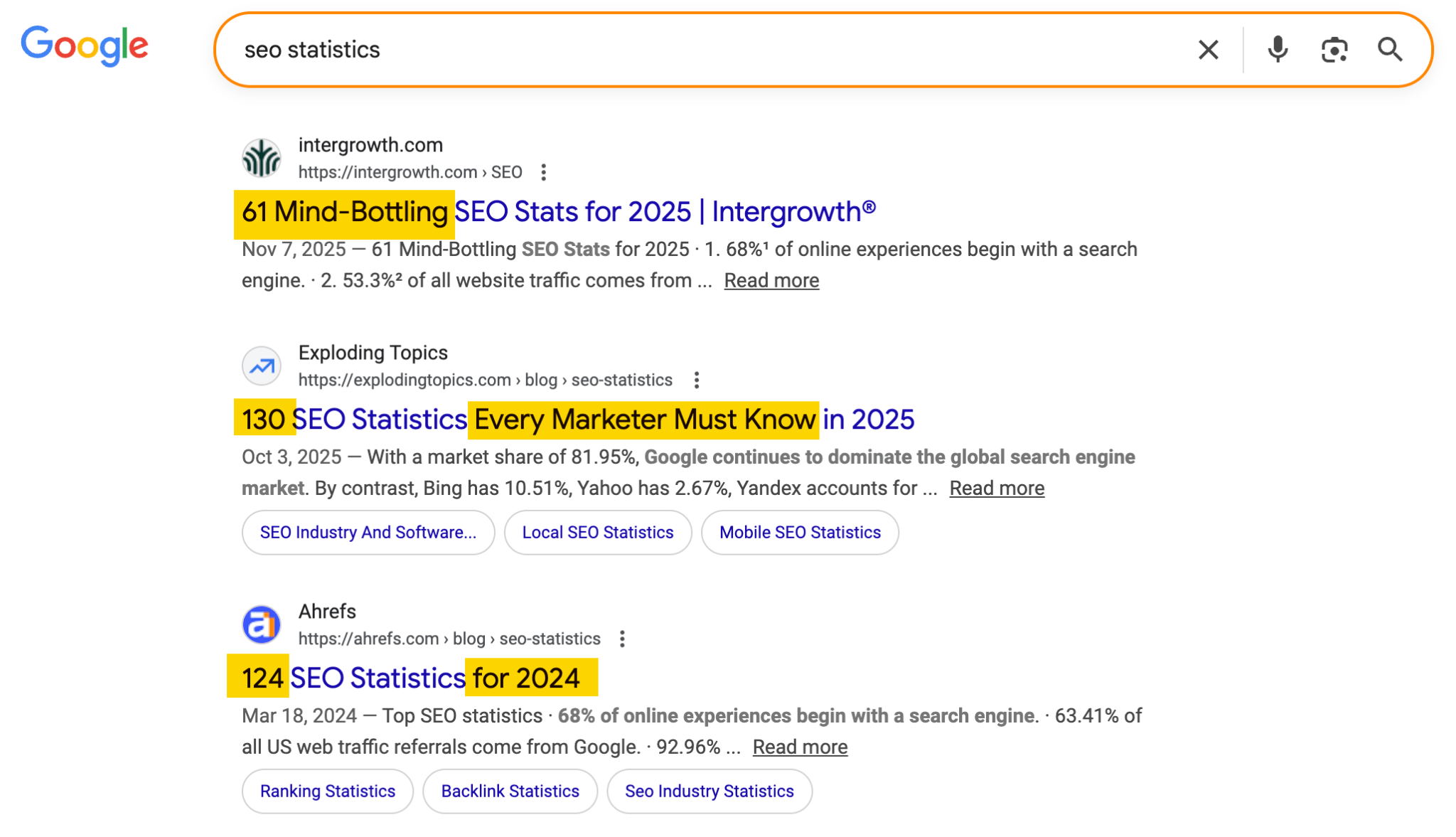
Match these three elements, and you’re starting from a strong position.
Second, make sure you’re covering everything searchers want to know. The traditional way to do this is to open the top 5-10 ranking pages and look for patterns:
- What subtopics do most of them cover?
- What headings appear consistently across multiple articles?
- What questions do they answer that you haven’t addressed?
- Are there specific examples, data points, or tools they all mention?
This works, but it’s time-consuming. You’re basically building a mental map of what “comprehensive” looks like for your topic.
To speed things up a bit, you can use Ahrefs’ AI Content Helper. It identifies what’s missing from your content and gives you specific recommendations (and a score to help you see the progress).
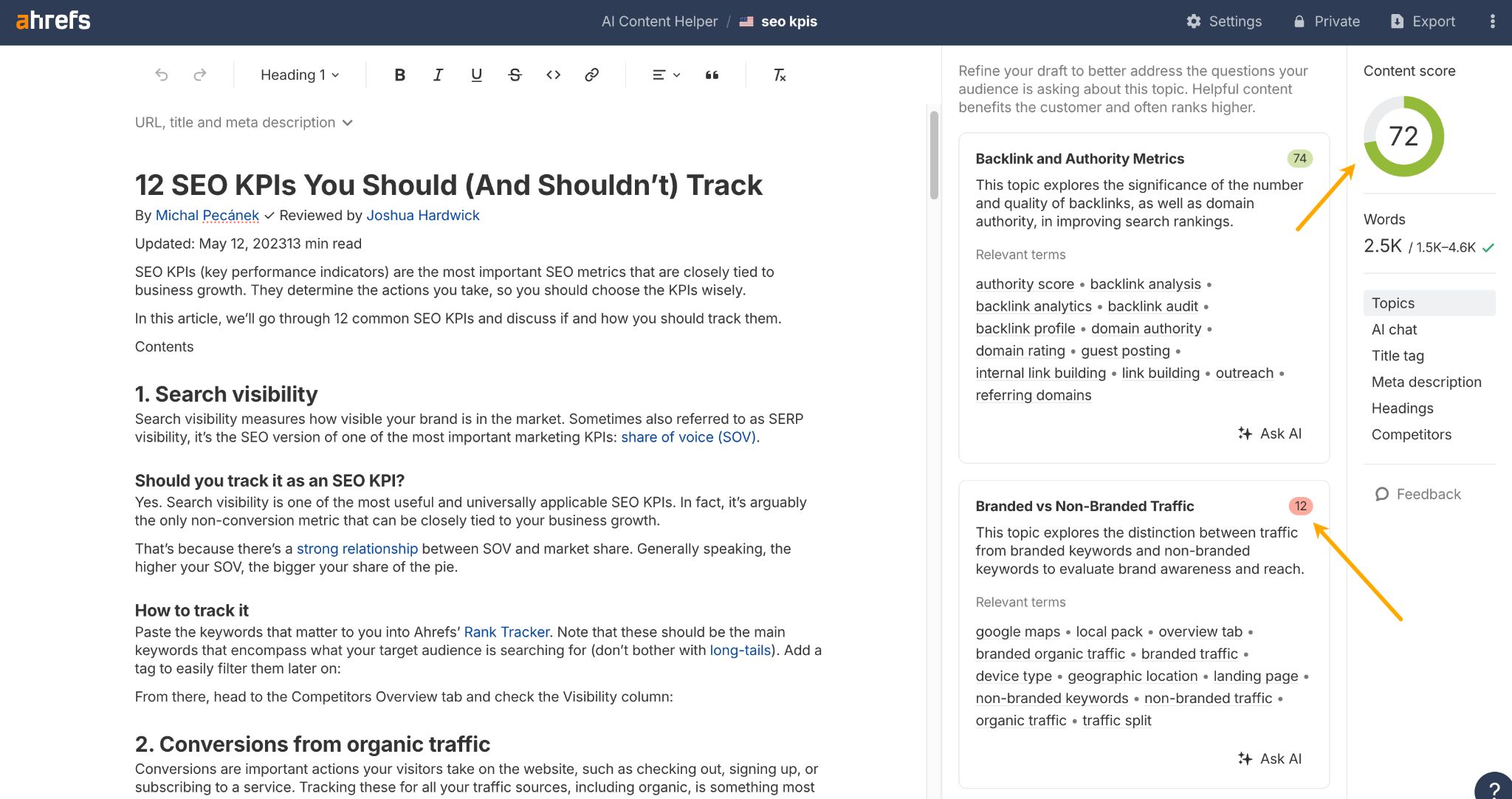
Here’s how it works:
- For new content: Enter your target keyword and the tool analyzes the top-ranking pages to show you which subtopics you need to cover. Use that to build your outline.
- For existing content: Paste in your article and the tool spots missing topics, then suggests exactly how to fill those gaps. It gives you a content score out of 100, showing where you stand compared to top-ranking pages.
The difference between this and most AI tools: it doesn’t just ask “did you mention this keyword?” It asks “did you meaningfully cover the concepts people expect when searching for this?”
That means you’re optimizing for completeness, not keyword density. You’re filling in the gaps that actually matter to readers and search engines.
2. Link your related content together
Internal linking helps connect your content in a meaningful way and shows search engines what you’re knowledgeable about. Google looks at the words you use in links—and the text around them—to understand what the linked page is about. Clear, specific link text makes this much easier.
For example, if you link from your keyword research guide to your article on low-competition keywords using clear, descriptive wording, you’re showing search engines that these topics belong together. You’re essentially laying out your expertise and making your site easier to understand.
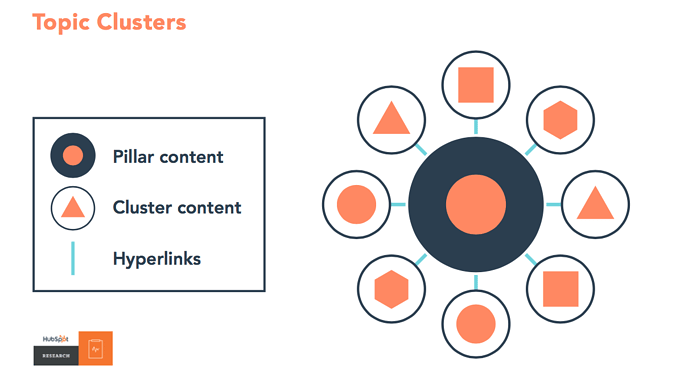
So, think of your site as a set of connected themes (aka topic clusters), not isolated articles. Your broad, in-depth guides (often called pillar pages) should link out to more focused posts. For example, if you have a complete SEO guide, it should naturally link to individual articles on keyword research, link building, and technical SEO. This helps both readers and search engines see how everything fits together.
Next, pay attention to anchor text. The words you use in your links matter. Instead of generic phrases like “click here,” use language that clearly explains what the reader will find on the other page—such as “learn how to find low-competition keywords.” Clear anchors make your content easier to understand and more useful.
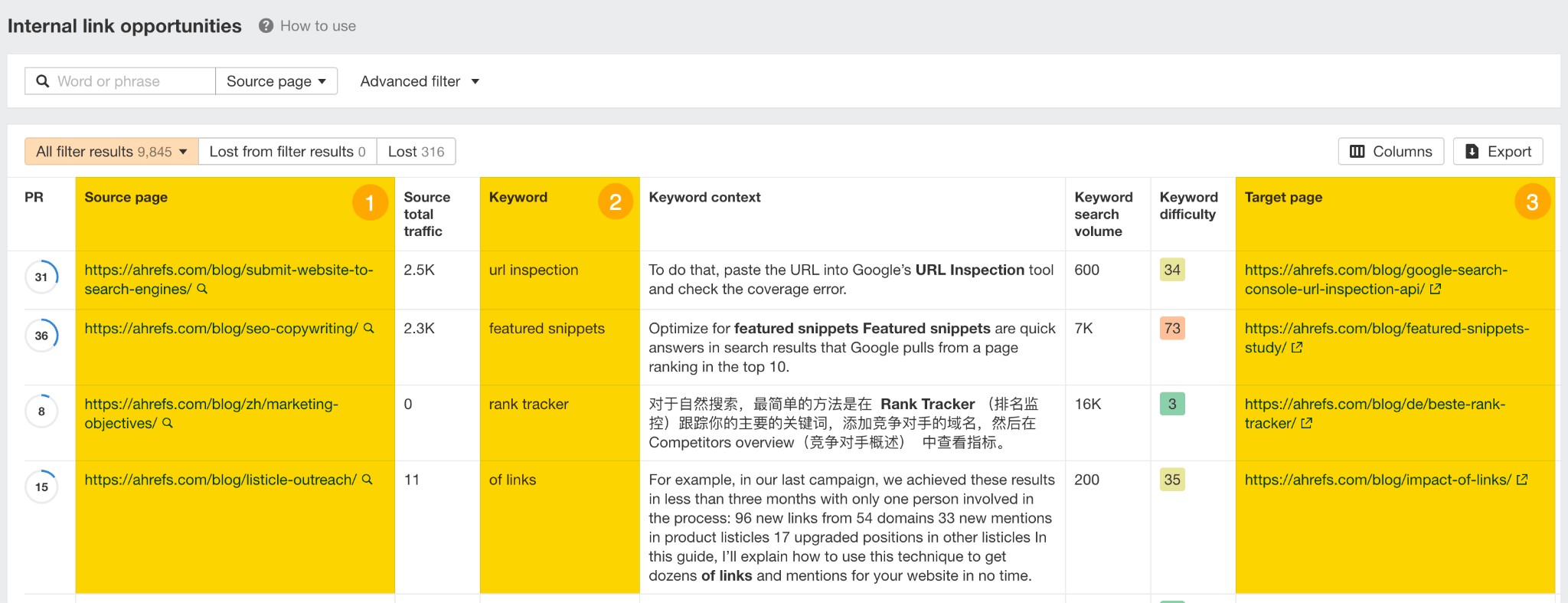
Finally, remember that you don’t have to do all of this manually. There are tools that can help you spot internal linking opportunities automatically. For example, Ahrefs’ Site Audit includes a Link opportunities report that shows where adding internal links makes sense based on keyword relevance to your existing content.
Recommendation
The same principles apply to backlinks. When other sites link to you using topically relevant anchor text, it helps search engines understand what topics you’re associated with. Something to keep in mind if you’re running a link building campaign.
Further reading
3. Build consistent information about your brand everywhere
Semantic search builds entity profiles, connecting your brand to attributes like founders, locations, products, and claims. AI systems construct these profiles from whatever sources they find: Reddit threads, Medium posts, Quora answers, random blog articles.
This is especially true for AI answer engines. Branded comparison pages and buying guides—like Samsung’s “QLED vs OLED” explainers—get cited frequently in ChatGPT because they answer specific questions with authority. If you don’t create this content, AI systems will piece together answers from whatever sources they find.
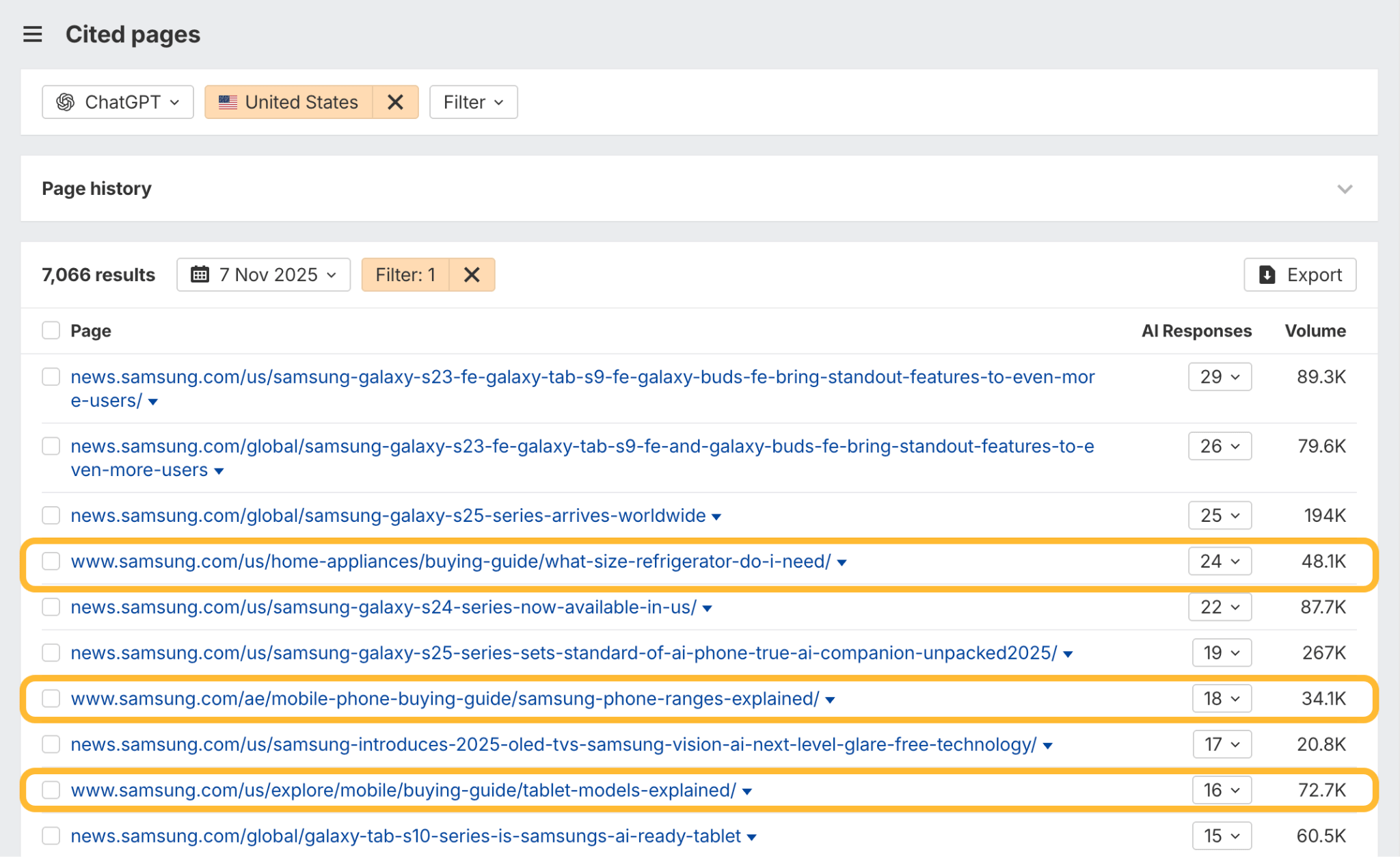
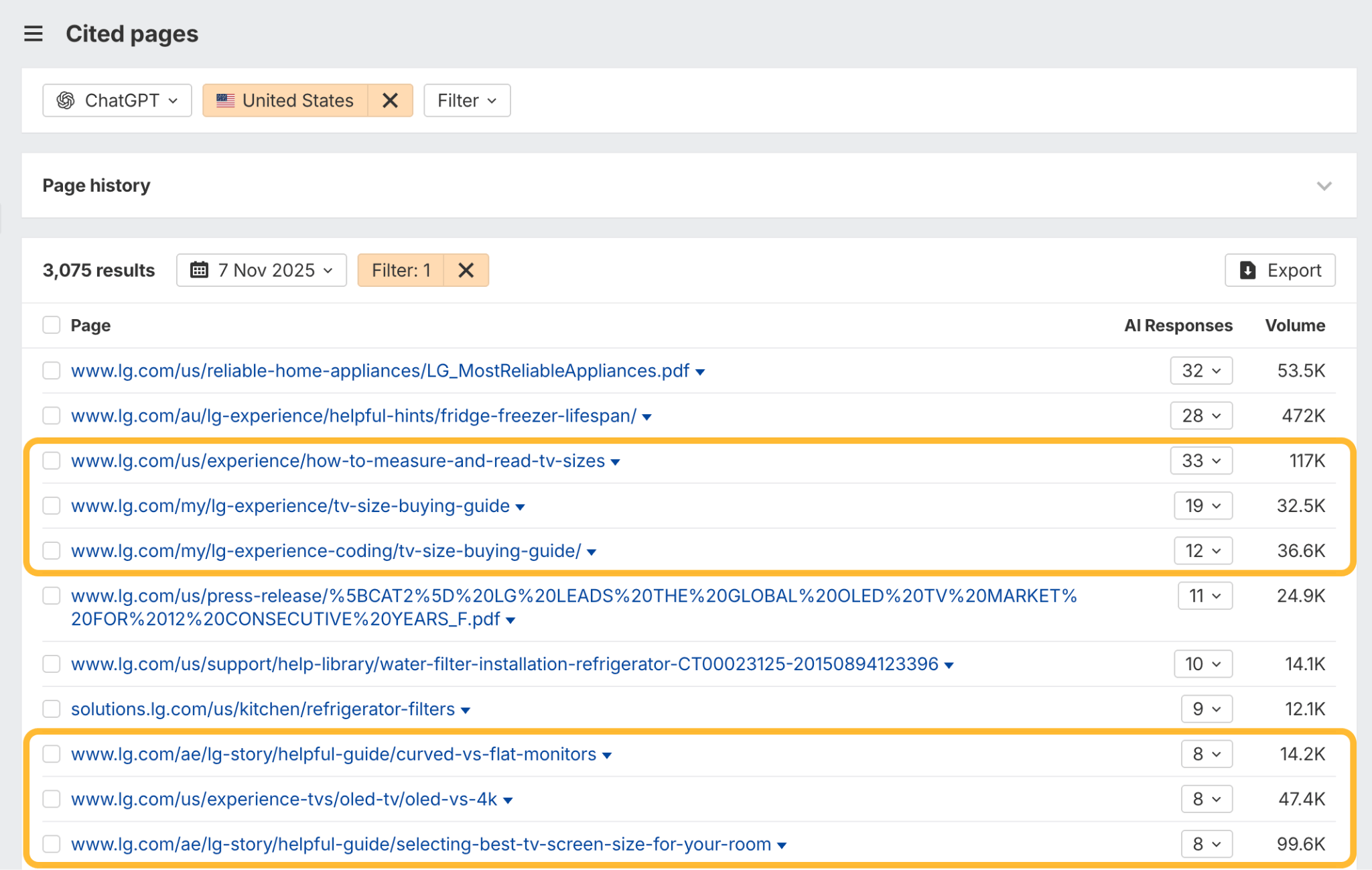
If your official sources are vague or incomplete, AI fills the gaps with whatever sounds most authoritative. And “authoritative” often just means “specific.”
So, here’s what you should do:
- Fill information gaps with specific official content. Create an FAQ that addresses potential rumors directly—“We have never been acquired,” “Our headquarters is in [City].” Vague denials don’t work.
- Build consensus around your brand. Fix outdated information on your site and online profiles. You need other sites to corroborate your story, too.
- Publish detailed “how it works” pages. Make them specific enough to outcompete third-party explainers in AI-generated answers.
- Claim specific superlatives. Stop saying “industry-leading.” Own claims like “fastest at [metric]” or “best for [use case].” Specific claims are quotable; generic ones aren’t.
- Monitor for narrative hijacking. Set alerts for your brand name plus words like “investigation,” “insider,” “lawsuit,” or “controversy.”
We tested that with a fake brand. Read about the Xarumei experiment if you’d like to learn more.
4. Work toward becoming a recognized entity
When your brand becomes an entity in Google’s Knowledge Graph, you get a major trust boost.
How to work toward this:
- Create and verify your Google Business Profile.
- Get mentioned on authoritative sites in your industry.
- Keep your business name, address, and phone number consistent everywhere. This is crucial for local businesses—you can read more about local citations in this guide.
- Build a presence on relevant social platforms.
- Create a Wikidata entry if possible.
This isn’t quick. It’s the result of genuine brand building over months or years. But the payoff is significant.
5. Help machines read your content with schema markup
Schema markup is structured data that tells search engines exactly what your content means. Instead of making Google guess what “20 minutes” refers to in your recipe, you can explicitly mark it as cooking time.
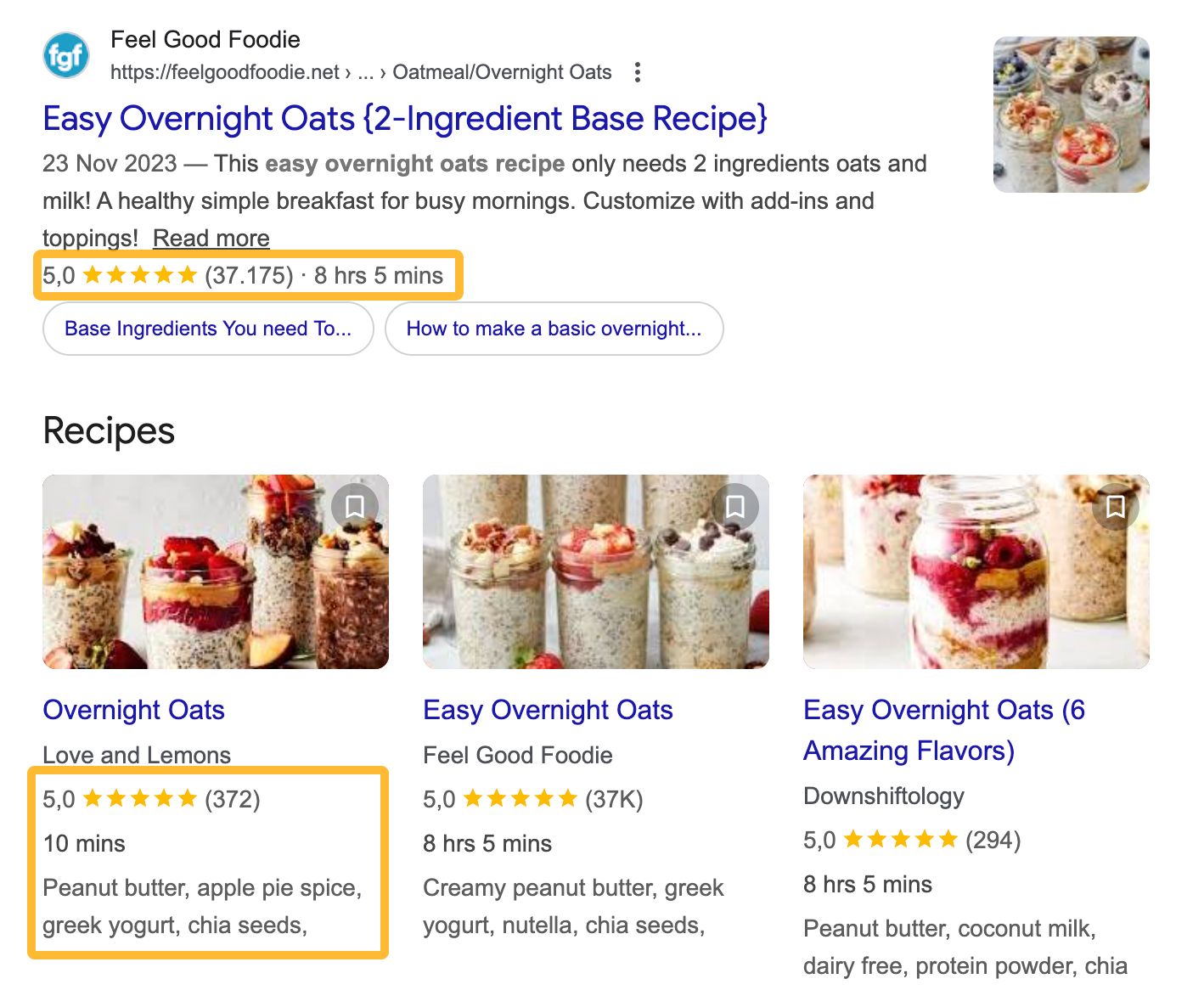
Example schema types:
- Article schema. For blog posts (tells search engines the author, date, topic).
- HowTo schema. For step-by-step guides (perfect for AI systems that love structured instructions).
- FAQ schema. For questions and answers (directly feeds AI the Q&A pairs they need).
- Product schema. For products (includes price, reviews, availability).
For traditional search, there’s really no issue with schema. It helps you get rich snippets—those enhanced search results with star ratings, prices, cooking times, and other eye-catching details that can increase clicks.
For AI search, it’s complicated. There’s no consensus among SEOs about whether schema actually helps AI visibility.
The case against it: Eli Berreby’s experiment provides evidence that AI crawlers don’t read schema at all because they don’t execute JavaScript—they just read the raw HTML content. If your schema is injected via JavaScript, AI systems might never see it.
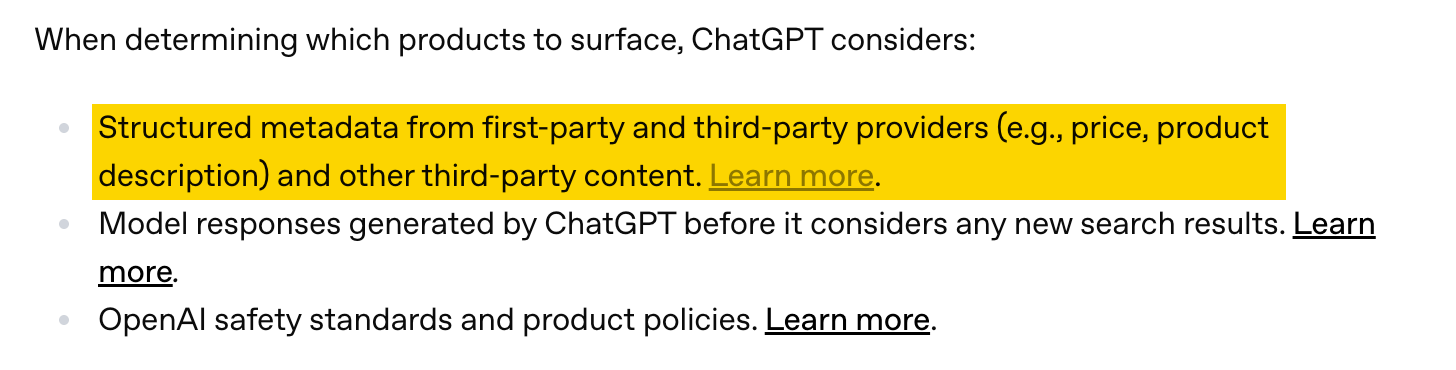
The case for it: OpenAI officially states that ChatGPT Shopping considers “structured metadata from first-party and third-party providers (e.g., price, product description)” when determining which products to surface. Other AI systems might do something similar.
And if you want AI crawlers to see your schema, make sure it’s in your server-side HTML, not injected by JavaScript. This guide from Search Engine Journal explains how to fix this:
- Server-Side Rendering. Render pages on the server to include structured data in the initial HTML response.
- Static HTML. Use schema markup directly in the HTML to limit reliance on JavaScript.
- Prerendering. Offer prerendered pages where JavaScript has already been executed, providing crawlers with fully rendered HTML (consider tools like Prerender.io).
One more critical point: your schema should accurately reflect what’s actually on your page. Don’t mark up content that doesn’t exist.
6. Structure content so machines can extract it
Semantic search rewards content that’s easy to understand, well-structured, and clear at a glance.
Most importantly, each section of your content should make sense on its own—this is called atomic content. Start with the answer, then add context and explanation. This matters because both readers and AI systems focus most on the beginning of a section and often scan or extract content without reading the whole page.
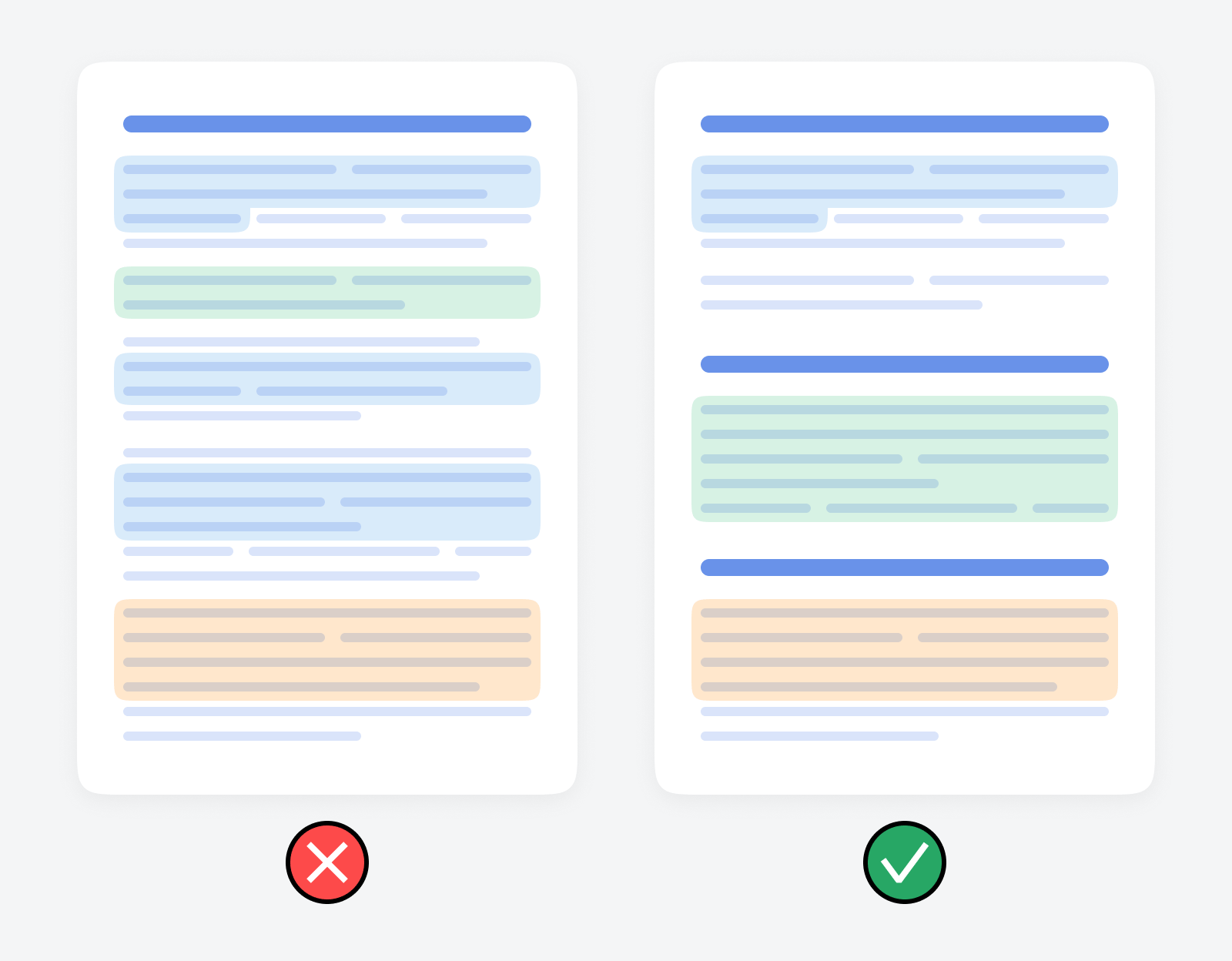
To support this, use a clear heading hierarchy with one main title (H1), sections broken into H2s, and sub-sections into H3s—without skipping levels.
Then choose the right format for the information you’re presenting: tables for comparisons, bullet lists for grouped ideas, numbered lists for steps, and FAQ sections for direct questions and answers.
Further reading
7. For local businesses: map every entity your local business touches
If you run a local business, there’s a simple opportunity that often gets missed. My colleague, Despina Gavoyannis, noticed it while working with local service businesses, and once they fixed it, many of them more than tripled their organic traffic from Google.
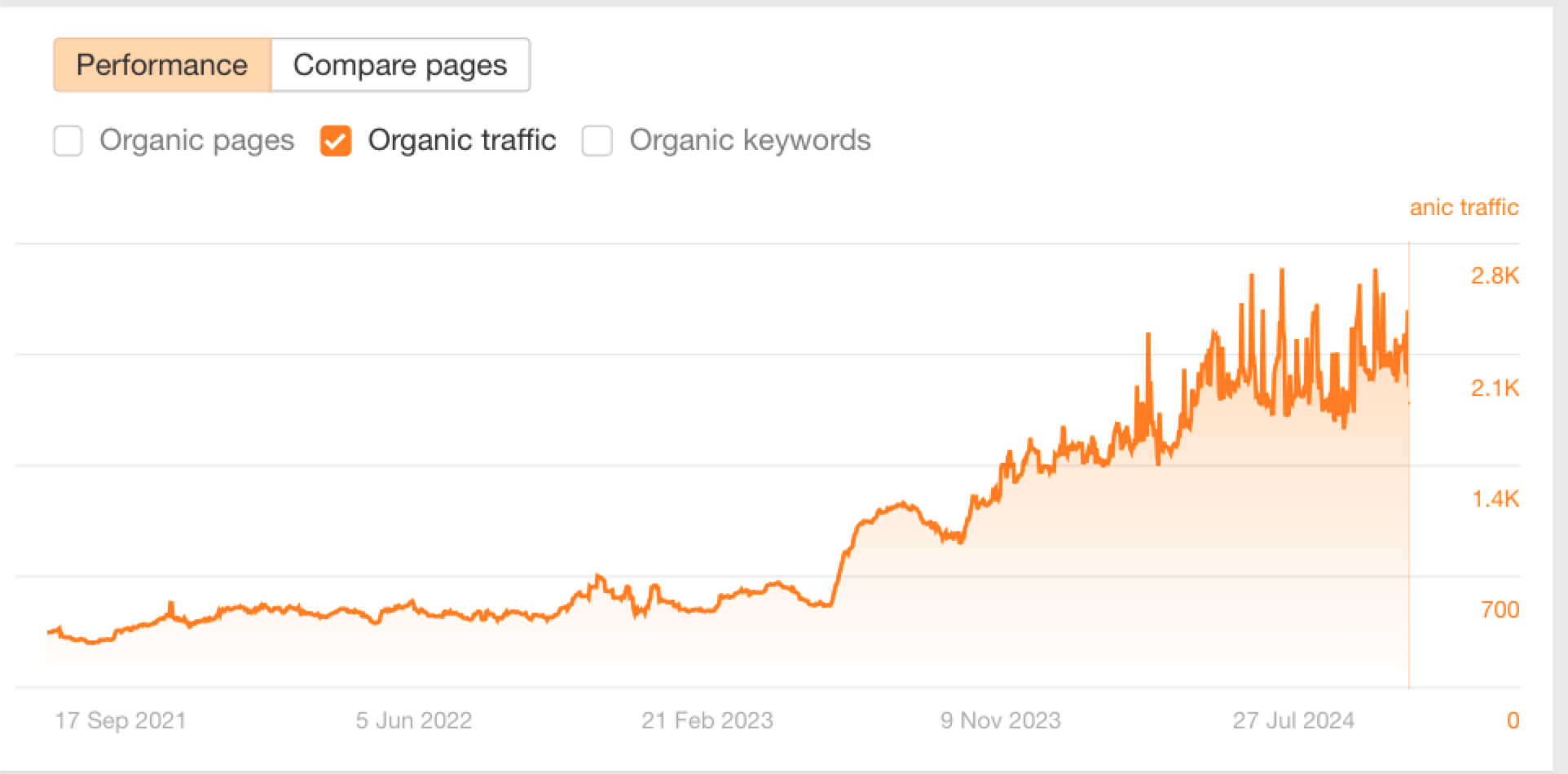
The typical local SEO approach stops at services and locations: “We clean buildings in Sydney.” That’s not enough for semantic search. Instead, map out every entity related to what you do, put that on your website, and fill in your Google Business Profile. In the case of that cleaning company, this could be parts of buildings you clean, types of properties you serve, surface materials you work with, and cleaning solutions you use.
For a deeper dive into entity optimization, check out the full guide: What Is Semantic SEO? How to Optimize for It
Further reading
Final thoughts
The technology behind semantic search is quite complex, but the principle isn’t: search engines understand meaning now, not just words. That’s better for everyone. Users get answers that actually match what they’re looking for. Publishers who create genuinely useful content get rewarded for it.
You don’t need to master vector databases or transformer architecture to benefit from this shift. Just focus on what the technology is optimized to find: complete, clear, credible content that answers real questions.