
A new old home for Ospreys side fighting for a future
-
Published
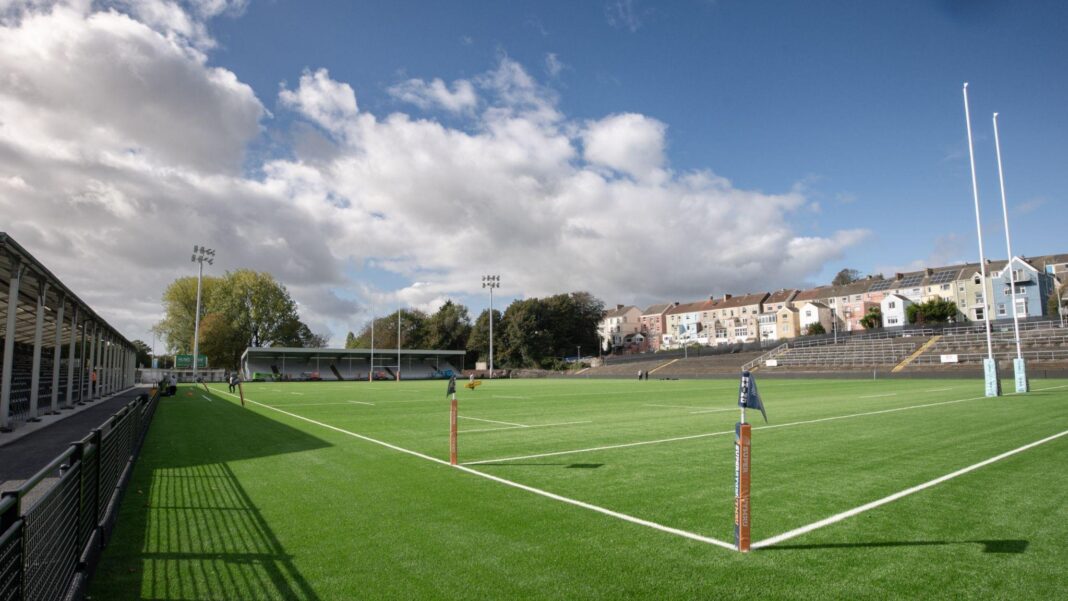
The Ospreys are returning to one of Welsh rugby’s most historic grounds after 20 years away.
But with construction still ongoing, and the club’s future uncertain, what awaits supporters at St Helen’s?
Six weeks ago, there was little more than a newly laid artificial pitch.
Last week – as the ground staged Swansea v Cardiff in Super Rygbi Cymru (SRC) – there were two stands, fresh tarmac, temporary bars and an army of workers racing to finish the job.
On Saturday, the Ospreys will welcome Welsh rivals Dragons to St Helen’s for the ground’s first United Rugby Championship (URC) fixture, kicking off at 19:00 BST.
It has been an extraordinary transformation in a remarkably short space of time.
And it comes as the Ospreys face a fight for their existence, with Welsh rugby’s governing body planning to reduce the number of professional men’s teams from four to three.
-
Ospreys and Dragons fully-loaded for St Helen’s return
-
Published23 hours ago
-
-
WRU loses £18m and says four regions unsustainable
-
Published20 hours ago
-
But anyone expecting a shiny new stadium might be surprised by what awaits them on Swansea’s seafront.
This is not a new ground. It is an old one being repurposed, and the speed of the redevelopment is evident everywhere.
There is something of the Royal Welsh Showground about it. Open spaces, temporary-looking structures, shipping containers and scaffolding.
One stand has a tarpaulin covering and a fabric back wall, offering little protection from the wind blowing in off Swansea Bay.
When a rugby ball lands on top, the resulting bang is enough to startle spectators and shake the structure.
During Swansea’s match against Cardiff the terracing remained closed and there was still uncertainty about where television cameras would be positioned.
A new giant screen had yet to be installed.
It was, unmistakably, a building site preparing to become a rugby stadium.
And yet, considering how little was there just weeks earlier, the scale of what has been achieved is remarkable.
“We only started the work on the ground in June this year, and what’s been achieved is nothing short of spectacular,” said Ospreys managing director Richard Lancaster.
A race to get ready
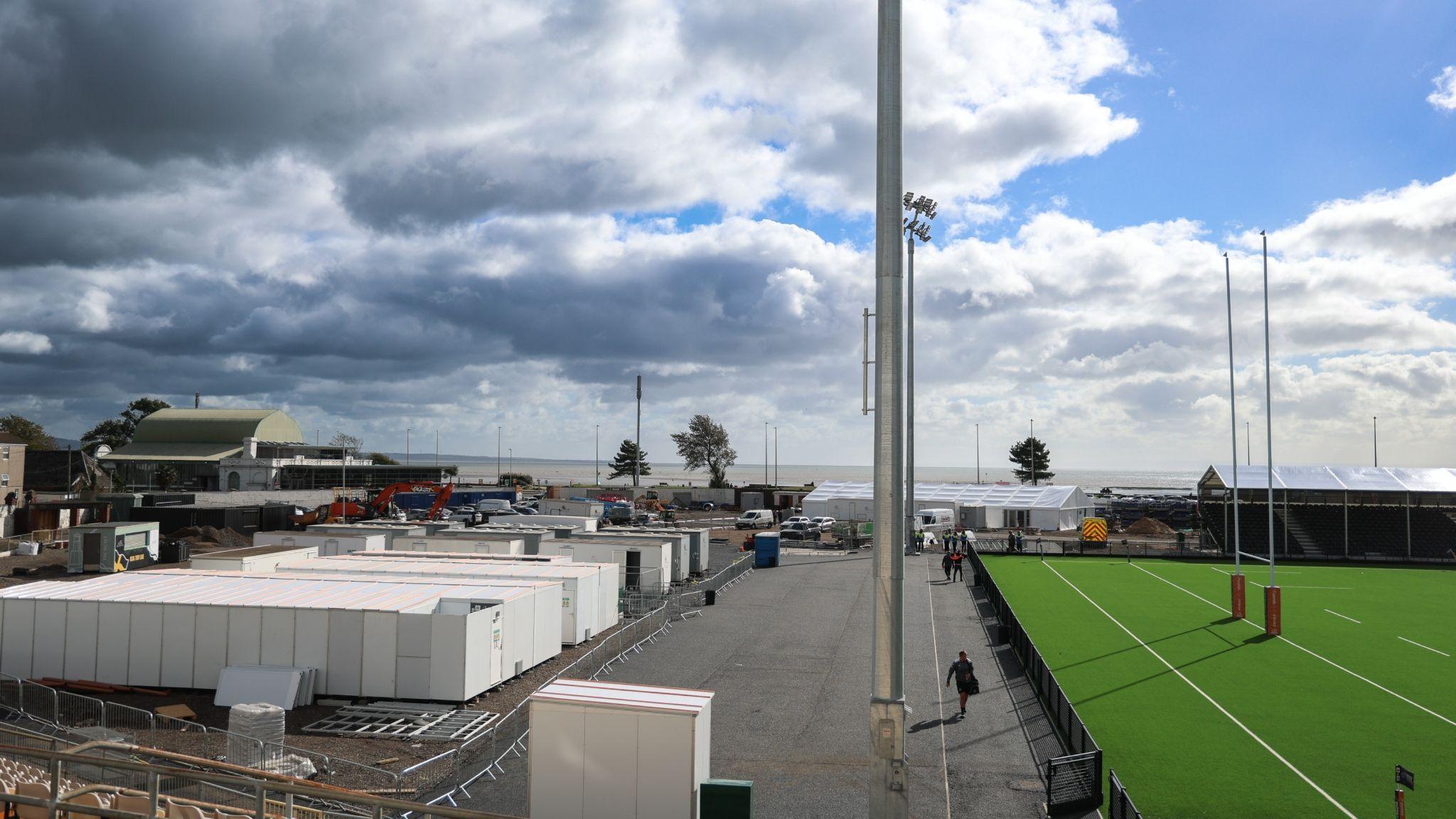 Image source, Huw Evans Picture Agency
Former Wales captain and Swansea RFC vice-chairman Colin Charvis has a colourful description of the unfinished surroundings.
“Maybe a little bit like your Jet2 holiday and a trip to Benidorm,” he quipped.
“Things are being ironed out, but it’s not going to be an issue.”
Ospreys head coach Mark Jones says the work has continued at pace.
“We were down here Tuesday and came back again today and there’s been progression in two days,” said former Wales wing Jones.
However, he acknowledged the transformation is far from complete.
“It’s like any new home you move into, I guess. There’s a few little gremlins there that need ironing out,” he added.
The Ospreys have trained on the artificial surface twice, with positive feedback from players.
Temporary changing rooms are being completed, while permanent facilities await a later phase of construction. Work on the stands could continue for another year or two.
“We’re not feeling like we’re short of anything at the moment. Everyone’s absolutely working their socks off here to make sure it’s a comfortable place for us,” Jones said.
-
Cheetahs to play European games in Swansea
-
Published6 October
-
-
Ospreylia: How Welsh club turned to a land down under
-
Published17 September
-
Can the supporters make it feel like home?
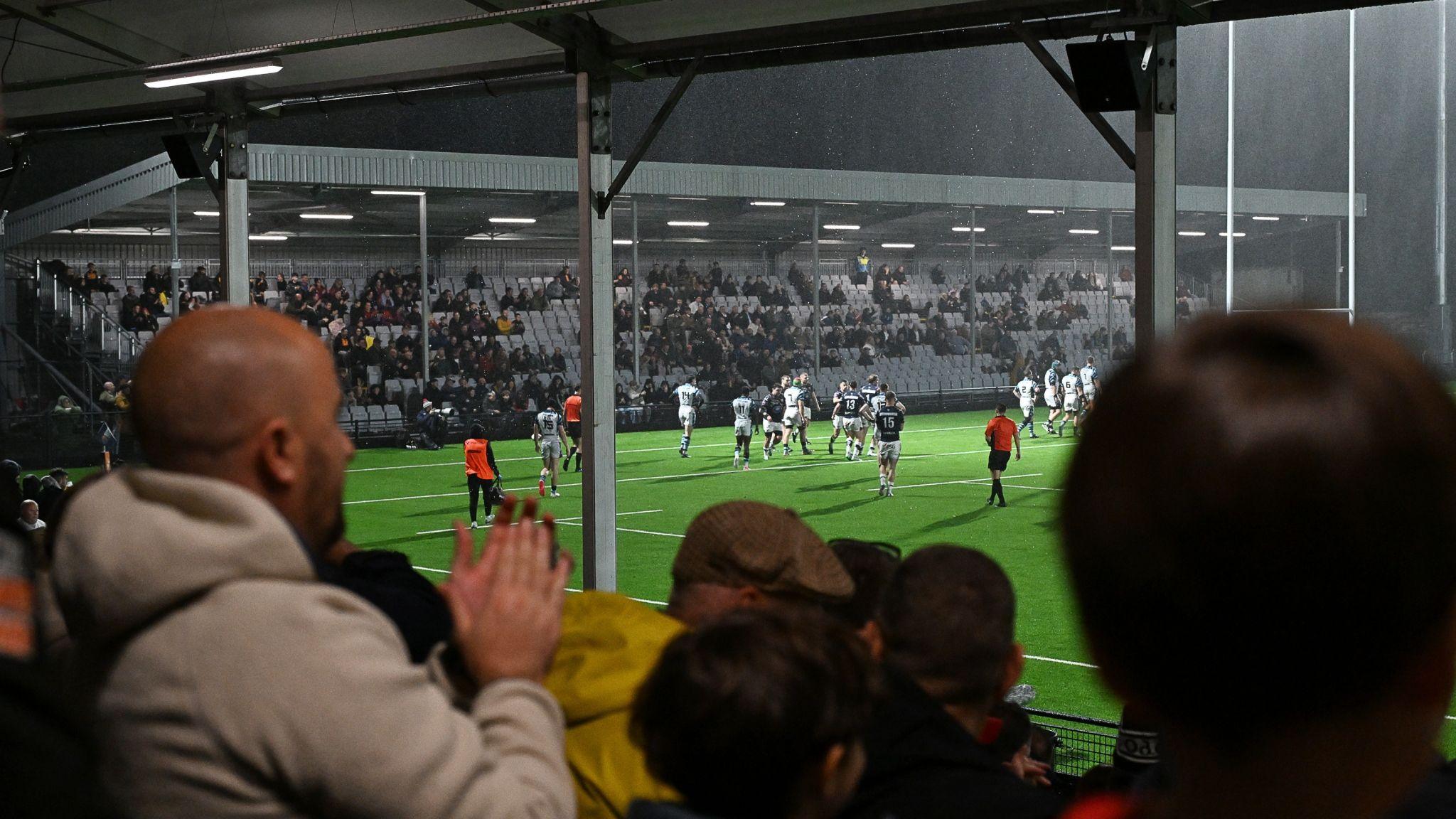 Image source, Huw Evans Picture Agency
For two decades, the Ospreys played at the Swansea.com Stadium, a football ground with a capacity of more than 20,000.
Crowds of five or six thousand can feel lost in such surroundings.
At Rodney Parade, Cardiff Arms Park or Bridgend’s Brewery Field – where Ospreys made their home in 2025-26 – similar attendances can generate a very different atmosphere.
St Helen’s, with its smaller stands and supporters closer to the pitch, offers something different.
Jones acknowledged there was a challenge in creating an atmosphere at the Ospreys’ previous football-ground home.
“Ultimately it was sometimes the numbers that turned up, they were just sort of lost in the size of the venue,” admitted the well-travelled coach who joined the Ospreys’ staff in 2023.
He hopes St Helen’s will provide a greater connection between players and supporters.
“It does make a big difference to the team when you can really feel that energy coming from the supporters… a massive difference,” Jones added.
For Ospreys winger Keelan Giles, a Swansea local who played at St Helen’s as a schoolboy and later for Swansea RFC, the return has particular significance.
“When I go out in Swansea you can feel the buzz in the city,” Giles said.
“Speaking to people who are not that interested in rugby itself it’s turning their heads and [they’re] saying they’re going to come down and watch a game.”
-
Wales great Jones returns to Ospreys as a director
-
Published21 August
-
-
Ospreys get go-ahead for St Helen’s return
-
Published25 March
-
A ground with history – and an uncertain future
 Image source, ANL/Shutterstock
Few rugby grounds in Wales have a history to rival St Helen’s.
Wales played their first home international there against England in 1882.
Swansea defeated South Africa, New Zealand and Australia, while it was the venue for Sir Garfield Sobers as he famously struck six sixes in an over during a cricket match between Glamorgan and Nottinghamshire in 1968.
The Ospreys moved to the newly built Swansea football stadium in 2005, leaving St Helen’s largely to Swansea RFC and cricket.
During Thursday’s game there was a reminder of that history, as Swansea’s players emerged beneath the old Swansea Cricket and Football Club sign.
A small piece of the old ground surviving amid the construction work.
But the Ospreys’ return comes against a very different backdrop.
The Welsh Rugby Union plans to reduce the number of men’s professional teams from four to three, with only one licence earmarked for west Wales.
It leaves the Ospreys and Scarlets facing an uncertain future.
The Ospreys are investing in a permanent new home at precisely the moment their long-term existence is in question.
Lancaster believes the significance extends beyond the professional team.
“It is great to have a home for Ospreys which we have never really had but more than that, it’s a community facility, a beacon of rugby for the region,” said the Ospreys recently appointed managing director.
The transformation is not complete, and nobody arriving at St Helen’s should expect the polished surroundings of a newly built stadium.
But perhaps that misses the point.
The Ospreys spent two decades playing in a stadium built primarily for someone else.
Now, in the middle of a fight for their future, they have returned to a ground steeped in their region’s rugby history.
The stands are up, the pitch is ready and the finishing touches are being made.
What St Helen’s still needs is a crowd to bring it to life.