
This post was originally published on this site.
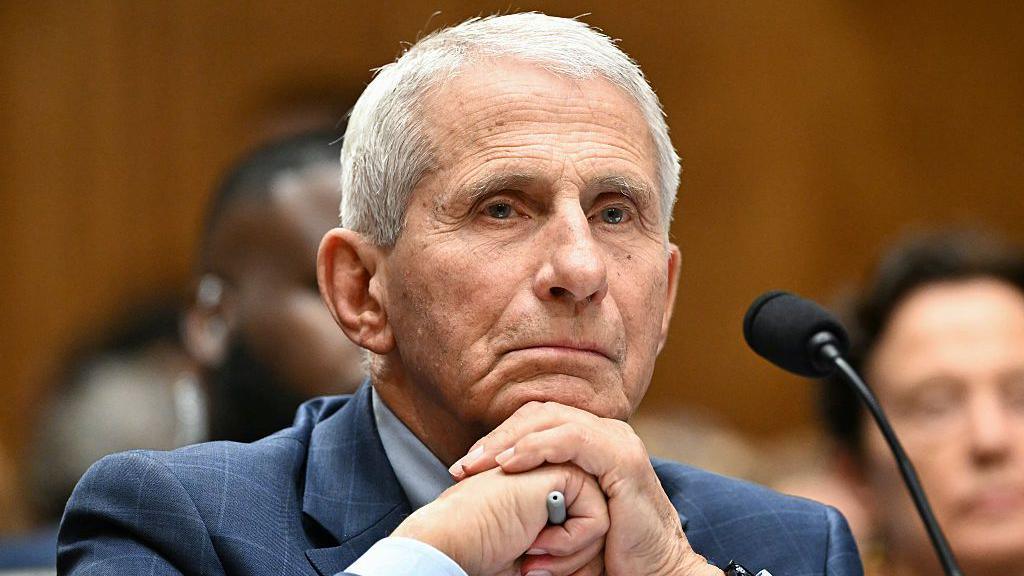
Anthony Fauci refuses to answer questions during tense US Senate hearing about Covid origins
To play this video you need to enable JavaScript in your browser.
This video can not be played
-
Published
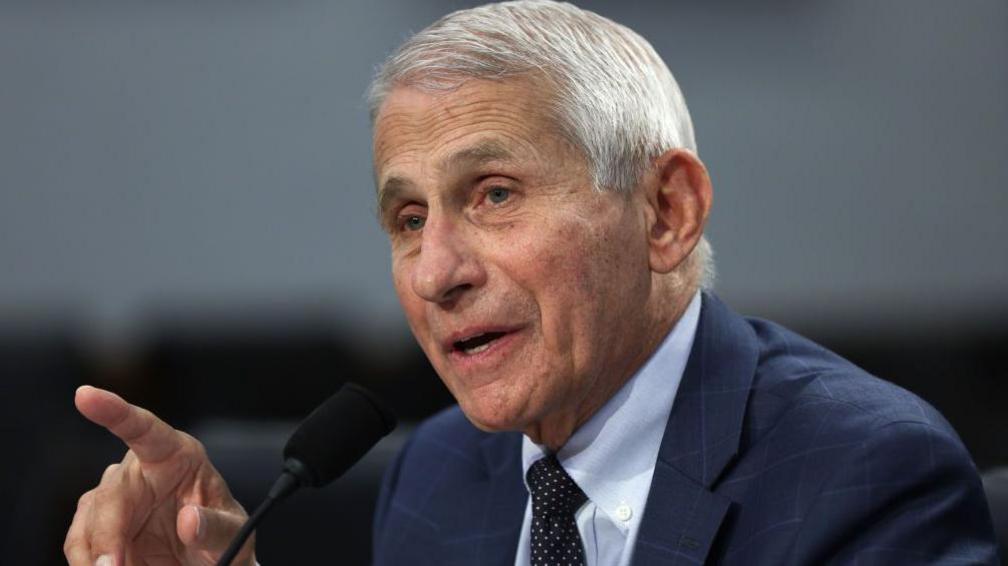
Former top US health official Anthony Fauci has refused to answer questions at a tense US Senate hearing on Covid-19, saying he feared Republicans would try to use his testimony to prosecute him for perjury.
He invoked the Fifth Amendment to the US Constitution, which says nobody can be “compelled in any criminal case to be a witness against himself”.
Contradicting himself under oath could be legally perilous for him. Fauci noted he had testified about Covid and its origin at several congressional hearings.
Republicans have long accused Fauci of concealing information about the pandemic from the public and lying about its dangers.
He has denied wrongdoing, calling the allegations against him “simply preposterous” in previous testimony to lawmakers.
“Although it pains me to do so because of the respect I have for the legislative branch of government … under the advice of my attorneys, I will invoke my right under the Fifth Amendment of the constitution to refrain from answering your questions,” said, Fauci, 85, former leader of the National Institute of Allergy and Infectious Diseases (NIAID), at Wednesday’s hearing.
Taking the Fifth is not an admission of guilt – it is designed to protect individuals against coercion, mistakes, and unfair shifting of the burden to provide proof of wrongdoing.
While he was granted a pre-emptive pardon by former President Joe Biden, protecting him from federal prosecution for his actions between 2014 to 2025, Fauci could still face charges for anything after that date, including in his actions towards the Senate committee. He could also face state or local charges.
In his statement to the Senate Committee on Homeland Security on Wednesday, Fauci said Republican Senator Rand Paul, who chaired the hearing, had an “obvious obsession” with prosecuting him and that had led Fauci to decline to answer questions.
“The only conclusion I can reach is that the sole reason he is calling me before this committee is to get me to say something – anything – that could vindicate his repeated public pledges that I end up, in his words, ‘behind bars,'” Fauci said.
Paul, who worked as an eye surgeon before joining Congress, continued questioning Fauci despite his refusal to answer. He repeatedly invited Fauci to “apologise” and said the committee would vote next week on a resolution holding Fauci in contempt of Congress.
Republicans asked Fauci about shifting health guidance, which changed during the pandemic as health officials learned more about the disease. Fauci has previously defended his policy positions.
One of Fauci’s lawyers, David Schertler, who was seated next to him, repeatedly tried to interject during Paul’s questioning and was removed from the room.
Schertler later called it “outrageous” for Paul to “exclude his counsel for making a legitimate legal point”, adding in a statement: “It proves the baseless and vindictive nature of this proceeding and Rand Paul’s personal vendetta against Dr Fauci.”
During the hearing, President Donald Trump took to social media to call Fauci “crazy”.
“I said from the beginning that the Virus came from the Wuhan Laboratory in China. Fauci strongly disagreed, always trying to protect China,” Trump said.
The origins of the pandemic have been a matter of strong debate in the US, including between Trump, who was in office when it began in 2020, and public health officials, including Fauci.
The pair frequently sparred over the handling of the pandemic, including when Trump suggested unproven treatments.
In the hearing, Paul suggested that while Fauci said publicly that Covid originated naturally, he privately believed the virus originated in a medical lab. The senator has repeatedly promoted the lab-leak theory that Covid came from China’s Wuhan Institute of Virology.
The World Health Organization in 2025 said the natural-origins theory – the virus spilling over from animals to people – was the “best supported” idea from the available evidence but said until more information emerges, origin determination is “inconclusive”.
Earlier this week, Paul released Fauci’s pandemic-era diary entries, in which he mused about fame and Covid’s origins.
The diary entries reflect openness at the start of the pandemic to two possible theories about Covid’s origins – including natural origins and a lab leak – before he appears to become more convinced it had a natural origin.
In one entry from February 2020 discussing a conference call between Covid scientists, Fauci says the doctors did not have “total agreement” about where the virus came from.
Later, he writes he “is almost certain that the virus evolved naturally from a species jump, even though… I keep an open mind about the possibility of a lab leak”.
“[J]ust because two alternatives are possible that does not mean that they are equally probable,” Fauci wrote.
His decision not to testify enraged Republicans, including Senator Ron Johnson who angrily told Fauci that he planned to push to subpoena him in an effort to require him to answer lawmakers’ questions.
Following the hearing’s conclusion, Florida’s attorney general, a Republican, said he would open an investigation into Fauci.
Several Democrats, meanwhile, came to Fauci’s defence, including Senator Maggie Hassan, who said the hearing was “designed to entrap” Fauci.
Fauci has faced death threats during and after the coronavirus pandemic. Trump last year removed his security protection.
Fauci was one of the most trusted members of the US government during its response to the pandemic as scientists were trying to learn about the virus as quickly as possible.
He was not always at loggerheads with the current US president. In 2021, Trump awarded Fauci a presidential commendation to him for his work on the US Covid vaccine project, known as Operation Warp Speed.
-
-
Published26 January 2025
-
-
-
Published24 January 2025
-