
This post was originally published on this site.
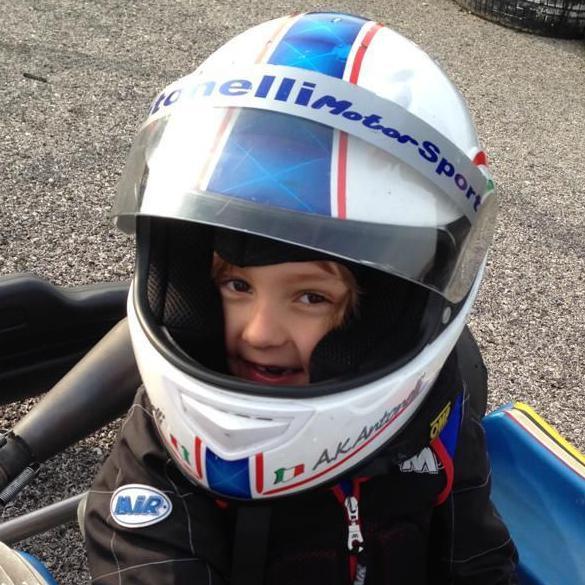 Image source, Marco Antonelli
Kimi Antonelli was 10 when his father Marco first realised the boy sitting on his lap, operating the steering and gears, might have an exceptional talent as a racing driver.
The pair were at the Adria circuit in north-east Italy, Marco with his Lamborghini sports car team, Kimi competing in a karting race.
It was the end of the day and Marco, a former driver himself, asked his son: “Do you want to try the Lamborghini?”
Of course he did.
Marco strapped himself and Kimi into the car, belts extended around both. Dad was in charge of the throttle and brake, his son would control the rest.
“I couldn’t see the track because he was in front of me with a helmet on,” Marco tells BBC Sport. “I could only see beside me the marker panels before each corner – 100m, 50m.
“We started to drive, step by step, faster, faster, faster. In the end, I pushed like I was alone and I arrived at the braking point at the end of the straight, 320km/h, braked very hard and at the limit.
“The car had a lot of oversteer. Kimi controlled the oversteer perfectly, then I went on the throttle, Kimi finished the oversteer, changed gear, and went.
“I said: ‘OK, stop, because it has now become dangerous.’ But when I saw the video, 10 years old, on my leg, oversteer, everything perfect, I said: ‘Maybe he has something special.'”
Now a 19-year-old Kimi is dominating this year’s F1 championship in only his second season.
This is the story of a boy his dad says was “born in a garage”.
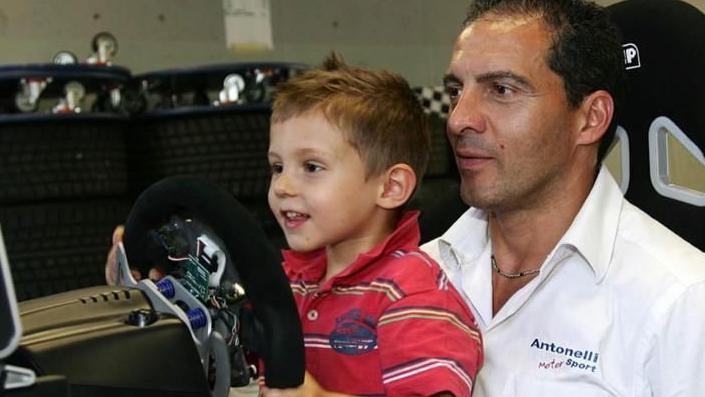 Image source, Marco Antonelli
“Kimi from 15 days old was in the garage and heard the sound of the engine and the smell of the exhaust,” says Marco, who worked with his wife Veronica on their racing team business.
It was the Christmas holidays when Kimi was about three, and Marco had brought home a simulator he had bought for his guests to try out at the Bologna Motor Show.
“Each evening, Kimi wanted to drive,” Marco remembers.
Just like seven years later in the Lamborghini, Kimi would sit on Marco’s leg, the controls divided in the same way.
“I remember one night I started to fall asleep because I had been at work very early and we had a crash because I didn’t brake when we arrived at the end of the straight,” Marco says.
“And Kimi said: ‘Dad, dad, no sleep, no sleep. I have to drive.'”
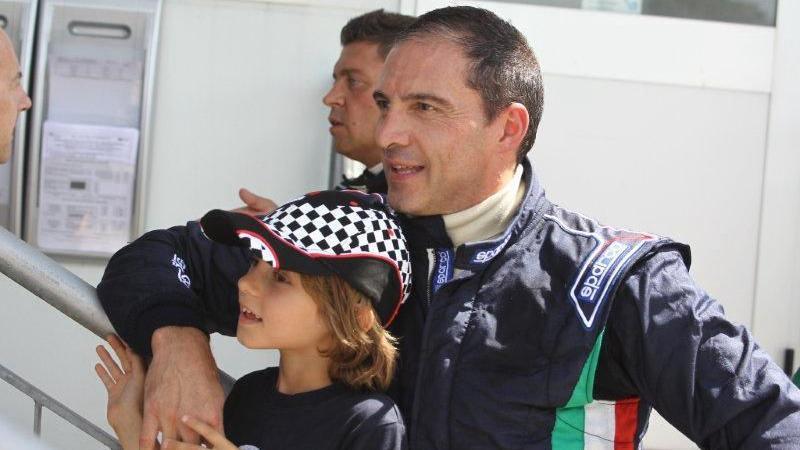 Image source, Marco Antonelli
Marco Antonelli did not originally want his son to become a racing driver, because of his own struggles during his career.
“Sometimes you are fast but not in the right position to become a professional driver,” he says.
In the 1990s, Marco Antonelli was on the cusp of becoming a works driver in the DTM touring car series, then a huge hit with audiences across Europe.
He tested for Alfa Romeo, but then the team boss left and the opportunity evaporated. Another chance came up with BMW, alongside Roberto Ravaglia and Steve Soper – stars at the time. Again, the same thing happened.
“I suffered a lot for it,” Marco says. “And, of course, I was scared that my son [would] relive the same situation. At the beginning, I was very stressed about the passion my son had for motorsport.”
Kimi tried a go-kart for the first time when he was five, and immediately showed an awareness of racing lines, braking points and car control.
The Antonellis were what Marco describes as “a normal family”. They could not possibly afford to pay for Kimi to take part in all the categories on the way to Formula 1.
Marco decided he could fund Kimi through karting and a year of the basic single-seater category, Formula 4. After that, he figured he might be able to put him in one of his GT cars and become professional that way.
But Kimi immediately started to impress. Whatever category he got into, he was quick, and won.
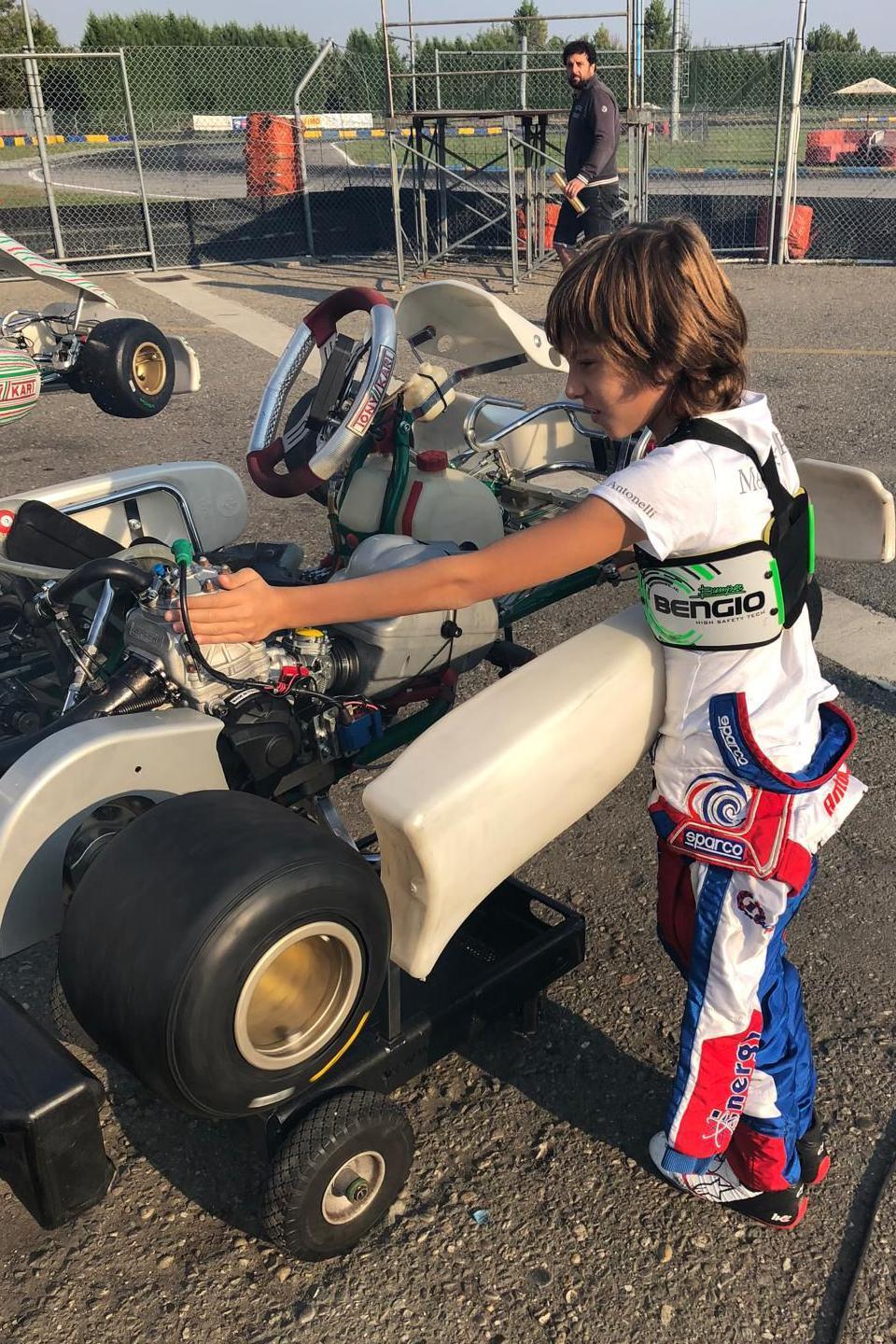 Image source, Marco Antonelli
By the time Kimi was 11, his name was buzzing around motor racing circles. Mercedes heard about him, and their driver academy scout Gwen Lagrue flew to Italy to check him out.
It was a season in which Antonelli had ended up driving a kart with less power than those of his rivals. Marco had told Kimi this would be good for him – he should think not about the result, but about how to improve, always push hard.
“Gwen was impressed about this condition of power and driving in this category that Kimi did,” Marco says. “And maybe they understood that Kimi was a different child.”
Now Kimi was a member of the Mercedes driver academy, Marco could stop worrying about money, and start focusing on helping his son achieve his full potential.
Mercedes were not the only big names in F1 who had noticed Antonelli’s promise.
“When he was in karting, you could already see he was one of the stand-out talents,” says four-time world champion Max Verstappen, the only other teenager to win an F1 race.
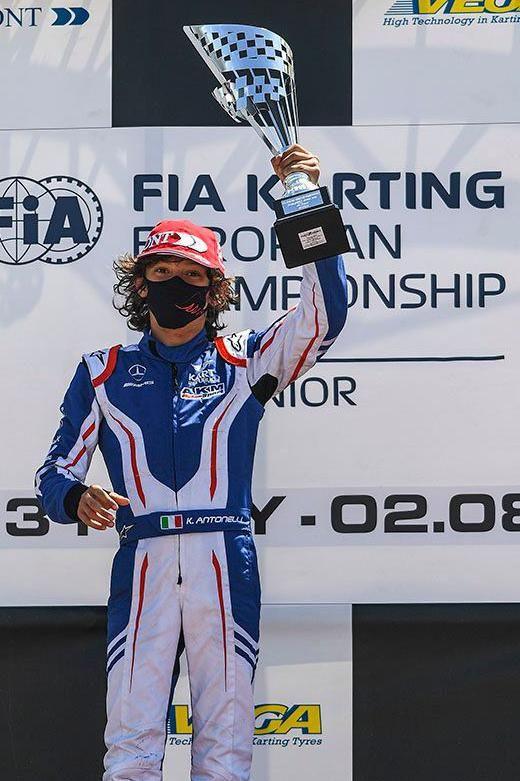
At 15, Antonelli was ready to move up to cars, and, as a final preparation, did a couple of races in a karting category with gears. On his debut, with minimal pre-event testing, he took pole position. After that, he went to the world final, and stuck it on pole again.
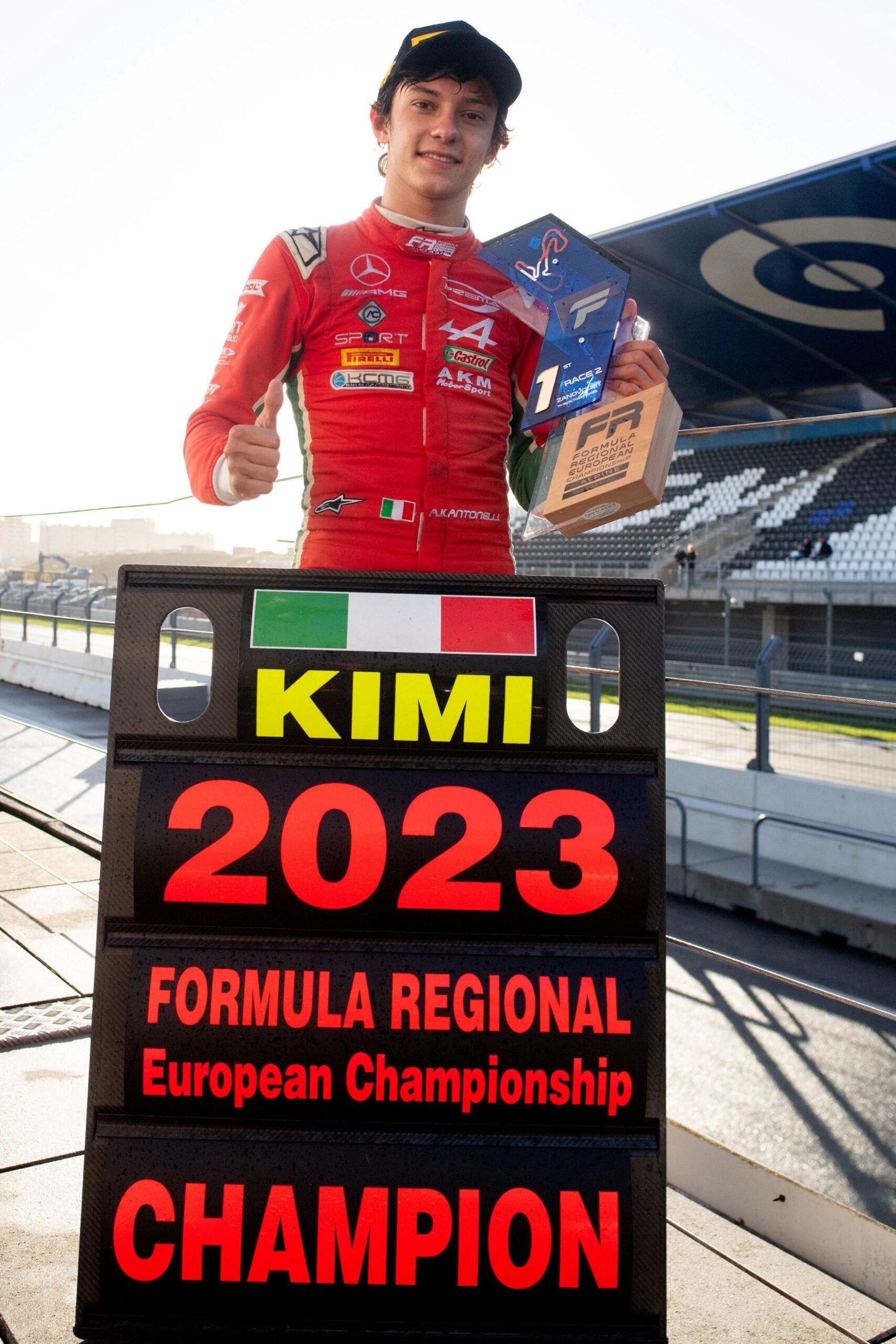
This was the end of 2021, after which Antonelli moved full-time into cars. Through 2022, he swept the board in various championships in Formula 4, and the same happened in Formula Regional in 2023.
-
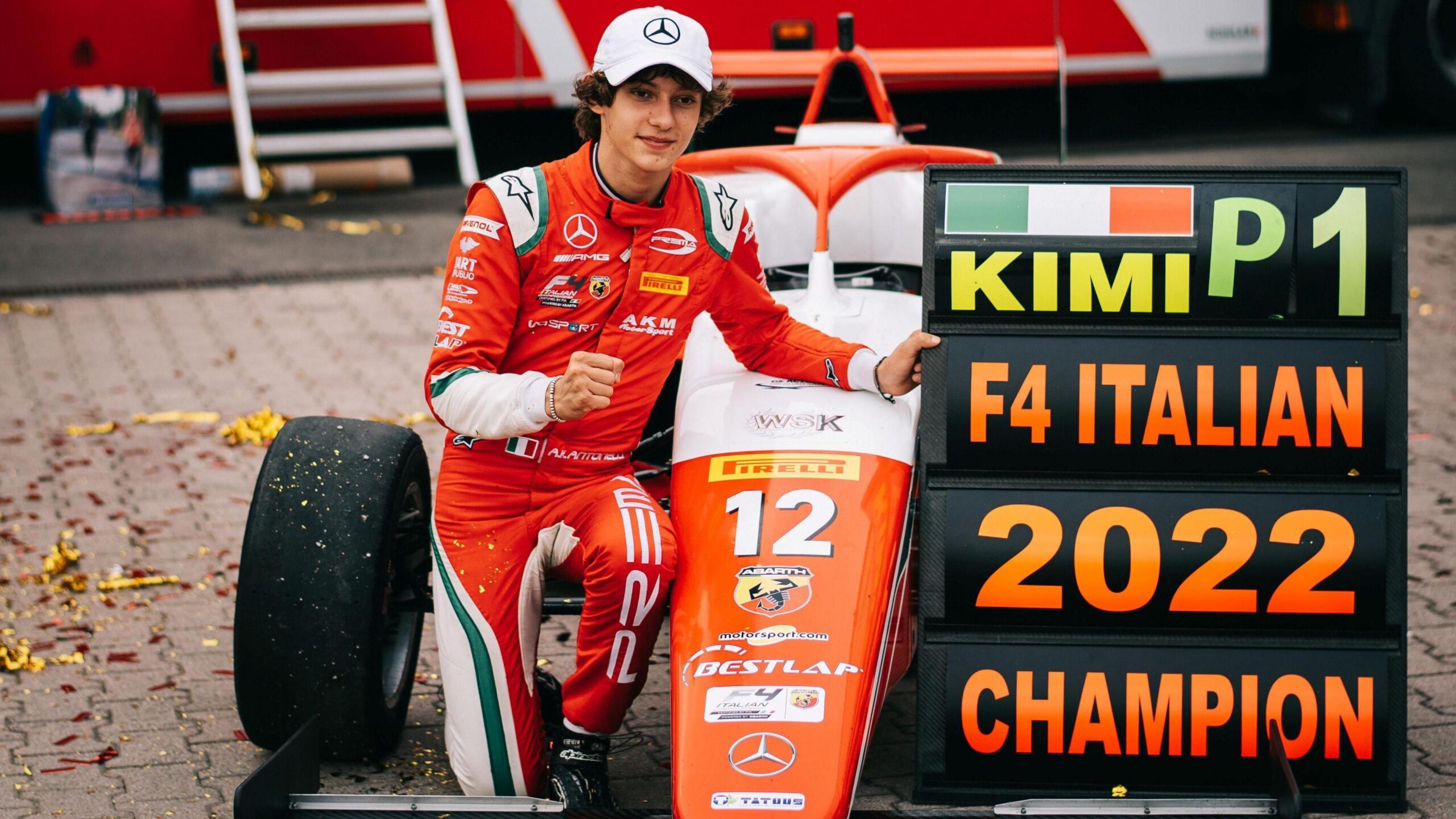
Image source, Mercedes F1
1 of 4
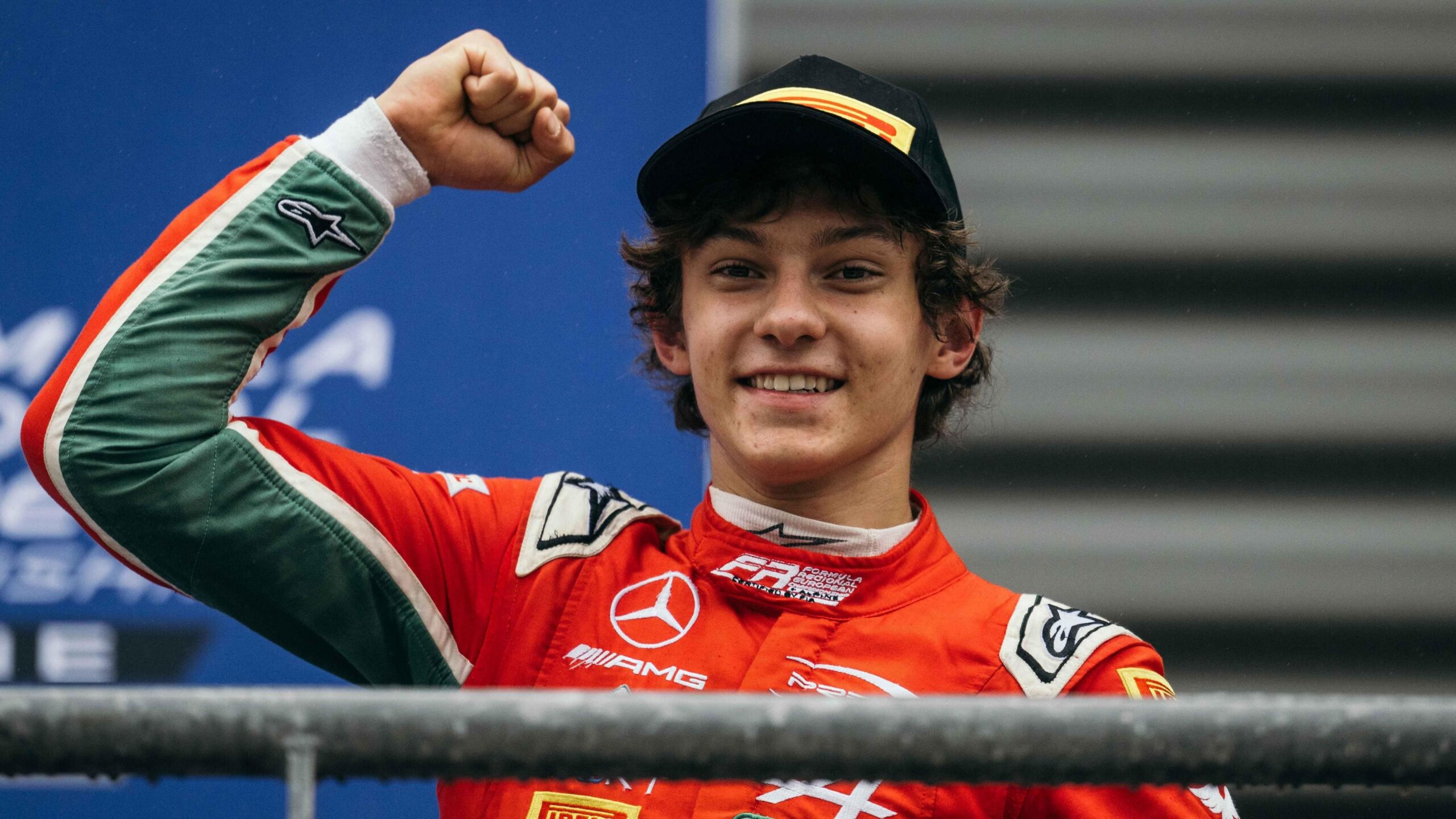
Slide 1 of 4, Kimi Antonelli poses for a picture alongside his racing car and a pit board side that refers to him winning the 2022 Formula 4 championship, Antonelli, who won the 2022 Italian Formula 4 championship, would become F1’s youngest world champion if he wins the title this year
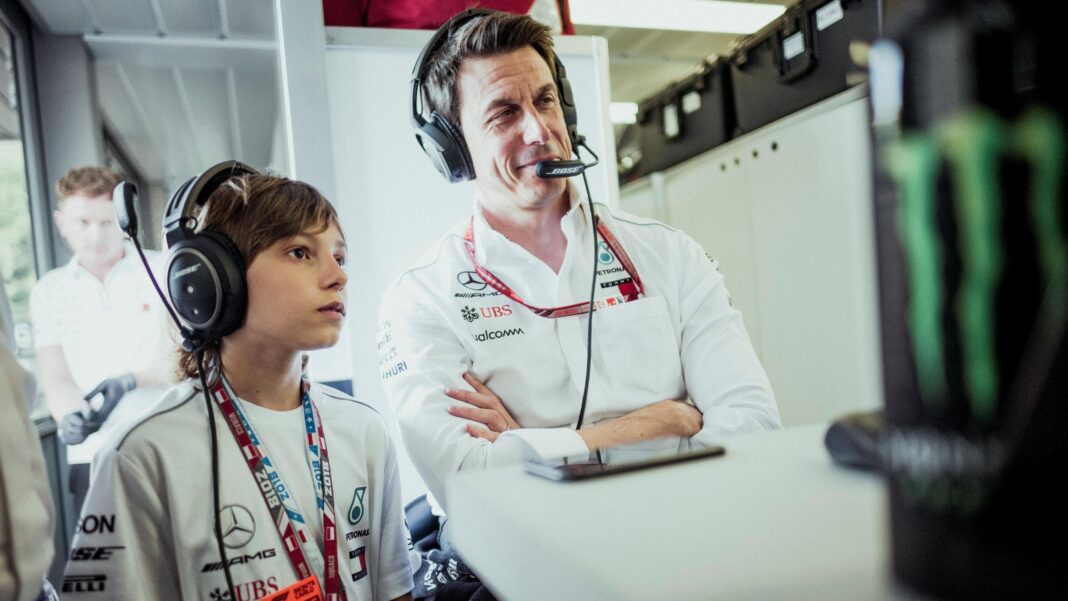
By now, Mercedes team boss Toto Wolff was already thinking that Antonelli would be his next F1 driver, potentially a replacement for Lewis Hamilton. With the seven-time champion approaching 40, Wolff was planning on taking control of that generational transition.
So when it came time to negotiate a new contract with Hamilton in 2023, Wolff played hardball. Hamilton wanted to sign for at least two firm years, Wolff only one. In the end, they compromised on a contract for 2024 with an option for 2025.
Hamilton, unimpressed, decided to look at his options, and signed to join Ferrari in 2025, telling Wolff in late January 2024, before the start of that season.
Wolff immediately phoned Marco Antonelli, to tell him the “very big news”.
“‘We put Kimi in Formula 1,'” Marco remembers Wolff saying. “‘What do you think?’
“I said: ‘Oh, [it] is a difficult question you ask me. Of course I’m happy that you think about Kimi but are you sure he’s ready?'”
Mercedes were at a management away day. Wolff called his senior engineers together to tell them about Hamilton’s decision.
“We were reviewing options and trying to come to a fairly rapid conclusion,” says trackside engineering director Andrew Shovlin.
“We were all keen to just go with Kimi, which we knew was a bit of a risk. But it was quite exciting and we thought, based on his career to date, he had a good chance of being very good. It seemed like a good challenge.”
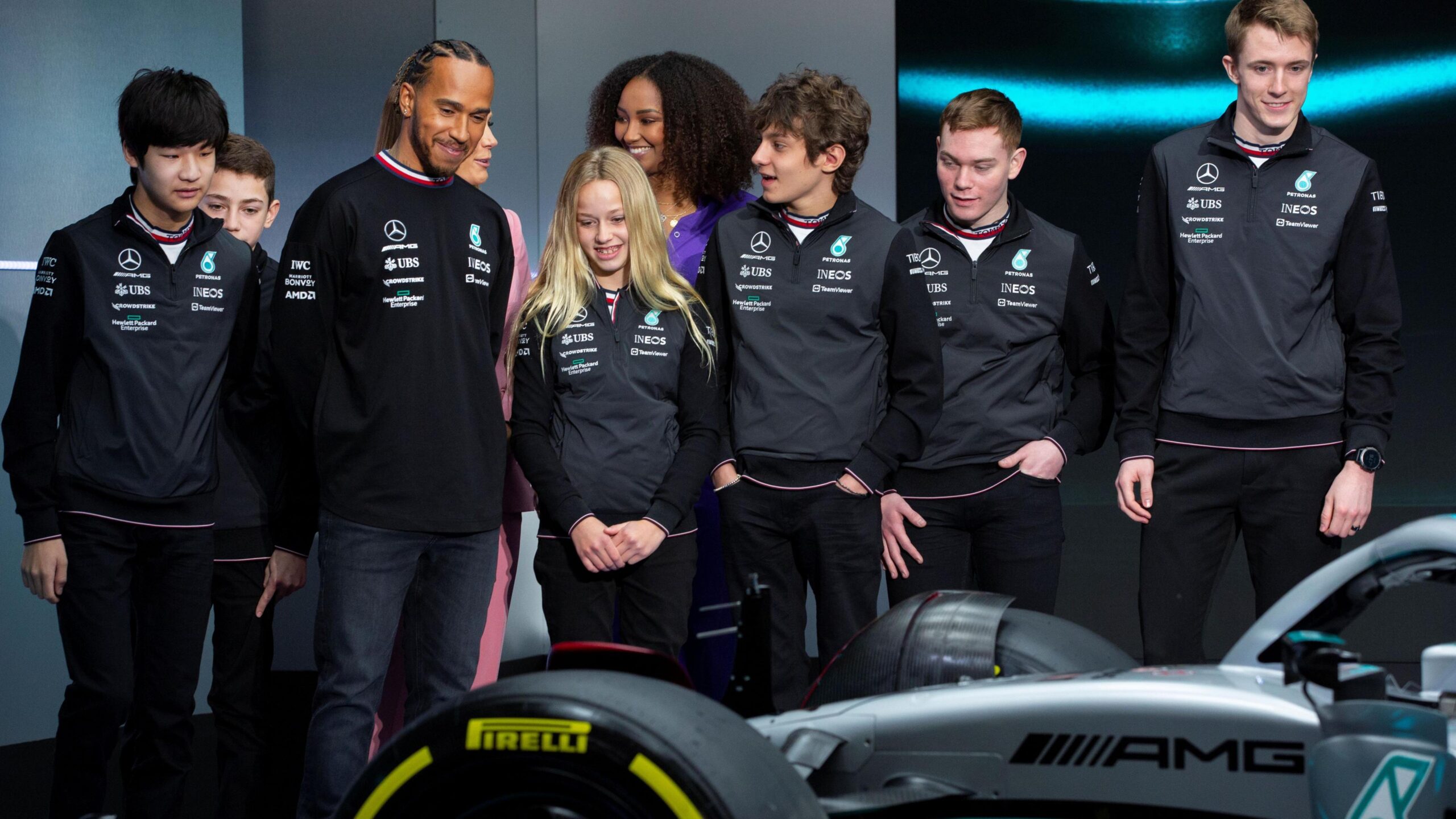 Image source, Mercedes F1
Antonelli had not even driven an F1 car when Wolff made the call. Mercedes put together a testing programme for him, 20-odd days in cars a couple of years old at tracks all over the world to prepare him for his F1 debut in 2025.
Shovlin and the engineers were immediately impressed.
“It was how rapidly he would get up to speed,” Shovlin says. “What you normally see with drivers is they’re just incrementally going a little bit quicker, braking a bit later.
“If you compare with other drivers we’ve seen in an F1 car for the first time, the best I’d ever seen until then was George [Russell]. You suddenly saw someone who was quite similar.
“With Kimi, he took a couple of runs to work out how the car behaved and then he’d be more or less on the limit.
“The other thing you can see is the fidelity of the car control, how they can sit with it right on the edge of breaking away from them on entry to a corner, but they can just control it in that condition.
“Equally, when you looked at the mistakes he was making, they were often errors of judgement or lack of experience. They weren’t run-out-of-talent mistakes.”
Antonelli made one of these at the 2024 Italian Grand Prix. Wolff decided to give him his first experience of an F1 weekend in first practice at his home race at Monza.
It was a spectacular debut – for both good and bad reasons.
Antonelli set the fastest time on his first lap. Then he went for another. He was flying, miles quicker than anyone up to that point, but then he crashed heavily at the final corner, Parabolica.
“No-one on earth could have got the car around the corner at the speed he was attempting,” Shovlin says. “He clearly got into his head that he would try and do something special and it was an error of judgment.”
Wolff took Antonelli aside, told him it was OK, and not to worry about it. But the crash had a significant impact on Antonelli.
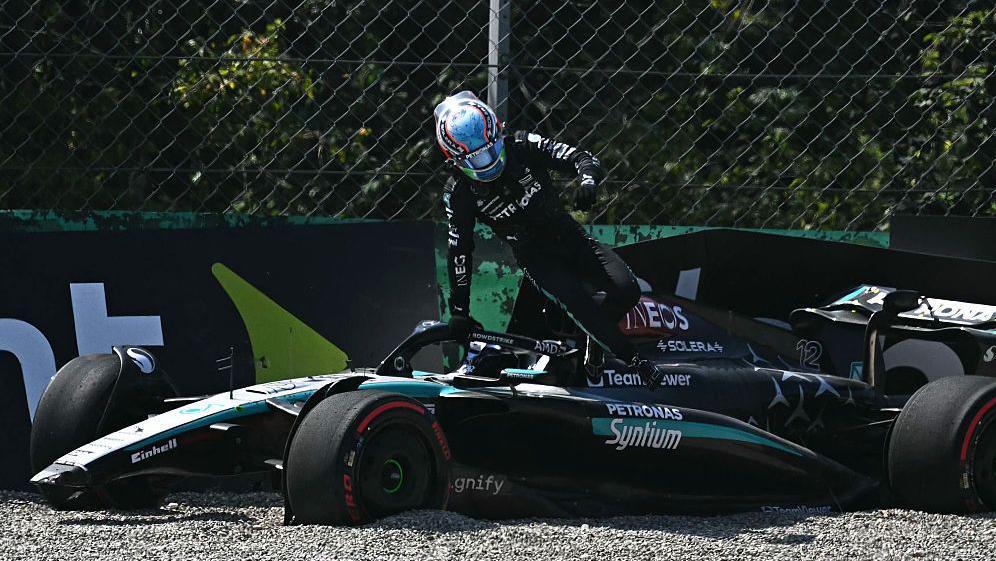 Image source, Getty Images
Wolff was very clear in public about managing expectations of Antonelli going into his debut season.
“I conditioned myself so strong that I said: ‘There’s going to be moments of brilliance and moments where you want to tear your hair out’,” Wolff says.
There were stand-out moments – Antonelli out-qualified Russell at the second race of the season on the high-speed Jeddah street circuit and stuck it on pole for the sprint in Miami.
But the middle part of the season, through Europe, was a disappointment. A change to the rear suspension design made the car nervous and rocked his confidence. His pace was not impressive, and he made too many mistakes.
“We expected more highlights from him,” Shovlin says.
Marco Antonelli explains: “Mercedes needed to have a good result after a period that was not like the Hamilton era. And, of course, needed two cars that always take points.
“Kimi felt this necessity. The crash in Monza was very tough for him to forget. It created on him a big pressure.”
Wolff said the “moments of brilliance were there” but then there was “a spell of nine races that was really not good”.
“Me, personally, I never doubted,” says Wolff. “Other people doubted. In the team and externally.”
A year on from his practice debut, Antonelli crashed again in Monza practice.
“This was the point where I said: ‘Kimi, you’ve got to turn this around. This is just not good enough’,” says Wolff. “He said: ‘I know.'”
Marco Antonelli says he and his son talked a lot during this period and that Kimi “understood that everything can change”.
“The period was bad but you can see light at the end of the tunnel,” he says. “And step by step he started to take confidence.”
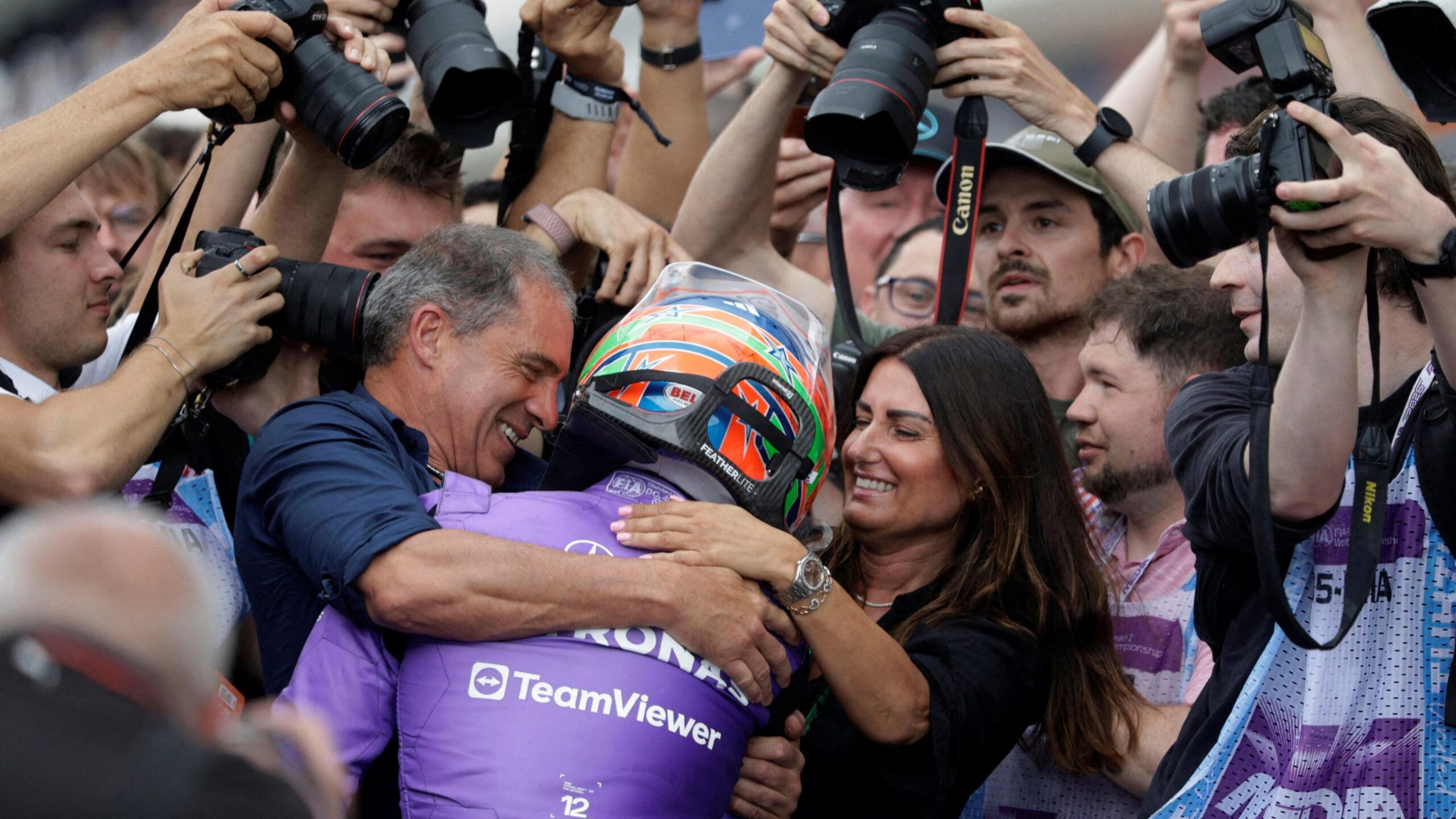 Image source, Reuters
Once F1 had left Europe in the autumn of last year, there was a shift.
“Suddenly, we felt like we were making really good progress,” says Shovlin.
“There were signs towards the end of the year. I’m not saying any of us thought we’d see what we’ve seen so far this year, but that we had a decent F1 driver.”
Antonelli has been rather more than that this year. He has taken the season by storm, and established a consistent supremacy over Russell.
In the best car in the field, Antonelli has taken six poles and six wins in 11 races and heads into the second half of the season, starting at the Dutch Grand Prix this weekend, with a 50-point lead in the championship, and well on course for his first world title. If it had not been for dodgy reliability, he could be even further ahead.
The extent of this turnaround has shocked almost everyone.
“We were all surprised,” Wolff says. “My thoughts were always that he needed to make the experience of knowing all the tracks, the pressure of performing on such a high level under the spotlight of the media, the constant public feedback, whether you’re doing well or not, the situations everyone wanted to be close to him.
“There wasn’t one single defining factor where I would have said that made it difficult for him, but this year, he knew exactly what to expect. What was really nice to see is that the self-confidence, without feeling any entitlement, has shone.”
Marco points to his son’s “very strong” mentality.
“In F4 and Freca, he started with not good results, and he was able to remake everything and, at the end, work hard and win the championship,” he says.
“We talk about F1. I don’t know what the spark is in his brain, but Kimi in the past did the same.”
Verstappen says: “For me, there was never any doubt that he would make the jump the year after and already be a lot more consistently competitive.
“It’s normal in the progression of a driver. In your rookie season, it can be quite tough, but at the moment, of course, he’s doing an amazing job.”
Kimi pays tribute to his father, describing him as his “rock”, while Wolff also praises the driver’s “typical Italian family”.
“They are caring, they are loving,” Wolff says. “Kimi’s character, he’s gentle, he has empathy, he has charisma, he has the right amount of intelligence for being a racing driver.”
-
Antonelli-Russell contrast could hardly be more stark
-
Published7 June
-
-
Antonelli says he still has questions to answer
-
Published11 June
-
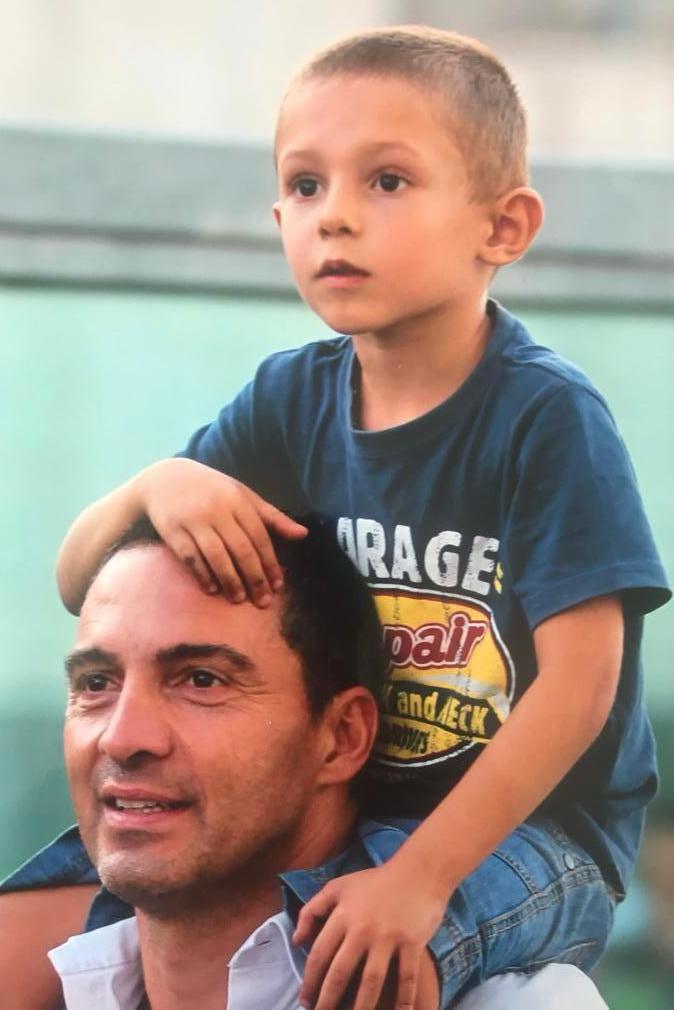 Image source, Marco Antonelli
Mercedes have been talking to Antonelli about managing his emotions, which have flared at times this season, such as in the sprint in Canada, when the racing between the two Mercedes drivers came close to boiling over.
Shovlin says: “He just says: ‘I’m young, I’m Italian, what do you expect?'”
The remark reveals Antonelli’s sense of humour, but also a maturity and self-awareness that might not always be expected in someone so young.
Wolff says: “He has all that. He’s actually not a typical emotional Italian. He’s so clear [in] what he needs to do in a car. I don’t see lots of emotion. I see full focus, full concentration. I see, ‘OK, this is a problem, let’s analyse it, and move on.’
“You see him in a debrief afterwards. You couldn’t really say whether there was a bad or a good session. It’s all very balanced and stable.”
Antonelli took advice on this when he met tennis legend Roger Federer at Wimbledon this summer.
“We chatted about my races,” Antonelli says. “About when he used to play, and about life in general.
“About pressure, he just told me to focus on one race at a time, just focus on what you can control, and also to control the emotions, especially the ones that can make you do mistakes.”
Federer’s words echoed something Marco has always impressed on his son.
“In our family, we use this concept in normal life as well,” he says. “We have to live every day our best day. You work hard every day to arrive at the end of the project you have.”
Back in February 2024, Wolff followed up his phone call to Marco with a meeting in Milan.
“Toto said: “Of course it will be difficult, but I think after one year of experience, we can do very well with Kimi in F1,” Marco says.
“The project was 2025 experience, 2026 start to achieve results. I think we overachieved.”