

This post was originally published on this site.
Argentina v Cape Verde: Breaking down biggest World Cup knockout mismatch
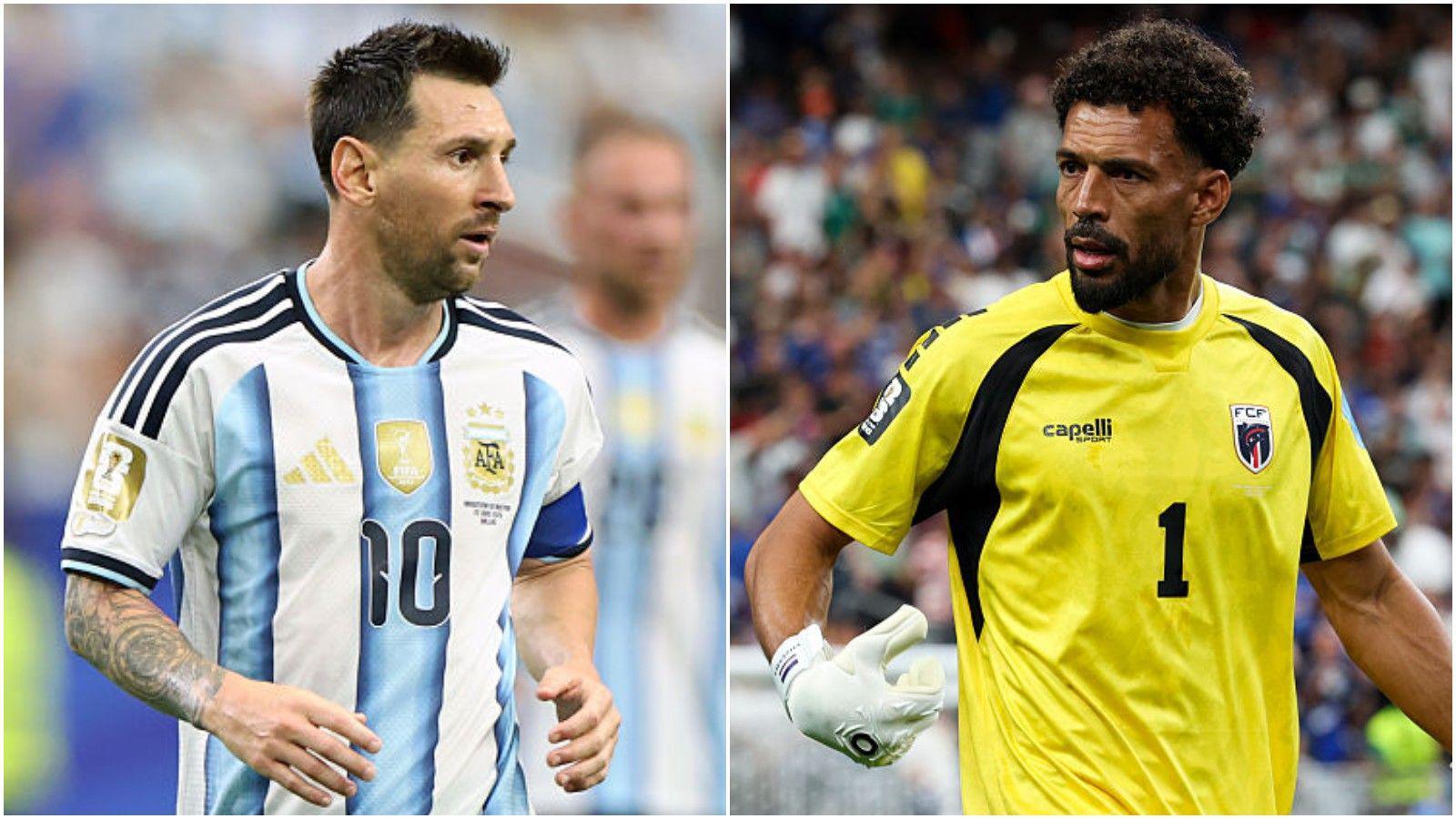 Image source, Getty Images
-
Published
Lionel Messi versus Vozinha. It is the World Cup battle no-one knew they wanted, but which fans now cannot wait to see.
Argentina and Cape Verde walk out at the Miami Stadium on Friday (23:00 BST).
Arguably the greatest player the world has seen faces a 40-year-old goalkeeper who was a complete unknown three weeks ago.
It encapsulates one of the best stories of this World Cup – Cape Verde, on their World Cup debut, defying the odds to reach the knockout rounds.
No-one gave Cape Verde a prayer against European champions Spain. Yet they drew 0-0.
It was heralded as one of the greatest-ever World Cup shocks, and the African nation did not even win.
Then came draws against two-time World Cup winners Uruguay and Saudi Arabia, to qualify for the last 32 in second place in the group.
Next come Argentina. It could be the biggest mismatch the World Cup has ever seen.
Three-time World Cup winners v debutants
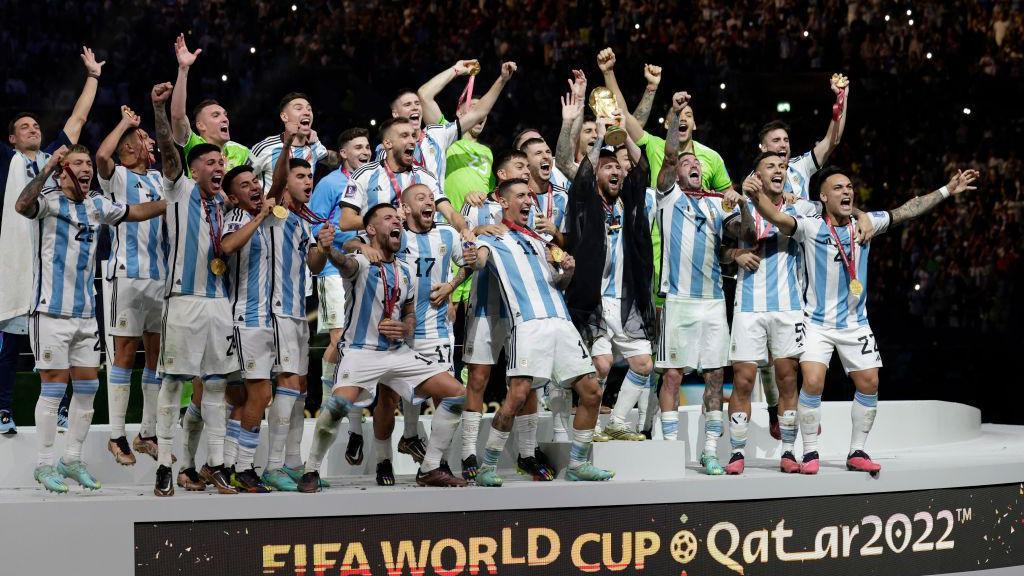 Image source, Getty Images
One of the most-storied national teams – and the current world champions – face opponents who only first qualified for the Africa Cup of Nations in 2013.
Cape Verde was a colony of Portugal when Argentina took part in the first World Cup in 1930, finishing runners-up to Uruguay.
La Albiceleste have only failed to qualify for one World Cup, in Mexico in 1970, though withdrew from the three tournaments either side of World War Two.
Argentina’s first World Cup success came in 1978, beating the Netherlands 3-1. In 1986, a 3-2 victory over West Germany took the trophy back to South America.
A third World Cup trophy was secured in Qatar four years ago, with France beaten on penalties after a 3-3 draw.
Argentina have enjoyed extensive continental success, too, winning the Copa America a record 16 times – including the past two tournaments.
They have not been out of the top three of the Fifa world ranking since March 2022, and spent two years in the number one spot before being dethroned by France last year.
The Cape Verdean Football Federation was only formed in 1982, and accepted as a Fifa member in 1986 – just as Argentina were winning the World Cup for a second time.
The Blue Sharks first entered World Cup qualifying in 2002 but did not have a realistic chance of qualifying until 2022.
Four years ago they only just lost out to Nigeria, drawing the final group game 1-1 in Lagos when a win would have sent them to Qatar.
For the 2026 finals, despite being drawn in a group with eight-time qualifiers Cameroon, Cape Verde finished top with one defeat in 10 matches.
Such has been their recent development they only played at their first Africa Cup of Nations 13 years ago, reaching the quarter-finals before losing to Ghana.
They have now played at the Afcon four times, reaching the last eight again in 2023.
But they failed to reach the 2025 Afcon, despite qualifying for the World Cup.
Cape Verde broke in the Fifa top 100 in 2006, and climbed to 36th on the back of the first Afcon outing. In 2014, after qualifying for the 2015 tournament, they achieved their highest-ever ranking of 27th.
For the last nine years, Cape Verde have hovered around the 60-80 bracket, and will go into Friday’s game ranked 64th.
Five Argentina players are each worth more than Cape Verde’s entire first XI
To play this video you need to enable JavaScript in your browser.
This video can not be played
Cape Verde’s transformation began in 2010 when then-coach Joao de Deus looked to their massive diaspora and called up eight uncapped players.
Many international teams in the modern game rely on their diaspora: citizens who were born and live elsewhere across the globe but are eligible to play international football for the country.
Twelve of Cape Verde’s squad were born in the country, with their first-ever World Cup finals goal – in their 2-2 draw against Uruguay – scored by Kevin Pina, from the capital city of Praia.
But they do lean heavily on their diaspora, including five players born in the Netherlands, and three each in France and Portugal.
No player is based in the country’s semi-professional domestic league.
Twenty-three are in Europe, but only Villarreal defender Logan Costa plies his trade in any of the continent’s top five leagues.
Vozinha, the 40-year-old goalkeeper who has been a surprise star of the tournament, is officially a free agent after his contract with Portuguese second division side Chaves expired on Tuesday.
Vozinha is one of seven who have been playing in Portugal, though full-back Sidny Lopes Cabral – who was at Benfica but is joining Tranzonspor – is the only one at a major club.
According to the website Transfermarkt, the whole squad has a value of just 54.5m euros (£46.8m).
Only nine of the 48 teams at the tournament are valued lower, with Qatar ranked last on 19.9m euros (£17.1m).
Argentina, meanwhile, have a squad stacked with household names, with their squad value of 807.5m euros (£693.7m) ranked seventh at the World Cup. France top the table on 1.52bn euros (£1.31bn).
Two of Argentina’s squad play in the domestic league, for River Plate and Boca Juniors, with one at Brazilian club Palmeiras.
Midfielder Rodrigo De Paul and forward Lionel Messi are at Major League Soccer side Inter Miami, with the 21 others in Europe’s top five domestic leagues.
Just two players were not born in Argentina, forwards Giuliano Simeone (Rome, Italy) and Nico Paz (Tenerife, Spain).
Taking just the first XIs, Argentina have a combined value of £360.3m, with the most valuable being Chelsea’s Enzo Fernandez at £77.4m.
The whole Cape Verde team comes in at £19.77m.
Their most valuable player is Trabzonspor’s Wagner Pina (£9.5m), but his only appearance at the World Cup came when Cabral was suspended against Saudi Arabia.
Cabral himself (£3.4m) and Krasnodar’s Kevin Pina (£4.3m) account for a large chunk of the rest of that value
Argentina’s team is worth more than 18 times that, with five players valued higher than the whole Cape Verde team.
Then there’s the silverware, too.
Sixteen members of the Argentina squad are already World Cup winners, and between them they have won many league titles and cups – both European and domestic.
For Cape Verde, success has been limited to winning championships in lower-level countries, such as Cyprus, Hungar and the United Arab Emirates, and also in Major League Soccer in the United States.
The highest-profile title came for Jovane Cabral, who won the Portuguese league with Sporting CP in 2020-21. Kevin Pina lifted the Russian Premier League trophy with Krasnodar in 2024-25.
From Portuguese colony to independence in 1975
Cape Verde is an archipelagic country in the central Atlantic Ocean made up of 10 islands, of which nine are inhabited.
It can be found 450km off the west coast of the Africa, closest to Senegal.
The islands are part of the Macaronesian group along with the Canary Islands and Madeira.
Cape Verde was uninhabited until the 15th century before Portuguese settlers arrived. For a long time it was a central hub for the slave trade, external.
It continued as a Portuguese colony and overseas territory until it gained independence in 1975.
The islands cover 4,033 sq km, with the United Nations reporting a total population of about 530,000 – smaller than every one of the 50 US states.
This makes Cape Verde the third-smallest country ever to qualify for the World Cup, behind Curacao and Iceland.
But it is the smallest to make it to the knockout rounds, taking the record that Northern Ireland (1.4m) had held since 1958.
Argentina is so much bigger it seems barely comparable.
The United Nations put the population at 46 million, with the country covering an area of 2.8 million sq km.
It is the eighth-largest country in the world, and the second-largest in South America behind Brazil.
Argentina’s gross domestic product – the market value of all goods and services – is $683 billion, compared to $3bn for Cape Verde.
-
-
Published14 hours ago

-
-
-
Published1 April
-