
This post was originally published on this site.
At least 111 killed in Colombia’s largest earthquake in years
To play this video you need to enable JavaScript in your browser.
This video can not be played
-
Published
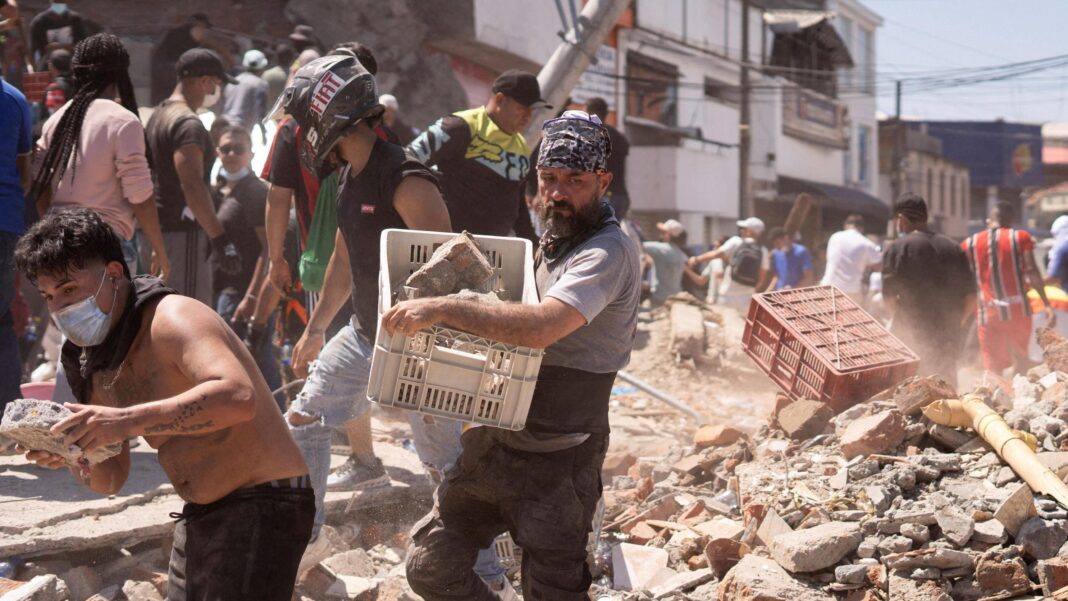
At least 110 people are dead and a state of emergency has been declared after Colombia was hit by one of its largest earthquakes in years.
The death toll is likely to rise, with more feared trapped under collapsed buildings.
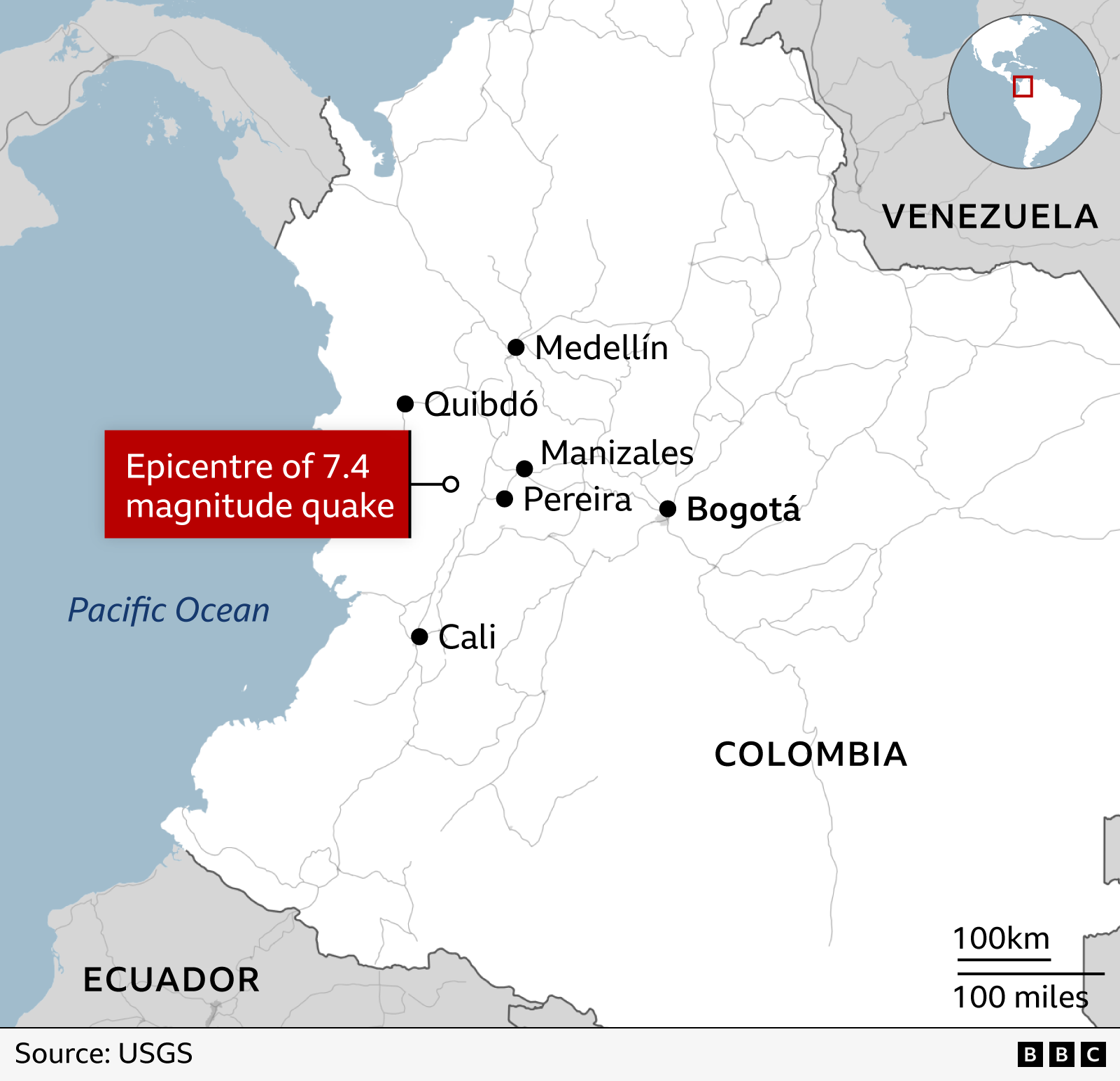
The magnitude 7.4 quake struck at 07:34 (12:34 GMT) at a depth of 103km (64 miles) in Chocó province, the country’s geological service said. It was felt across an enormous area, stretching for hundreds of miles across western Colombia.
Many of the deaths have been concentrated in the city of Pereira, in Colombia’s coffee-growing region, with surrounding cities and the Valle del Cauca region also hit hard.
The epicentre of the quake was near the village of San José del Palmar, in Chocó province, but local mayor León Fabio Marín Moncada said that there had miraculously been no deaths or injuries – despite the roads in and out being damaged.
About 55km (34 miles) from the epicenter of the earthquake, the city of Pereira saw some of the worst damage.
Videos verified by the BBC show at least one building collapsing in Plaza Bolívar, the city’s main square, with scattered debris and dust across the open space where many people had gathered.
Local authorities have reported at least 40 people dead in the city’s metropolitan area, with 65 collapsed buildings. People are believed to be trapped in 15 of them.
A curfew is in place in some parts of the city until 05:00 local time on Tuesday.
Thirty-two buildings collapsed in Cali, located about 160km south of Pereira and about 200km from the epicentre.
Dan Cutler, 29, is from London but has been in Colombia for about two months as part of a big trip with his partner, and is currently in Cali.
Being woken by the earthquake, he told the BBC: “I’ve never experienced anything like it.”
“We sprinted outside in our pyjamas. There’s no major structural damage to the hotel, but there are surface cracks in the walls, and paint and plaster have peeled off,” he says.
There were also reports of deaths in Manizales, Quibdó, Medellín, across the Chocó and Valle del Cauca regions.
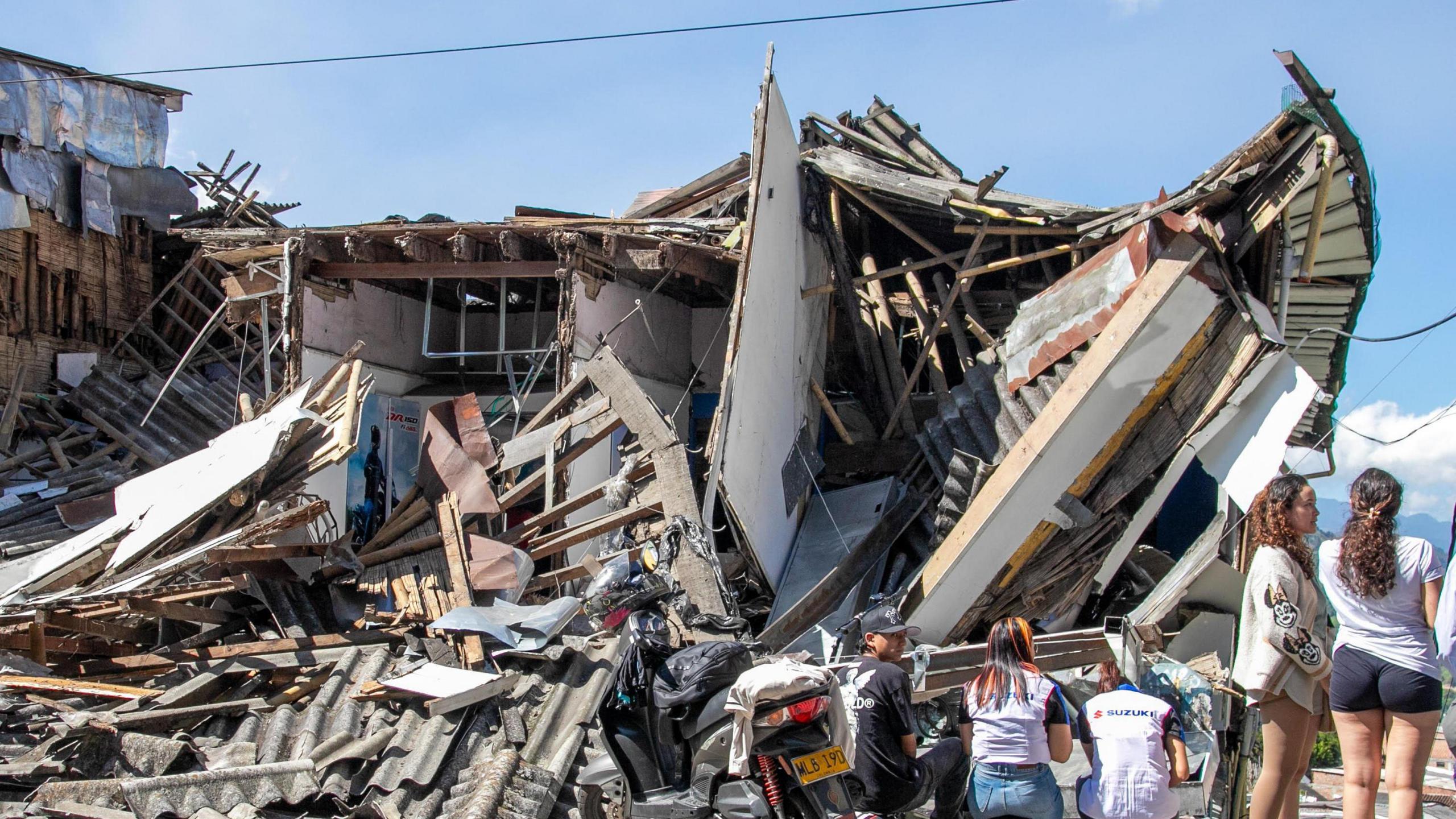 Image source, EPA
At least two people have died in Manizales.
Speaking to BBC World Service, Angélica Ávila said she had been staying in a hotel in Manizales.
She said as the earthquake hit, cracks appeared in the walls.
“Everyone was screaming… I saw dust coming out of the neighbouring buildings, and bricks were falling off the walls,” she said.
Journalist and meteorologist Luis Felipe Molina, from Manizales, was at home when the earthquake struck – about 150km from the epicentre.
He explained that due to previous earthquakes, the city has “very strict seismic-resistant building regulations” – so his building was able to resist the impact.
“I have 450 books and only a few were left standing on the shelves. You could hear glass breaking and people screaming,” he told BBC Mundo.
“It was a terrible and terrifying experience.”
The country’s aviation authority has reported damage at several regional airports, including those in Pereira, Manizales, Quibdó, Armenia, Cartago and Buenaventura.
In the capital, Bogotá, trees and traffic lights shook violently, with reports of cracks in buildings but so far none of any serious damage to the city’s infrastructure.
Tremors were felt as far away as neighbouring Venezuela, Ecuador and Panama.
The quake comes less than two months after twin quakes devastated the north of Venezuela, killing more than 6,300 people.
Colombia’s President Abelardo de la Espriella has declared a national disaster situation, creating special powers to react to the emergency, including to reallocate budgets.
Having only taken up the role on Friday, the new president is immediately faced with a potentially legacy-defining event.
Along with the dead, he confirmed that more than 1,500 homes had been damaged.
As the extent of the damage has begun to emerge, world leaders have come forward to offer support.
US Secretary of State Marco Rubio said it was “closely monitoring” the earthquake, and stood “ready to support”, while EU chief Ursula von der Leyen said the EU’s Copernicus satellite was being used in the rescue operation.
The President of El Salvador, Nayib Bukele, sent a message of solidarity to the Colombian people and offered personnel and equipment for rescue efforts.
According to the US Geological Survey, an estimated 1.5 million people felt shaking close to magnitude seven.
It stated that deep earthquakes, like the one which hit on Monday, are usually less dangerous than earthquakes which break closer to the Earth’s surface.
But they can release energy in a way which is damaging to buildings, with fewer but potentially stronger aftershocks.
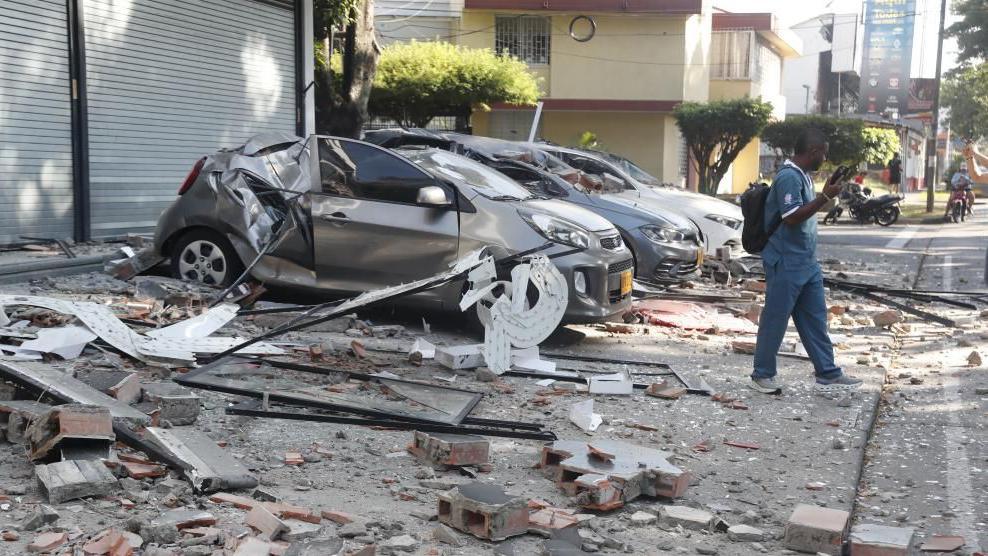 Image source, EPA
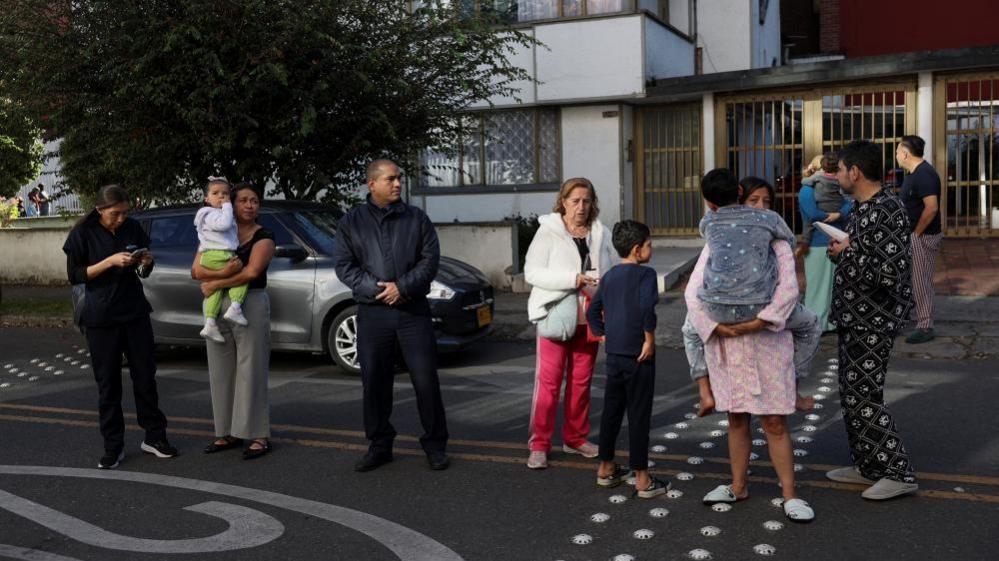 Image source, REUTERS/Luisa Gonzalez