
This post was originally published on this site.
Heeding the call, I set out on one of Ytri’s swish custom speedboats with Anders Budde, a water engineer who moved to Træna seven years ago. He’s now one of the hotel’s two activity guides and a free-diver who plucks the scallops and kelp served in the restaurant from the ocean bed. Sanna is one of the oldest inhabited islands in the north. At the Kirkhelleren—church cave—a colossal yawn in the mountainside visible from afar, fish hooks and tools dating back at least 9,000 years have been discovered, as well as mass burials, some containing the remains of people who died of the Black Death. The Trænafestivalen music festival in July culminates with a rave led from its “altar,” a psychic line back to the early travelers who pulled their kayaks ashore here.
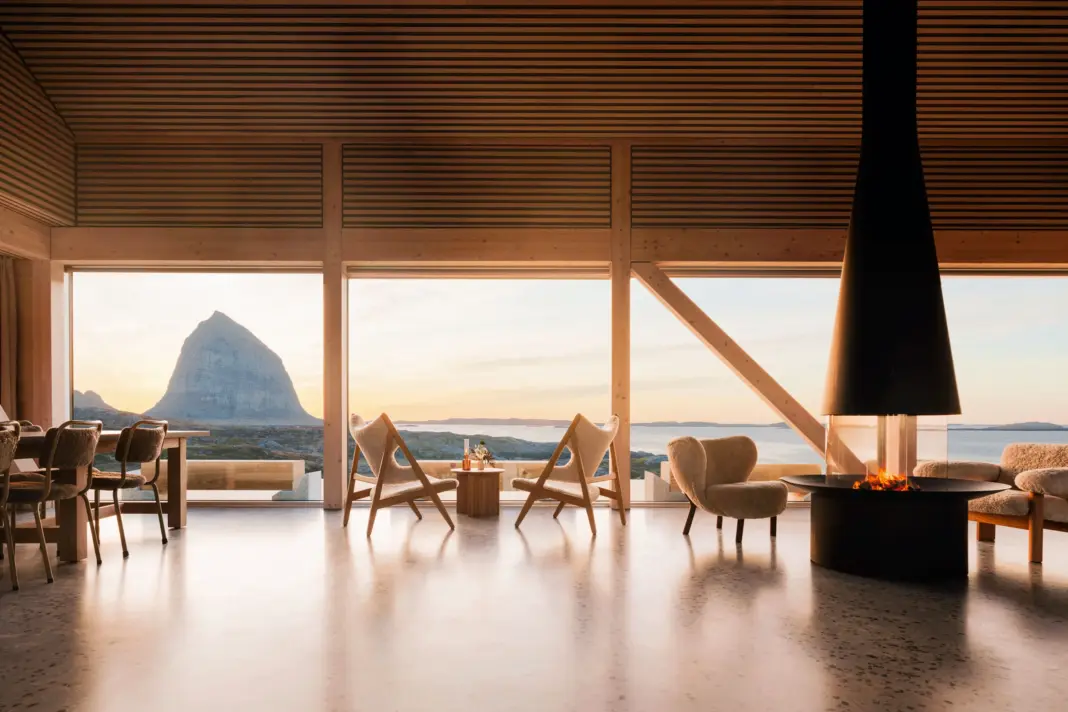
Budde tells me that, despite the ways in which the Lofoten archipelago—a sort-of neighbor, up to nine hours by boat—has been dented by overtourism, he doesn’t worry about the same happening here: “It’s so remote, and there’s a cap to the number who can arrive via sea—only a certain kind of person will make it here.” Private helicopter transfers from Bodø can be arranged, but I take his point: apart from the Hurtigruten cruise ships that offload down-jacketed day trippers here a few times a week, the islands’ inaccessibility is as much their saving grace as their challenge. Those who persevere can look forward to hikes, kayaking excursions, and freediving trips for the brave, and for the less so, drifting out on the water in flotation suits to see the kelp forests and Northern Lights up close, or lazing in Ytri’s ocean-facing sauna.
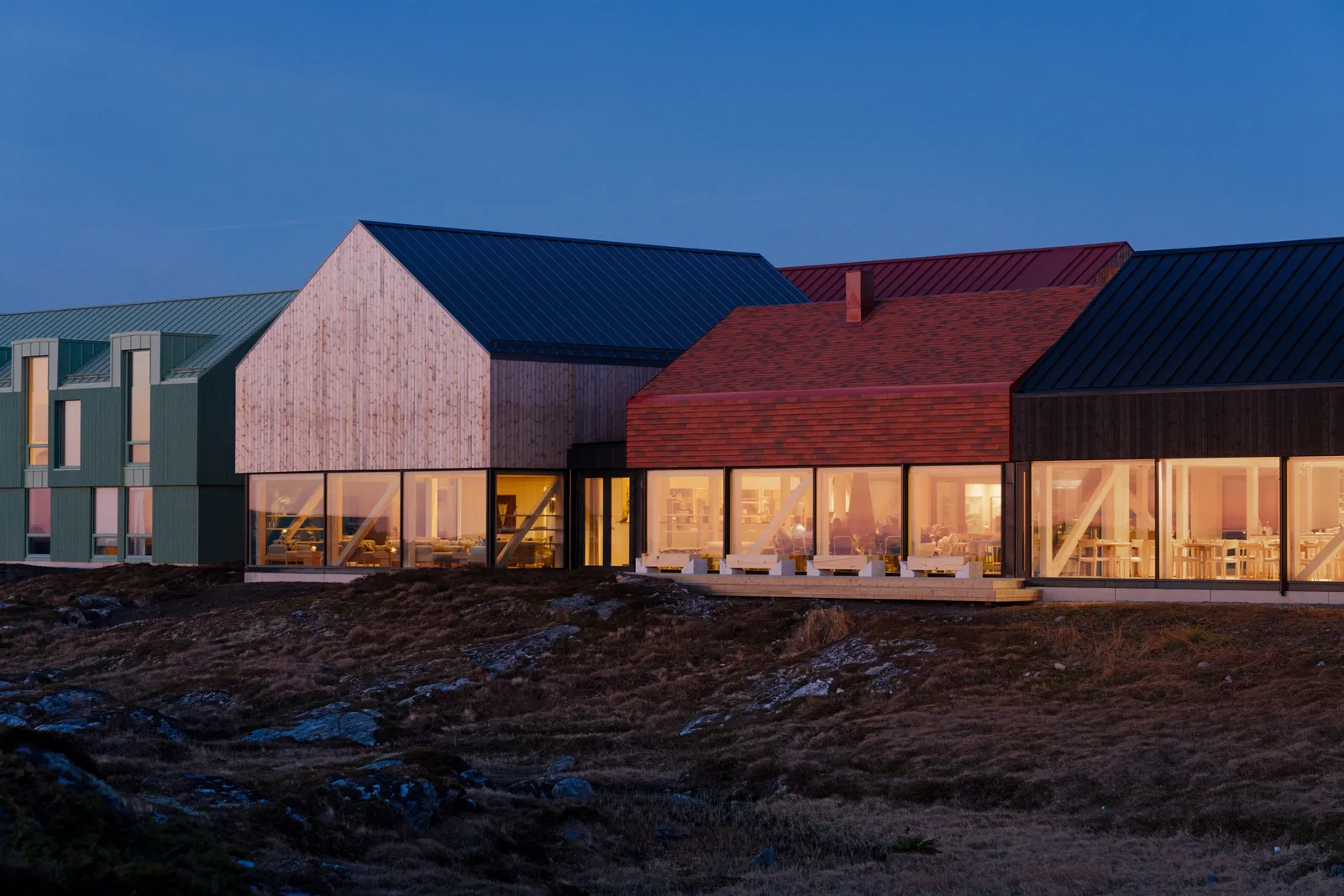
The islands’ wildness finds its way into the food at the hotel’s restaurant, Alma. Breakfast unfolds like a miniature tasting menu: cured lamb and brown cheese, barley porridge, lentil hummus on seed crackers, coffee ground by a man on a neighboring island. From the four-course dinner, a delectable melting brown butter candle scooped up with bread is a tribute to the beacons used by sailors out at sea. But it’s the chef’s table—a 12-course odyssey reimagining a journey from Hawaii to Træna, two islands at opposite ends of the earth—that really stands out. On a shared table with nine strangers, I eat whale tartare to represent Hawaii; mussel chowder in a batter cup for San Francisco; and cod-tongue fish and chips in newspaper, a nod to London. Afterwards I take a dip in the bracing sea with my new friends before we weave our way under the blazing midnight sun to the village pub to watch Norway’s World Cup return. This is the great surprise of Ytri: while there are places travelers can go to escape themselves and others, this harbor for small stories is determinedly not one of them.