
Bid to overturn ruling which stops police being sued for failings
 Image source, Getty Images
-
Published
Backbench MPs are seeking to roll back a court ruling they say will have “devastating consequences” for victims of crime by preventing them taking legal action against the police, even when there have been grave investigative failings.
The 2025 Court of Appeal judgment, which applies to England and Wales, held that police officers are immune from civil litigation both in their role as witnesses, and for conduct or statements they make when carrying out criminal investigations.
Conservative Andrew Mitchell and Labour’s Jess Phillips have submitted an amendment to a bill being debated in Parliament next week seeking to counteract the ruling.
Separately, the judgment could also be overturned at a Supreme Court appeal this month.
The MPs are seeking to stop immunity applying, including in cases where police have fabricated evidence, been dishonest or negligent, and where there has been a reckless disclosure of confidential information relating to victims.
The ruling came in a case brought by a victim of serious domestic violence who fled her abuser for a secret refuge, but Sussex Police included her new address in a file sent to the Crown Prosecution Service (CPS) without sufficiently flagging its confidentiality.
A CPS lawyer subsequently disclosed her address in court during a bail hearing, thereby revealing it to her abuser. As a result, she had to flee again.
The woman said the disclosure of her address had meant the place she was supposed to be safe “no longer felt safe at all” and she was still living with the impact of what happened and that loss of security.
She brought claims against both the police and CPS, arguing their failure placed her in fear for her life, compelled her to leave her home, caused her to suffer loss of earnings, and resulted in her developing a psychiatric injury. Her claims were initially rejected, reinstated on appeal, then struck out again.
The key issue was who could be held legally responsible for what happened, and who would benefit from legal immunity. Witnesses and lawyers have what is known as “core immunity” for things they say in court, so that they can speak freely there.
The Court of Appeal ruling further expanded such immunity, holding that it extends to an extremely broad range of police activity, including conduct or statements which are part of an investigation leading to a potential prosecution
Most types of legal claim are thus blocked by this immunity, including cases about serious human rights abuses and data breaches, and there are no exemptions for unjustifiable conduct.
Officers can still be prosecuted in the criminal courts and held accountable by police misconduct processes.
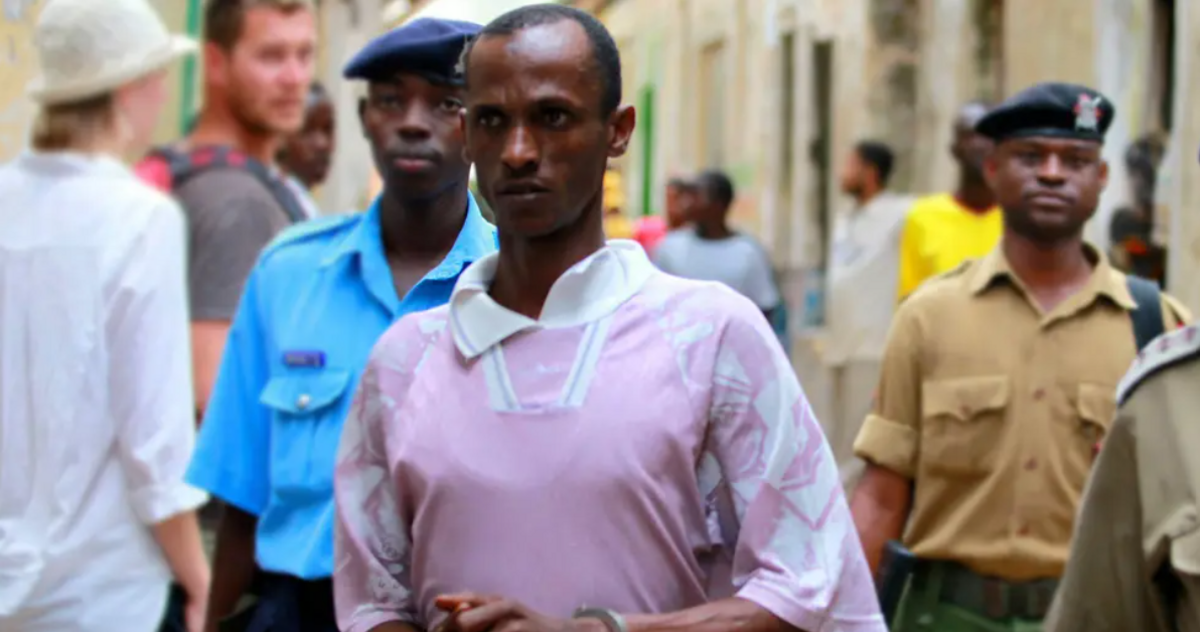 Image source, Reuters
The amendment by Mitchell and Phillips, which will be debated on Tuesday, states that, except while acting as witnesses, no immunity applies to actions by police officers in preparation for criminal proceedings, including in cases where there are specified grave failings.
Mitchell told BBC News the “police misconduct immunity created by the Court of Appeal’s ruling” was extremely concerning and that if “we fail to close this legal loophole there will be devastating consequences for victims”.
He cited the case of Ali Kololo, saying his life was “ruined by a wrongful conviction secured, in large part, by the Metropolitan Police”.
Mr Kololo, a Kenyan woodcutter, spent 11 years in jail after being wrongfully convicted of assisting a gang that attacked two British tourists in Kenya in 2011 – one of whom was murdered. He was sentenced to death following a trial in Kenya, at which a senior Met officer who was called to appear as a prosecution witness omitted key evidence.
Mr Kololo – who is represented by human rights group, Reprieve – is suing the Met, but the force has said it will rely on the legal principle of core immunity in defending the claim, a position likely to be bolstered by the Court of Appeal ruling.
A Met spokesperson said the force would not comment on the ongoing civil claim, but said its thoughts were with Mr Kololo, the victims of the crime and their families.
Kate Ellis, from the Centre for Women’s Justice, told the BBC forces may now argue they cannot be “held legally responsible at all for serious mistakes made in a criminal investigation” and it could lead to an “accountability gap” where police forces who fail to investigate rapists, stalkers or domestic abusers “face no consequences for their failings”.
A government spokesperson said: “The home secretary and lord chancellor commissioned a review into police accountability following long-standing concerns from policing leaders, officers, victims and their families that the current system is not fit for purpose. Any changes to how the police are treated should be considered alongside the wider findings of this review.”
Sussex Police and the National Police Chiefs Council both declined to comment at this time.