


Boxing chiefs to assess Fury mental health before fight
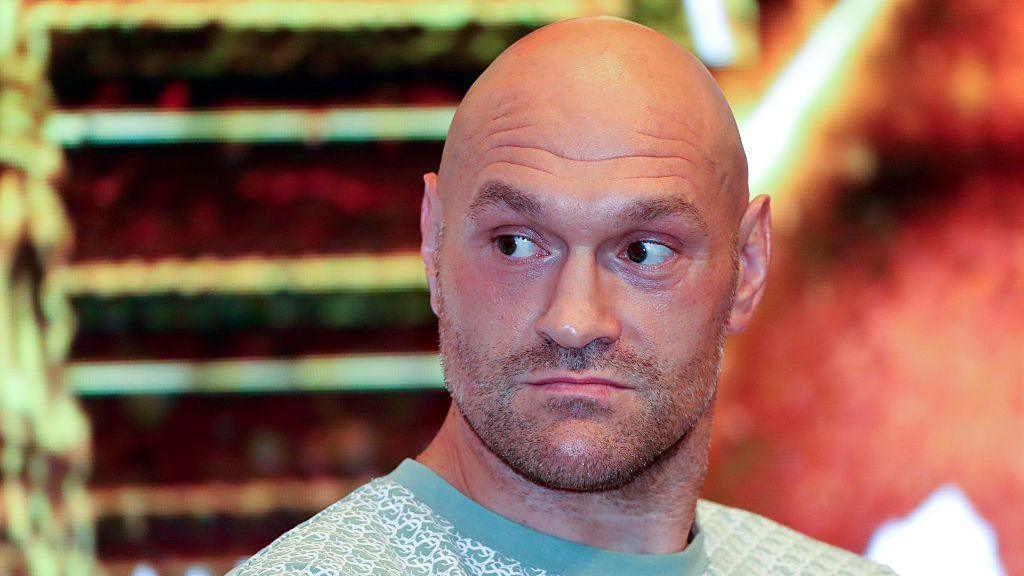 Image source, Getty Images
-
Published
The British Boxing Board of Control is looking into Tyson Fury’s comments about his schizophrenia diagnosis but is “fairly confident” the British heavyweight will be cleared to fight Anthony Joshua next month.
Fury, 38, is due to face Joshua at Cardiff’s Principality Stadium on 11 December, with the ringwalk expected in the early hours of 12 December.
In a Netflix documentary out on Friday, he says he heard voices threatening him and his family in the months after he beat Wladimir Klitschko to become world champion in 2015.
“We are in the process of dealing with the matter but if there are any medical issues we wouldn’t let anyone box, doesn’t matter if it’s Tyson Fury or not, it could be anybody,” Robert Smith, the board’s general secretary, told BBC Sport.
“I’m fairly confident he will be absolutely fine. We’re dealing with it now and we’ll have an answer very shortly.”
Under regulation 8.1(b) of the British Boxing Board of Control’s 2026 rules and regulations, external, schizophrenia is among the conditions that “may preclude” a boxer from obtaining a first licence, while for an existing licence holder the board “may take such action as in its absolute discretion it sees fit”.
Smith would not say what the process would involve over the next few days, saying “it’s a medical matter”.
He said that all boxers on the card will undergo medical checks, adding: “If our doctors are satisfied he’s fit to box, he will box.”
In the documentary, Fury and his wife Paris recall his admission to hospital in June 2016 with a suspected heart attack.
Doctors said he had suffered an anxiety attack. He was diagnosed with schizophrenia after he left hospital, according to the film.
The NHS describes schizophrenia as a form of psychosis, and symptoms can include hallucinations, delusions and muddled thoughts and speech.
“Words can’t explain the darkness I was in,” Fury says.
The heavyweight, who struggled with drug and alcohol addiction after beating Klitschko, says a Halloween night out in 2017 prompted him to return to training, calling that a “turning point” after being “embarrassed by how I looked”.
He went on to beat Deontay Wilder in 2020 to become world heavyweight champion for a second time.
-
Fury reveals schizophrenia diagnosis
-
Published3 days ago
-
-
Fury vs Joshua fight to go ahead despite objections over 3am finish
-
Published1 day ago
-
To play this video you need to enable JavaScript in your browser.
This video can not be played
-
-
Published9 November

-
-
-
Published28 April 2024
-
More boxing from the BBC
-
-
Published28 August

-