

This post was originally published on this site.
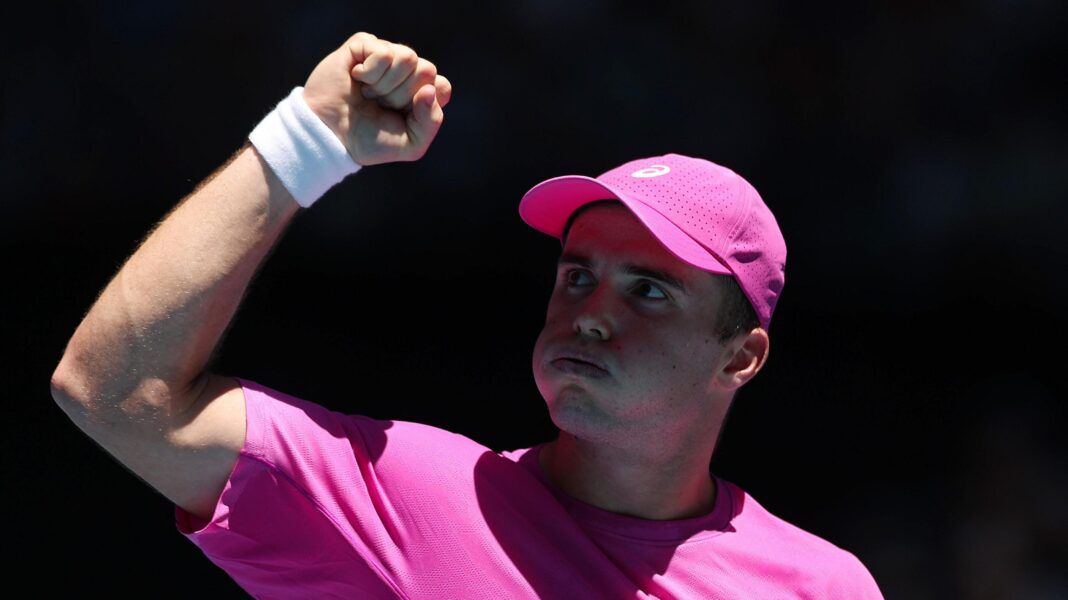
British qualifier Arthur Fery claimed another notable Grand Slam scalp by beating Italian 20th seed Flavio Cobolli to cause the first shock on day one of the Australian Open.
World number 185 Fery matched the biggest win of his career with a 7-6 (7-1) 6-4 6-1 victory at a sun-soaked Melbourne Park.
Cobolli was struggling physically from the start with a stomach issue, running off court at the end of the opening set for a toilet break.
Fery has a knack for beating 20th seeds, having beaten Alexei Popyrin at Wimbledon last year.
“It seems I like drawing 20th seeds at Grand Slams,” Fery joked afterwards.
“I love playing on big courts and big stages.”
‘Now I feel tennis is my job’ – from Stanford to Slam success
Born to French parents with backgrounds in finance and sport, Fery is not a rags-to-riches story.
His mother, Olivia, is a former professional player who previously worked for the Lawn Tennis Association as a business development manager, while father Loic owns Ligue 1 football club Lorient.
Olivia flew in to Melbourne on Saturday to watch her son make his Australian Open debut, and Fery says having parents who understand the inner workings of professional sport has been a benefit.
“They’re both extremely supportive. Not only now but in the past 10 to 15 years I’ve been playing sport,” Fery said.
“It is important to recognise their help, not only now I’m having success but also in the bad times in the past two years.
“It’s been a long journey.”
The 23-year-old has had his progress limited by injuries, notably a bruised bone in his arm that is similar to the problem affecting British number one Jack Draper.
His breakthrough at the top level was also delayed by deciding to pursue his studies.
-
French-speaking Briton aims to lift gloom
-
4 October 2020
-
As a teenager, Fery opted to go on a scholarship to Stanford University in California – a prestigious institution that specialises in research – and majored in science, technology and society.
The American collegiate system is a popular route for British players, with top-80 stars Cameron Norrie and Jacob Fearnley also following that path.
As well as receiving what Fery described as a “world-class education”, the nature of college tennis – noise, trash-talking and team-bonding – helped him prepare for the professional ranks.
“Some guys are ready to go all guns blazing 35 weeks a year – that’s their identity. They are a tennis player from 18,” he said.
“I was still in normal school until 16. I did A levels, home school and playing juniors, but tennis wasn’t my life at 18.
“Now I feel like it is. It’s my job.”
Australian Open 2026
18 January-1 February
Melbourne Park
Live radio commentaries across BBC Radio 5 Live Sport and BBC Sounds, plus live text commentaries on the BBC Sport website and app
The 5ft 9in Fery lacks the punch of some opponents on serve, but illustrated there is plenty of venom in his groundstrokes as he fired forehands past his opponent.
“I feel I’m a powerful guy in general,” Fery, who has bulked up through intensive gym work, told BBC Sport.
“But purely from my size and games tyle I’m not going to blast guys off the court with aces and winners from the back.
“I’ve been playing tennis for a long time so it’s something you learn to work around by coming into the net and changing the speed.”
The Londoner, who grew up close to the All England Club in Wimbledon, played smartly and aggressively, moving Cobolli around the court.
Wimbledon quarter-finalist Cobolli looked desolate throughout the match.
He took electrolyte tablets provided by the doctor after going off court, then asked to see the medical staff again after going 3-0 down in the third set.
Despite the potential distractions, Fery had no issue serving out for the second Grand Slam victory and third ATP Tour-level win of his career.
Argentina’s Tomas Martin Etcheverry – the world number 61 who came through in five sets to beat Serbia’s Miomir Kecmanovic – is his reward in the second round.
Related topics
-
-
16 August 2025
-



