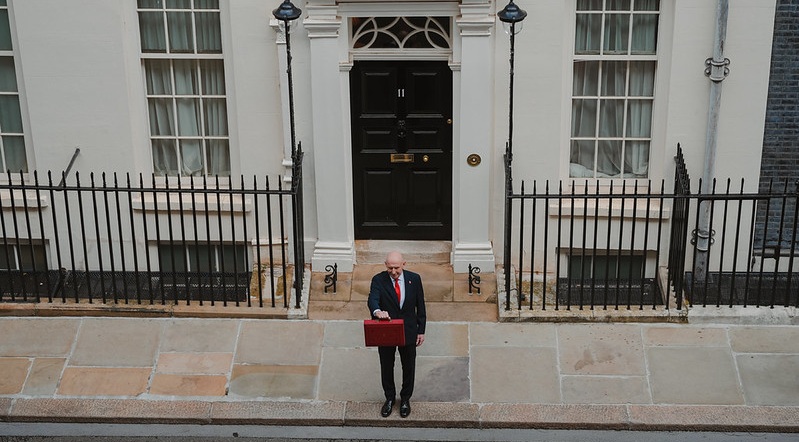

Chancellor John Healey has unveiled his 2026 Budget and it included several announcements of relevance to SMEs. Read our full guide here and the reaction of business groups, founders and experts below.
Business groups’ reaction
Tina McKenzie, national chair, Federation of Small Businesses:
“This Budget should have been the moment to help small businesses with the soaring costs holding them back, and the taxes restricting job creation. Instead, they got nothing to ease sky-high energy bills and nothing to make hiring someone more affordable, while the increase in business rates relief excludes too many.
“The government has an ambition for growth in every postcode. Today’s Budget missed the mark on matching that ambition.
“Our latest research shows nearly half of small businesses (47%) expect their revenues to shrink in the coming months, while only around a fifth (22%) expect revenue growth. They are three times more likely to be planning to reduce headcount than increase it (18% versus 6%). There was nothing today anywhere near big enough to change that gloomy outlook.
“The increase in Small Business Rate Relief for small firms in retail, hospitality and leisure is welcome for those who will be lifted out of rates. FSB has campaigned hard for the threshold to be lifted for the first time since 2016, but it should have been applied much more widely. Small businesses blighted by the rates system aren’t just on the high street. Where was the help for the likes of manufacturers, small exporters, nurseries, office-based businesses and – in turn – the people they employ?
“Of the smaller measures announced, we’re pleased the chancellor has acted upon our call to increase the Trading Allowance from £1,000 to £3,000. This will incentivise potential small business owners of the future to take the first steps to exploring a business idea, alongside the new Young Entrepreneurs Allowance. Parental pay rights for self-employed dads and partners is also a good step.
“We’ve been very pleased to see the government adopt 14 out of the 15 recommendations from the Small Business Regulation Taskforce, which was co-chaired by FSB, including a reversal of the Companies House plan to make even the smallest businesses submit profit and loss declarations.
“The chancellor acknowledged the risks and hard work involved in setting up and running a business, and building it across many years. It is incredibly unclear what difference his plans for founders’ relief compared to entrepreneurs’ relief, officially called Business Asset Disposal Relief, will make. The chancellor must urgently clarify whether he intends to tax or back those who spend a lifetime running and growing successful
Shevaun Haviland, director general, British Chambers of Commerce:
“This was a ‘steady as you go’ budget, sending the right signals to business, but lacking big calls that would really shift the economic dial.
“Most sectors will be pleased to have avoided any further taxes being piled upon them. But, overall, most businesses won’t notice this budget at all.
“Our key tests for the chancellor were whether his plans would boost growth and ease costs for business. Many firms will have been hoping for a greater impact.
“It is clear he has heard business calls for action to ease the costs pressures they are facing but was constrained by a tight fiscal and difficult international environment.
“There were several positive steps outlined, including Founders Relief and significant reductions or the complete removal of business rates for many in the retail, hospitality and leisure.
“Additional funding for AI, increased finance through the National Wealth Fund and British Business Bank will also offer new opportunities for entrepreneurs to start and scale up.
“On the other side of the ledger, measures including the announcement of a higher bank surcharge and limited new help on businesses’ energy bills are less welcome.
“The chancellor clearly has a vision of where he wants to take the economy. But the only way this can happen is if he gets behind business by cutting their costs. Unless that happens then the stronger economic performance we all crave will prove elusive.
“We would have liked to see a wider range of businesses benefitting from energy support and business rates reform, and more action to tackle the youth unemployment crisis. These are areas the British Chambers of Commerce will be seeking more action on in the months and years ahead.”
On devolution
“We strongly support the transfer of real economic power to Mayors but for the potential of devolution to be realised, business must be given a seat at the table from the start, and every area needs the capacity and safeguards to benefit.”
On the bank surcharge
“Taxing one part of the economy to help another is not cost-free. Albeit time-limited, a higher bank levy will affect the price and availability of finance, with costs travelling down supply chains to businesses already operating on tight margins.”
On energy costs
“It was disappointing that there was nothing in this budget to help businesses with energy costs outside of the British Industrial Competitiveness Scheme. More than half of firms tell us that energy costs are squeezing them to raise prices. With operating margins already razor-thin, more of that pressure is likely to find its way through to higher prices for customers.”
On procurement
“Using procurement more strategically and reducing selected tariffs are welcome. But the next test is delivery: giving SMEs a fair shot at public contracts, improving export support and turning the UK-EU reset into lower costs and fewer barriers.”
On youth unemployment
“While the chancellor mentioned a £100m fund for a Local Apprenticeship Service, this had previously been announced. This funding is welcome, but firms were hoping to see him go further. Hopefully the Milburn Review will set out further measures to help tackle this problem.”
Aaron Asadi, CEO, Enterprise Nation:
“I can’t remember a Budget in which founders and entrepreneurs were mentioned so often. A year ago we struggled to find the words ‘small’ and ‘business’ in the same sentence. Today they were front of mind, and for the people who run Britain’s small firms, being seen counts for something.
“In our Budget submission we asked the chancellor not to add to the burden on small business, and he avoided the broad-based tax rises that would have hit them hardest. Two of the biggest measures for small firms were calls from that submission: the trading allowance triples to £3,000, and small business rate relief rises to £18,000 for retail, hospitality and leisure. The rates package also gives the high street two years of certainty.
Founders’ Relief, the Young Entrepreneurs Allowance and the extra £5bn through the British Business Bank are the right signals. And the measures aimed at households – the energy payment, the electricity VAT cut, fuel duty, the living wage – matter just as much, because a customer with more money in their pocket is the best support a small business can get.
“We’re watchful on a few things. Business Asset Disposal Relief has been halved, so owners selling a business they’ve built over many years will feel that, while the new relief is aimed at a much narrower group. The rules on family succession need to live up to the promise in the Red Book. And on AI, the government has put far more money into security than into helping small businesses adopt it. Security matters, but the world won’t wait while we get comfortable.
“Anyone demanding big giveaways is asking for money the country doesn’t have. The chancellor faced severe economic trade-offs, with a war in the Middle East pushing up energy prices and borrowing costs, and he can’t pluck money out of thin air without real fiscal risk. Within those limits, the government has done a good job. What we need next is strategy, not tactics: a ten-year plan that tells founders which industries we’re backing, how we’ll make this the easiest place in the world to start and grow a business, and what the country stands for. Breathing space is welcome. A plan is what we’re waiting for.”
Josh Toovey, head of policy and research, IPSE:
“Some of these tweaks are genuinely helpful. Reversing the Cash ISA cut, better mileage rates, parental pay and an increased trading allowance will all make a difference, and business rates reform is a welcome boost for our smallest high street businesses.
“But taken together, they don’t go anywhere near far enough. The biggest problem facing the self-employed is finding work. But the cost of hiring is still too high across the board. It’s forcing businesses to postpone projects and other activities that spur growth in the self-employed sector. Nothing in this Budget fixes that.
“Add the rising cost of simply being in business, from Companies House fees to Making Tax Digital and a dividend allowance cut to the bone, and starting and running a business on your own has never felt like a bigger gamble.
“Where is the support for entrepreneurs we were promised? Government can’t talk about growth while leaving the biggest barriers to working for yourself untouched.”
Anna Leach, chief economist, Institute of Directors:
“In the short-term, this Budget fulfils its brief of delivering some relief for households and a chosen few in the business community, particularly high street businesses and pubs. Ongoing efforts to improve the ecosystem for entrepreneurs alongside capital reforms are welcome and should help more businesses form and scale in the UK.
“The devolution agenda has considerable scope to improve the efficiency of the state, albeit the payoff is a fair way off and provided the risks are well managed. There’s tougher talk on tackling public spending, increasing the hope that fiscal risk will no longer fall so squarely on the shoulders of businesses and investors.
“But this Budget is also a missed opportunity. Business taxes go up again overall, as does borrowing. The £2.6 billion being spent on untargeted and small-scale reductions in household energy bills would have been better used to reduce the cost of employing young people or reducing business energy bills. The surcharge on banks may be smaller and shorter lived than feared, but it still represents yet another attack on successful large businesses in the UK which will do little for the UK’s global investor appeal. Spending restraint is tomorrow’s problem and the need for wholesale reform of the tax system remains.
“All in all, there’s no game changer for growth here. Living standards remain under pressure, housebuilding targets will not be met, distortionary taxes remain unreformed and the UK’s capacity to meet further shocks continues to be eroded. All eyes will be on next year’s Spending Review as the big test of the government’s resolve in tackling some of the hard choices needed.”
Neil Carberry, chief executive, CIPD:
“Overall, employers will be pleased that there were no big, unwelcome surprises in today’s Budget, which will go some way to underpinning confidence in the economy. But there is much more to do to get the economy firing in a way that will help close the fiscal gap.
“The chancellor showed that he understands the importance of employers and entrepreneurship in our economy – but that sentiment has to extend to all areas of government activity. Many organisations are still recovering from a wall of Government-imposed costs they have had to absorb – or will have to in the next few months.
“The intentions outlined in this Budget also highlight the very real tensions at the heart of the government’s growth strategy. Policies on skills, AI and other job measures are seen in isolation and unrelated to decisions on employment taxes and regulation which too often pull in the opposite direction.
“We need the government to do the hard work and join the dots on some of the most pressing issues facing employers today. Without a joined-up approach, any measures announced today, will struggle to have the impact government wants, and that employers and individuals need.”
Rain Newton-Smith, chief executive, CBI:
“Our economy faces big global challenges, and the government has set out big ambitions to boost prosperity – today’s Budget does not meet the scale of that ambition. On the face of it, this Budget lacks the bold moves that would have made it easier for firms to invest, hire and grow.
“Fiscal discipline matters, and the chancellor is charting a path through difficult circumstances. At a time of exceptional geopolitical pressures, using some fiscal headroom to absorb genuine short-term shocks is preferable to loading additional permanent costs onto business and weakening investment.
“Slowing the convergence of youth rates with the National Living Wage is a sensible move in face of the NEETs crisis and current labour market pressures. But the Chancellor could have gone further. Reducing the cost of hiring by increasing the employer NICs threshold would have given firms more space to create entry-level jobs and boost employment.
“Relief for business rates for retail, hospitality and leisure firms will be welcomed but misses the chance to deliver the wholesale reform to the system we desperately need.
“Financial services firms in the UK already face a higher tax burden than those based overseas. The surcharge makes the UK less attractive to investors, and ultimately the cost will be paid by ordinary people through higher borrowing costs. The banking surcharge must be time-limited and the government must work with the sector on how to keep the UK ahead in a global competition.
“Households will be grateful for some relief on energy bills, but there is nothing concrete to provide breathing space for the vast majority of businesses who are already dealing with energy bills a third higher than their European counterparts, and with prices due to escalate further next year. Pledged future action to help business energy costs must be followed through in the government’s upcoming 10-year plan.
“It’s reassuring to see the government sticking to the corporation tax roadmap, and providing support for start-ups that nurtures innovative businesses to scale and grow in the UK is important for our long-term growth. More funding through the British Business Bank is a welcome step that can help unlock private investment, giving growing firms the backing they need to invest, innovate and create jobs.”
Eva Barboni, executive director, Enterprise Britain:
“This Budget has been a shot of adrenaline for Britain’s entrepreneurs.
“Founders’ Relief will help keep our top entrepreneurs in Britain. Expansions to EMI mean our fastest-growing businesses can attract and retain the best talent by giving them a share in their success.
“And reforms to non-compete clauses will get talent moving more quickly between roles, boosting innovation.
“We’ve been pushing for many of these measures for months, and it’s great to see that the government is listening. But there is still much more to do.
“Now, attention turns to Andy Burnham’s ten-year plan. If he wants to drive job creation, growth, and innovation, his plan should back the firms that have proven they can deliver.”
Other reaction to specific measures
Founders’ Relief and Business Asset Disposal Relief
Matt Katz, head of corporate finance, Buzzacott:
“The headline 10% CGT rate on gains of up to £10 million looks like a very generous incentive for founders, with a potential tax benefit of up to £1.4 million per person for those who qualify. But when you dig deeper, there is a minefield of conditions to get through, and in reality we expect relatively few founders will qualify.
“While BADR has been further restricted, the new Founders’ Relief could still be a much more meaningful incentive for those who qualify. For the larger transactions we typically advise on at Buzzacott, BADR had already become relatively modest in the context of the overall proceeds, so I don’t think this fundamentally changes deal economics.
“For founders, the proposed relief is much narrower than the headline suggests. The immediate question people will be asking is “do I qualify”? It won’t be easy, with founders needing to satisfy a series of conditions including a 25% original threshold, five years’ ownership and five years’ continuous UK tax residence. The company itself must also have reached at least £10m of turnover, have at least 15 qualifying full-time employees, and they must also meet growth or innovation tests which set a high bar.
“Those potentially losing out are management teams and those who joined a business later in its journey, including individuals who have built up significant value through EMI options.
“People considering a transaction should look at the position shareholder by shareholder rather than assuming everyone receives the same tax treatment. That will be particularly important where founders, management and EMI option holders sit alongside one another.
“For founders, the key message is not to let the headline drive a transaction decision until the detailed qualification criteria have been considered. The relief could be extremely valuable for those who qualify, particularly against the reduction in BADR, but we expect that to be a relatively small proportion of founders. The £10 million headline should not be mistaken for a broadly available relief for everyone who has founded and successfully sold a business.”
James Kipping, head of private client, MHA:
“The new Founders’ Relief is undoubtedly good news for UK entrepreneurs. Although it might have sounded like somewhat of a reinstatement of Entrepreneurs’ Relief at pre-2020 levels, it will be in a much narrower form. To qualify, individuals must hold at least 25% of the company at the start of trading and the company must also meet minimum turnover and employment thresholds and satisfy two of three specified growth and innovation tests, which will be subject to consultation.
“The chancellor emphasised in his speech that high street businesses are the heart of the community, but a successful high street start-up may never be able to benefit from this new relief. If so, their founders will be taxed at a higher rate than founders of larger businesses.
“He said it was a measure to encourage people to start, build and scale businesses in the UK. But a £10 million turnover threshold seems a long way off when starting out in business. It therefore sounds like too tight a relief, although perhaps it reflects the government’s recognition that entrepreneurs are leaving the UK and is intended to encourage founders of established businesses to stay.
“Also, how will this interact with succession planning that founders of family businesses will undoubtedly have been considering or implementing since the significant restrictions to IHT business property relief from April 2026? Will qualification be passed down to the next generation?
VAT and online marketplaces
Glenn Collins, head of technical and strategic engagement, ACCA UK:
“We recognise the government’s objective to combat VAT fraud and non-compliance. This includes making online marketplaces more accountable for ensuring that sellers using their platforms comply with VAT obligations.
“However, we have a number of significant concerns and observations about HMRC’s proposed approach and its impact on the tax compliant small business community.
“The plans are not good for small businesses. Rules aimed at dealing with a minority of problematic businesses will have an adverse impact on the majority.
“The plans raise a whole host of questions, including how this proposal will work for people selling on multiple platforms and the likely administration burden being seemingly imposed on small businesses.
“Businesses will have to work out how to support their cash flow when these changes take effect. What is clear is that in terms of cashflow, there are going to bewinners and losers from this announcement. It would be a great shame if the losers were small businesses who are already facing multiple hits to their cash flows and to their administrative burden.
“We will await the design of this scheme, to be introduced in October 2027, but we are not reassured that the maths has been done on this.”
Business rates
David Walsh, VP original content, EMEA, BHN:
“Using revenue from the new online marketplace tax to reduce business rates for high street retailers is a welcome move, particularly as businesses continue to grapple with rising costs. But financial relief alone won’t secure the future of Britain’s high streets. Retailers also need the confidence and resources to invest in giving shoppers a reason to return.
“Shopping habits have fundamentally changed. Consumers no longer think in terms of online versus in-store shopping. They want the freedom to browse online, collect in-store, and shop across different channels without friction. Retailers that can offer this flexibility will be better placed to attract customers and encourage spending.
“Physical stores still have an important role to play, offering personal interactions and experiences that online shopping can’t always replicate. We see this in the gift card market, where shoppers value the flexibility to spend across channels while retaining the personal touch of shopping in-store.
“The real opportunity now is to ensure that business rates relief translates into investment that makes our high streets more attractive, convenient, and relevant to how people shop today.”
Nick Richardson, head of funding, Capitalise:
“Raising the small business rates relief threshold is welcome news for retail, hospitality and leisure businesses. For the 70,000 firms that will no longer pay business rates, it takes some pressure off as they head into the Christmas period and prepare for the cash flow crunch that typically hits in January.
“But much of that saving will be cancelled out by rising wage costs. These sectors employ large numbers of staff on or near the minimum wage, so a 3.9% increase lands hard. With inflation where it is, higher pay is absolutely necessary. But the two measures side by side show what a fine line these businesses are walking just to stay viable.
“For many owners, the next few months will come down to managing cash flow carefully. Planning ahead for the January dip and knowing what finance options are available before they are urgently needed could make all the difference.”
Lee Biggins, CEO and founder, CV-Library:
“Reducing business rates is a welcome step, but the government must not mistake easing one cost pressure for solving wider challenges facing high street businesses. With retail employment down by around 410,000 jobs over the past decade, according to ONS figures, there is a clear need for action that supports not just high streets, but the jobs and opportunities they provide.
“Retail and hospitality are vital entry points into the workforce, particularly for young people taking their first steps into employment. When businesses are under pressure, recruitment can become one of the first areas to suffer, leaving fewer opportunities for people to gain experience, develop skills and build careers.”
Max Wilson, CEO and co-founder, Pocket Storage:
“The chancellor’s decision to increase the Small Business Rates Relief threshold to £18,000 for retail, hospitality and leisure businesses is a welcome move. Taking another 70,000 businesses out of paying rates altogether could make a real difference, particularly for independent operators already working with tight margins.
“But I think the government needs to be more ambitious about what business rates reform is actually supposed to achieve. These financial pressures aren’t exclusive to retail and hospitality, and there are plenty of other small businesses operating from physical premises that also need support.
“So much of the discussion around supporting SMEs focuses on helping businesses survive. That’s obviously important, but we should also be asking how we make it easier for successful small businesses to grow.”
“When we look at opening a new location, there are costs at almost every stage. There’s the rent and business rates, but also planning, professional fees, fit-out, utilities, insurance, staffing and the approvals needed before we can actually open. Depending on the terms of a commercial lease, there can also be Stamp Duty Land Tax to pay upfront. So before the site has even generated any revenue, you’re already committing a significant amount of money.
“Planning can add further uncertainty. You might find premises that make commercial sense but still have applications to submit and permissions to secure before you can start trading. Those processes can take time, leaving money tied up in a location that isn’t yet generating any income.
“The government has already made some progress by extending the period that eligible small businesses can retain rates relief on their original property when they take on additional premises, from one year to three. That’s a welcome step, but there’s still a question of whether the wider system does enough to encourage businesses to grow.
“Today’s announcement is a positive step, but it shouldn’t be the end of the conversation. Reducing rates for the smallest businesses is important, but we also need to look at the financial barriers they face when they’re ready to expand.
“We need a business rates system that gives entrepreneurs the confidence to invest in new locations, create jobs and expand their operations. Otherwise, we risk making it easier for businesses to stay afloat without doing enough to help them grow.”
Bank surcharges
Katie Horne, savings expert, Flagstone:
“The government needs to be careful about treating UK banks as an easy source of additional tax revenue when it is also relying on banks to help drive economic growth.
“On paper, taxing profitable banks to help support struggling households may look appealing. But the unintended consequences of taxing banks more could be far-reaching for the SME business economy which provides jobs to three in five working UK adults.
“Banks play a fundamental role in keeping small businesses in business – from lending essential finance to them, to providing them with ways to maximise their cash reserves and manage their cash flow. As chancellor John Healey has said himself: banks are “hard-wired into the economic fabric”.
“Now faced with bigger tax bills, banks could pass on some of the additional cost to business customers through more expensive loans and lower interest rates on deposits.
“The unintended consequences of bank taxes could extend far beyond the Square Mile; they could reduce the capacity for regional banks and building societies to lend and offer good rates to their local small businesses, reducing these companies’ scope to invest in their own growth, jobs, products and services.
“UK businesses have spent the past decade navigating Brexit, the pandemic, inflation and successive energy shocks, and now the scale of the challenge SMEs face is clear: 43% of SMEs doubt they can continue as they are for more than two years if today’s financial problems persist; 11% of businesses have considered closing altogether.*
“Against this backdrop, how businesses manage their cash becomes even more important. If borrowing becomes more expensive and returns on deposits come under pressure, making the most of existing cash reserves could give firms more room to absorb rising costs. That could mean keeping enough money accessible to meet day-to-day costs, while ensuring surplus funds are earning interest rather than sitting idle in low-interest accounts.”
Business funding
Adam Owens, head of tax advisory, Xeinadin:
“The additional £20.4bn for the National Wealth Fund and British Business Bank is a significant commitment, but it is not an immediate cash injection. This is funding being provided over a number of years. Employers need to understand what finance will become available, on what terms and when. Access to capital will help a business expand or buy better equipment, but it is not a substitute for being able to afford its existing workforce.
“Giving local leaders in England greater control over investment will help address some of the problems holding businesses back in their own areas. But moving a decision out of Whitehall is not itself an economic benefit. SMEs will judge devolution by whether it delivers the premises, transport links and commercial opportunities they need, and how quickly those improvements materialise.”