
This post was originally published on this site.
WRU chair Richard Collier-Keywood called the current overseas players in Wales a “waste of money.”
Back in 2023, in an interview with WalesOnline, former Ospreys and Wales prop Paul James waxed lyrical about the impact of the likes of Filo Tiatia, Marty Holah, Justin Marshall and Stefan Terblanche, among others, on the development of young Welsh players.
James played during the Ospreys’ so-called “Galacticos” era, when the region could afford to sign world-class overseas players. “Jerry Collins, Filo Tiatia and Marty Holah were like heroes to a lot of the young boys growing up,” James said.
“I do think these big-name overseas players did a lot to develop young Welsh talent.
JOIN OUR WALES RUGBY FACEBOOK PAGE! Latest news, analysis and much more
“They really set the standard, and they created such a strong culture with their attitude to train and play.
“They were really nice guys as well and were mentors to the young boys.
“If any player needed help they’d always be quick to give it to you.
“Those boys improved the likes of myself, Justin Tipuric, along with other players, and were worth their weight in gold.”
Yet when sitting in front of the Welsh Affairs Select Committee in Westminster last week, current Welsh Rugby Union chair Richard Collier-Keywood described the 25 overseas players currently plying their trade in Wales as “a waste of money”.
While it is true that Wales’ four professional teams have made a number of poor signings over the past decade or more, the right calibre of overseas player is worth their weight in gold.
In an ideal world, a significant number of those overseas players would be replaced by the plethora of Welsh-qualified players based in England, but as things stand that simply is not affordable.
What is clear is that Welsh rugby needs quality overseas players in order to remain competitive, even if the WRU are successful in their plan to reduce the professional game to three teams.
The high number of overseas players across the four regions was a long-standing bugbear of Warren Gatland, who believed the emphasis should be on quality rather than quantity when it came to foreign signings.
Gatland was frustrated when the regions opted to sign a middle-of-the-road Super Rugby player instead of backing young Welsh talent who potentially had a higher ceiling.
In many cases, however, the fact the professional clubs felt compelled to go down this route points to a deeper issue: there were not enough high-quality players emerging from the pathway, while there was insufficient money to retain much of the best talent, which was being snapped up by Gallagher Premiership clubs at academy level.
This weekend also saw overseas players play a significant role in a relatively successful round of United Rugby Championship fixtures for all four regions.
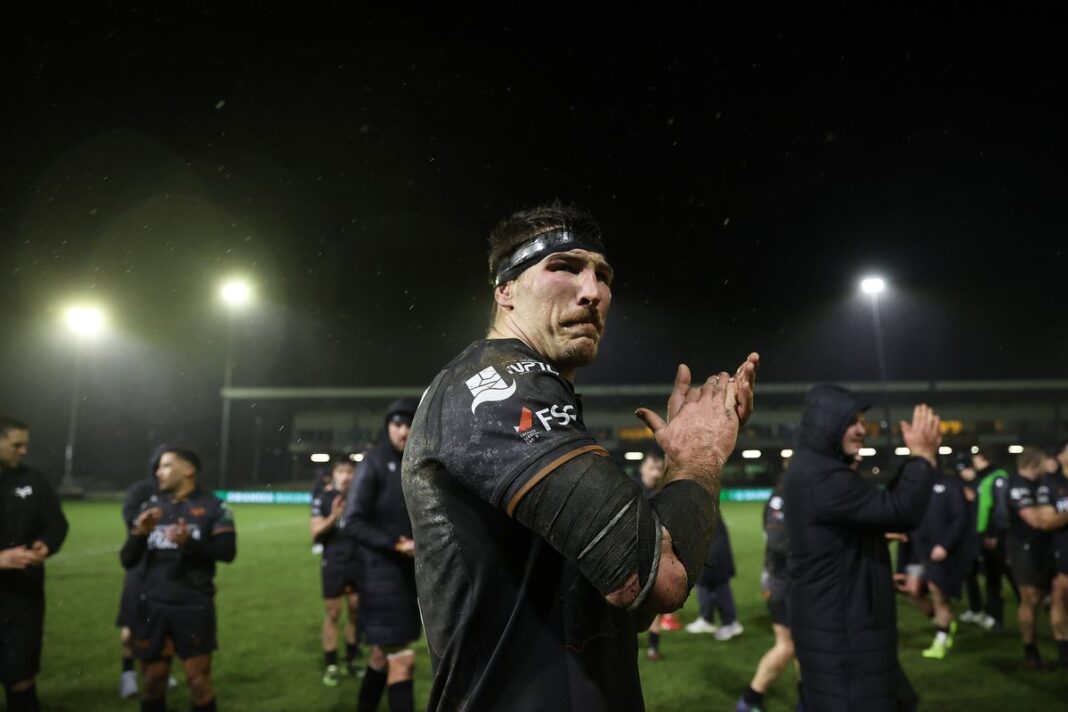
Former Bath and England lock Josh McNally claimed the official player-of-the-match award in Cardiff’s crucial victory over Benetton, while Australian second-row Ryan Smith picked up the same honour as the Ospreys drew with the Lions.
At Parc y Scarlets on Saturday, Tongan lock Sam Lousi played a vital role in a notable win over Ulster, acting as the central figure in halting their driving lineout.
On top of this, Kiwi No 8 Fletcher Anderson produced another fine performance, while Australian tighthead Archer Holz locked out the scrum, getting the better of Ulster’s marquee Wallabies signing Angus Bell.
It is evident these overseas players are not a waste of money, because without them the four regions would be even less competitive.
However, as Welsh rugby moves towards a new structure — whether that involves four teams or three — there does need to be a clearer and more coherent plan regarding overseas recruitment.
In the short term, overseas players will be required in significant numbers due to the volume of frontline Welsh players heading to England or France.
In the long run, though, there must be fewer overseas players, but of a higher standard.
The emphasis needs to be on fixing and investing in the pathway to produce better-prepared Welsh players.
Further down the line, assuming the WRU’s plans take effect, there should be a more sophisticated strategy when it comes to signing overseas talent.
Ideally, Welsh regions would be in a stronger financial position — particularly if there are fewer of them — to sign multi-cap All Blacks, Springboks or Wallabies, as they once did with the likes of Holah, Rush and David Lyons.
This would allow for more targeted recruitment of high-end players who are genuine match-winners, rather than squad fillers.
They would also be brought in to address specific gaps where experienced Welsh players are lacking, with equal emphasis placed on personality as well as playing ability, in order to mentor and develop young domestic talent.
At present, many players in Wales have never truly tasted sustained success, so the introduction of elite international performers could significantly enhance standards and culture.
Wales’ policy on overseas players undoubtedly needs refinement, but they must remain an integral part of the Welsh rugby ecosystem.