

Fusion power usually conjures images of massive industrial facilities laced with large lasers or magnets, but a startup in Cambridge, Massachusetts, has been quietly building a device that can fit on a tabletop.
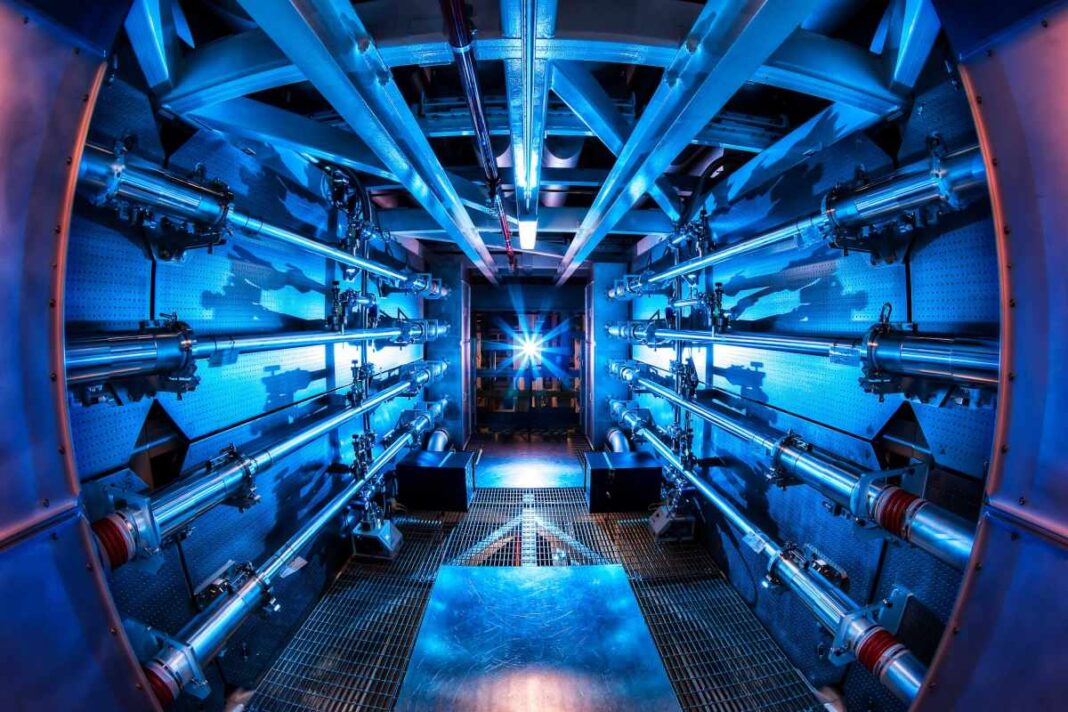
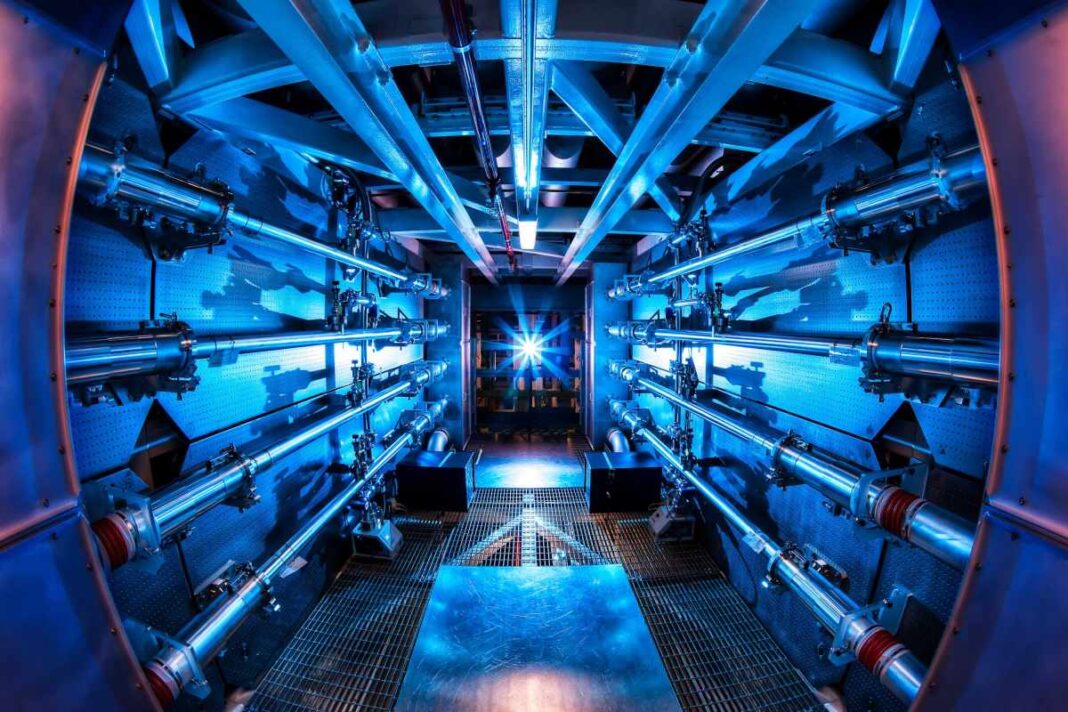
The optics of the device were on display behind Yun Kai, co-founder and CEO of Cambridge Heavy Industries, while he chatted with me on a video call. The company has been operating in stealth out of a small lab near MIT, and Kai gave TechCrunch an exclusive look at the technology it has been developing.
“We purposely built a small modular reactor. It’s tiny, it’s benchtop,” he told me. “Because it’s small, it makes everything easier.”
The small size has allowed Cambridge Heavy to experiment and iterate quickly. “The small module nature can enable 50 to 80 experiments, 50 to 80 shots per day,” he said. Data from those experiments will feed simulations that use AI to optimize the design.
That nimble approach has attracted investor attention. The startup recently raised a $6.2 million seed round led by Azolla Ventures with participation from Overlay, Neta Foundation, P3A, MassCEC, and the Rothrock family.
Cambridge Heavy’s fusion reactor uses lasers to compress a fuel target, similar to the groundbreaking experiment that proved controlled fusion reactions could produce more power than they consume. But unlike other inertial confinement designs, Cambridge Heavy’s minimizes the number of lasers required to spark fusion.
The system uses two main lasers to drive ignition. One laser is split into multiple beam lines that deliver light in concentric rings. Those rings of laser light are timed to hit the flat, round fuel target successively, starting from the outside and working in. The first ring starts a compression wave within the target that starts traveling inward. The subsequent laser rings are timed to boost the wave at just the right moment to further compress the fuel.
As the shock wave reaches the center of the target, a laser fires on the target, generating heat and producing a magnetic field. With the right amount of pressure and heat, fusion occurs.
Cambridge Heavy’s design generates high pressures with relatively low laser power, Kai said. The concept emerged from the lab of Keith Nelson, a chemist at MIT. There, researchers used the laser pulses to study materials under extreme conditions. As they ramped up pressures, they realized they were approaching fusion-ready conditions.
In about a decade, Cambridge Heavy plans to develop a power plant from the concept, though that’ll require scaling up the design. It will be larger than the current benchtop prototype, though not quite as large as other fusion power plants. Kai said it should be about the size of two basketball courts, and it will test whether the approach can generate enough energy to support a power plant.
Before that happens, though, Cambridge Heavy plans to use its smaller-scale devices to make tritium, a rare isotope of hydrogen that will be used by nearly all fusion power plants in the works today. Tritium sells for around $30,000 per gram today.
Each power plant won’t need a lot of tritium — on the order of grams per year — but the substance is so rare that only about 40 kilograms exist today. One recent study predicts that without new sources, the fusion power industry will be short by about 28 kilograms in 2054. At current prices, that’s about $840 million worth of tritium.
Fusion startups are in the process of designing fuel systems that will help the reactors be largely self-sufficient when it comes to tritium supplies, though they may need occasional top-ups. But that process could take up to 10 years, Kai said, giving Cambridge Heavy years of potential revenue as it pursues its power plant.
When you purchase through links in our articles, we may earn a small commission. This doesn’t affect our editorial independence.