
This post was originally published on this site.
Chinese teens are turning to mind-numbing drugs to ‘run away from reality’
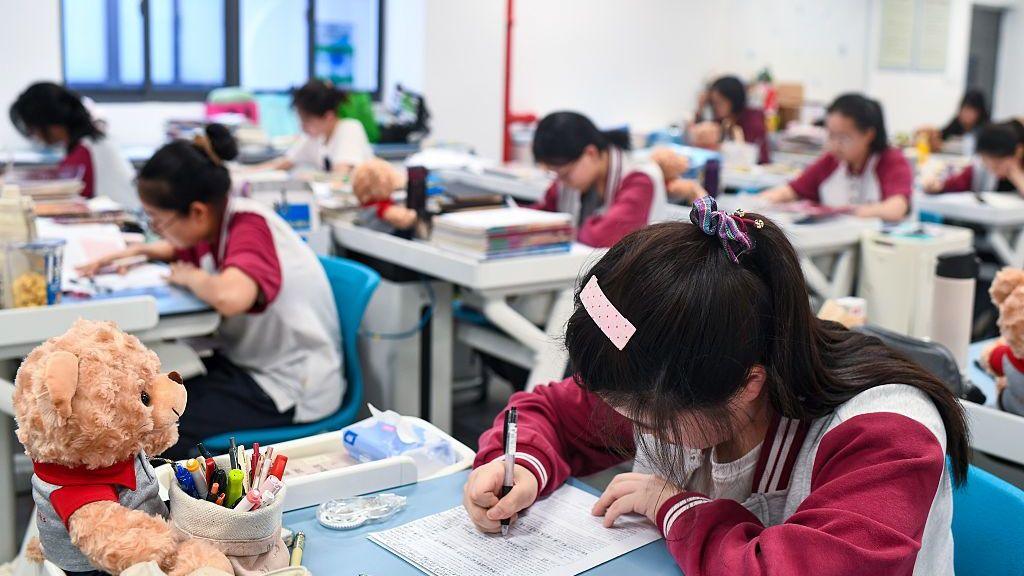 Image source, Getty Images
-
Published
At 14, *Xiaomei, a high-performing student from a coastal province in China, decided to overdose on cough medication.
She wanted to impress an older boy who told her it would help her relax. The tablets were usually only available with a doctor’s prescription, but she managed to buy them online.
At first she found that they made her a bit dizzy. But she was soon hooked to the slightly numb sensation, which, to her, felt like a brief respite from the pressure of looming exams. When taken in large doses, the drug can cause serious side effects, including hallucinations and impaired coordination.
Eventually she tried other medication recommended to her on chat groups. Some were for pain or epileptic seizures. Sometimes she would take five tablets. Other times she would try more than 10 to feel the effects of different drugs.
For two years, she took large quantities of various prescription drugs. None of them were prescribed to her or anyone in her family. She bought them all on the internet.
“When I felt too much pressure from my studies, or I didn’t do well at exams, or even when I quarrelled with my parents, I would take these drugs,” she told the BBC. “I was running away from reality.”
The BBC has heard similar stories from dozens of Chinese teenagers in chat rooms across various social media platforms. Nearly every one of them seemed to be escaping the same thing: pressure. They were doing that by chasing what is being described as a “pharmaceutical high”.
One girl shared a voice note after taking large doses of a neuropathic pain drug. Her words were slurred and hard to comprehend: “I feel my body doesn’t belong to me. I’m so dizzy.”
“Just sleep,” comes the advice. “You will be fine tomorrow.”
One boy offered to use his father’s old prescription to fake a new one for the same drug.
Some offered tips: “If you want to hallucinate, you can just buy… it’s not been controlled yet,” says one user, suggesting a drug used by people with Parkinson’s to control tremors. In excessive doses it can cause confusion or even delirium.
“Which keyword should I use to search for it on online platforms,” another user asks.
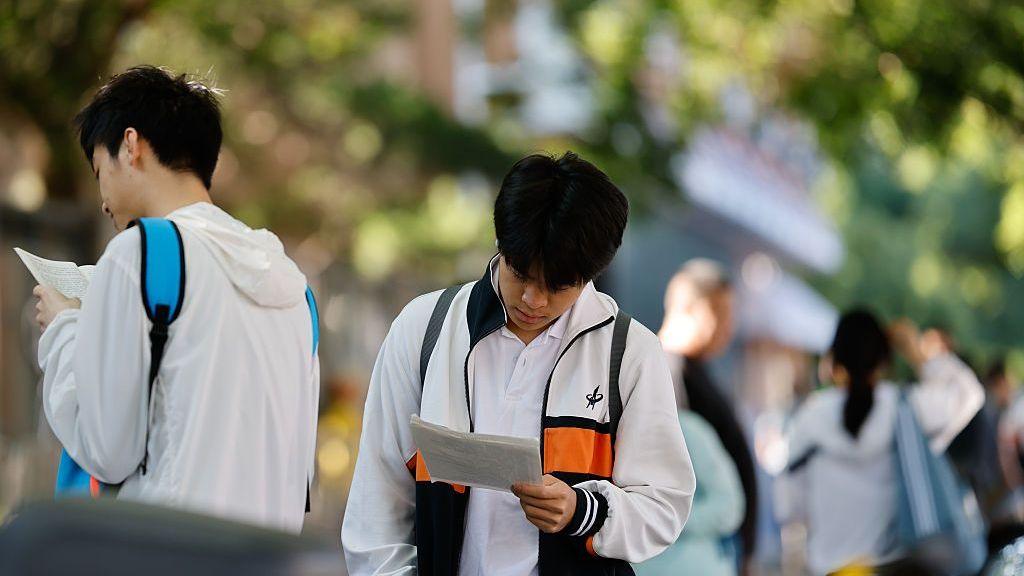 Image source, Getty Images
It is hard to gauge the scale of the problem, as there are few official figures.
But it is serious enough that the government launched a nationwide crackdown two years ago against the cough suppressant Xiaomei started using, classifying it as a psychotropic drug which would only be available to patients with a doctor’s prescription. That made it much harder for young people to buy online.
Then in April this year, authorities noticed that young people had switched to another drug and imposed tighter controls on how it is prescribed and dispensed at chemists. Still the BBC was offered the drug in an online chat room for as little as 10 Chinese yuan ($1.5; £1.09) per gram.
“Non-regulated substances are easy to acquire and even when one drug is controlled by the authorities, young people quickly find alternatives,” says a 2025 paper written for the Crime Prevention Institute at the Ministry of Justice.
In some cases the BBC found that teens online were using different names for drugs to avoid detection, which the 2025 study also noted.
There is growing evidence that young people across the world are turning to prescription medication to fight off pressures and anxiety.
So easy access to cheap prescription drugs in China is perhaps not that surprising given that it produces the vast majority of the world’s pharmaceutical ingredients.
When Xiaomei wanted to buy the cough suppressant, it just took a few clicks for an entire box of the medication to be delivered at her door, she says. “You could simply enter your ID number on shopping platforms and buy it directly.”
The ID, which is a national identity number, includes her age but she says she was still sold the drug, no questions asked. It was also cheap – often 50 tablets cost less than a dollar.
On paper, China is winning the war on illegal drugs. Official data for 2025 shows a dramatic fall – 41% – in newly identified drug users under the age of 35.
However authorities have had to acknowledge that the misuse of prescription drugs is becoming a widespread problem. It has been especially surging among minors, China’s National Narcotics Control Commission warned in a recent report.
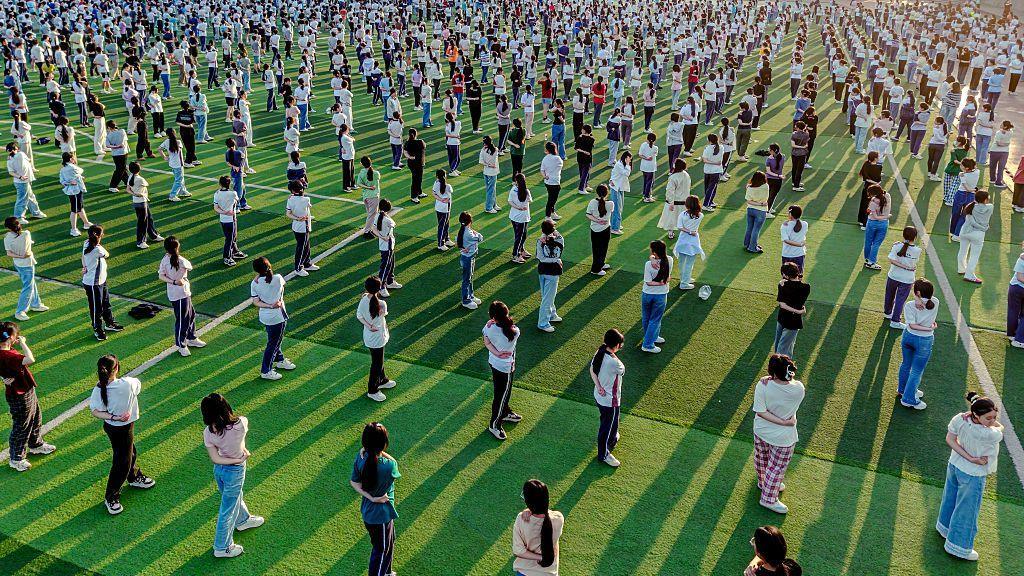 Image source, Getty Images
Xiaomei says that a lot of students in her elite chemistry class were discussing ways to overdose on prescription drugs to avoid feeling like “complete losers”.
“It is just so hard to pass exams and to stay in elite classes. In our school, the elite classes operate on an elimination system; if your academic scores drop, you get kicked out of the class. When you fail, you feel like failures, believing you have no chance in life.”
Part of the pressure comes from parents who also see their child as their only hope for the future, says renowned Chinese sociologist and director of the Max Planck Institute for Social Anthropology, Xiang Biao.
Because of the one-child policy which ended in 2016 after decades, many families only have one child, Biao adds, who shoulders all their expectations.
“What makes Chinese teens different is their isolating environment. They spend at least nine or 10 hours in school. They have very few chances to develop social relationships, very few opportunities to witness what life is really like.”
More worrying, he sees a link between prescription drug abuse and an increase in self-harm. The BBC noticed, for instance, that in many of the chat rooms, young people would encourage one another to cut themselves “to feel something”.
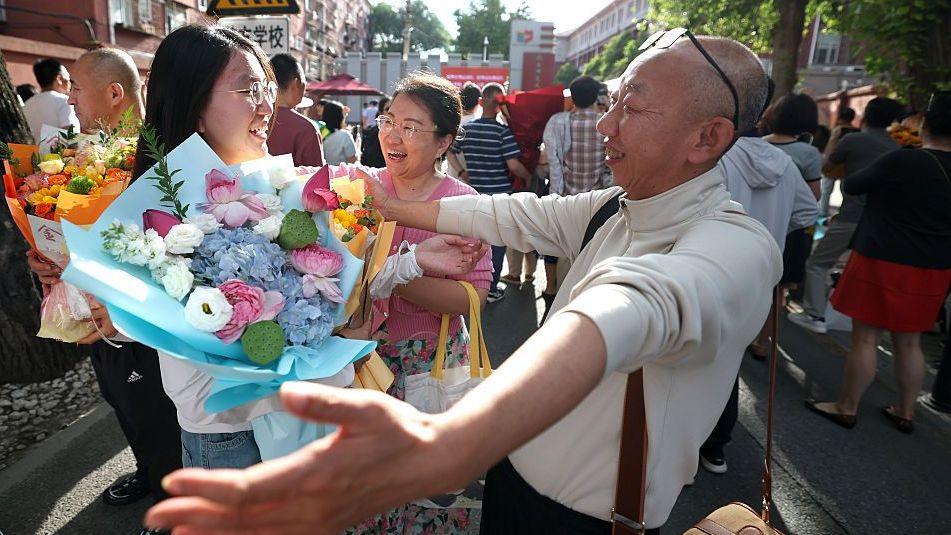 Image source, Getty Images
As an extremely competitive high school entrance exam drew close, Xiaomei tried a different drug, searching for ways to numb the anxiety.
“But my memory deteriorated rapidly,” she says. “I couldn’t remember anything clearly, and I lived in a constant daze.”
The drug is usually prescribed to help control epileptic seizures and it works as neuropathic pain medication. When Xiaomei explained the side effects in one of her chat groups, they suggested another drug, which is given as pain relief. She says it gave her some release but she soon needed higher doses.
Months before sitting the important exam, she went too far.
She’d taken 50 tablets and started to panic. “I was afraid something serious might happen, but I didn’t want to have my stomach pumped so I wanted to wait before telling my parents.”
But she became so unwell that she had to confess.
Her parents decided to listen to what they saw as their daughter’s cry for help.
“They mostly expressed how heartbreaking it was for them to see me like that. They didn’t scold or criticise me. Their approach was gentle.”
For her, this has made all the difference.
“Many children receive lots of attention but the type of attention they want is to be asked how they feel. Do they feel lonely or stressed? Often in China parents brush that away and say you just have to be stronger,” Biao says.
“There’s a very loud alarm being sounded out across Chinese society. Adults have to examine how to be responsible for a teenager. Having an open conversation as a family – that is probably the most rewarding part of life.”
And that is where the real battle lies, according to experts. Rather than playing whack-a-mole trying to suppress online sales of prescription drugs, the government should focus on what may well be a mental health crisis, they say.
In 2023, a study for China’s Mental Health Blue Book found that nearly 95 million people suffer from depression and more than 30% were under 18 years old.
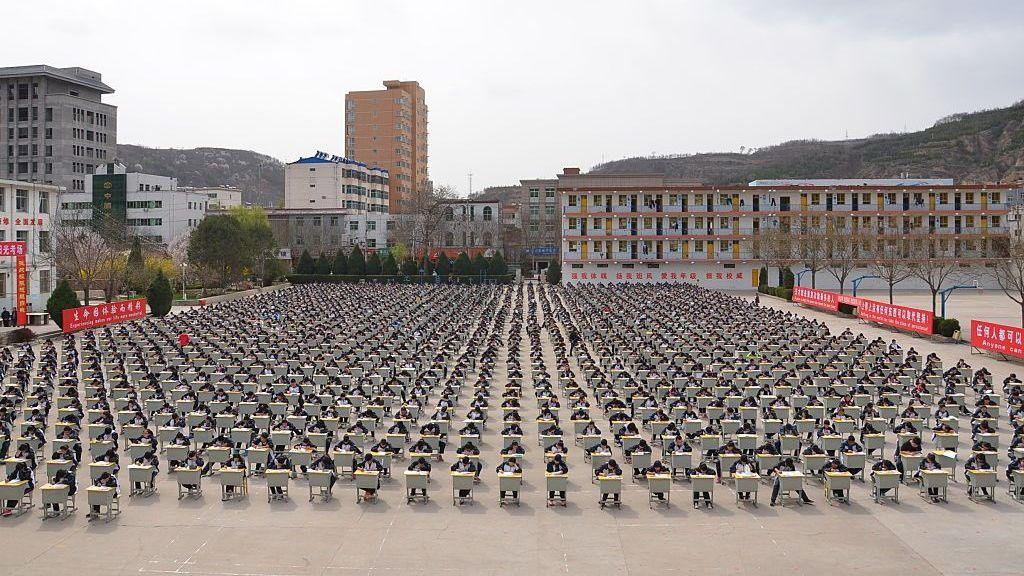 Image source, Getty Images
The Chinese government has recognised the need for mental health support for teens. Those plans include counselling rooms in every school, psychiatric services in at least one hospital in every county and more mental health professionals. The aim is to build a nationwide system of psychological support and crisis intervention by 2030.
So far they have been quite successful. According to the State Council, 92% of primary schools and 95% of junior middle schools now have a counsellor. Many major cities, including Beijing, have started to incorporate mental health into the curriculum.
However, there is still a major shortage of medical psychiatrists specialising in children and adolescents.
A 2020 study published in British medical journal The Lancet claimed there were only 500 qualified child psychiatrists in the country, and many of them were based in major cities such as Beijing and Shanghai.
This is a huge challenge in a country that has undergone three decades of unprecedented social and economic change.
The China Xiaomei’s parents grew up in is very different from the future she is facing. Her parents followed a script set by the Communist Party: work hard and you will be rewarded. Now, even if young adults pass with high grades and get a university degree, a bright future is not guaranteed.
Following gruelling pandemic restrictions, the Chinese economy has struggled to bounce back. One in five young people are thought to be struggling to find a job and families are spending less.
“People have become more pessimistic in general,” Biao admits. And the anxiety extends to adults, he adds.
“I think parents feel confused and anxious because they see a problem in their children, but they don’t see an alternative. If my child has a problem, it’s the end of the world. If my child doesn’t do well in school, it’s the end of the world. If my child doesn’t speak to me, it’s the end of the world. I think we should pay more attention to parents as well as children.”
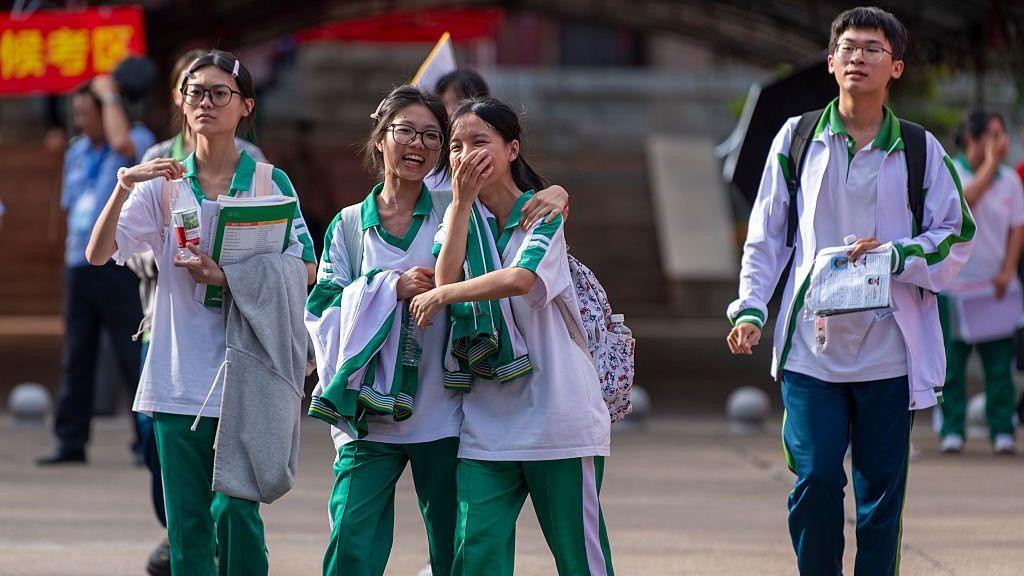 Image source, Getty Images
Fortunately Xiaomei and her parents have managed to find a way to cross this bridge.
“In the past, my parents didn’t really understand me and would say some pretty harsh things. I felt like I had no help and was truly on my own,” she says.
But that changed when she was rushed to hospital after the overdose. They started listening to her and talking to her, and “knowing that there was someone standing by my side made me feel really good”, she says. It even helped her perform well in the entrance exam she had been dreading for so long.
“I am lucky to have their support,” she adds.
Not everyone finds such support though, and that’s where *Lu Jingchan hopes he can help.
The 22-year-old spent years battling depression. He found it hard to beat the euphoria that came from taking prescription drugs, and overdosed more than four times in four years.
“The drugs drove me to the brink of madness. You risk sinking into an abyss of addiction, destroying your health,” he says.
He has now quit all prescription medication, and spends his time on social media urging others not to start. And he has this advice for young people battling the pressures he once did.
“I hope you can face life head-on, without needing medicines to numb yourselves. If you are overdosing, I want to give you the courage to stop. I believe your lives will improve. I believe you will all find happiness.”
*Names have been changed to protect their identity
-
-
Published11 November 2025
-
-
-
Published30 September 2024
-