

Controversial Orange Order march to go ahead for first time in nearly 30 years after late night drama
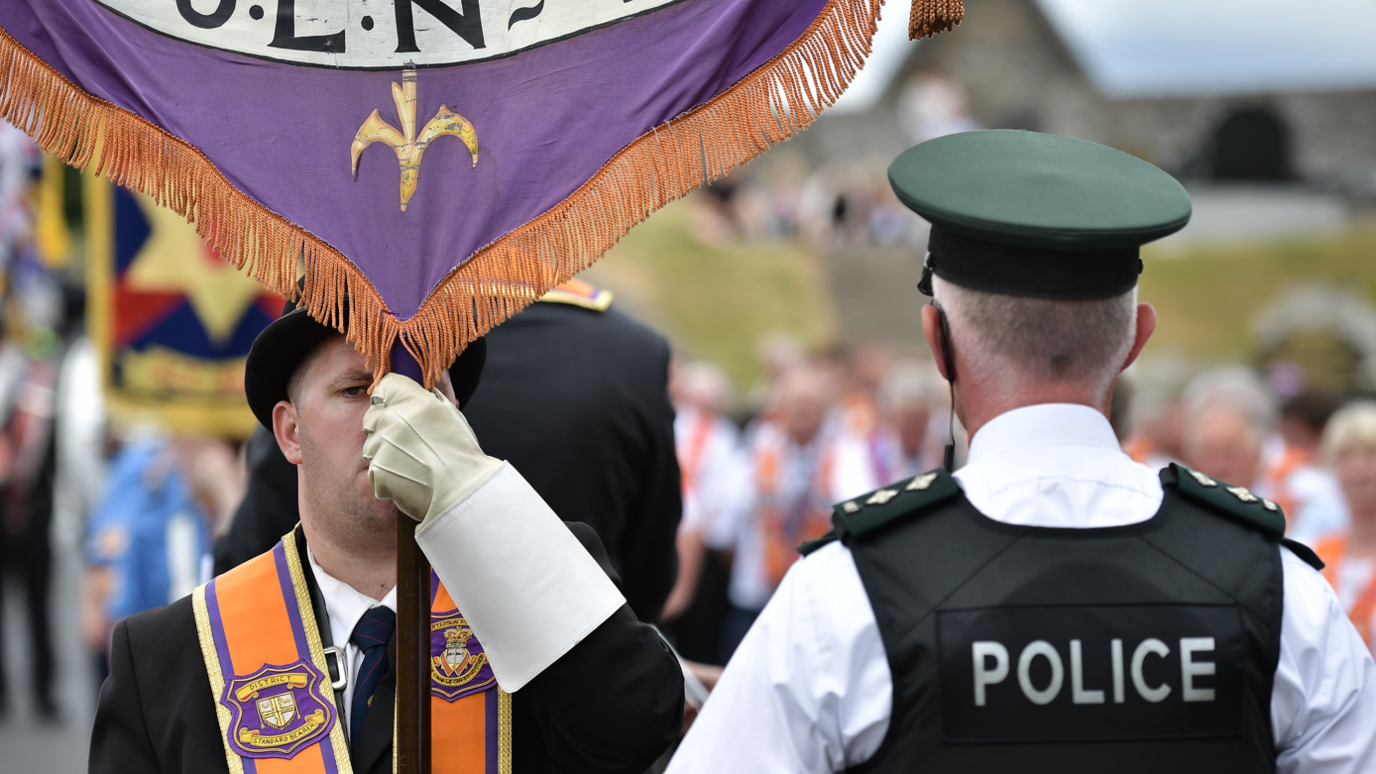 Image source, Getty Images
-
Published
A controversial Orange Order parade is set to go ahead in a nationalist part of Northern Ireland after nearly 30 years.
Following a series of legal challenges, the High Court ruled in the early hours of Sunday that the initial decision by the Parades Commission had to be respected.
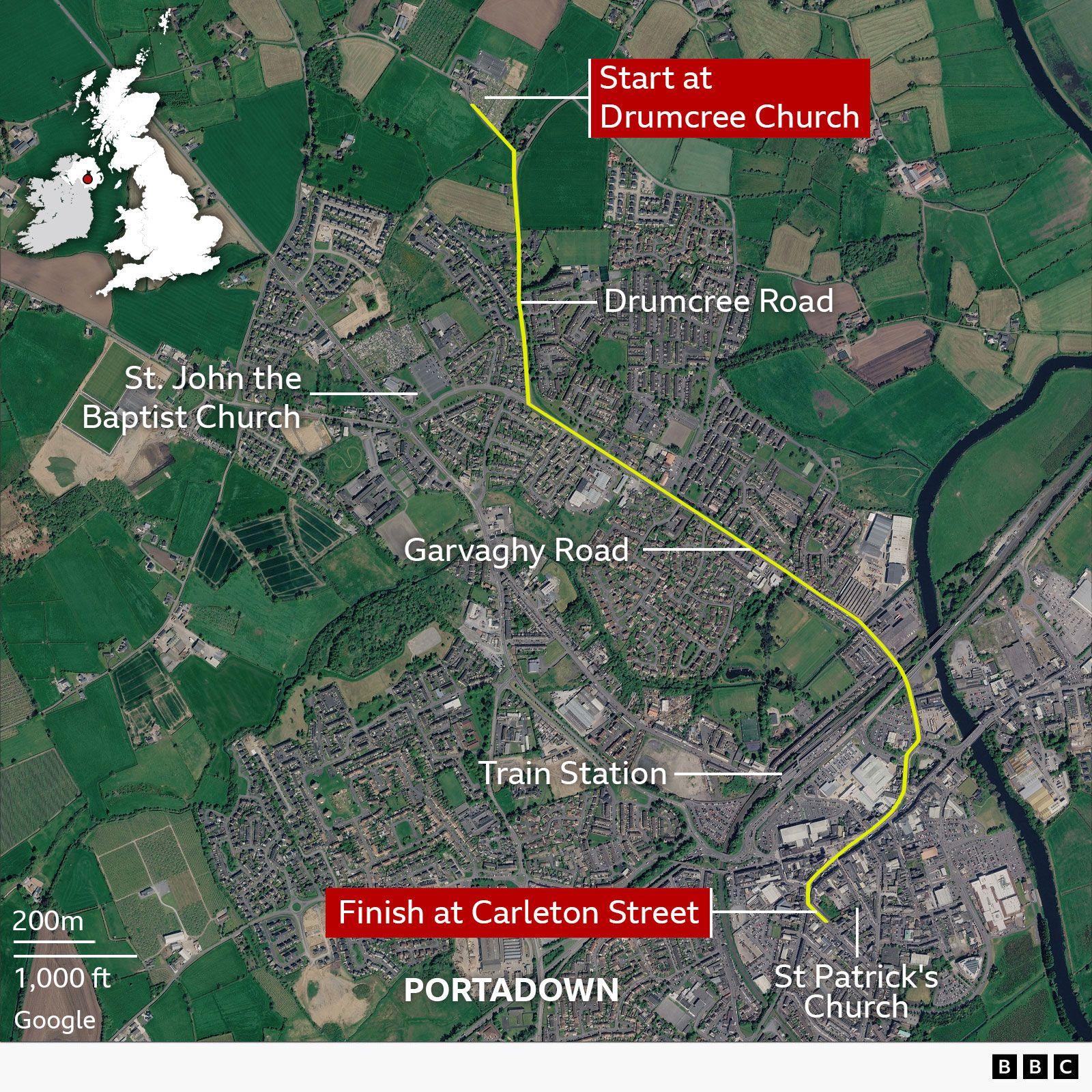
The Drumcree parade, which in the 1990s sparked some of the most serious disorder in Northern Ireland’s history, had been given permission to go ahead along the Garvaghy Road in Portadown with restrictions in place.
However, that decision was challenged in several different courts in Belfast on Saturday before finally being given the go ahead just hours before the parade is due to take place.
To play this video you need to enable JavaScript in your browser.
This video can not be played
Reaction to final court ruling
The Orange Order, is the most prominent of the loyal orders associated with Protestants in Northern Ireland.
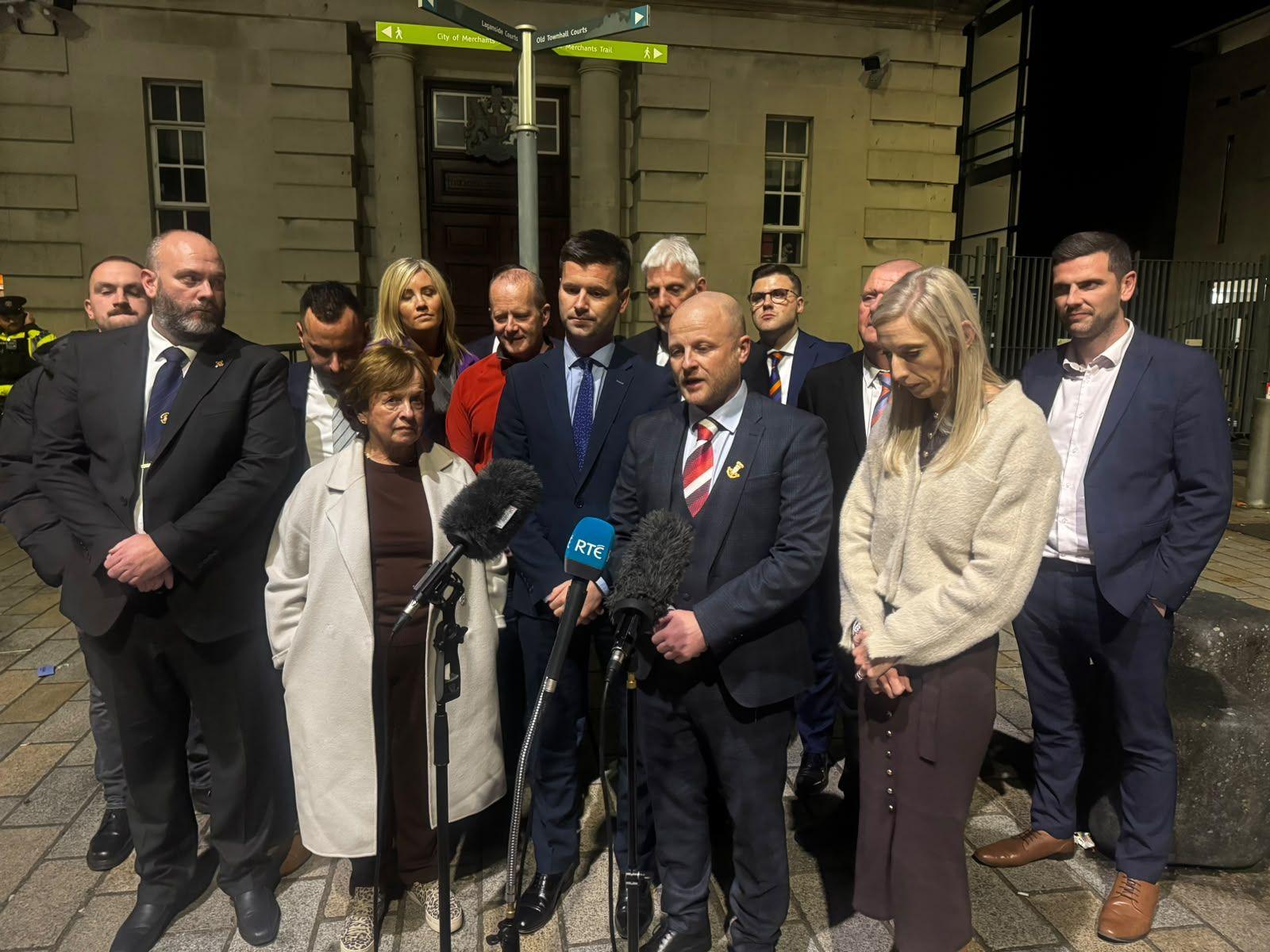
Speaking outside court Democratic Unionist MP Carla Lockhart described the decision allowing the parade to go ahead as a “seismic night for the rule of law”.
The Upper Bann representative added: “This is not a night to be triumphant”
Loyalist activist Jamie Bryson, who has acted as a legal adviser for Portadown district lodge, said:”We look to the chief constable to make sure this parade is policed.”
“We will march peacefully, respectfully and lawfully.”
However Sinn Féin MP John Finucane said the decision had left Garvaghy Road residents feeling” angry and scared”
“They have a right to feel like that,” he said. “We have and we will stand with residents of Garvaghy Road”
A large crowd gathered on the Garvaghy Road in the wake of an appeal court ruling which overturned an earlier High Court judge issuing a temporary ban on the parade.
Masked men also blocked the north end of the Garvaghy Road, towards Drumcree.
Reacting to the Court of Appeal ruling Breandan Mac Cionnaith of the Garvaghy Road Residents Coalition said: “There’s no such thing as justice or rights for our community. I’m going back to help defend my community.”
Sínn Féin leader Mary Lou McDonald and Stormont First Minister Michelle O’Neill also pledged to “stands fully with the Garvaghy Road community”.
A day of drama unfolded at Laganside courts after a High Court judge issued an injunction banning the Orange Order parade overturning the Parades Commission decision.
The move came after Portadown District Orange Lodge declined Judge Patricia Smyth’s request to postpone the parade until all issues were properly considered.
This was later successfully challenged by an Orange Order member at the Court of Appeal.
Towards midnight the Garavaghy Road Residents’ Coalition (GRRC) was given permission to challenge the decision at the High Court where Mr Justice Humphreys upheld the ruling saying the Parades Commission determination had to be respected.
‘Potential to escalate’
The basis of the residents’ group’s High Court review was on the PSNI’s risk assessment to the Parades Commission.
Lawyer Denise Kiley KC for the residents told the court hearing that “much remains uncertain” in the wake of the Parades Commission ruling.
She claimed that “nowhere” in the PSNI’s contribution to the commission was there “any assessment of future risk” and was “entirely directed to past risk”.
“That all leads to a requirement for more time and for the Parades Commission to explain the discrepancy that is apparent on the face of the documents,” she said.
Delivering her decision to issue an injunction, Judge Smyth said “the level of mistrust” between residents and the lodge cannot be “overstated.”
“It is also clear to me that this particular long running dispute has the potential to escalate within Northern Ireland,” she added.
“Against that backdrop I am thoroughly of the view the issues of all three parties must be properly ventilated.”
 Image source, PA Media
Reacting to developments DUP leader Gavin Robinson MP said unionists would await the appeal court’s decision and expect “all parties to respect the legal process”.
“The Orangemen of Portadown have conducted themselves with dignity and respect for the rule of law for 28 years. If they must wait for further deliberation, be it 28 days, they will do so with their heads held high and dignity intact.”
SDLP leader Claire Hanna MP said Drumcree “carries a history and a meaning that cannot be ignored”.
“I welcome that the heat has been taken out of this difficult episode. Lighting the tinder is easy; putting the fire out is much harder.”
Alliance deputy leader Eóin Tennyson MLA, said that calm heads were needed.
“Following the High Court’s intervention, it is important that everyone now takes a step back and responds responsibly,” he said.
‘Step back from the abyss’
Before issuing the injunction Judge Smyth had given the parties involved a final opportunity to “reach an agreement” and “step back from the abyss”.
Judge Smyth said “it is my view the issues at stake are so sensitive and so important, I would expect all of the lawyers to be creative and to use the law for the good of all the people in Northern Ireland.”
The judge said the issue the court is dealing with is of “fundamental importance” to the entire society in Northern Ireland.
She highlighted that information provided to the court from the PSNI has “promoted further enquiries” and “further time would be of benefit to the court.”
“In my view it would be contrary to justice and unwise to proceed to make a decision in the absence of information in relation to the issues I have identified.”
She said the important date for the Orange Order was July 5 and therefore there “is no prejudice in adjourning for a short period to allow this case to be prepared by all parties .”
Portadown District Lodge submitted a letter in which they outlined their reasons for not agreeing to delay the parade.
“The suggestion there is no prejudice to us is, to be frank, absolutely contrary to all reality,” the letter said.
“The prejudice is very clear – those opposed to us could simply ramp up the threat of disorder or violence, to change the factual context, and therefore effectively act as a veto.”
It added: “This is not balanced or fair to us; it is depriving us, potentially on a permanent basis, of what we have been lawfully granted for Sunday, with no guarantee this outcome will be replicated even if the Applicant’s case is ultimately found to be without any merit whatsoever.”
The letter concluded: “We would ask the court not to take this unprecedented and extraordinary step, which we are advised is unheard of and has hitherto not ever occurred.”
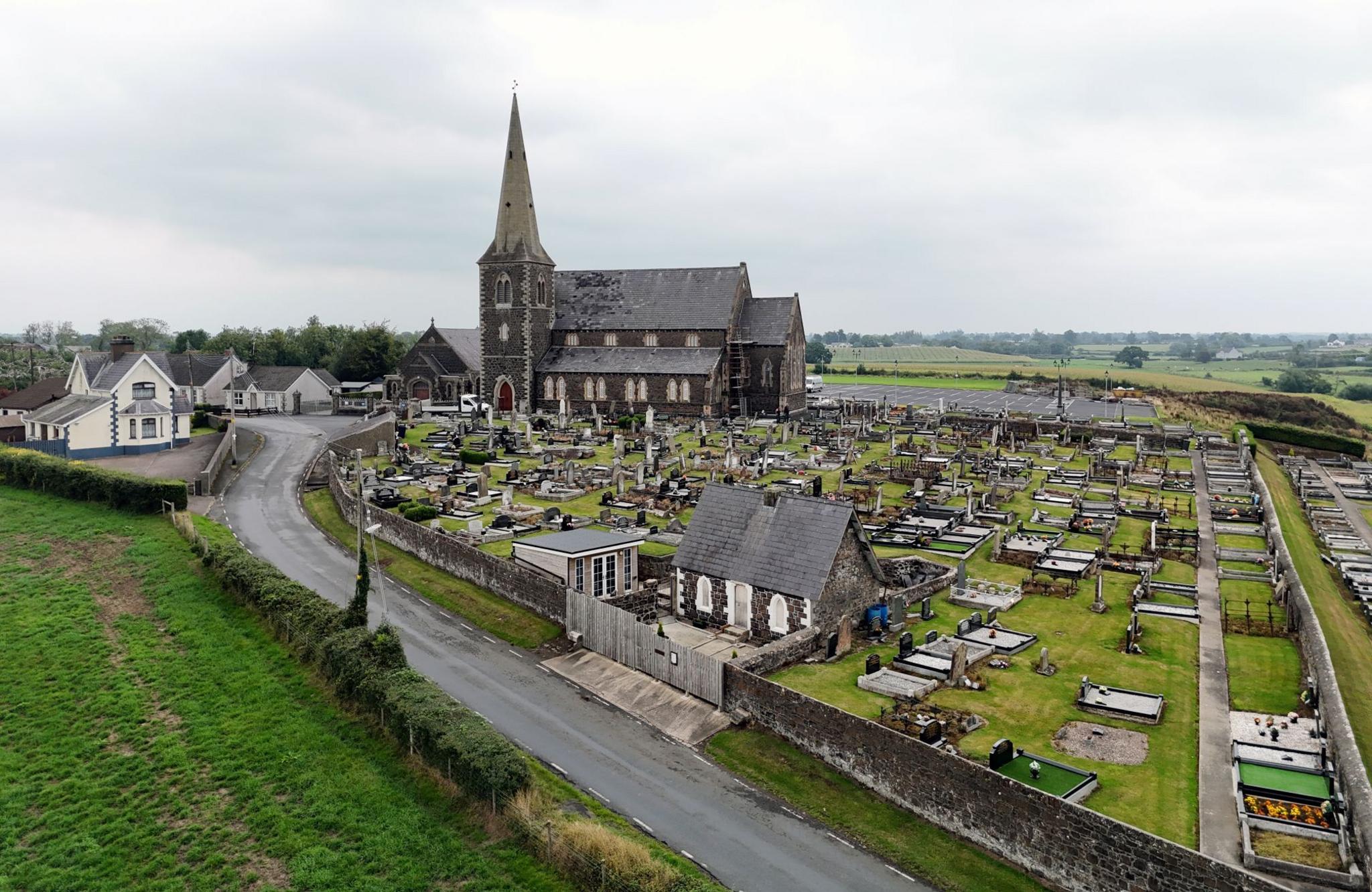 Image source, PA Media
‘Restrictions put in place’
Rather than start at 13:00 BST on Sunday as intended, the Parades Commission had said the march could depart no later than 08:00 and with 35 participants , externalrather than the 60 the Orange Order requested. No bands or supporters are allowed.
According to the Drumcree Catholic Church parish website, external, Mass takes place at 08:30 on Sundays in the church of St John the Baptist on the Garvaghy Road.
When asked by BBC News NI if Mass time had been taken into consideration, the Parades Commission said commissioners “recognise that the timings set out in the determination” should allow the church service “to proceed as normal”.
‘March going to clash with Massgoers’
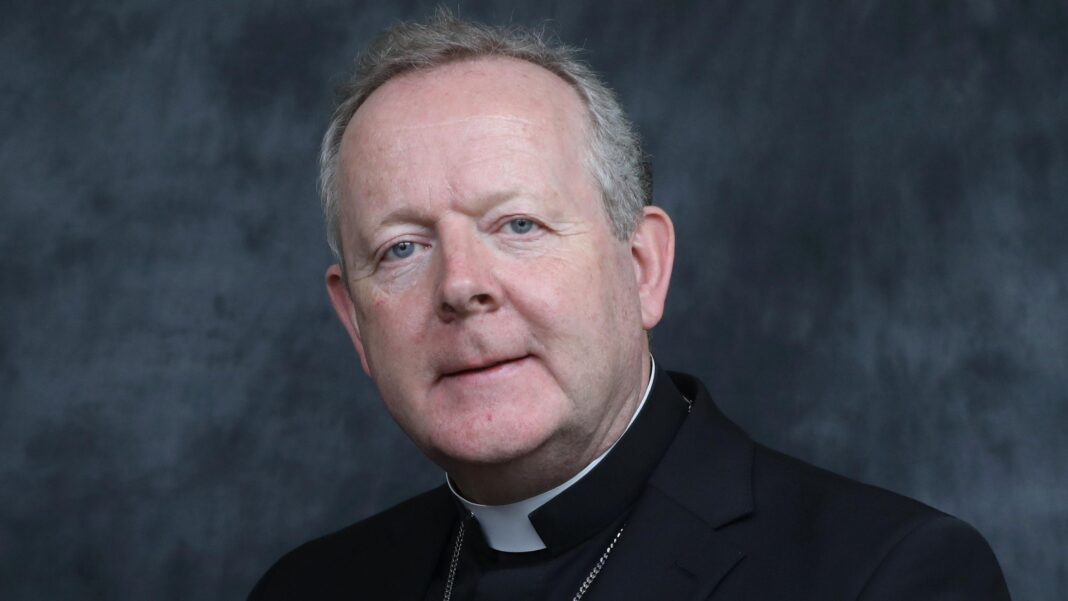
In a statement on Saturday afternoon Archbishop Eamon Martin called for “prayers and support for a peaceful resolution to complex Garvaghy Road situation”.
The Catholic primate said he shared the “sense of shock and disappointment of so many people at recent developments”.
“I also appeal for support for the patient use of solely lawful and democratic processes to resolve this deeply complex and emotive situation.”
Fr Peter Clarke, from St John the Baptist in Portadown, said he was concerned the march would “clash” with parishioners coming and going from the church.
He said he had emailed the commission to express his concerns and stated he “doesn’t know how they came to” their conclusion.
Parishioners at St Patrick’s Church on William Street are also likely to be affected ahead of the 10:00 service, according to the priest.
He added “tensions are high” in the community, and said he will be addressing the situation during Sunday’s service.
The decision to give the go-ahead for the parade came after the five-person Parades Commission, led by Prof Evelyn Collins, held face-to-face talks with the Orange Order earlier this week, and a separate meeting with the residents’ coalition.
Senior police officers were also consulted about the planned parade.
Within the 31-paragraph determination by the Parades Commission, details were revealed of conversations held with the PSNI.
The document stated: “The police made both written and oral submissions, indicating that they, at the time of making them, had no information indicating that the parade would result in disorder or violence.”
The Police Service of Northern Ireland (PSNI) said it had activated “mutual aid arrangements to support contingency planning for a policing operation” in Portadown on Sunday.
It is understood about 200 officers are coming from Scotland.
When did the Drumcree dispute begin?
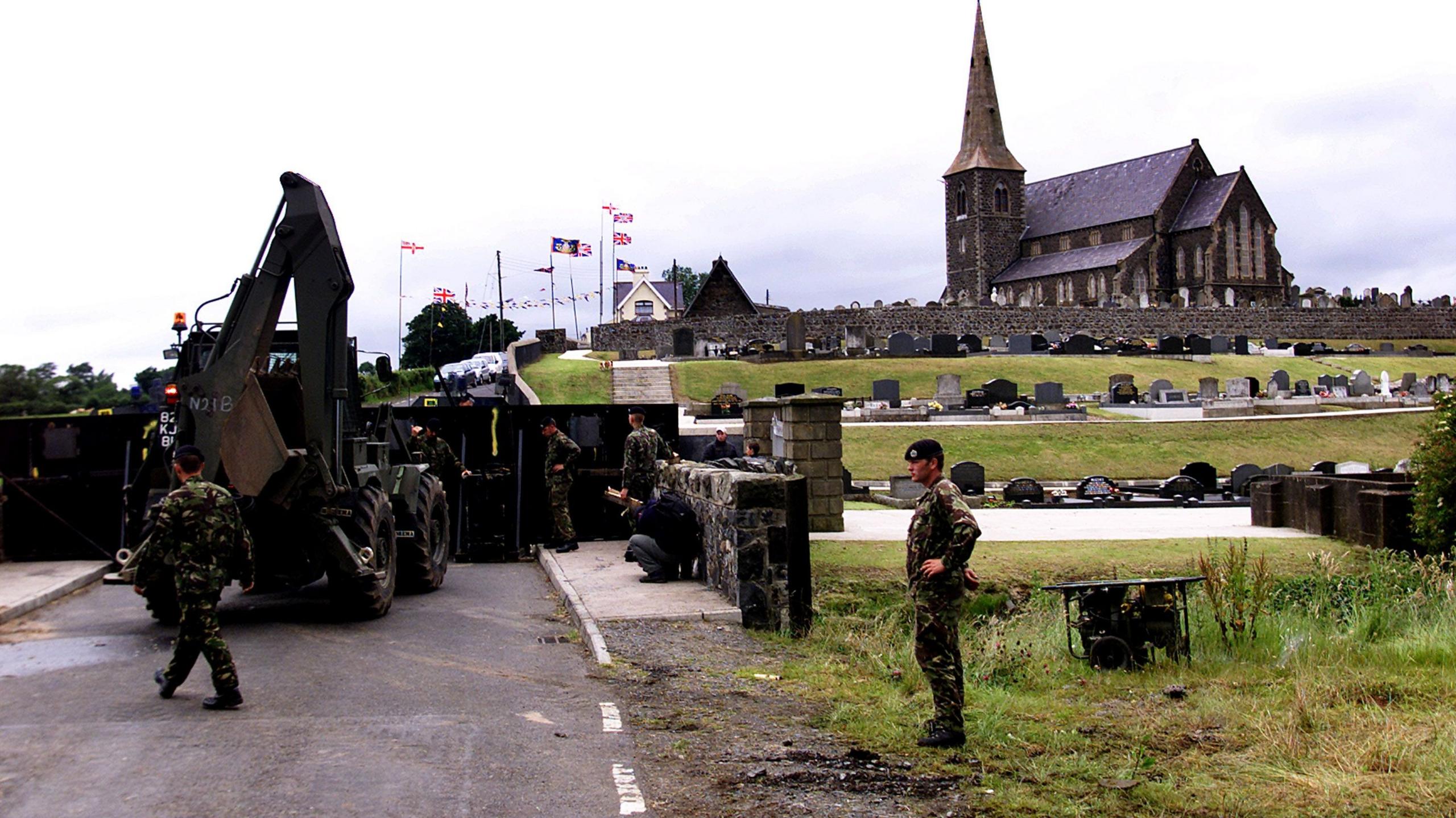 Image source, Getty Images
The Parades Commission has been in the political spotlight since its previous Drumcree determination was quashed in the High Court in August.
A review of the commission has since been ordered by the Northern Ireland Office.
The Drumcree parade dispute began in the mid-1990s and it almost derailed the peace process at the time.
Violence related to the dispute resulted in riots, roadblocks and murders.
When the Orange Order was prevented by police from walking down the route in July 1995 there was a tense stand-off. It was the same for the next three years.
The Parades Commission began operating in 1998 to regulate parades and try to defuse tension around marches.
Its decision not to allow a march down the Garvaghy Road that summer has been challenged by the order over the past three decades.
-
-
Published1 day ago
-
-
-
Published3 days ago

-
-
-
Published4 days ago

-
-
-
Published25 August

-

