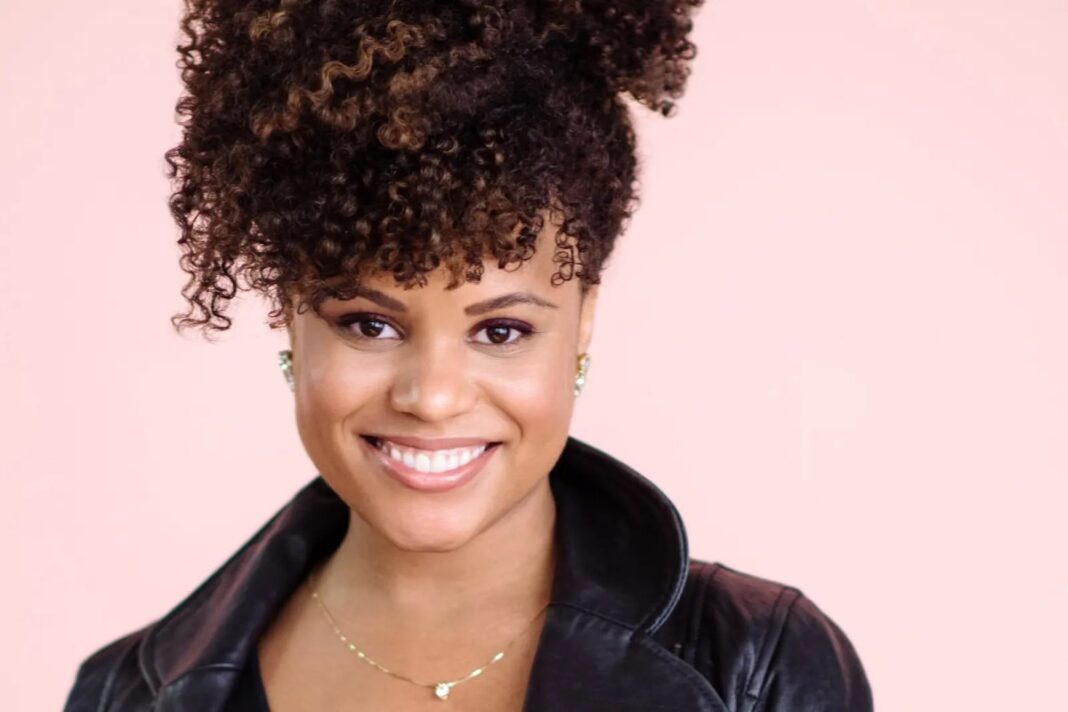

Normally, Dawn Myers wears her hair up in a big old afro, and anyone with an afro can attest that wash days — the routine of washing and styling textured hair — are often tedious. They take a lot of detangling, product, styling, and, well, time.
“I was watching ‘Shark Tank,’ and there was another curly girl idea,” she recalled of a day around eight years ago, when a pitch for a hair product aired. She started thinking about all the hair tools on the market, like blow dryers and curling irons, “things that straighten and change the chemistry of our naturally curly hair,” she told TechCrunch, adding that it takes around an hour and 20 minutes to wash and style her own hair.
None of those tools help with that, and for Myers, it highlighted a gap that has always existed in the beauty hardware space — a lack of tooling for textured hair. It’s a space that’s complex, expensive, and just overlooked.
“If you think back to slavery, we were mandated to cover our hair. That’s where do-rags come from. You had to cover your hair. Why? Because our hair was seen as ugly and unkempt and unacceptable,” she said. Later came hot combs, chemical relaxers, and flat irons, all of which straighten textured hair. “It’s only been the past 15 years or so where women of color and Black women in particular and, quite frankly, white women as well have really felt comfortable exposing their naturally curly hair and really just embracing it.”
Soon after that episode aired, she whipped out a legal pad and sketched out a business idea, then went to Ace Hardware and CVS and put together a “Frankenstein-looking prototype.”
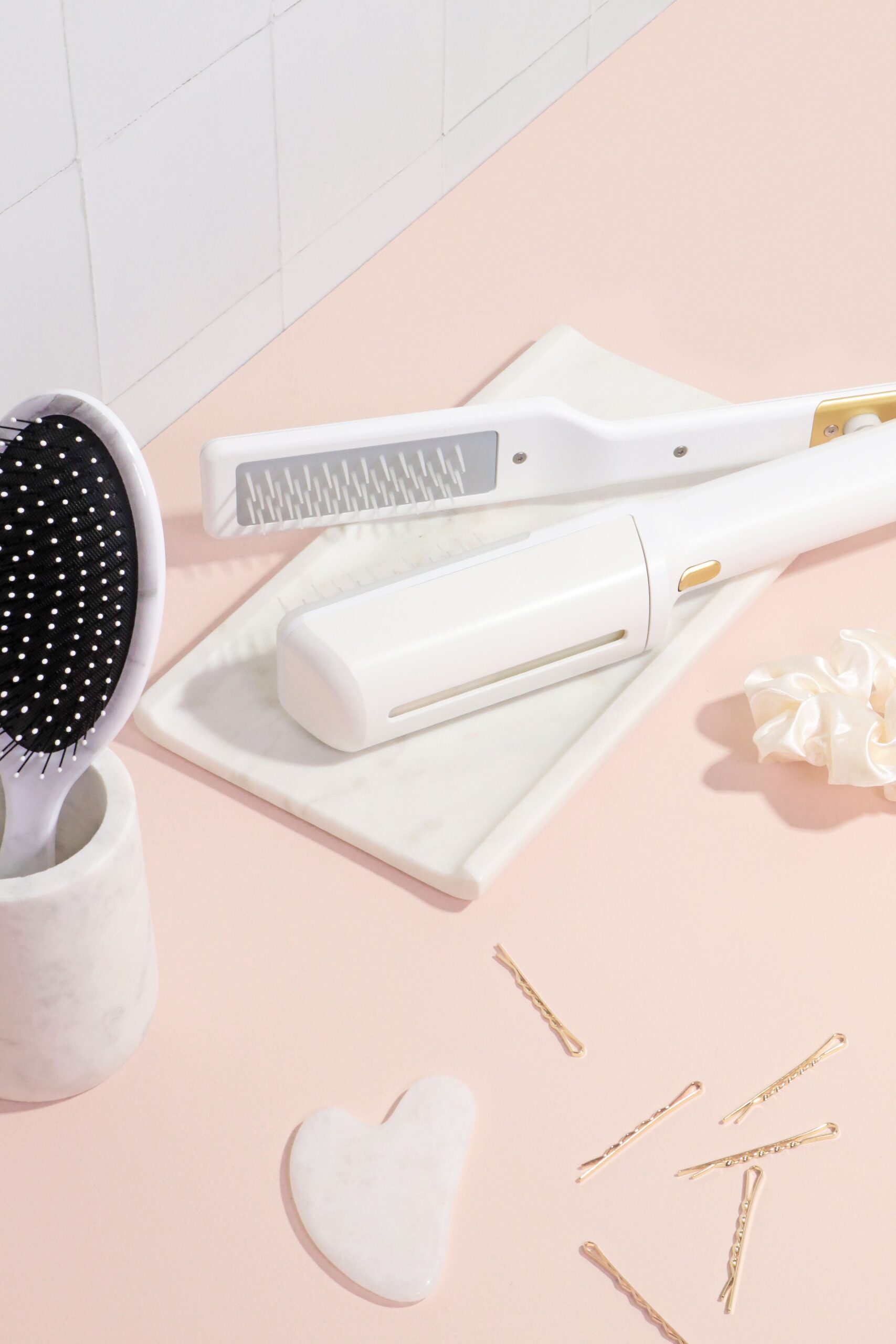
Her idea eventually became the company Richualist, which is known for its product Mint, a hair tool that helps detangle, condition, gel, and style in a single stroke using refillable product pods. It even has warming technology to gently heat the product before it’s applied.
“We get that styling time down to about seven to 10 minutes,” she said. “It’s a massive game changer for the customer really stressed out by wash day.” She said her product, which also comes in travel size, helps make hair a bit healthier, reducing shedding and breakage by up to 70% since people no longer need to tug endlessly on their strands as they wash and style.
She built it with the materials science company Dow, after an early prototype caught the company’s attention during a startup accelerator program. “It just so happens that Dow had identified this white space recently as well, and they were starting a textured hair care unit,” she said. “So they ended up collaborating with us and giving us a lot of engineering help and manufacturing guidance.”
Even though she eventually became one of the first 100 Black women to raise more than $1 million in venture funding, the early days were rough. “It’s really impossible to get hardware funded,” she continued. “It’s even more impossible to get it funded when we’re talking about such a niche problem.”
She recalled the early meetings with executives in the beauty industry. “There are no people who look like me in those R&D suites.” In fact, she said, when she described wash days, “these people didn’t know what a wash day was. They didn’t understand that there’s this whole process that their customers have to go through.” She would tell them how painful and arduous the process is. “And the powers that be, up until this point, did not know,” she continued. “Even the bonds in our hair are totally different than other technology types. We really do need bespoke technology.”
Myers sold her home and liquidated her 401(k) retirement account to fund the initial development of this product. “That was a crazy bet, but it paid off,” she said. “We were able to get about $1.4 million in the door to commercialize the product and just validate it.” Overall, it took about five years of development to get the product to “a place where it made sense to the customer,” she said, adding that her team also had to conduct their own research in the space since what they needed — like how much product the average person with textured hair uses — didn’t yet exist.
Then, in 2022, just as she was about to expand and go to market, she was diagnosed with stage three colorectal cancer. “We ended up closing our round while I was still going through treatment,” she recalled, saying the round took “forever” to close. She remembers sitting in the chemo chair at Johns Hopkins, on her laptop, trying to close deals. She applied to Shark Tank in 2023 and appeared on the show later that year, though the episode aired in 2024. “I was still wearing a binder around my abdomen [a compression wrap] under the dress I wore for my ‘Shark Tank’ experience,” she said.
She ended up nabbing a deal from investor Mark Cuban and serial entrepreneur Emma Grede, which helped her formally launch the product. Grede then helped it expand into Ulta’s online website earlier this year.
“We’re actually about to market ourselves as sold out,” she said, adding that the company is mapping out ways to expand further.
Her company was picked as one of TechCrunch’s Startup Battlefield 200 startups this year, earning a spot at TechCrunch Disrupt, the publication’s annual startup conference, which kicks off this Tuesday.
When asked how she first heard about Disrupt, she laughed. “I mean, who doesn’t know about Disrupt?” She said she’s bracing herself, as an introvert, for all the people she will meet and conversations she will have.
“But what I am most excited for is textured hair to be sitting on the stage with some of the most sophisticated tech in the space.”
When you purchase through links in our articles, we may earn a small commission. This doesn’t affect our editorial independence.