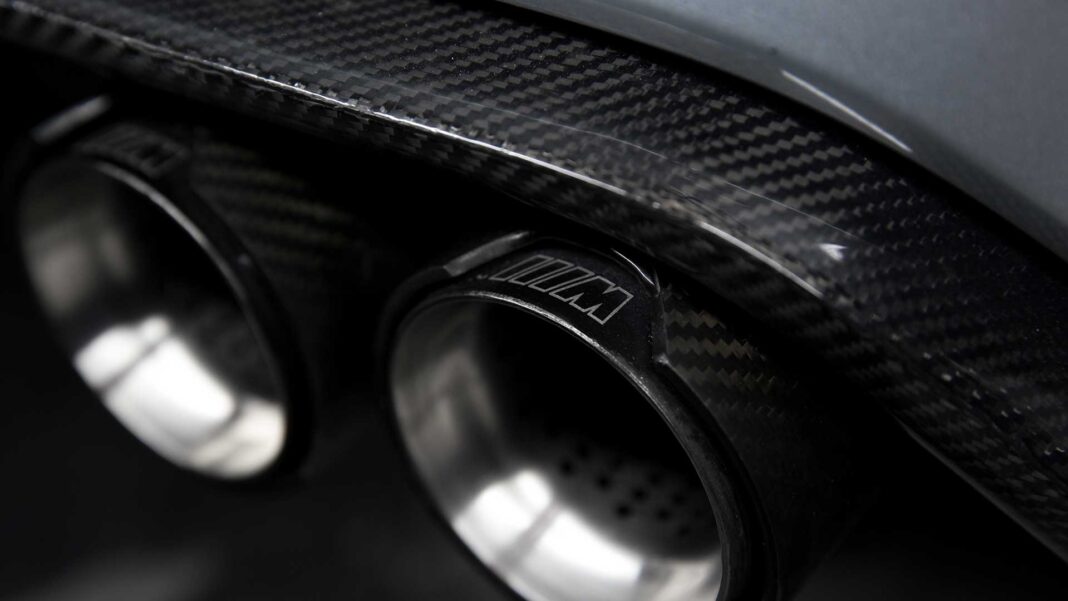

Manufacturers have struggled with difficulties like these for decades. What has changed is the range of materials their engineers have available.
Carbon fiber composites, previously used mainly in aeroplanes and Formula One cars, are now an option for industrial machines. But the expense still gives many firms reason to hesitate.
How a Lighter Part Can Improve Performance
Think of a robot arm on a production line. It takes a piece, puts it down and goes for the next. Nothing unusual about that. But when you do that manoeuvre thousands of times in a shift, the weight of the arm starts to matter. Now each time the machine moves it has to accelerate that weight and stop it again.
And that’s where carbon fiber reinforced plastic (CFRP) may help. Carbon fibers combined with a polymer matrix make a material that is rather light but doesn’t give up stiffness.
Of course replacing all metal parts with carbon fiber reinforced plastic (CFRP) is pointless. Use a support bracket that doesn’t move around all day. Making it lighter might not make much difference. But it’s a different thing when the robotic arm is moving constantly back and forth.
The fibers may be arranged to match the forces acting on a component. If a part is bent predominantly in one direction, the fibers may be laid out, for example, to provide extra stiffness where it is needed. Conventional metals don’t offer quite the same flexibility.
It’s Not Just the Purchase Price
If you ask a production manager about replacing an aluminium item with a composite one, the first thing they are likely to bring up is cost.
Fair enough. Carbon fiber parts may be expensive, especially if only a few are required or specialist equipment is needed.
But let’s say you’ve got a part that keeps failing and shutting down a machine. Replacing it costs more than just the price of the spare component. There is work to be done, and production might be delayed while the repair is carried out.
The extra upfront expense could be worth it if the redesigned part is expected to last longer.
The challenge is to prove that. Before investing in carbon fiber reinforced plastic (CFRP), a company needs reliable information on maintenance costs, downtime and estimated service life. Without such data, it is hard to tell whether the extra expense is worth it.
A Composite Part Needs Its Own Design
It sounds easy to copy an existing metal part in carbon fiber. In practice, it seldom is.
Metals and composites behave differently under load. With carbon fiber, engineers need to consider the direction of the fibers and the forces the part must withstand.
So a company working with carbon fiber reinforced plastic (CFRP) has to think about more than simply the material. The shape of the piece and where it attaches are also essential. Simply copying the original metal part may not produce the same result.
That might be a concern for small engineering companies. Their engineers know the machines, but have little experience with composite design. Getting specialist advice early may save them from costly mistakes down the line.
What If the Part Breaks Down?
Weight reductions might also have an impact on energy consumption. A lighter moving part may need less power to operate. This may be useful in factories that run several shifts a day.
But there are environmental consequences to consider too. Producing carbon fibers is energy-intensive, and recycling composite components is not always easy.
The UK government report on advanced composites looks at both their potential and the problems associated with their use in environmental applications.
The environmental effect of carbon fiber reinforced plastic (CFRP) relies on the production process of the item, its service life and what happens to it at the end of its life.
A component with a fifteen-year service life is a totally different proposition from one that needs to be changed every few months.
This is something to think about while considering whether carbon fiber reinforced plastic (CFRP) is the correct solution for a given machine.