
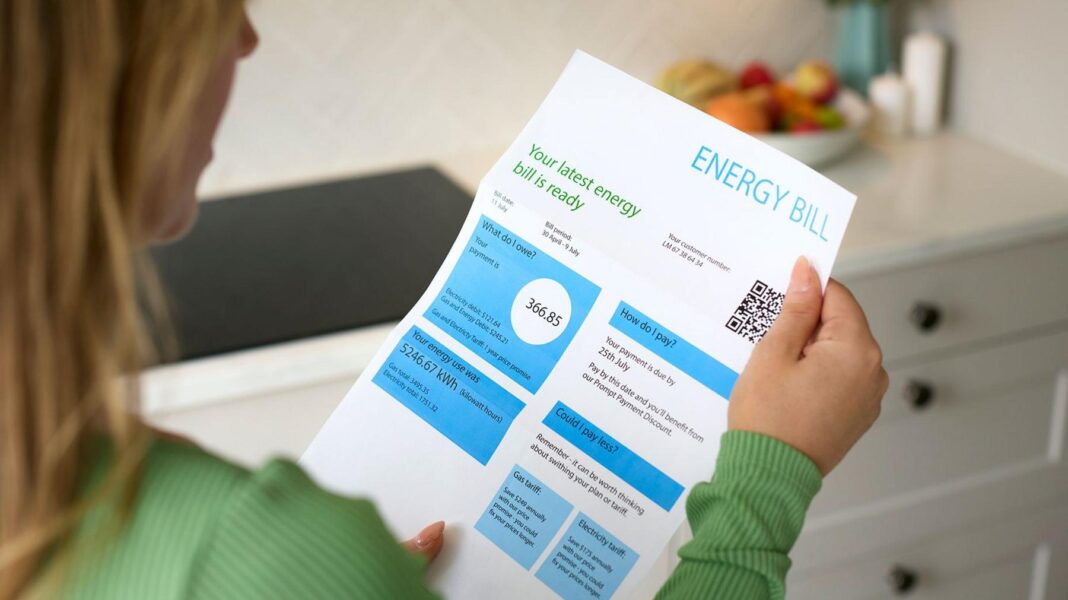

Energy bills to rise by 26% from January after gas prices surge
-
Published
Energy bills will soar by 26% for millions of households in January after a surge in gas prices sparked by the Iran war.
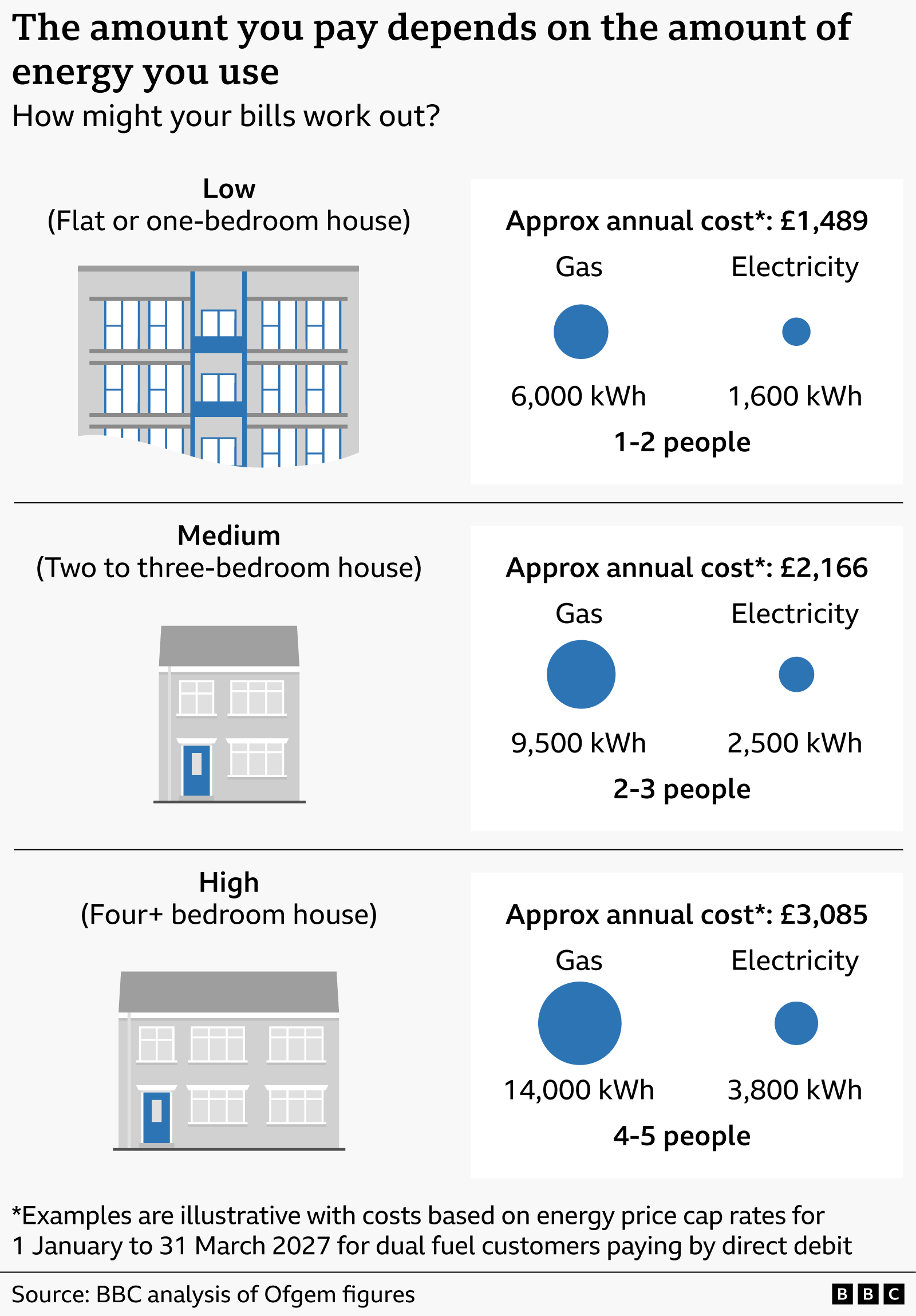
A typical bill will increase by about £37 a month in the first three months of the new year, although the price will depend on how much energy a household uses, so it could be closer to £60 extra a month in winter.
A household using a typical amount of energy in England, Scotland and Wales and paying by direct debit, would see their annual bill rise from £1,723 to £2,166 if the increase was sustained for a year, said regulator Ofgem.
The government will pay millions of households £100 from 4 January to help cover winter costs on top of an existing VAT cut on electricity.
Charities and suppliers expect debt to rise and a wave of people to need emergency support.
Ofgem said the rise had been driven entirely by higher wholesale costs faced by suppliers owing, primarily, to the Iran war. Wholesale gas prices, paid by suppliers, were up 33% in the last three months, the period used to set the January to March cap.
The warm home discount will take £150 off bills for six million households on benefits this winter. There have been calls for this support, funded through everyone’s bill, to be extended.
“We are staring down the barrel of a brutal winter,” said Dame Clare Moriarty, chief executive of Citizens Advice.
Neil Kenward, Ofgem’s director general for markets, said it wrote to energy suppliers “reminding them of their responsibilities” to customers this winter. They have been told to identify people who need help early, make support easy to access and ensure repayment plans are affordable and sustainable.
Campaign Groups Friends of the Earth and Global Witness said major oil and energy companies are making huge profits because of spiralling oil costs, hurting households.
Energy UK, which represents suppliers, said the firms which send your bill, have profits capped and do not see the same benefit as international energy generating companies.
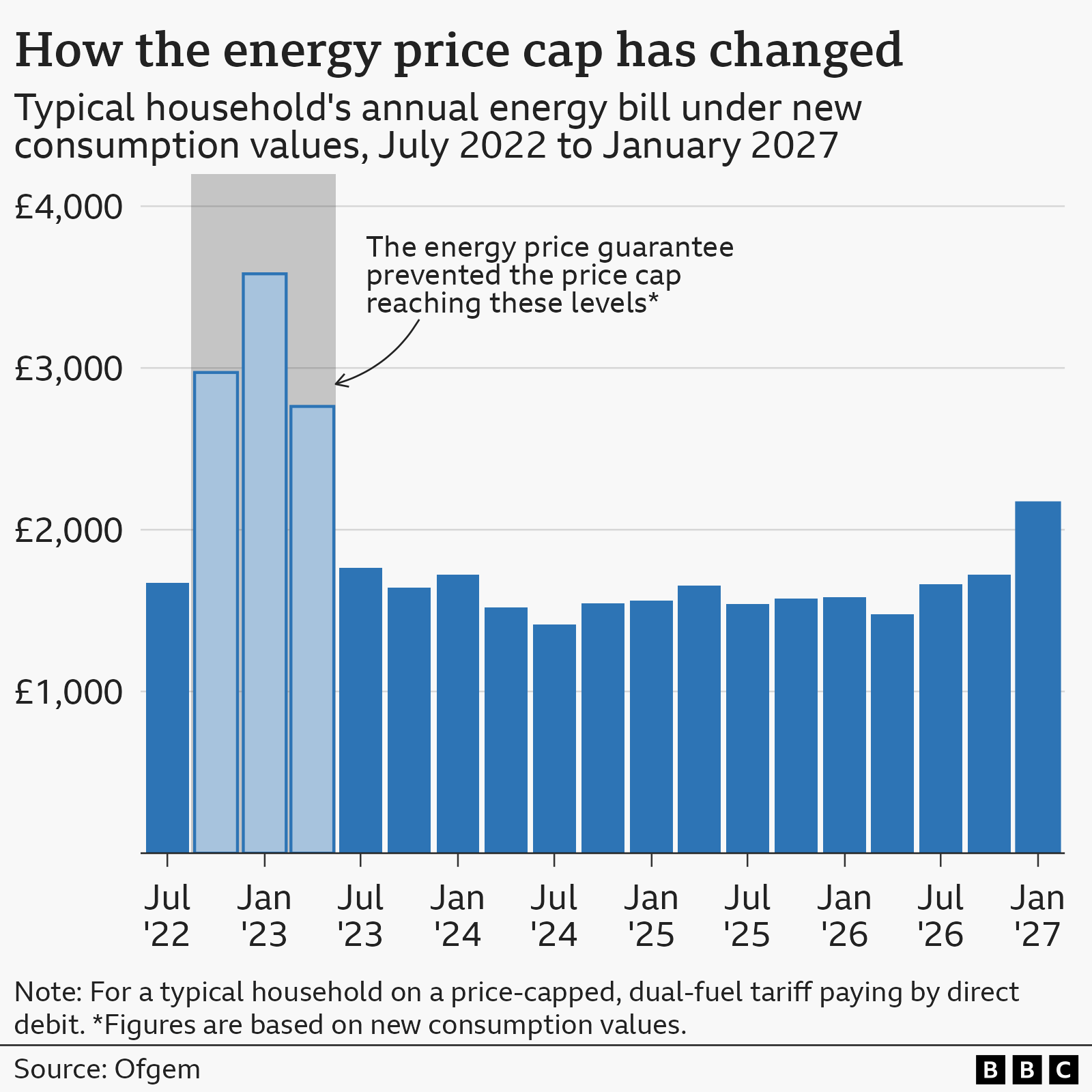
The increase is the biggest since Russia’s invasion of Ukraine drove up prices. It comes at a tough time of year, when the weather is at its coldest.
People on prepayment meters will be hit as their spending comes when energy is needed, rather than the cost being spread over the year as with direct debits.
What is the price cap?
The cap sets a maximum price for each unit of energy, not the total bill. Those on fixed deals are unaffected until the end of their term, but for those on variable tariffs it means:
-
For electricity, average unit prices will go up on 1 January from 26.32p per kilowatt-hour to 32.69p.
-
Gas will increase from 7.97p per kilowatt-hour to 10.96p, higher than in the wake of the invasion of Ukraine.
-
Daily standing charges will be 54.77p for electricity and 29.65p for gas.
The cap is set every three months, based on the costs faced by suppliers as well as the cost of running the energy system.
It is based on a three-month period that ends about six weeks before the new cap comes into force. A fall in international wholesale prices in recent days will not be reflected in January’s cap, but it will be in April’s.
Energy Secretary Miatta Fahnbulleh said people will be “deeply concerned” by another rise in energy bills.
“For too long, British families have been paying the price for conflicts overseas and volatile fossil fuel markets,” she said.
Andrew Bowie, shadow energy secretary, said: “It is an outrage that, as bills soar, Labour are not only piling green levies and taxes onto bills but signing us up to an EU scheme that risks pushing them even higher.
‘We’ve turned the heating down by 2.5C’
 Image source, Supplied
Stacey, 40, a single mother from Bristol, said dealing with rising energy costs has felt like a “battle” recently and she’s worried about 2027.
She’s turned her central heating down from 22C to 19.5C, bought electric blankets and pays her bills by direct debit.
She also leaves her curtains shut to “keep the heat in”, while her daughters wear thermal clothing if it gets chilly in the house.
-
‘I only use the washing machine on a Sunday’ – how we’re keeping our energy bills down
-
Published31 minutes ago
-
-
Energy bills will soar – here’s how you can ease the pain
-
Published1 hour ago
-
-
Will I get the £100 energy payment and when will I receive it?
-
Published15 hours ago
-
Support payment for millions
Up to 20 million households in England will get a £100 payment from 4 January to help with their energy bills this winter, with equivalent payments in Scotland and Wales.
Citizens Advice said the money will disappear quickly, particularly for those on prepayment meters, leading to a wave of requests for emergency help.
Energy UK said the funding was poorly targeted and insufficient to stem rising levels of customer debt.
The government said councils had a £100m discretionary fund to support vulnerable households which fell outside of the main scheme.
-
Three reasons why your energy bill is so high
-
Published2 hours ago
-
-
What will the energy cap changes mean for my bills?
-
Published2 hours ago
-
Get in touch
How is the cost of energy affecting your quality of life? What questions do you have?