
This post was originally published on this site.
Europe’s heatwave linked to 1,300 deaths, WHO says, as Germany hits record 41.7C
-
Published
Europe’s unprecedented early summer heatwave may be responsible for hundreds of excess deaths, according to the head of the World Health Organization (WHO).
Temperature records were broken across the continent again on Sunday – including in Germany, Poland and the Czech Republic – as the extreme heat continued to move east.
In a post on X, WHO chief Tedros Adhanom Ghebreyesus said more than 1,300 excess deaths had been recorded since 21 June “linked to high temperatures in Europe”.
“Heat stress is often called the ‘silent killer’ – and European homes, workplaces and schools were not built for these temperatures,” he said.
On Sunday morning, France’s national health ministry said there had been around 1,000 more deaths than expected in the country since Wednesday.
Many of the extra fatalities are among those aged 65 over, the agency said, after logging a 40% rise in the number of people dying at home.
“Europe is the fastest-warming continent on Earth, heating at twice the global average,” Tedros warned.
Millions of people across the continent are currently “living under extreme heat, hundreds have died, schools are shut, grids are buckling”, he added.
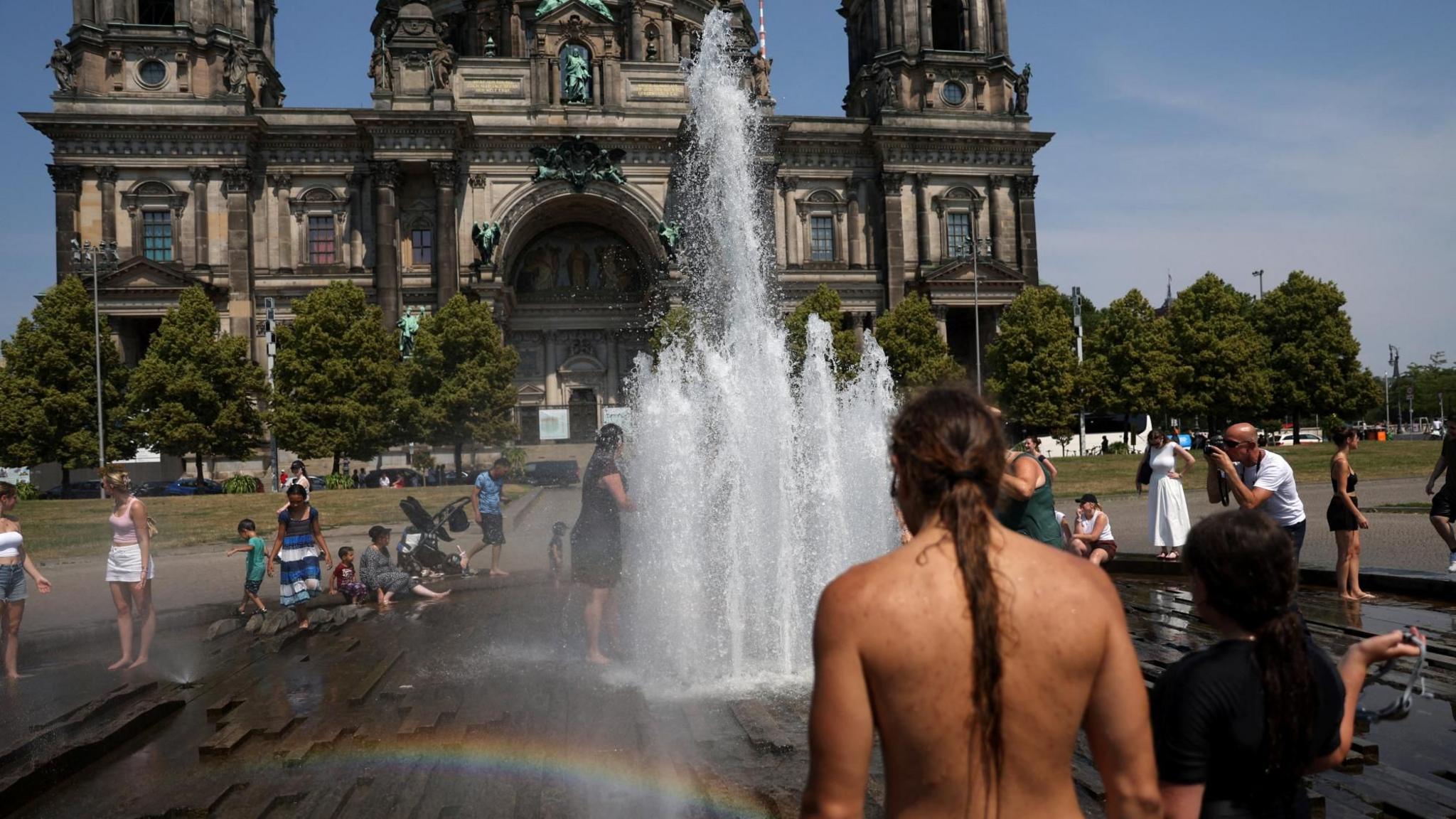 Image source, Reuters
On Sunday, Germany experienced its hottest-ever day for the third consecutive day after 41.7C was recorded in the east of the country, preliminary data showed.
A station in Coschen, near the Polish border in eastern Brandenburg, recorded 41.7C at around 16:00 local time.
The Czech Republic set its second temperature record in two days, recording 41.1C at Doksany, north of Prague, the meteorological institute CHMI said.
CHMI said it expected the heat to peak on Sunday, with storms forecast for western areas later.
Poland also broke its all-time temperature record with 40.5C in the town of Slubice, a spokeswoman for the Institute of Meteorology and Water Management (IMGW) told the AFP news agency on Sunday.
-
How to keep your home cool in hot weather
-
Published6 days ago
-
-
What extreme heat does to the body
-
Published30 July 2023
-
-
How to sleep in the heat
-
Published3 days ago
-
-
Can you keep your kids off school or refuse to work during a heatwave?
-
Published5 days ago
-
Climate change was responsible for the extreme weather, Tedros said, warning that Europe was warming at “twice the global average”.
“Driven by climate change and global warming, the phenomenon of the ‘once-in-a-generation’ heatwave is now occurring nearly annual,” he said.
He called on European countries to “implement heat health action plans”, as part of a push to safeguard health in the face of climate change.
The extreme weather has led European authorities to take drastic measures to prevent heat-related illnesses.
On Thursday, the Dutch music festival Defqon.1 was cancelled following an unprecedented code red warning for extreme heat.
In Paris, officials banned drinking takeaway alcohol in public and cancelled the city’s pride march to help stretched emergency services.
The ban began at noon on Friday local time ahead of France’s World Cup match with Norway and lasted until Sunday morning.
At least 74 people have drowned in France since the beginning of the heatwave, according to Interior Minister Laurent Nuñez.
Most of the deaths occurred in “unsupervised bodies of water such as rivers, lakes and ponds”, he told Le Parisien newspaper on Saturday.
The record-breaking June heatwave has been blamed on a so-called “heat dome” effect.
This weather pattern results in air sinking down through the atmosphere, which compresses and heats up as it hits the ground.
This sinking air also dries out, meaning no clouds can form, so strong sunshine is able to heat the ground up even further.