
This post was originally published on this site.
Mallory Moench

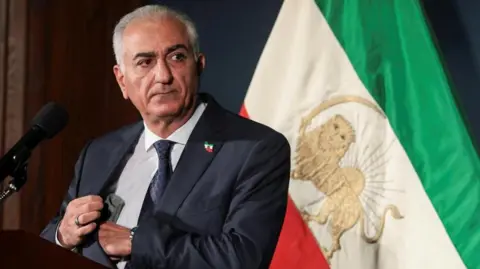
The exiled son of the last Iranian shah (king) has called on the world to help protesters topple Iran’s government, saying he is confident “the Islamic Republic will fall – not if, but when”.
Reza Pahlavi, a US-based opposition leader, asked the world to target Iran’s Revolutionary Guard leadership, which he said would “facilitate our task and prevent more loss of life”.
More than 2,500 protesters have been killed, according to a human rights group, in demonstrations that started over the economy on 28 December and turned into calls for the end of the rule of Iran’s Supreme Leader Ali Hosseini Khamenei.
The Iranian government has called the protests “riots” backed by Iran’s enemies.
Pahlavi has emerged as a prominent figure in Iran’s fragmented opposition and has previously urged Iranians to escalate their protests.
But protesters have been met with deadly force by authorities, masked by a near total shutdown of the internet and communication services.
US President Donald Trump has warned Iran’s government against killing protesters, telling demonstrators earlier this week that “help is on its way”.
In an interview with CBS News, the BBC’s US media partner, Trump said the US would take “very strong action” against Iran if it executed protesters.
He later said he had been told “the killing has stopped” – but did not rule out military action against the country.
Iran’s parliament speaker had warned that if the US attacked, both Israel and US military and shipping centres in the region would become legitimate targets.
The US and UK have reduced the number of personnel at the Al-Udeid air base in Qatar, with officials telling CBS News it was a “precautionary measure”.
Speaking on Friday at a news conference in Washington, Pahlavi claimed that sections of Iran’s security apparatus had refused to take part in the crackdown and that the Iranian authorities had brought in fighters from foreign militias to quell the protests.
He urged the world to target Iran’s Revolutionary Guards, and command and control infrastructure, calling for a “surgical strike”.
He also asked global powers to deliver economic pressure, expel Iranian diplomats, demand the release of all political prisoners, and deploy satellite internet Starlink and other secure communications to allow connectivity in Iran.
“With or without the world’s help, the regime will fall,” Pahlavi said. “It will fall sooner and more lives will be saved if the world turns its words into action.”
He also vowed to return to Iran and laid out a plan for creating a new constitution in the country.
Asked about future leadership in Iran, Pahlavi said: “It’s for the Iranian people to decide.”
He said he believes he can lead and has the Iranian people’s support: “I am trying to help them liberate themselves,” he said.
Pahlavi said he supported a governing programme based on the principles of Iran’s territorial integrity, a separation of religion and state, individual liberties and the right of the Iranian people to decide on the form of democratic government they want.
Pahlavi’s father, the last shah of Iran, was overthrown in an Islamic revolution in 1979 and a devout Shia Muslim regime took over.
The current wave of protests began after shopkeepers in Tehran went on strike over the rising cost of living and the depreciating value of the currency.
They quickly spread across the country and turned against Iran’s clerical establishment, particularly Khamenei. The slogans chanted by demonstrators have included “Death to the dictator” and “Seyyed Ali [Khamenei] will be toppled this year”.
According to the US-based Human Rights Activists News Agency (HRANA), at least 2,595 protesters have been killed since the unrest began, as well as 17 children, 164 people affiliated with the security forces or government, and 21 uninvolved civilians.
It reports that another 22,104 protesters have been arrested.
The Iranian government has imposed an internet blackout on the country since 8 January, with authorities stepping up their crackdown on protests.
The BBC and most other international news organisations are also unable to report from inside Iran, making obtaining and verifying information difficult.