

 Image source, Piotr Krasinski
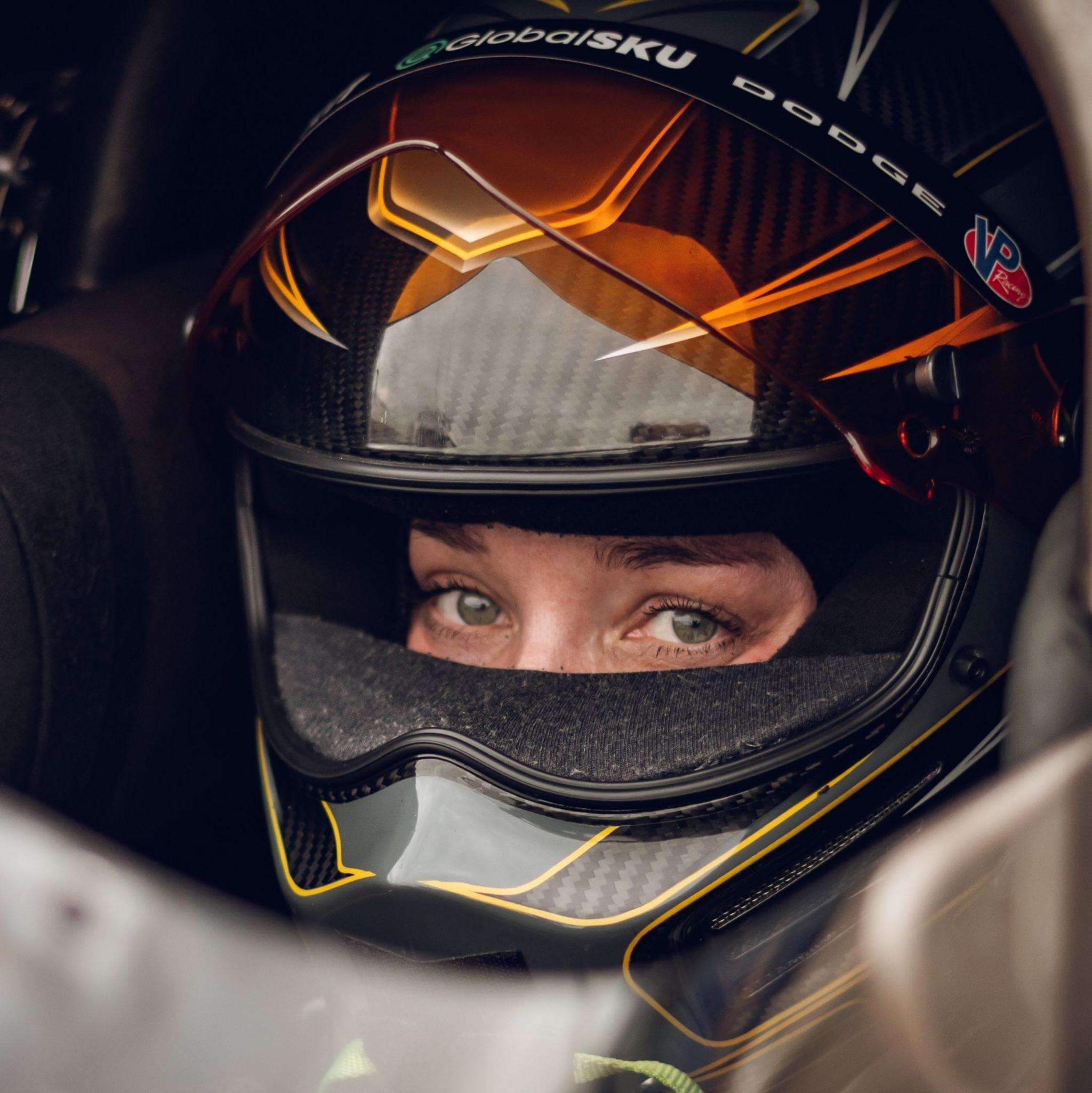
Like “being shot out of a cannon” is the closest comparison that driver Susanne Callin can come up with for the extreme motorsport she competes in.
She is a two-time European champion in Top Fuel drag racing – often described as the fastest sport on the planet.
Races begin with a bone-shaking roar, as the world’s fastest-accelerating cars leave the starting line, flames bursting out of their exhaust pipes.
The cars surge to more than 300mph (483km/h) in races that last just four seconds, with drivers experiencing more g-force than an astronaut launching into space.
It is the only elite class of motorsport where women frequently beat men to major titles.
Women have won seven out of the past nine European Championships, while, until recently, female US driver Brittany Force held the world speed record in the sport. In comparison, it is 50 years since a woman even competed in a Formula 1 Grand Prix race.
Women account for about 10% of participants across motorsport, and just 4% of elite drivers, according to campaign group More Than Equal. However, they made up 20% of the drivers competing in this year’s US and European Top Fuel seasons.
So why is this high-velocity motorsport bucking the trend?
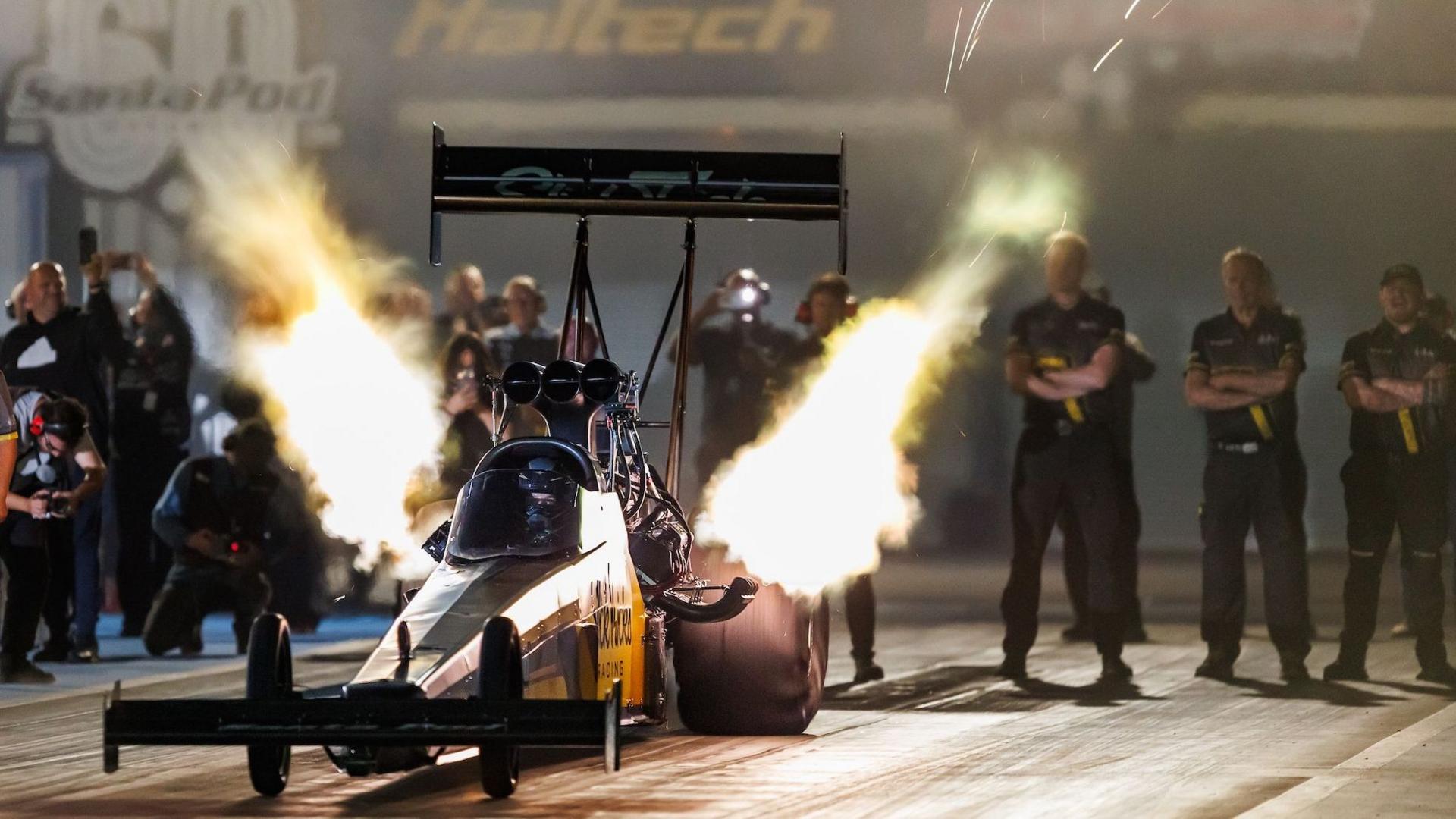 Image source, Ben Feetham / Pitlane News
More Than Equal has described drag racing as “the most gender-equal motorsport in the world”. Top Fuel is its most extreme form, named in reference to the powerful nitromethane fuel the cars run on.
Races take place on a straight track, just 1,000 feet (305 metres) long. Usually, two cars race each other. The intense g-force hits in the first second of the race, as the cars go from stationary to 100mph, with a second gut punch following as the clutch fully engages about half-way through.
It can look terrifying. The adrenalin rush is “extremely addictive”, Swedish driver Callin, aged 43, tells BBC Global Women. Concern over the risks “is always there” she says, but “the safety really does work”. Drivers are highly protected and safety precautions have been boosted further after fatal crashes in nitromethane-fuelled cars in 2004 and 2008, with races reduced in length.
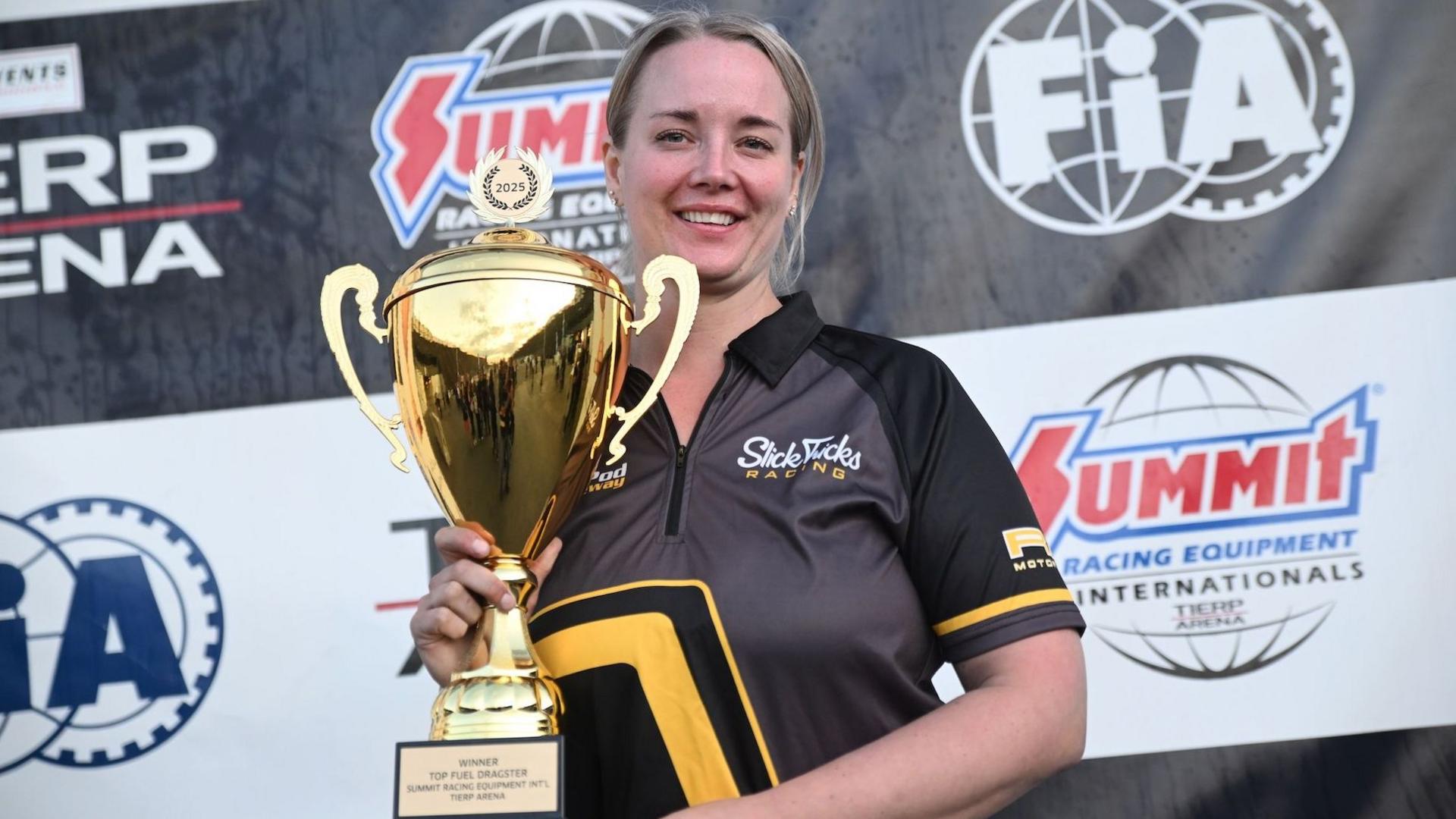 Image source, Remco Sheelings
Even just watching from the stands is a visceral experience, with vibrations shaking your body and the ground. Spectators are advised to wear ear defenders – the noise is comparable in decibels to standing next to a fighter jet taking off.
The highest official speed ever reached in a Top Fuel drag race is over 346mph, compared to 231mph in a Formula 1 Grand Prix. Brakes alone cannot slow the cars fast enough, so parachutes are deployed from the car’s rear at the finish. The abrupt halt is “like someone kicking you in the chest”, says Callin. “You lose your breath.”
Top Fuel drivers need lightning-fast reactions and the physical endurance to withstand the intense forces. Precision driving skills are crucial as constant tiny adjustments are needed to keep the car on track.
“It has to be instant reactions with everything,” says Callin. “By the time you’ve thought about it, it’s too late… You really have to be one with the car.”
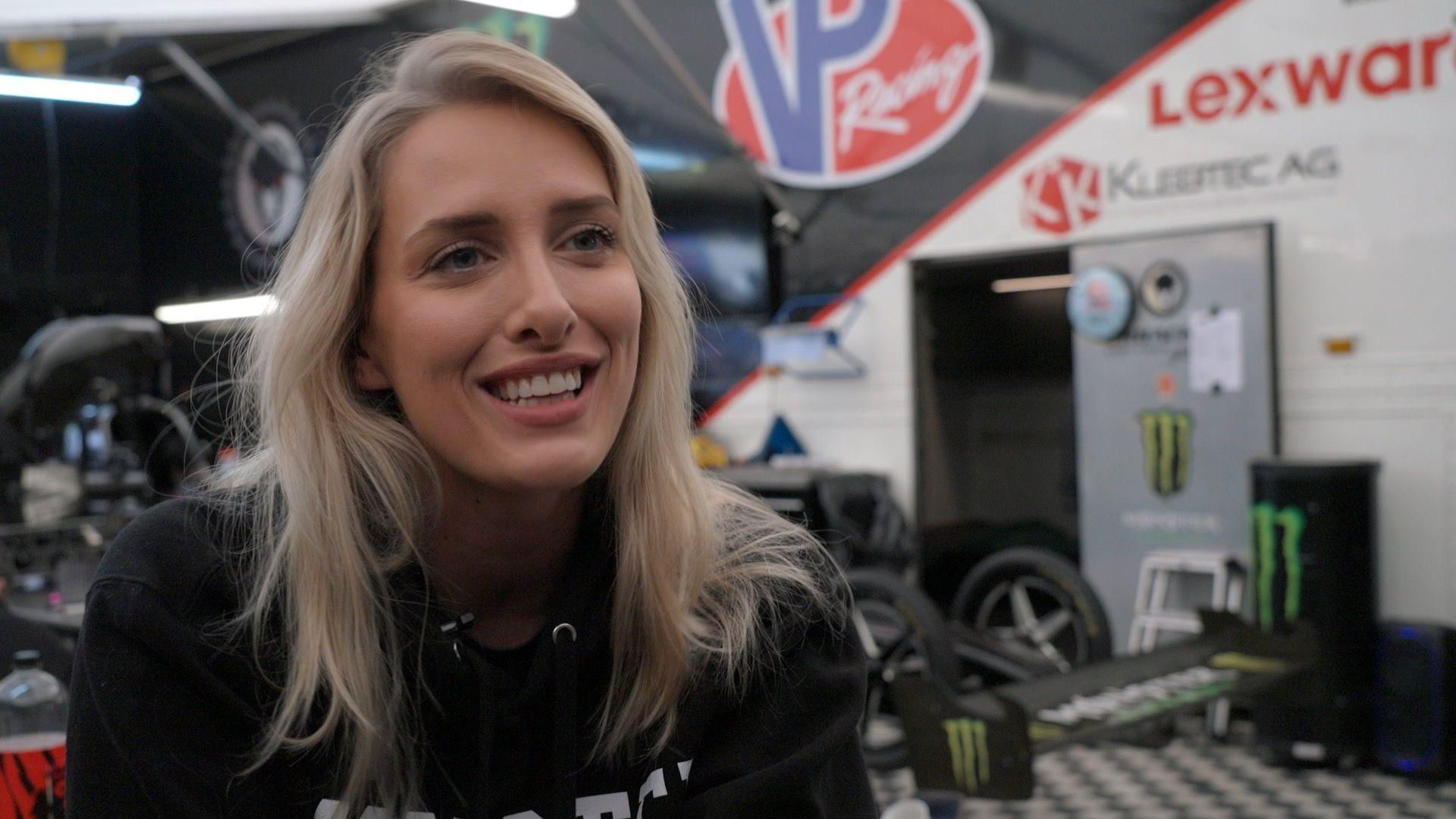
And drivers need sheer guts. As Callin’s rival and friend, 32-year-old Swiss driver Jndia Erbacher, jokingly tells the BBC – it takes “balls”.
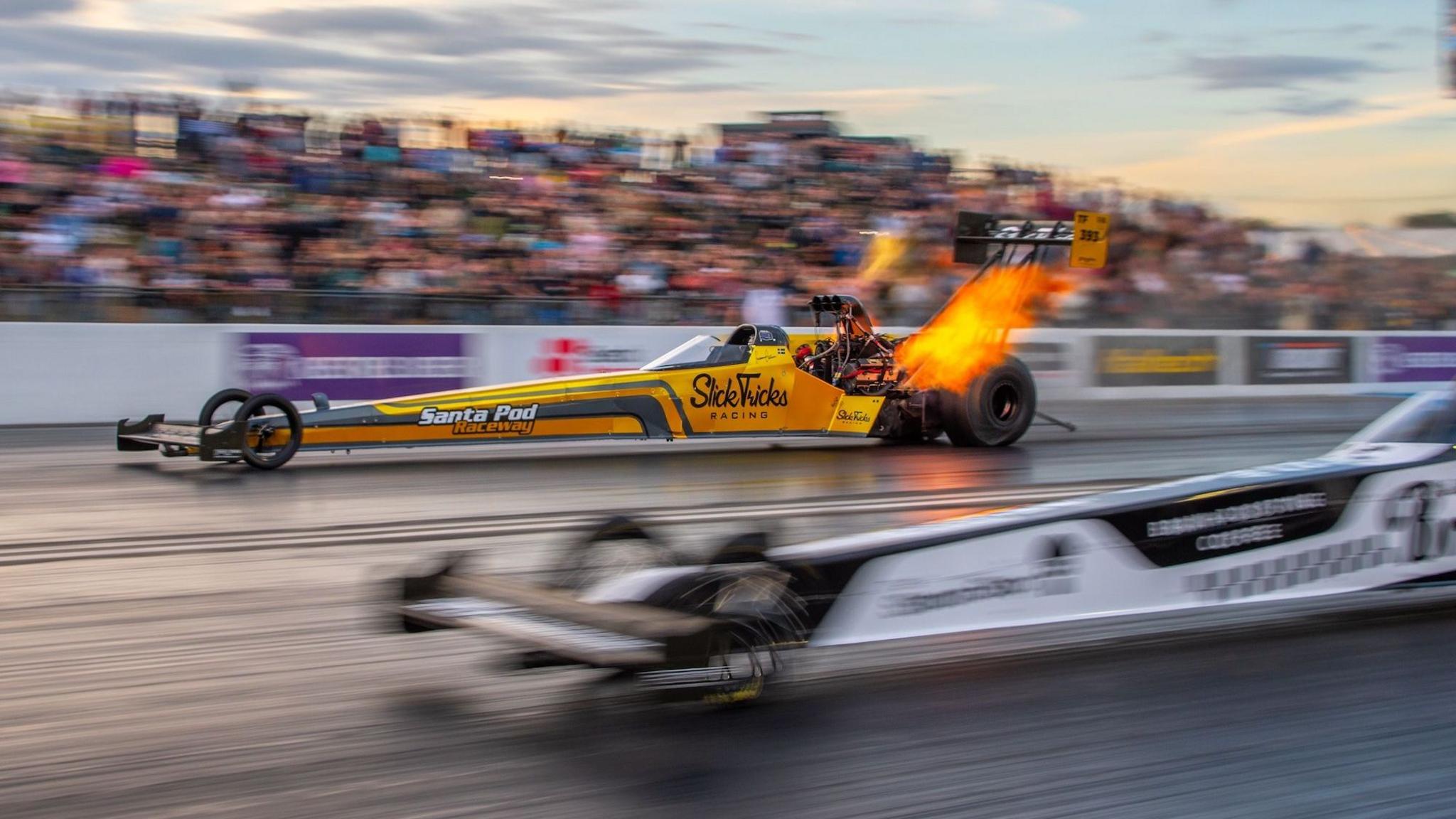 Image source, Callum Pudge
Callin clinched her second successive European Top Fuel title in September at the Santa Pod drag strip near Northampton. It is the fourth year in a row that a female driver has won the title. Meanwhile in the US, the record-setting Brittany Force won the US championship – run by the National Hot Rod Association (NHRA) – in both 2017 and 2022.
Drag racing is “highly unusual” among motorsports, says Fran Longstaff, chief innovation officer at More Than Equal, which supports and campaigns for women in motorsports.
Seeing women competing and winning in the sport has become “normalised rather than treated as exceptional”, she says, including with “sustained success” in Top Fuel.
Research she co-led into why drag racing leads the way for equality in motorsport did not identify physical or biological factors, she says.
Instead, she points to a “continuous stream of visible female role models”, as well as the sport’s “accessible grassroots structure, junior programmes, open pits and family-oriented, collaborative culture”.
In drag racing, points out Callin, women started winning major races “decades and decades ago”.
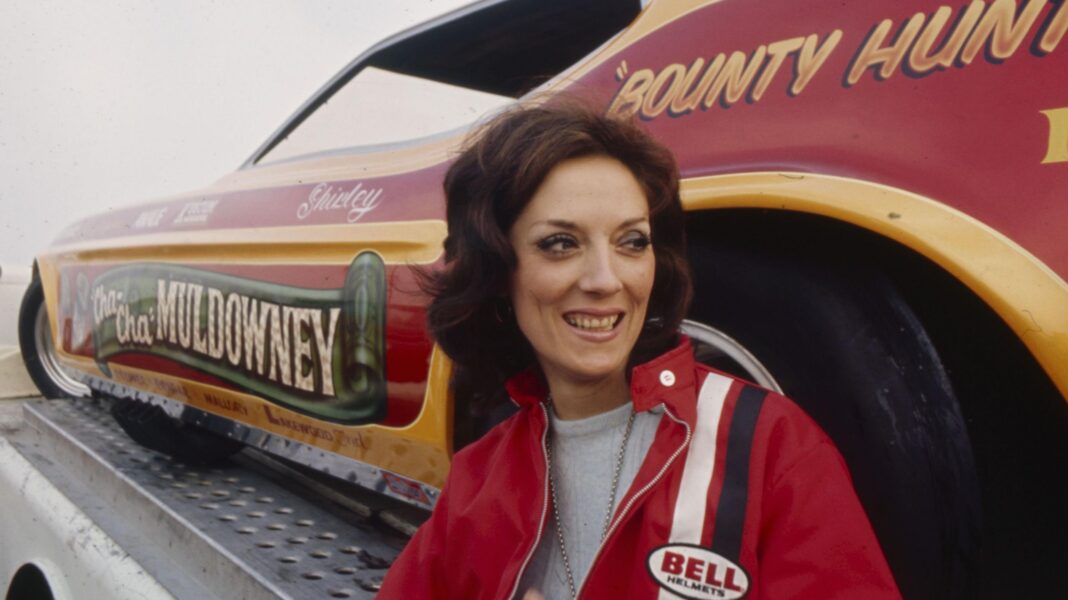
The best known is Shirley Muldowney, dubbed the “first lady” of drag racing. The first woman to gain a Top Fuel licence, Muldowney won the NHRA championship in 1977 and went on to become the first driver to win three titles, with further wins in 1980 and 1982.
She had to battle to be allowed to compete at high levels, and faced hostility at times from other competitors and fans, but is now lauded for her perseverance.
When the BBC spent time with Callin in the pits between races at Santa Pod, surrounded by roaring engines and the smell of burning rubber, she signed autographs for fans – young and old, male and female – as her team prepared her car.
“I never feel I’ve been underestimated or treated badly for being a woman – never,” Callin says.
This is in stark contrast to the experiences of women seeking to enter Formula 1. Young female drivers have spoken about being deliberately pushed off karting tracks by male competitors, and facing sexist comments in person or online.
More Than Equal’s research also highlights a close-knit, family-oriented, collaborative culture in drag racing.
Like many top drag racers, Callin is from a racing family. She has been involved since childhood, following in the footsteps of her father and uncle, who both raced competitively.
Similarly, Erbacher’s father Urs was a three-time European Top Fuel champion. And Brittany Force is the daughter of John Force, who holds 16 NHRA drag racing titles.
The 300mph motorsport where women keep winning
Watch the full documentary following Susanne Callin as she bids to retain her European Top Fuel title
Female drivers have also shown that success is possible in Top Fuel in the years after having children.
Callin took a break for more than a decade to raise her daughter and stepdaughters. It was when she returned, aged 35, that her career really began to flourish. Similarly, Finnish driver Anita Mäkelä has won the European championship four times – three of them after a six-year break focusing on her children and running her family’s chicken farm.
For Callin, racing is ingrained in family life.
Her dad is still part of her team. Her husband, Keith Bartlett – sometimes referred to as the “godfather” of UK drag racing – runs Santa Pod Raceway. Two of their daughters were driving junior dragsters at 80mph before they were old enough to sit a standard driving test. The youngest, Jacqueline, is now 19 and racing in adult classes.
The culture is collaborative, despite fierce competition – evident at last year’s championship, when Erbacher offered Callin spare parts after her car was damaged.
“We hate each other at the starting line, but we love each other at the finish line,” Erbacher says.
Asked about safety, both Callin and Erbacher talk about having “respect” for the car and the risks.
Over the years, strict procedures and regulations in Top Fuel have evolved to improve safety.
Drivers wear fire-resistant suits and sit in highly protected cockpits. Even after dramatic accidents, drivers in many cases escape relatively unscathed. This includes Callin, who has had two major crashes, suffering a concussion and a bruised collar bone, but no lasting injuries.
She says serious accidents are a “very small percentage”. Even so, she is still not sure she would be comfortable if her daughter wanted to race in Top Fuel, with its extreme speeds.
Erbacher says her father initially refused to let her race, but relented when she declared she would do it with or without his help. He now manages her team.
More Than Equal also points out that the financial barriers to participating in drag racing are lower than for some other motorsports.
It takes millions of pounds to reach Formula 1, requiring high levels of sponsorship. Elite drag racing is also expensive, but not on the same scale. At the lowest levels, accessible racing events called “track days” take place, where participants can turn up and drive their own ordinary cars.
In the biggest Top Fuel championships, drivers race for themselves and earn points based on how they perform against their competitors. The European championship consists of four events – two in the UK, and one each in Germany and Sweden – in which each driver takes part in six races. Prize funds are limited, mostly serving as a contribution towards costs.
The US championship is on a larger scale, with 20 events across the country. The NHRA has not published a breakdown of prize money, but according to drag racing website Competition Plus, there is $500,000 (£378,000) for the 2026 winner, and significant pots for winners of individual events throughout the season.
The US, Europe and Australia have all seen female drag racing champions, but in other parts of the world, the sport is less well established, Top Fuel is rare and the picture is more varied. Individual women are breaking barriers across a range of different motorsports, and in some countries female drivers are carving out space in drag racing.
Women have begun to make an impact in Brazil’s popular drag racing scene, including Fabiola Dal Bo who has held a category record in recent years. A team in South Africa hosts all-female drag races, while the popular reality TV show The Fastest in Arabic has raised the profile of women racers in the Middle East.
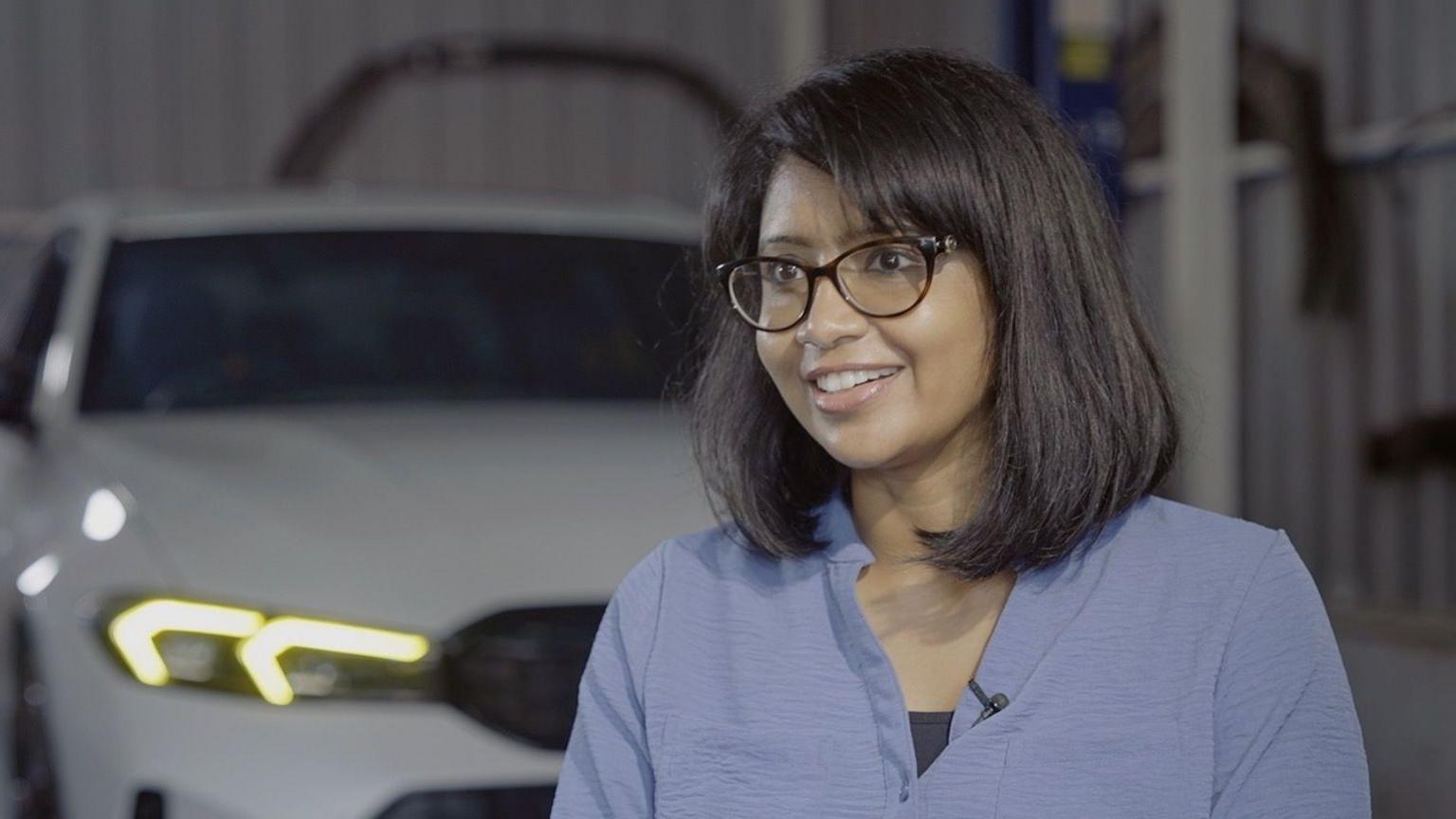
In India, 35-year-old Uvashri Kannadasan Balajeyanthi has clinched victories over male rivals in India’s major drag racing series, Valley Run, with wins across three different categories in events from 2022 to 2024.
Known as Octy Girl in reference to the modified Skoda Octavia she first raced in, she tells the BBC she has “mixed feelings” when her achievements are met with surprise: “Why do they have to get shocked? Anyone can drive, right?” But she adds “sometimes I feel proud… I’m breaking the barrier of being in a male-dominated sport”.
Back in Europe, however, Callin says being a woman on the drag strip is “super-normal”.
She describes winning the European championship two years running as a “massive achievement”. And she is already looking towards her next goal: becoming the first person, male or female, to win the title three years in a row.

-
This is part of the Global Women series from the BBC World Service, sharing untold and important stories from around the globe

