

This post was originally published on this site.
Footballers more likely to suffer depression and anxiety – study
-
Published
A new study into the brain health of former footballers has found they are much more likely to suffer from depression, anxiety, and difficulties with thinking and decision-making in mid-life than the general population.
Of the 124 former professional players aged 30-60 who were tested, 31% scored in a range indicating clinically significant depression, according to the Imperial College London findings, presented at the Alzheimer’s Association International Conference.
That is 22% higher than a group of healthy adults with no history of playing contact sports or head injuries, with whom the study compared the footballers’ results.
The study received funding from the Football Association and Professional Footballers’ Association, and those tested included former Premier League, Championship and Women’s Super League players.
The findings come amid growing scrutiny on the impact of heading in football on brain health, following a series of cases in which neurological illness has been linked to the deaths of former players, including Manchester United and Leeds legend Gordon McQueen.
-
Redesigned ball could reduce heading impact – scientists
-
Published20 April
-
-
How does a match with ‘no heading’ work?
-
Published27 September 2021
-
‘Footballers’ brains have reduced volume and grey matter’
In the range indicating clinically significant anxiety symptoms, 42% of the former footballers reached the threshold, compared with 25% of non-footballers.
Brain imaging of footballers found noticeably lower grey-matter volumes in several areas of the brain which are key for memory, maintaining attention, decision-making and emotional regulation.
There was also evidence of reduced brain volume, while – when asked – the players rated their own thinking and decision-making skills lower than non-footballers.
“This is the first and largest study of its kind looking at the brain health of retired football players in mid-life, and we are seeing these brain changes at a point before we could expect to see clinical symptoms,” says Heather Snyder – senior vice-president of medical and scientific relations at the Alzheimer’s Association.
“The study raises the possibility that there may be things we can detect in the brains of individuals at an earlier time, and if we understand what is happening, we may be able to intervene and benefit their brain health.
“Findings like those in this study and others are going to inform players, clinicians, sports organisations, and parents, so that they really understand what may be a risk in contact sports and enable them to make decisions.”
‘Former footballers at much higher risk of degenerative diseases’
The findings are the latest in a growing number of studies that suggest head injuries that come from playing football can contribute to neurodegeneration and diseases of the brain.
Establishing how and to what extent playing football – particularly repeatedly heading the ball – has caused damage to the brain of an individual is challenging because the best analysis of the brain can only be conducted after death.
A diagnosis for chronic traumatic encephalopathy (CTE), which is caused by repeated head impacts and studies show is more common in athletes like rugby players and footballers, can only be made post-mortem, when protein deposits and other forms of damage in the brain are examined.
CTE can cause symptoms during life including issues with memory, mental illness, behavioural changes and violent mood swings.
“In the UK there has been a tremendous amount of attention on the need for research on understanding the link between football players and the long-term impact on brain health,” Snyder added.
Former England striker Jeff Astle, who died in 2002 following years of neurological symptoms, is considered the first footballer whose death was shown to have been impacted by heading footballs.
A handful of former players – including McQueen, ex-Cardiff defender Keith Pontin, former Hull City man Alan Jarvis, and amateur player Goff White – have now had their deaths formally linked to football.
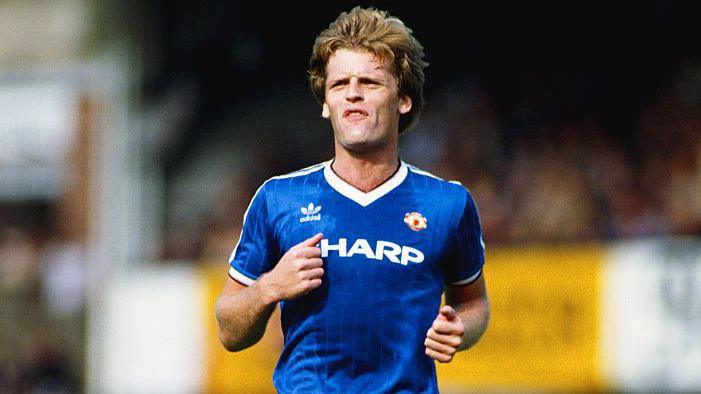 Image source, Getty Images
“Former professional footballers are at much higher risk of degenerative brain diseases, dementias and related disorders,” Professor Willie Stewart – a consultant neuropathologist at the University of Glasgow – told BBC Sport earlier this year.
“What we see is the risk is about three and a half times higher than it should be. There is a very unique change in the brain which only appears in athletes that we don’t see in other individuals.”
The families of some footballers who have died with neurodegenerative conditions have called for a reduction in heading for many years.
‘We need to see what the long-term consequences are’
Heading has been restricted in children’s football in England, Scotland and Northern Ireland, while different measures have been put in place regarding heading in training in the English and Scottish professional games.
In 2019, the ‘Field’ study, funded by the FA and PFA, found footballers were 3.5 times more likely to suffer from neurodegenerative disorders.
The FA has since issued guidelines to clubs on limiting high-force headers in training, such as from balls which come at speed from free-kicks and corners.
The Scottish Football Association has gone further – banning heading the day before and after matches in the professional adult game.
In 2023, the PFA and Premier League set up a brain health fund, making money available to assist former players and their families who have been impacted by dementia and other neurodegenerative conditions.
Those behind the latest study aim to continue monitoring the brain health of the former footballers who participated this time around, and say more research is required to understand what causes brain changes, how symptoms change over time, and try to establish what can be done to help.
“We need to really now take it forward and understand why we’re seeing these brain changes, what the underlying biology is, and what the long-term consequences are,” Snyder added.
“When we’re thinking about our brain health, one of the best things you can do is to protect your head from injury as best you can when you’re playing sports.”
If you have been affected by the issues raised in this article you can find the details of organisations offering support via Action Line.