
This post was originally published on this site.
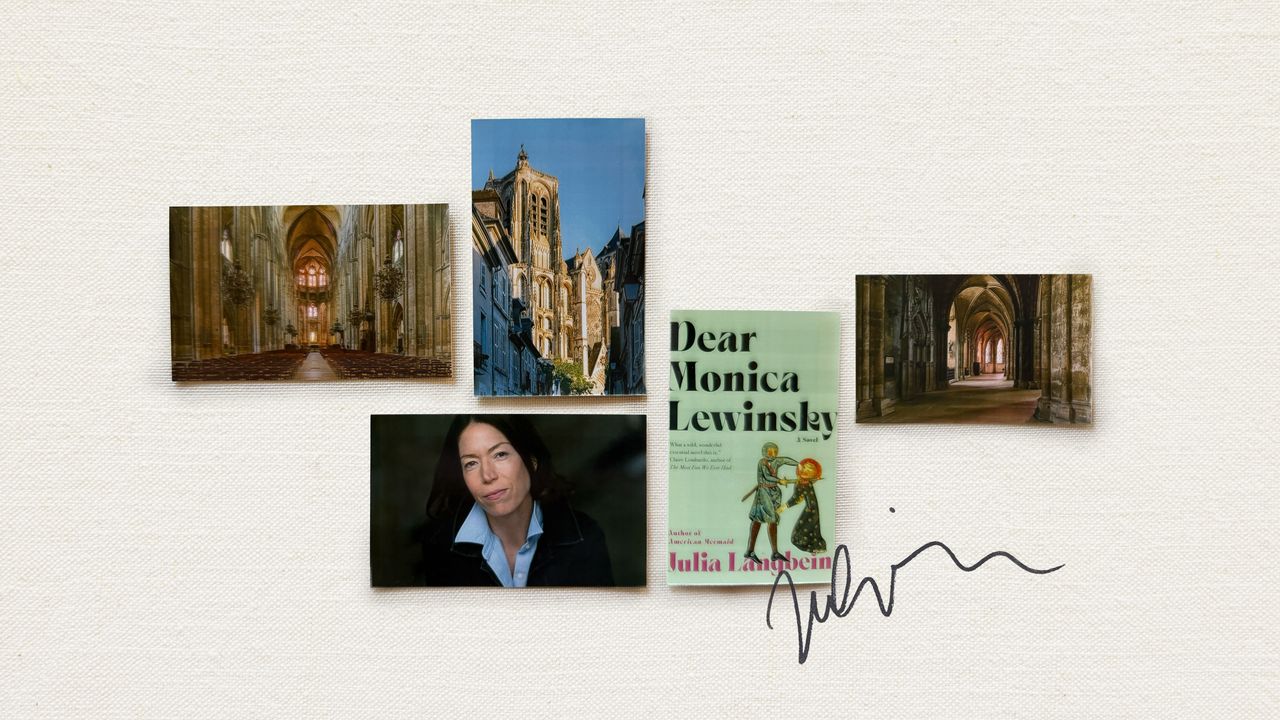
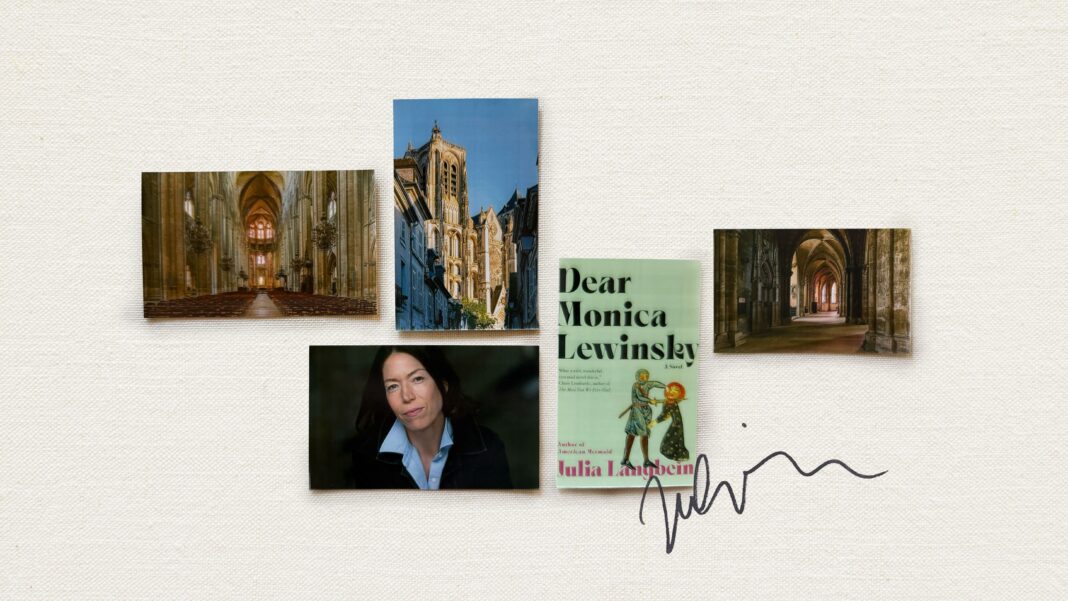
This is Write Here, a new column where authors and literary luminaries tell us about the travels they took to find inspiration and create their latest books.
In this installment, the author Julia Langbein shares her experience visiting Amiens and Bourges, France, to write her new novel Dear Monica Lewinsky. In it, a character named Jean Dornan recounts a study-abroad trip in France where she had an affair with her medieval art and architectural history professor during the summer of 1998—the same summer when President Bill Clinton admitted to his sexual relationship with Monica Lewinsky and she was vilified in the press and American society. Throughout the book, Lewinsky appears to Dornan “in undulating cobalt robes” and crowned with a “black halo” as the patron saint of “those who suffer venal public shaming and patriarchal cruelty.” As a writer with a background in comedy as well as a PhD in art history, Langbein was drawn to cathedral towns in France where she better grasped the hilarious mundanity of humans in divine spaces.
“In 2023 I went to the French towns of Amiens and Bourges to do some research on cathedrals for certain scenes in Dear Monica Lewinsky. I had already written most of the novel; a lot of it was based on some scholarship I’ve done, reading books, and memories of my own study abroad program in France in the 1990s. But since I currently live just outside of Paris, I figured I should take advantage of the proximity to be reminded about what it’s like to be in those big churches. At the same time, my parents were coming to visit me from the United States and they wanted to see Amiens. It’s an hour north of Paris by train and has the spectacularly beautiful 13th-century Cathédrale Notre-Dame d’Amiens, which my dad had studied at Columbia University. I figured, two birds, one stone.
I planned this lovely trip for us to Amiens, booked us for dinner at this super soigné restaurant Les Orfèvres, the works. But at the cathedral, all I could do was think about them: ‘Are they hungry? Are they tired? Do they need to not be on their feet right now?’ I took all these photos of the space and the art, but I gotta tell you, I just couldn’t absorb it the way I needed to for me and for the book—its stories and its characters. It’s one thing to think of yourself while traveling, then another to be with your parents, and wholly another to bring along the psychology of five imaginary people in your head. In the end, I realized it was impossible for me to take notes for a novel and care for people at the same time.
So a couple months later on a random weekday, I left my family and took the train down from Paris to Bourges, which is where one of the book’s pivotal scenes takes place. I wanted to see the Cathédrale Saint-Étienne de Bourges, which is one of the biggest Gothic churches in France, with this architecturally unified interior, the largest nave—architectural historians love it. But doing it, I almost felt sheepish. I was like, why am I spending all this time here? I know what a cathedral is. I know what’s here already. I can find all the architecture info I want in books.
In Bourges, I wandered around the Tudor-style houses, drank red wine, and ate unbelievably inexpensive delicious duck, feeling like an imposter the whole time, like I’d lied to my family so I could go eat duck alone. But it was so magical. What I saw by traveling there that I couldn’t get in my reading was the understanding that these cathedral towns are funny worlds: They’re not always super touristy, places like Bourges or Amiens or York in England. They have a real normalcy about them, even though things like cafés, the local cobbler, the town notary are awkwardly nestled up to these eye-popping distended monuments to God.