
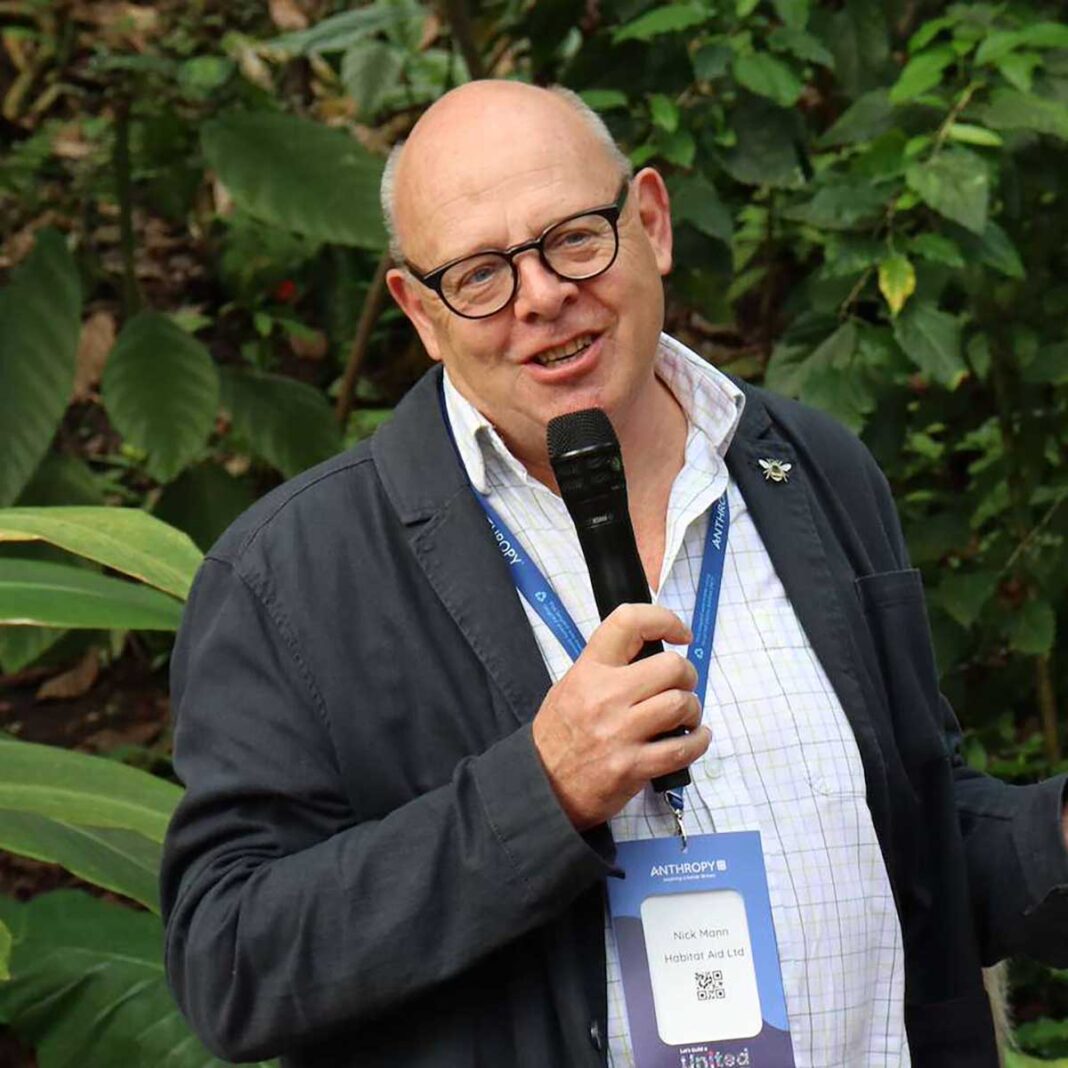

Nick Mann is the founder of Habitat Aid, the Somerset business that supplies native British plants, trees and seeds to people restoring habitats for wildlife.
He left a career in finance to launch the company in 2008, and it says it has since given around £160,000 to UK conservation charities. Habitat Aid became a certified B Corp in March 2022 with a B Impact score of 95.2, against a median of 50.9 for ordinary businesses. He tells Business Matters why he turned down a bank’s offer to buy the company, what a chance meeting with David Attenborough meant to him and why good suppliers should never be kept secret.
What do you currently do at Habitat Aid?
I head up a small team at Habitat Aid, and everything we do is about driving nature restoration across the UK. We sell native British seeds and plants from suppliers we trust, to help people create or restore habitats such as wildflower meadows, hedgerows, ponds, orchards and woodlands.
Habitat loss remains one of the biggest drivers of wildlife decline in the UK, so we are focused on helping people restore the natural features that wildlife depends on. Whether it is a homeowner planting a wildlife-friendly garden or a farmer creating species-rich grassland, we try to make it easier for people to take meaningful action for nature.
Alongside supplying native British plants and seeds, we also provide expert consultancy and practical conservation advice to make nature recovery accessible and effective for all. We are proud to be a B Corp, and we give a percentage of our profits each year to conservation charities and habitat-focused NGO projects. So far that has come to around £160,000, shared between groups including Butterfly Conservation, the Bumblebee Conservation Trust and Somerset Wildlife Trust. We are based in Somerset.
What was the inspiration behind your business?
I moved from the South East to rural Somerset in 2000, and I honestly could not believe the visible decline of British wildlife and the loss of habitats. It was a world away from the countryside I remembered from my childhood. I have vivid memories of walking through fields surrounded by clouds of butterflies, and I could not get that image out of my head.
I was working in finance and becoming increasingly disillusioned, and at the same time I could see that the biodiversity crisis was only getting worse. So I decided to change direction completely. I stepped away from the career I had spent years building and put all of our savings into founding Habitat Aid.
At the time, there was far less public awareness of biodiversity loss than there is today. Climate change was beginning to receive a bit more attention, but habitat loss and species decline were still relatively niche subjects. I felt there was a real need for a business that could help people understand these issues and give them practical ways to do something about them.
Who do you admire?
It might sound like a real cliché, but it has to be David Attenborough. I met him once at a butterfly conservation event where we were supplying native seeds. He stopped to find out more and we had a really lovely, long chat. Afterwards he sent us a letter wishing us luck with Habitat Aid, and I have kept it to this day.
I admire how effective he has been at educating people, particularly over the last decade. He changed his approach mid-career, moving from a softer style to getting much harder-hitting messages across about biodiversity loss and climate change.
I recently read that he has said he wished he had done more over his lifetime, but he has actually done a huge amount. He could easily be reclining in a warm bath of adoration as a national treasure, but he has not stopped working, even at 100.
Looking back, is there anything you would have done differently?
I wish I had made more money during my finance career. I know that might sound trite, but in the fullness of time I have realised that the more I had made then, the easier I would find it to get important biodiversity and habitat messages out now. We really did plough everything we had into Habitat Aid.
A bank once offered us a large amount of money to buy the company, but we turned it down because we felt the business was not scalable in the way they wanted. I only admitted this to my wife recently.
In hindsight, the money from that sale could have really helped me get our message to a broader range of people earlier. But you live and learn.
What defines your way of doing business?
Ethical. I do not love the word “stakeholders”, but we really do see everyone we work with as a stakeholder in Habitat Aid. From day one, we have tried to support the suppliers we work with, such as the plant nurseries and native seed producers, because they are as important to us as our customers.
We are happy to tell the world about them. There is no need to gatekeep good suppliers, and I would rather more people discovered them.
We have always tried to think long term rather than chase short-term gains. That means being transparent about where our plants and seeds come from, supporting British growers and encouraging customers to make informed decisions. If we can help strengthen the whole ecosystem around habitat restoration, everybody benefits.
What advice would you give to someone starting out?
Take the first step. Just like having children or getting married, it never feels like there is a good time to start a business.
Mine was very much a gut decision, and it is something I have never regretted, even though we have had to learn a lot along the way.


